The Wire came out during a time when television producers realized that they could make shows that were actually good in a meaningful way. The Sopranos sparked a golden age of television, and The Wire was hot on its heels to become arguably the best television show of all time.
I recently rewatched the series from start to finish, and genuinely found it better the second time. The slowness of season two was more compelling because I saw it in a wider context than I had my first time through. Season five is still hot garbage, but the overarching narrative throughout the show more than makes up for it.

What I found compelling this time around was being reintroduced to Jimmy McNulty. The first time I watched the show, I was convinced that Jimmy was the main protagonist of the series. He’s not killed off, he’s charming and handsome, his character is explored in detail, and he has that infallibility in his detective work that is common across all cop show protagonists – they always catch the bad guy due to their unfailing ingenuity, even if the Bosses do everything they can to get in the way.
The Wire is special because there are no clear “good guys” and “bad guys” in the show. The most sympathetic characters are indeed those involved directly in the drug trade; this could be because they are children which naturally plays to our sympathies, but it can be said more generally that the creative team goes to great lengths to humanize a demographic that is almost unanimously depicted as one-dimensionally violent or evil in every other piece of media. The drug dealer exists as an evil scourge plaguing our world, but in The Wire, D’Angelo Barksdale is far more appealing and likeable than any other character portrayed in season one – except for maybe Bubbles.
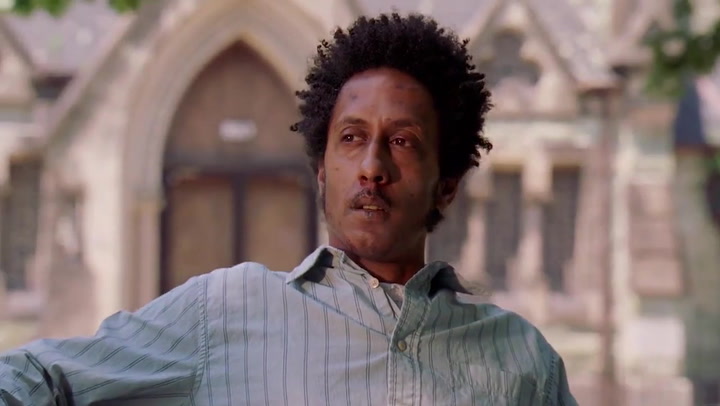
So in a show without clear heroes and villains, how can I say that Jimmy McNulty is the villain? Particularly when he’s on the side of police, no less; the side that doesn’t overtly use murder to negotiate their business dealings. I am definitely not saying that Jimmy is the villain because of his infidelity or even his show-polluting atrociousness in season five. That’s the flavour to his character and is irrelevant to his villainy.
Jimmy McNulty is the show’s villain because in his heart of hearts he wants the War On Drugs to continue. He might want it to be fought with more resources and to go after the generals instead of the soldiers, but ultimately, he is so passionately committed to the War On Drugs that the show portrays it as his literal vice. Policing is Jimmy’s drug; he is addicted to the War On Drugs. We are sucked into enabling his addiction because of his charisma and charm, and believe along with him that maybe we just need an extra few days on the wire, and drug crime will be eliminated forever. We’ll shut down Avon Barksdale; we’ll shut down Marlo Stanfield; these are the outcomes we cheer for. They don’t get to win!
The Wire is about the institutions of Baltimore, and in this depiction, speaks about the institutions of America more broadly. We see quite clearly how these institutions function only to perpetuate themselves – through policing stats, through political ambition, through an educational system detached from the realities of the children it is ostensibly there to educate. All of them function in ignorance of the actual problems because all of them are hyper-focused on keeping their heads above the water in an unsustainable status quo. The reality that they all seem to ignore is the reality created by the War On Drugs. This ideology manifests this problematic reality that all of these institutions do their best to dance around because denouncing the actual problem would mean confronting the status quo – likely ending their career.
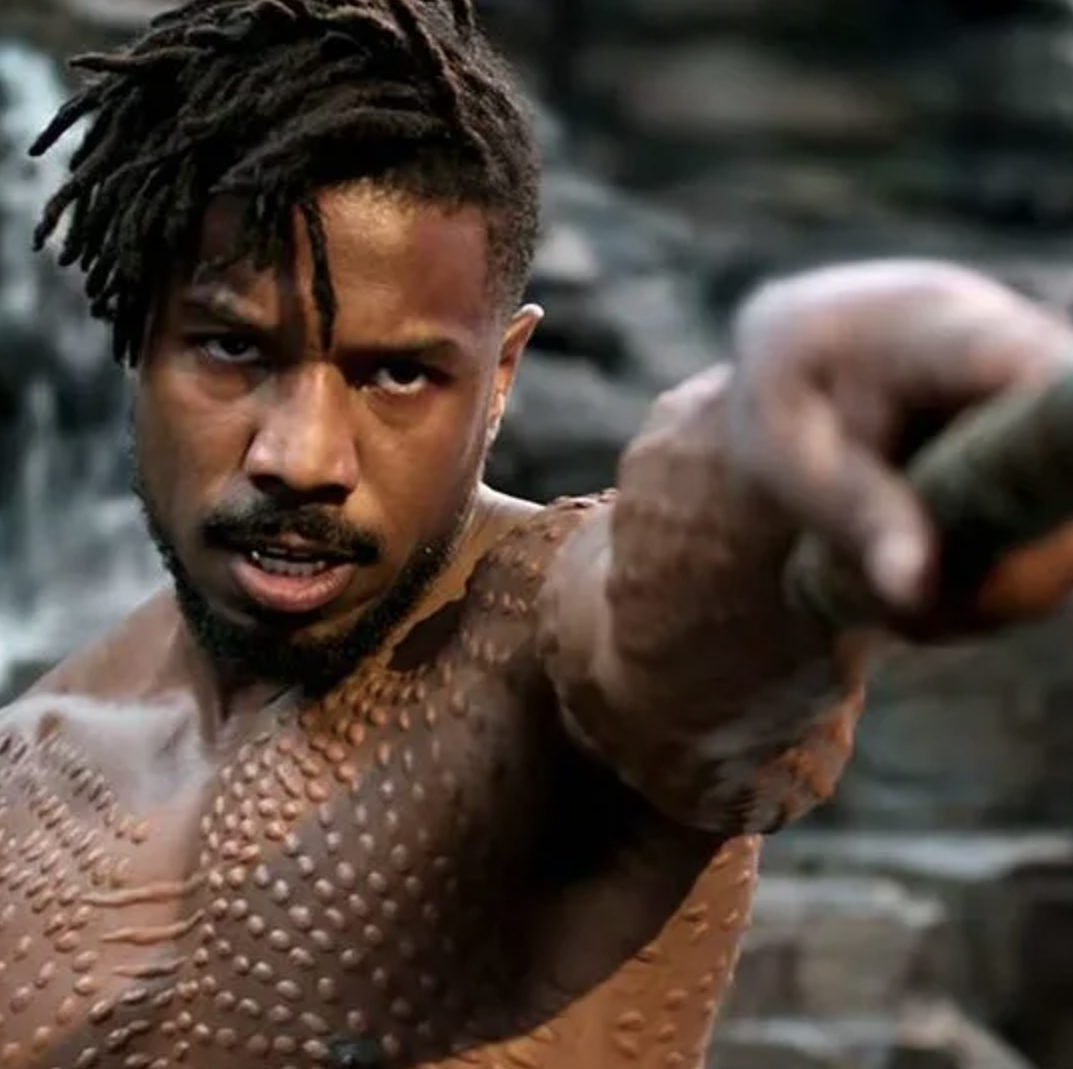
In season three, we see two approaches to dealing with the actual problems of the War On Drugs. The first is put forward by Major Bunny Colvin who creates safe zones where drugs can be sold without police interference. It is a very clear indictment of the pointlessness of the War On Drugs. What is less clear, but equally compelling, is the equivalent mirror being put forward by Stringer Bell. Bell and Prop Joe put together a co-op to try a new form of drug dealing – one closer akin to a normal business than to the “gangster shit” that dominates the Game in most other circumstances. They hold votes, they negotiate territory, they resolve differences diplomatically – all in an attempt to distance themselves from the widely acknowledged problems of illegal drugs: murders, insecurity, unpredictability, and police interference. Both factions want a better way to accommodate the hard reality that drugs will never go away.
Jimmy is mostly ambivalent to Colvin’s experiment. He looks more favourably at fucking over the Bosses than he is at what Colvin is actually trying to accomplish, and in no way sees the connection to what Bell is trying to do. He even resists focusing on the target of Major Crimes who is actively killing people, preferring to fixate on Stringer Bell because he knows that’s where the War belongs. Bell sees the wisdom of what Colvin is trying, and is explicit in this when he comes to Colvin at the end of the season to betray Avon. They both are trying to find a way to get around the dysfunctional status quo. It can be just a business as much as any other; the bodies are created by the War.
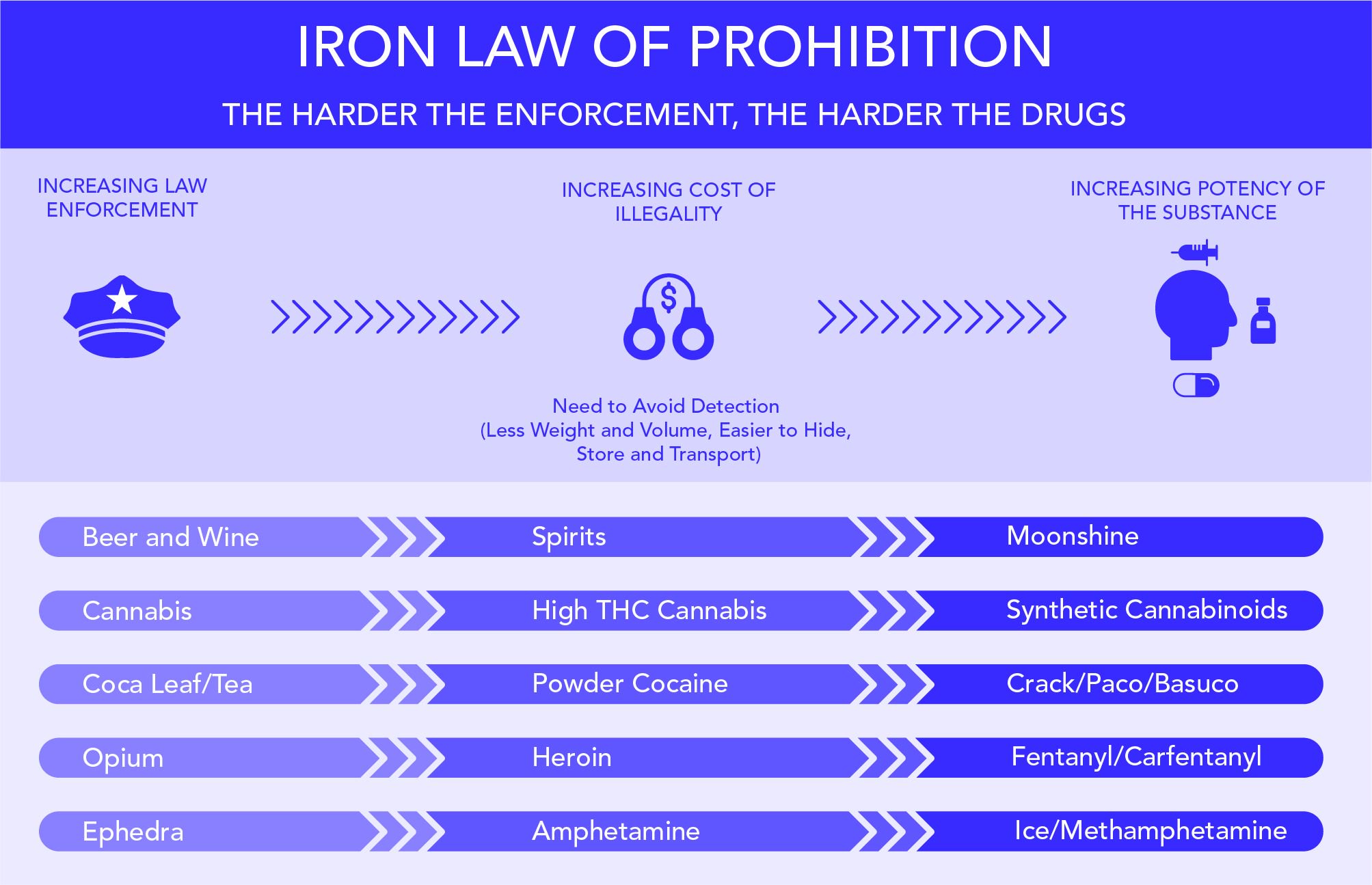
The second nice thing I’ll say about season five is that it showcases the Sisyphean meaninglessness of the War On Drugs. The police win. Marlo and Avon are arrested; their gangs dispersed. But we see as the season ends that Michael turns into the new Omar, that Kima becomes the new Jimmy, Carver becomes the new Daniels, and Duquan becomes the new Bubbles. The pawns have already been replaced so often throughout the show that the bottomless pit from whence they come has already been well-established. The boulder goes up the mountain once again, and the War continues – and for what? A few people got promoted, and many more died. Jimmy’s belief that policing ought to confront the War On Drugs more effectively is only a means of finding a more efficient way of getting the boulder up the mountain.
The War On Drugs is the villain of The Wire. The champions that we’re used to seeing from other cop shows are seen here perpetuating it in all its pointless glory. There cannot be any heroes because all of the characters are produced by a villainous system. There are only survivors, mercenaries, and profiteers. The only reasonable heroics would be to challenge that system itself, and under that rubric, ironically it is Stringer Bell who ends up on a pedestal higher than Jimmy McNulty.
 Blog for Chumps
did you set out to have the worst take possible, or did you just end up here by accident?
I mean, David Simon is adamantly against the War On Drugs – even going so far as to suggest that the only way we’ll get a sixth season of The Wire is if the Department of Justice were to end it. Viewing the show’s already ambiguous heroes and villains through that lens seems quite reasonable given that reality…
Perhaps you could be more specific in your criticism so I can more appropriately address your concerns?
it’s a thoughtful, articulate take. more than what you’re offering
Thank you for reading and taking the time to reply! While I appreciate the response, I have already addressed the comment, and I worry that your approach might be more antagonistic to the original commenter than helpful to the overall discourse.
I never know what’s going on for people on the other side of the internet, who they are or what kind of situation they’re in, so I try to approach people with a sense of curiosity and assumption of good faith, regardless of their comment. Whether a take is good or bad is irrelevant when deciding how I want to engage with it. Thankfully this blog is small enough that I can get away with this kind of approach without becoming overwhelmed and jaded. It’s worked out okay so far!
I’m grateful you think my article is thoughtful and articulate! I really value feedback from internet strangers, both positive and negative, so again, thank you so much for your comment. I hope you keep reading and keep engaging!
this is a awfultake
you obviously have a very basic grasp of life so you want the “dealers” to “lose” but aren’t the cops similar criminals?
I’m really not sure how to respond to this… the literal title of this blog is that Jimmy McNulty is the villain of The Wire. He’s a police officer in the show. I don’t know where you’re getting the idea that I’m somehow pushing for the victory of cops over the drug dealers when I’m suggesting a police officer is the show’s main antagonist? Again, if you could clarify your issue, perhaps citing a specific sentence or paragraph in my piece that you have a problem with, I’d be happy to discuss this further.
Jimmy starts off as homicide, right? In season one he even says that to Bodie (?)
I’m paraphrasing, but he says he’s not interested in the drugs. He’s onto the Barksdale crew and has a vendetta against them precisely due to the bodies they’re dropping.
I think you’re wrong with saying Jimmy wanted the war in drugs to continue
Ultimately, there’s no way to know. It’s a show that is deliberate in not having heroes and villains because those don’t exist in real life either. He’s never asked about it in the show, so it’s all pure speculation. As I point out, in Season 3 when that random person is killing folks and Stringer Bell is not, he still goes after Stringer Bell. He is ambivalent about Hamsterdam, and stays pretty much away from it the whole time. My line which I don’t use quotation marks around, “They don’t get to win!” is a Jimmy McNulty quote. The question becomes: win what? Whose they? Who should win, and what does that even look like? There is no way in the world that Jimmy doesn’t see that victory as the bad guys being locked up, and this somehow solving everything. Jimmy is Good Po-lice, after all, and that is a significant lens through which the show depicts the War on Drugs – through policing, the objectively wrong way to approach it. Another point: when he’s walking the beat or on the boat, Jimmy’s mental health is vastly improved, but when he’s fighting the War on Drugs, that’s when the addiction comes out and he becomes self-destructive. I don’t think that he’s “for” or “against” the War on Drugs in any kind of conscious way, but in the way a heroin addict wants to keep using heroin, even if they see the harms of it. Jimmy is almost the personification of America, in that sense.
But as I said, this is speculation. It never comes up in the show, so there’s no real way to know Jimmy’s overall philosophy toward the War on Drugs as a concept. Personally, I find it valuable to look at the show that way because the War on Drugs is on-going. It’s important to have insight into the system, and self-reflection is a critical tool toward that end. For example, where I live in British Columbia, Canada, we recently decriminalized, then recriminalized small amounts of drugs for personal possession. There was no real evidence showing that the program was failing, but it was canceled before the pilot program even ended, and all the evidence points to the upcoming provincial election with a surging Conservative party as the reason – the governing NDP didn’t want to have to defend it because the drug situation here overall is very bad, and the status quo is easier to justify than trying something new. It’s exactly like something out of The Wire – cowardly politicians not wanting to stick their neck out for something that might actually have a long-term impact, and drug users being burned because of it.
Now, if we approach The Wire with the mindset that Jimmy is the villain, then we’re forced to approach real life with more introspection. Jimmy meets all the regular tropes of being the protagonist, as I outline. In real life, we need to be more critical of the regular tropes because the status quo is killing people. Jimmy as a concept is the normal approach that we’ve used for decades against the War on Drugs, just slightly smarter (e.g. take your time, go for the bosses, etc.). He’s the villain because that approach is a red herring. Jimmy will always fail because Jimmy is not the right tool for the job. If we are ambivalent about radical new approaches, if we’re fixated on policing as a solution, if we look at the War on Drugs as something to be “won,” then we’ve lost before we’ve even begun. If we choose to see Jimmy McNulty as the villain, then maybe we’ll start to recognize that the next version of The Wire shouldn’t be a cop show in the first place.