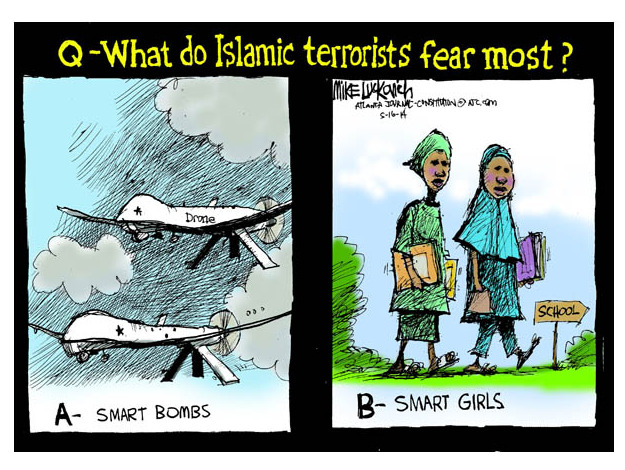
After 9/11, there was a massive uptick in hate crimes against Muslims… and Sikhs, too. It was a tough time to be brown, generally. Racism was on open display, as prominent Muslim voices were routinely asked to condemn Islamic terrorism before being allowed to speak on even irrelevant topics. Terrorism was a burden carried by all Muslims in the West, and that was incredibly racist of all of us to allow this generalization to take place.
After October 7th, there has been a significant increase in antisemitic hate crimes as well. It is a tough time to be Jewish. What I see as different between the two rises of hate crimes is that the link between Islam and Jihad as it was expressed by groups like Al-Qaeda is not widely accepted in the Muslim community. Mosques across the world do not hang the flag of ISIS in prominent locations. Muslim summer camps across North America do not teach kids the importance of aggressive Jihad as a fundamental component of their belief system. There is no broad institutional link between Islam and terrorism; hence, it was racist to make that the underlying ideology of American foreign and domestic policy. Zionism as the belief in the necessity of a specifically Jewish ethno-state has no such exculpatory claim. It is perfectly reasonable to criticize religions like Islam (and Christianity, for that matter) for its treatment of women since there is a textual basis for this, and there is an amazing feminist movement within Islam that is attempting to address that. So too should it be reasonable to criticize Judaism for its widely-held belief in a uniquely Jewish state (and there is a great anti-Zionist movement within Judaism as well).
This is obviously a very complex and fraught comparison, but I think it has merit. It is perhaps unfair to single out Israel as The Jewish State when there are many Islamic States and many of them are behaving badly, notably Sudan with its own genocide in the works, that do not elicit the same response as Israel. If there were multiple Jewish states with diverse sets of policies, it’s easy to see that pinning the acts of Israel on Jewish people generally would hold a greater degree of antisemitism. Iran can claim to be the representative of Shia Islam, but there are other countries with high Shia populations and many in the Shia diaspora that vehemently reject Iran as their religious nexus and this is easily recognizable as valid differentiation.
However, the way that Israel as a homeland functions as part of Jewish belief, there can’t be multiple Jewish states. Israel is the Jewish state, and while Islam has political methodologies embedded into its belief system, these can be interpreted in many different ways across a variety of localized cultural perspectives. There can be only one Israel, and maybe that’s unfair to the Jews, but that’s kind of the point of this article. Whether we like it or not, Israel is the sole state representative of Judaism.

The difficulty of combatting the rise of antisemitism is thus how to differentiate Jew from Israel when so much of the Jewish religious institution has support for Israel baked into it. If a Jewish representative is giving an impassioned speech against antisemitism in a synagogue with an Israeli flag hanging on the wall, inconspicuously wafting behind them, how can we take that seriously? If a Jewish summer camp teaches children that Israel brought civilization to an untamed wilderness, and this is the legacy of their people and a formative part of a young person’s identity, how do we then cleave that child from the acts of their homeland? The concept of dual-loyalty is a pernicious form of antisemitism, but it is not helped by a socially-accepted establishment that embraces Israel as part of the Jewish faith. How much antisemitism would there be in Canada right now if the Jewish people and communities across this country rejected Israel as much as our Persian neighbours reject Iran?
I was listening to a “debate” between podcasters Daniel Maté and Jesse Brown, two Jewish men of differing views on the threat to Jews in Canada. Brown’s thesis is that antisemites do not need an excuse to hate Jews and that these people have found their home in the pro-Palestinian movement. If we bring up subjects like a Jewish embrace of Israel as a reason for antisemitism, then we are blaming Jews for their own victimization. To an extent this is true; a random Hasidic man who is assaulted walking down the street is a victim regardless of his beliefs. We can’t lock up Japanese immigrants in internment camps because of the actions of a government they walked away from. However, if there was broad and vocal support for Japan and its actions during World War II among Japanese-American communities, I still wouldn’t suggest locking them all up, but it would make sense that there would be consequences to that.

To be clear, this does not excuse violence against Jewish people, their places of worship, or their businesses. To understand the reasons behind bad behaviour is not to condone it. I can understand the reasons behind both terrorism and even the Palestinian genocide, so I don’t think it’s taboo to explore why antisemitism is on the rise. But people have a hard time with nuance, so I’ll repeat myself: this stuff is all bad. Beyond the fundamental inhumanity of antisemitism, it is also antithetical to getting the Jewish community to separate itself from Israel since groups that are attacked tend to close ranks rather agree that the position of violence is offering reasonable points.
It is critical we address the rise of antisemitism. I agree with Brown on that point. We cannot have a repeat of Japanese internment camps – not that we’re anywhere close to that in Canada, but the general idea remains. I disagree that the blame lies with the pro-Palestinian movement because this violence does not exist in a vacuum. It would be like blaming the Allies for the negative attitudes toward the Axis. It is right and good to fight against fascism and genocide, today as it was back then. It is also right and good to distinguish the individual from the institutions, even as some individuals may support that institution. We’re all still human.

I am not Jewish, so I can’t contribute very much to the internal dialogue that needs to happen within that community. Much like the feminist movement within Islam, the voices of outsiders are not worth very much in which direction the current will end up shifting. However, I am Canadian, so I do get a say in the direction of this country. I don’t like seeing a rise in hate crimes, and I don’t see the current siloed approach to addressing it as effective.
In the same way that I don’t think a meaningful conversation about jihadi terrorism can exist without addressing Western intervention in the Middle East, so too I don’t think a meaningful conversation about the rise of antisemitism can exist without addressing the genocide of Palestinians. Saying the terrorists simply “hate our freedoms” is the equivalent of saying that antisemites “don’t need an excuse.” Arguably, the violence against Jews today is a continuation of the terrorism that came to our attention on 9/11 as it is an on-going response to the Western intervention and imperialism in that region. There is a vacuum of accountability in the West manufactured by ignoring and denying our own role in perpetuating violence and repression, and the compounding progression of that global gaslighting campaign has led us to where we are today. Even more than a conversation, action is required on both antisemitism and the genocide and ethnic cleansing in Palestine, and I think they need to happen in tandem so we don’t make the same mistakes we made in the past.
Canada recently joined a baby-step of an international boycott on goods coming out of the illegally occupied West Bank (despite our lengthy history of condemning the Boycott, Divest & Sanction movement because it “demonizes Israel”, but I suppose one day everyone will always have been against this). This could be done in cooperation with the pro-Palestinian movement as well as one or more of the many Jewish groups that are vocal and active in condemning the actions of Israel. It could be done in repudiation of the antisemitism at home, reinforcing the distinction between the Jewish population and the state of Israel. Politics is not separate from communities. The personal is political. I wish we had politicians that could address that bridge, but we do not. I hope that we as citizens can try our best to do so on our own in the interim.

 Blog for Chumps