Those in the West live fairly comfortably in democracies. Sure, some of us are technically constitutional monarchies, but our overall vibe is still pretty democratic. Partisan politics always seem to claim to be the voice of the people and not the voice of the king, so there are at least overtures to democracy. And yet, we still tell kid stories that revolve around princesses. Disney has a veritable pantheon of them and isn’t seen as an enemy of democracy (barring the inanity that is the state of Florida). Celebrating someone in the queer community is to call them a “queen.” The monarchy remains embedded in our culture across the spectrum, from the capitalists to the queer dissidents.
The usage of these monarchist tropes certainly don’t aim to be anti-democratic. Disney princesses rarely do any actual governing or promote policy measures; they typically go on adventures, solve mysteries, and sing songs about how many thingamabobs they own. If there is a queen or king involved, they may even have a short temper you certainly wouldn’t want in an autocrat, but it’s never viewed in that context – they’re just a mean ol’ parent who doesn’t let their teenage daughter have any fun! The monarchies in these stories are about as apolitical as you can get.
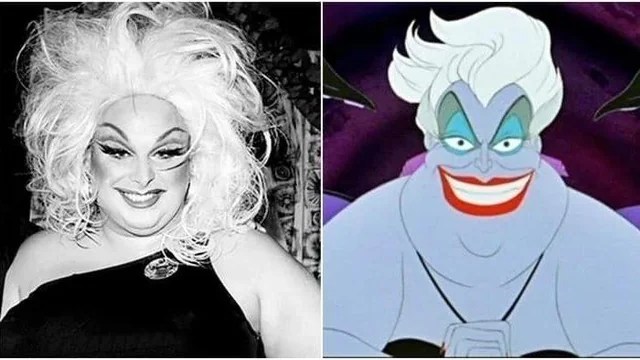
So why have the story told through the lens of monarchism at all if its function as a form of government is completely irrelevant to the plot? Why is Ariel a princess when she can just be some random girl with an overprotective father? The same story works if they’re poor and Triton is a working single father who is trying to raise his daughter alone, but she isn’t focused on taking care of herself or her future; she’s focused on hoarding useless junk. These stories don’t need monarchism, so why romanticize a form of dictatorship most countries killed a whole bunch of people to overcome? Monarchies are bad, you guys! Remember? Remember how America fought a war and France killed a lot of people to get rid of them? Democracy and monarchy are antithetical toward one another, and we’re supposed to love democracy!

Edmund Burke is the father of modern day conservatism, and he was a staunch opponent of democracy in his time and opposed the French revolution. He recognized the failures of the contemporary monarchies that were being resisted, but believed ultimately that there still ought to be an elite governing the masses, and if the current group were a failure, then they were just the wrong kind of elites. Monarchism, and the aristocracies that are associated with that type of rule, are elites who dictate how the world ought to be run. When viewed in this context, we can see that this ideology can actually be applied quite comfortably to our capitalist system. The elites are the rich, and it is right and good that they influence our democracy, because they are better than the rest of us. They’ve proved it by being richer than us in a competitive market. They won; we lost. They earned their place in the aristocracy, and therefore their voices count more than ours. Forget democracy, we shall be governed by those who can buy out the most of their competitors.
This is why queer people call each other “queen,” to infer that their peer is an elite. Queer people are often downtrodden and dispossessed, and reclaiming some power by stealing the language of elitism is a way to overcome that. It could even be argued that the usage is satirizing the idea of elites, as drag satirizes gender and patriarchy. I expect each person who calls out, “Yas Queen!” has their own reason for doing so, but at its core, it is a reference to an elite, whether ironic or genuine. I’ve also started seeing people refer to men as “kings,” and this trend does not appear to have any of the irony that it really ought to.
Similarly, with no hint of irony, stories about princesses create an image in a child’s mind that there are groups of people who are simply better than others. If there’s a dragon or a mer-witch, then thank God we have a class of people capable of handling them. We wouldn’t want to trust that kind of responsibility to the peasants! Readers naturally empathize and insert themselves as the hero of the story, and so they believe themselves to be that class of person: it doesn’t matter what station in life you’re born into, when you read a story with monarchical characters, all of a sudden, you’re an elite too. And if you’re not, you could be! Just say your prayers and take your vitamins, and by God, maybe you’ll be rich some day too!

These stories naturalize power imbalances. That’s why monarchism is still included in these “tales as old as time” despite being irrelevant to the story. Kings historically claimed a divine right to their rule, and while that trope has fallen out of fashion, cultural monarchism still seeks to naturalize the righteousness of the elites of today’s society. Our modern princess stories might have empowered women wearing the tiara, no longer requiring to be saved, but it’s the empowerment of the Girl Boss who still functions within an unequal capitalism. She deserves to be the She-E-O; she’s better than those seamstresses making fast fashion out of Bangladesh, and don’t you question it! If you are born into a situation where succeeding in capitalism is essentially out of the question, well, you’re just destined to peasantry. Accept it. Your betters will make all the important decisions about your life. Here’s a fun song about living under the sea to explain why.

Democracy necessarily requires equitable access to the functions of power. If someone isn’t able to have their voice heard, then that’s not a democracy. These stories are not subtle about being anti-democratic: they literally have kings and queens in them. We celebrate and romanticize the monarchy because some groups of people benefit from undemocratic structures cementing their neo-aristocratic roles as pseudo-lords within a plutocracy. To even compliment someone as a king or queen is to normalize that these hierarchies are natural and good, and that we ought to celebrate whatever power, however small, we have within them. Who benefits from people thinking that humanity is divinely segregated into natural categories? Certainly not the vast majority of us.
To call me “queen” is to call me tyrant. To idolize a princess is to deify the robber barons. Perhaps instead, Yas comrade!
 Blog for Chumps