If at first you don’t succeed, try, try again.
On its face, the maxim of never giving up is fairly straight forward and positive. Life is hard, and quitting doesn’t move you forward. Simple. Easy. No notes. However, being pointlessly analytical is what we do here, so there will be notes regardless.
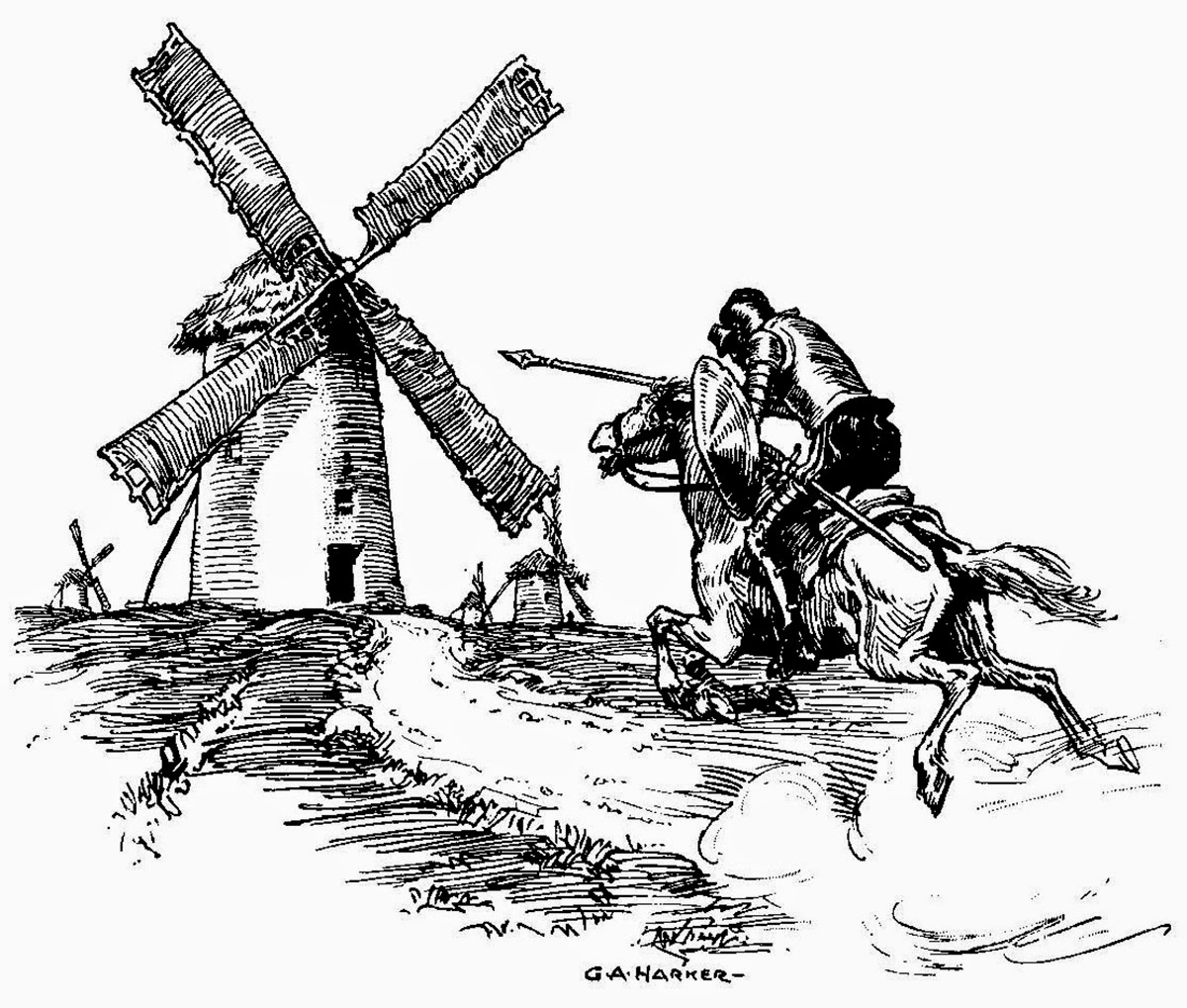
This maxim has undergone some helpful iterations for our purposes here: comedian W.C. Fields cleverly rephrased it as, “If at first you don’t succeed, try, try again. Then quit. No use being a damn fool about it.” This approach offers further practicality; what’s the point in carrying on when there are very likely better things to do with your time? One who only ever tilts at windmills will never slay a real giant. However, there is a tragic, quixotic romance to a life spent fixated on a single task but never quite achieving it. This begs the question, is it the effort or the success being championed by this arbitrary New Year’s adage?
If you make a pass at someone that you’ve got a crush on and they reject you, there is a clear failure and an opportunity to try, try again. However, is this an opportunity for further clichés about fishes and the sea, or do you continue to try to woo that same individual? In most other instances, further attempts are dedicated to the same task until one achieves success, but with dating, the obvious alternative is bringing your courtship to the feet of another. Tasks are often amorphous and don’t always intuitively direct where efforts ought to go irrespective of how we might have perceived their conclusion. If we attempt a hobby like playing guitar and can’t get the hang of it, is it quitting if we pick up another instrument? Another hobby? Even if we wanted to quit to avoid the embarrassment of being a damn fool, how do we know what that quitting looks like?
Or perhaps we fail, and in that failure, we succeed in alternative terms. Perhaps the one that got away ends up murdering their spouse in a jealous rage, or after abandoning the guitar, we pick up badminton and find an ecstasy unknown in any other pursuit. We have further cheap platitudes about blessings in disguise, and these remind us that our expectation and understanding of failure are often incomplete.

Or say we succeed in traditional terms: we successfully woo the loved one, or we nail the guitar. But then the relationship doesn’t work out because they cheat on us, or we don’t keep up the effort and lose the guitar in the attic. At what point does success bleed into failure? Is Rudy a success because he participated in a single play for Notre Dame? Would it have been an equal success if he played more games at a different university? Or if he dedicated his life to a longer-term goal beyond a single game of football? If a Rudy-esque success story never accomplished anything else in their life because of a massive concussion obtained from a late tackle, would it still be considered a ‘success’?
We attribute failure and success to an end, with varying degrees of effort as the means to achieve that end. But the thing about life is that nothing ever ends. Even after death our actions continue to have ripple effects on the lives of those we’ve touched. Both success and failure become nearly impossible to define if you zoom out to any meaningful degree. Quitting too loses some of its gravitas when you realize that it invariably leads to yet another task. Our lives are not a series of distinct instances, each with their own measurable quality, but a churning river in constant flow. Success and failure are fluid, and intermingle together almost harmoniously as we evolve and grow in ways that are often outside of our control.

As much as he is a fool, we would still admire the tenacity of our single-minded Don Quixote, just as we would still admire Rudy if he never got to play for Notre Dame. What distinction is there really between Sisyphus rolling one boulder up a mountain or rolling several different boulders up a mountain? Does it matter if he makes it to the top, or do we imagine Sisyphus happy in the effort?
Camus’s absurd hero only loses credibility if the heart isn’t in it. A child making a play at trying a new food after having predetermined it to be gross is the antithesis to effort, and some never grow out of this. Whether in success or in failure, the try, try again requires intention. All told, the outcome is irrelevant if we approach our effort in good faith.

Our original maxim, despite its superficial benignancy, is itself a quixotic drive at damming the river of life into a forced end. There are no ends; there is only trying. If you fail, continue to try. If you succeed, continue to try. Try to date whomever you please. Try the guitar or badminton. Try to joust a literal windmill. Do so with intention, or quit and find something where the intention is strongest. The ends will never matter so long as you find value in the effort.
 Blog for Chumps
Or if you don’t play for Notre Dame at least you can be Frodo’s best friend.
Yeah, but then you get killed by a demogorgon in a laboratory.
Goals are important to have, and striving towards one is admirable and healthy. Achieving a goal is called success. It may be fleeting, but it is glorious nonetheless. Working towards a goal is what we also call purpose. It is what gives life meaning.
Goals are more often than not quite ambiguous and difficult to pin down. Not many people make SMART goals in their day to day lives, so “get into shape” or “quit smoking” (typical this time of year) are the assignments we tend to give ourselves, and the so-called outcomes of these often feel like failures because of that ambiguity. A focus on the effort rather than the outcome would likely negate this, even without the SMART goals – people would focus on the lifestyle rather than the outcome.
I’m not saying goals are a bad thing, or even that “success” and “failure” as measurements are completely invalid. My point is that they aren’t as relevant to life’s meaning as the maxim suggests. Martin Luther King Jr. didn’t end the three evils of American militarism, poverty, or even racism for that matter, but he made progress and it was his constant effort in the face of majestic oppression that is awe inspiring. Gandhi considered himself a failure because of partition, and was killed by a Hindu because of it. These things are infinitely complex, and relying on them to define the meaning in our lives is going to be impossible because of that. Better to focus on what we can control – how we act in the face of what the world brings us.