Archives for category: Social Criticism

Riots and looting get a bad rap. The additional violence on top of a protest is seen as opportunistic chaos for amoral folks who are taking advantage of tumultuous times, or, for the more cynical, as the underlying and unstated value system of the entire protest movement despite their presented goals of social change and justice. In either case, rioting and looting is seen as delegitimizing protest movements; peaceful demonstration and presumably drum circles are the only valid forms a protest can take. Despite the long history of violence (even random, directionless violence) being associated with well-celebrated social change, today such ghastly displays are tut-tutted by the pearl-clutching among us.

pearl clutching

Oh goodness! Another police killing / school shooting / poisoned water supply / pointless war? I sure hope nobody has any strong emotional reactions to this!

Protesters are told to follow the example of Martin Luther King Jr., who once said:

“And I must say tonight that a riot is the language of the unheard. And what is it America has failed to hear? … It has failed to hear that the promises of freedom and justice have not been met. And it has failed to hear that large segments of white society are more concerned about tranquility and the status quo than about justice and humanity.”

Or Gandhi, who said:

“I have been repeating over and over again that he who cannot protect himself or his nearest and dearest or their honor by nonviolently facing death may and ought to do so by violently dealing with the oppressor.”

The use of violence is ghastly, and has problems of its own, but to deny its history is to deny the history of protest.

Why might that be? Well, effective protest serves as a disruption. ‘Normal’, as in the status quo, is deemed as harmful by the protesters, so a disruption of that normal is required to challenge it. Blockades, boycotts, and marches all serve to disrupt the economy, trade, and traffic respectively. Peaceful, non-invasive protests like holding signs on the side of the road while shouting slogans disrupts the normal routine of our day; we have to see and hear them when we otherwise would pass an uneventful commute.

pepsi protest

Let’s disrupt society’s ability to drink Pepsi! Oh, God dammit Kendall Jenner, you ruined it!

While certainly a reasonable link between the problem with normal and its subsequent disruption brings greater clarity to the protest in general, it is not out of the question for a little randomness to be thrown in for the same reason that blood feuds are a thing. A blood feud is a form of collectivist justice: if one member of a family commits an infraction, everyone in that family is guilty because they exist as a collective rather than as distinct individuals. Society has become more individualistic since the times when blood feuds were more prevalent, but the idea has not gone away. Consider this: George Floyd was not killed because he was George Floyd, and Derek Chauvin didn’t really kill him as Derek Chauvin. George Floyd was killed because he was a black man, and Derek Chauvin killed him because he was an arbiter of normal. This then is not an individualistic murder, but a collectivist crime. A crime against all of black people by the enforcers of normalcy. The response then, makes sense as the collective of black people and those who stand in solidarity with them lash out at all of normalcy in response. Normal kills black folks, so normal is to blame. Let’s smash up normal: hence, riots and looting. And obviously it doesn’t help that the police continue to brutalize protesters which then exacerbates the blood feud further.

It’s worth pointing out that the size of disruption seems to have a golden mean of effectiveness. A small disruption doesn’t really affect much change (for example, changing your social media profile), but blowing up an Ariana Grande concert is clearly too far. Blood feuds tend to demand blood for blood, but I believe we’ve moved far enough beyond that ideology that we’re no longer moved by this bloody level of disruption. Are riots and looting too far? Well, considering that this is a response to many on-going deaths at the hands of police, we then have to ask, how much property damage is equivalent to the life of a human being? Trump put the number at around $450 billion when refusing to provide any kind of consequences for the Saudi dismemberment of Jamal Khashoggi, and, while I haven’t seen any numbers, somehow I think the looters have a long way to go before they reach that ceiling. Trump, of course, is using harsher language to describe even the peaceful protesters than he used for MBS after the Khashoggi dismemberment, but I suppose that’s because he’s not personally profiting from the BLM movement. Or maybe he just needs vapid flattery, who knows?

orb

Could have been something to do with this orb. Remember the orb? I don’t think that mystery ever got solved…

The point is, the riots and looting are not separate from the peaceful protests, but are an extension of the same disruptive motivation that propels all protest. When these things happen, ideally we would reflect on normal. How does normal impact or harass others, or maybe how does normal benefit us, or even just leave us alone? Those who are impacted or harassed are quite familiar with the problems of normal; it’s those who are not who typically need to reflect. Once the justifications are assessed, then we can reflect on whether the level of disruption is appropriate to the level of impact.

Reshaping normal is thus the goal, and normal is not individual. Individual transgressions do not result in riots because riots are by definition collective, which requires collective response, and not the reprimand of “a few bad apples.” Ibram X. Kendi suggests focusing on policy changes, and the individuals will follow. What are some policy changes that might reshape normal into something less destructive towards people of colour? Well, they’ve already made some suggestions; we can start there.

Those who are less than enthusiastic about sports are often confused by the vehemence with which a true fan can celebrate their team. A team can change the entire roster of its players, can change the coach, the owner, the logo, can change every single facet of itself, and the fan will continue to cheer without question in a complete validation of Theseus’ ship. This is because the fan is connected to the idea of the team rather than any tangible aspect of the team itself. The critic is baffled as to why the fan would bother with something that is so incredibly alien to them. The answer is simple enough, however: the fan sees the team as part of their tribe.

Sports television is very aware of this. Pre-game shows often deliver the stories and travails of the players and teams as a whole. Relationships will be analyzed and champions will be celebrated. It’s all gossip, and gossip is how we navigate tribes. How is Susan doing? Watch out for Bill. Did you hear what happened to Karen? Gossip is what keeps us safe and connected in our communities; it’s a natural human attribute. When we talk in-depth about the stars and heartbreaks of the previous night’s game, we are engaging in communal gossip.

The thing is, your sports team is not your tribe. The stress of a close game and the pride toward a favourite player kindles deep instinctual drives, but modern sports are “entertainment.” You can’t call any of your team for emotional support during a difficult time. The success of the quarterback does not bring food back to your table. A loss has no concrete consequences. Knowing who is a dangerous player will not keep you safe. Fandom is not so much the connection to an idea of a team, but to an idea of a community.

world series tickets

I value baseball over having a life partner! I’m sure I’ll be able to count on the Red Sox in turn to help me cope with the emotional devastation of losing said life partner

There are merits in the celebration of athletic prowess and remarkable skill. An argument could be made that sports facilitate community by acting as a shared interest among friends, and that’s fair. However, sports as an interest is then interchangeable with any other interest, and the accompanying gossip becomes meaningless.  If a group subscribes to the full tribalism of intense fandom, then it is in the same danger as described above. The importance of interdependence and mutual support in a tribe could easily be lost in shallow relationships centred on extrinsic factors.

We are, all of us, literally all of us, living in a time when the necessity of our tribe is morbidly obvious. Communally-deviant behaviours such as hoarding, ignoring physical distancing measures, neglecting essential workers, and spreading disinformation are representative of large swathes of the population feeling disconnected from the real-life human beings that surround them. We’ve been so focused on our false tribes for so long that we’ve forgotten the value of our neighbours.

covid toilet paper

We seem to recognize the destructiveness of wealth hoarding when the wealth is toilet paper. Wouldn’t it be sad if there were far worse forms of wealth hoarding taking place that people go to great lengths to justify? But I digress…

Whose shoulder can we cry on? Who will drop off groceries for us if we’re sick and unable to go out? Who will help us financially if we’re out of work? Who will mourn us as we lay dying, even if from afar? These are the people who matter. These are the people who have always mattered. None of them are on the television hanging in a sports bar. Let us no longer be distracted by idolatrous practices meant to profit off our deepest human instincts.


Movies shape our view of the world. We are socialized not just by our parents and peers, but by the stories we consume, and movies are one of the most predominant storytellers of our current era. This makes the content of films of paramount importance. We can learn courage and determination from John McClane. We can learn responsibility from Spider-Man. We can learn about changing the world from Neo. Our virtues are shaped by the heroes we learn to emulate, since the very practice of storytelling puts the protagonist on a pedestal. A generation growing up on anti-heroes is likely to be as cynical and morose as their paragons, learning that these are admiral qualities to embody.

Rick

Rick is genuinely a bad and miserable person. The show is quite clear on that. Fans struggle to emulate against him rather than from him because of the nature of the protagonist pedestal. Similar things can be said of Bojack Horseman. I know these are TV shows. Shut up.

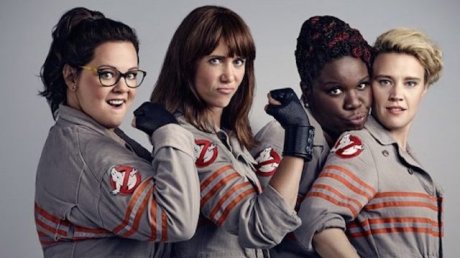
SJWs seem to be aware of this, and so a new spat of movie trends throw women and ethnic minorities into the protagonist role, allowing these demographics to see a hero that they can relate to. This then allows black youths to learn responsibility from Miles Morales rather than Peter Parker. We now have Katniss Everdeen to teach us how to be fearless, and Melissa McCarthy to teach us how to bust ghosts.

This seems to anger some people. Those who think that women can’t bust ghosts or that black youths can’t be responsible decry this new trend as ruining film. There are those who, regardless of quality, think that these kinds of movies just shouldn’t even be made. Soon, films won’t have white men at all, and it’ll be the great replacement all over again! It’s that cancer Feminism running amok once more!

Ghostbusters

What’s next? A remake of Leprechaun with a female leprechaun!? UNACCEPTABLE! Leprechauns can’t be female!

Let’s take a deeper look at our lessons from these common tropes. We might learn to be responsible, but it’s a responsibility to our tribe at the exclusion of the Other. We might learn courage, but it’s a courage to defend the normal rather than a courage of standing up as someone different. We might learn to change the world, but if we’re changing it into an exact copy of what has come before, this type of change is more an enforcement of the status quo rather than its repudiation.

Is this trend truly feminist? Carol Gilligan, a notable feminist, would likely disagree. All of our ethical systems since the ancient Greeks have been philosophized by men. And not just any kind of men, but men who grew up in societies that did not care about women at all. This means that these ethical systems that they devised were not informed by the situations of women whatsoever. Gilligan decided to ask the question, what if we considered women when thinking of ethical systems? Thus arose the ethics of care.

The ethics of care is born in contrast to what is typically called the ethics of justice. The ethics of justice represent systems of ethics that see moral situations in objective terms. There is a right answer, whether that rightness is determined deontologically or consequentially, and that right answer is determined in the abstract. The ethics of care seeks to find rightness in the salvaging of relationships, of meeting needs, and existing in concrete situations that are determined by the individuals and the relationships they share. While Gilligan does not dismiss the intentions of justice, she does seek to imbue care into that system in order to incorporate women’s perspectives into the ethical discourse.

in a different voice

This is coming from a book, one of the least predominant storytellers of our current era.

If this is a feminist ethic, then very few of these movies are actually feminist at all. The latest Terminator movie (Dark Fate) perfectly encapsulates this distinction. The villain is literally an unfeeling machine that will not stop. Regardless of how many Hispanic women you throw into this movie, it is a film defined by a relationship that cannot be repaired. Patriarchal ethics exist in a Manichean dichotomy that pits absolute, rigid and uncompromising evil against absolute (though occasionally nuanced) good. Feminist ethics cannot exist in this universe because the way the villain is written. If these kinds of stories are what shape our virtues, when we look at our universe, it is much easier to see our own antagonists as dogmatically inflexible monsters who cannot be bargained with. What this means is that Doctor Strange is actually more feminist than the 2016 Ghostbusters film because it conceives of a solution wherein the villain (after some degree of coercion, sure) settles their score through a dialogue. The villainy of the ghosts allows no such relationship.

The socialization that these kinds of films are expanding is actually patriarchal in nature. They indoctrinate their viewers into an ethic of domination, of a good guy with a gun ultimately crushing a bad guy with a gun, but now the good guy can be a good black woman with a gun. Those angry with these films correctly assert that they are propaganda, as all stories are propaganda for the ideology that underlie them, Die Hard as much as Into The Spider-Verse, it’s just that the propaganda isn’t feminist.

Post-Script: For those who read the title and expected a listicle, and still made it this far, congratulations on your attention span!