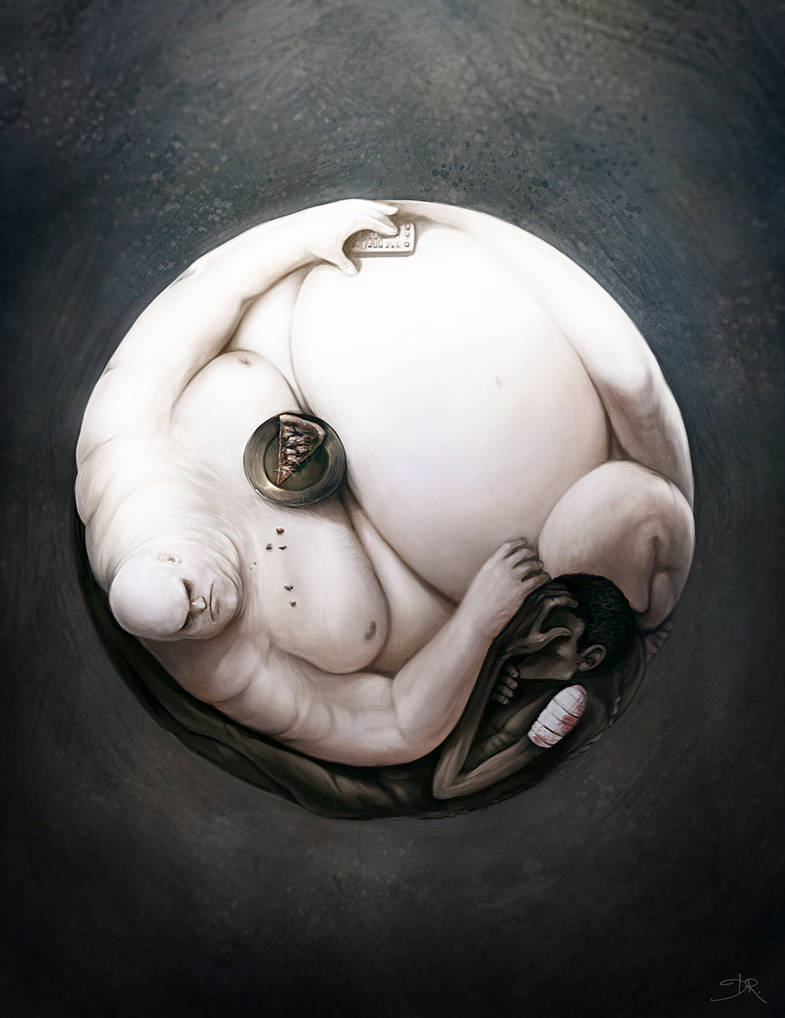
After a certain age, we tend to valourize our tribulations as badges of pride. Our struggle needs to matter, and so we glorify it. When we walked to school, it was through five feet of snow, and it was uphill both ways. Now these lazy fucking kids with their global warming barely have to deal with a frosted sidewalk, and they even shifted the laws of the universe so that our proud Escher-like omnidirectional hills have become laughable fantasies.

Of course, it goes beyond the gentle facetiousness of a school commute. You may have heard it said that, “I got beaten as a child, and I turned out okay!” This type of language is used to dismiss corporal punishment in this example, but often is applied more broadly to dismiss criticisms against the status quo more generally.

What does it mean to “turn out okay”? This of course varies. Our protagonist could hold bitter resentment against their father and still claim that enduring corporal punishment was a net “okay”. Is the PTSD overwhelmingly debilitating? No? Then it’s fine. To be fair, the majority of children who receive corporal punishment do not suffer long-lasting psychological trauma because of it, but how many of them maintain the belief that it’s okay to use violence on children to socialize behaviour? How many take it one small step further to believe that violence is justified on anyone in the assertion of legitimate authority?

We are nothing if not topical here at Blog for Chumps!

I think we have a better understanding of the phenomenon of “turning out okay” if we replace the word “okay” with the word “normal”. It was “normal” back in the day to whoop misbehaving children, and this normalcy carries forward in its defenders today. This is where we can see the generalizability of this attitude. “Every older woman was a homemaker when I was a kid, and I don’t hate women today, therefore it’s normal for women to maintain domesticity.” We are basically defending our socialization when we say we turned out okay, in whatever form our “okay” looks like.

If corporal punishment is normal, its socialization is what you could call systemic corporal punishment-ism. I’m using such awkward language to draw a parallel to the systemic socialization of female domesticity which has its own fancy name: patriarchy. You may have heard of it. Our attitudes toward corporal punishment, toward women, toward racialized groups, toward the LGBT community, etc., are all socialized from a young age, and we don’t see the systematization of this process for one, because we’re children, and two, because it’s “normal”. Normalcy may have its problems, and that’s why we don’t say we turned out “amazing”, but it’s at least “okay.” And “okay” is tolerable, so all these whiny progressives are just complaining for the sake of complaining.

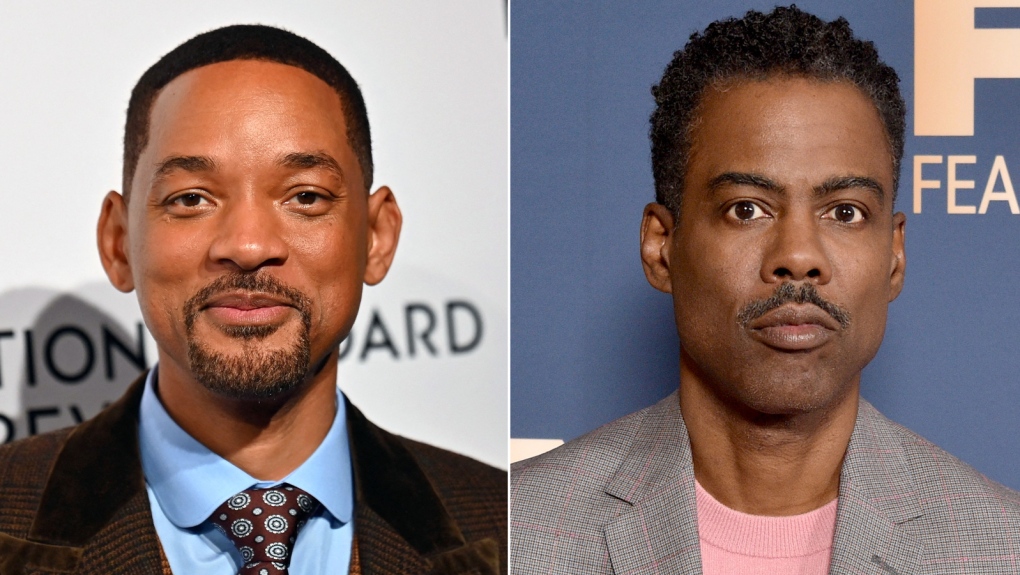
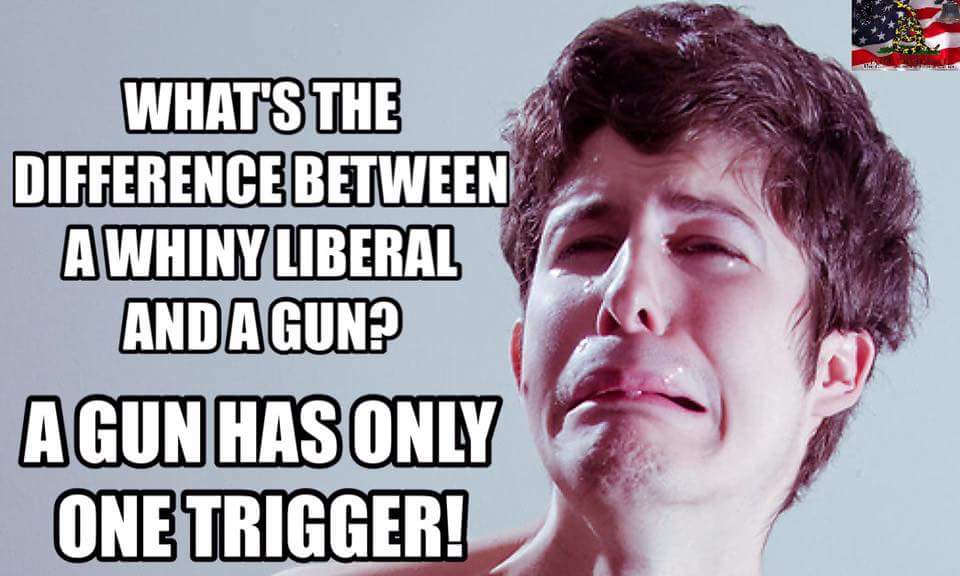
What they have in common? Neither of them wear shirts, apparently…

Normal works out okay for some people. It even works out wonderfully for others! Unfortunately, there are those who actually suffer greatly under it. The young girl who grows up believing that abuse is the “normal” way to receive love, or the young boy who grows up to mete it out. Our relationship toward violence is traditionally gendered because our roles within it are just as socialized as the violence itself: men typically commit abuse against women. It doesn’t always happen that way, but society as a whole functions in broad terms.

Our personal experiences aren’t universalizable. You may well have turned out okay! Congratulations! That doesn’t mean that everyone who endured similar experiences did too. Nostalgia is not a suitable justification for an ongoing social practice. Luckily, we have this thing called science now, and you can actually study the impacts of certain behaviours, and it turns out, physical punishment increases the risk of antisocial behaviour, depression, and substance use. A person can smoke cigarettes their whole lives and never get cancer, but it’s generally agreed upon now that promoting cigarette use in teenagers is kinda evil. Similarly, harmful attitudes, behaviours, and social policies toward marginalized groups have an abundance of literature explaining why they’re bad. Using “normal” to dictate how we organize our society really only benefits those who were benefitting from it already.

Inequity Shmim-Shmeck-Shmitty!

As easy as it is to say that our personal experiences are obviously not universalizable or that we should use peer-reviewed studies to guide our social decisions, it’s quite unlikely that my argument is going to be all that compelling to the defenders of normalcy. I’ve hinted at why already. Firstly, there’s the belief that socialization should be brutal and unforgiving. These shirtless, whiny liberals just need to toughen up! A diamond can only be formed under intense pressure after all; just look at Michael Jackson and the well-adjusted adult that he became! Everyone in the world is a pussy except for me!

This is the hazing mentality, and no matter how many freshman literally die from the experience, it is a proud tradition and it’s a fine way to purge the weak from our midst. Meritocratic survival, right? Except that if the winner of the race is the only one that’s allowed to survive, and the starting conditions differ for each participant, it’s a bit rigged, isn’t it? “Oh, but I started the race in this condition, and I turned out okay!” Again, it’s not universalizable, and we can see from science where the inequities lie. It’s not that hard to see where we can add a bit more fairness to society, and the logic used to justify why it always seems to be certain groups that lose at the race contorts itself pretty hard to avoid being overtly oppressive.

Ah yes, the production of the finest merit! And yet, it was Bluto who became president…

My personal belief is that what we consider normalcy is embedded so deeply within our psyche that it becomes a part of who we are. If we criticize the sausage-making process, we’re criticizing the sausage. The social value of “toughness” is vague to the point of irrelevancy, but being “tough” can be a huge part of who we are as individuals. I am what made me, and if I can’t point to anything concrete, that doesn’t matter because I need to feel as though my life has meaning.

If the left wants to abolish student debt, or stop corporal punishment, or give women the space to develop their own meaningful lives, and I had to pay back my student loans, got properly whooped, and Mother certainly never complained, then I might take it personally that others might not want to endure what I had to go through. Humans are very sensitive creatures, and we’re all pretty whiny when you get down to it. Again though, it’s the process and not the person. No one “has” to go through anything, and society can change to become more equitable, and maybe the suffering that has been endured in the past can be less so in the future.

Virtue ethics has been a thing for a long time. It’s about embodying certain characteristics that make someone a good person. Aristotle, who coined the whole system, advocated admiring the virtuous sage and copying their behaviour; the sage being someone who embodies characteristics that ought to be copied. It’s a bit of a circular process that certainly deserves some criticism, but it’s hard to shake the notion that there are certain characteristics that make a person more virtuous. Aristotle gave out a list, but I’m not going to focus on every single one because some of them are dumb.

I mean, you can have a look… try to figure out the dumb ones!

The thing about virtues is that they require personal sacrifice. Courage is the best example, because courage without risk to the self is incoherent. It no longer functions as a concept. Honesty, for instance, is certainly not incoherent when there isn’t any risk, but lying about something benign would usually typify some kind of pathology. Honesty is only a virtue when the sage has something to lose by being honest (we’ll call “something to gain” the loss of an opportunity to gain to keep our sacrificial theme simple). Patience is only a virtue when it would feel real good to lose our shit on someone. Temperance is literally the sacrifice of indulgence, which, if you’ve ever indulged, is a lot of fun. While loyalty is not on Aristotle’s list, it is a common sense virtue that only has value during instances of temptation; its value coming from the sacrifice associated with it. Aristotle liked to think of virtues as the perfect balance of moral homeostasis, but it is very easy to frame them instead as the subjugation of the self for the sake of a higher purpose.

Ask yourself: is this a better depiction of virtue than a soldier throwing themselves on a grenade to save their peers?

To be virtuous then, is to act for the benefit beyond oneself. What this means is that individualism is inherently an unethical philosophy, and systems built on individualism are by definition immoral. By focusing entirely on ourselves, we limit the risks we are willing to absorb for others. We may want to think of the tenets proselytized by individualism such as efficiency and productivity as virtues, but we would be sacrificing the core of virtue ethics. Personal sacrifice for the boss’s profit may seem virtuous to admirer’s of “good work ethic“, but where is the reciprocity necessary in an ethical system? Do bosses exist outside of that system? Probably wouldn’t be great if they did! What’s good for General Motors is not good for the group; I mean, unless General Motors became a collective… *cough*.

Hm. This collective may be a bit problematic.

Again, there are problems with virtue ethics. For one, they’re very tribal. Loyalty to the group may detract from perfectly good or better alternatives, for instance. Friendliness literally points to a circle of friends, and no one can tell me that the same level of friendliness extends outside of that group. For those wondering about which of Aristotle’s virtues are dumb, they’re the ones only attainable by rich people like liberality, magnificence, and magnanimity (listed as great-souledness in that weird list I found on Google). Dude made a living selling philosophy lectures to those with the means to pay for fucking philosophy lectures; he had to play to his audience. However, this illustrates very well the problems of virtue ethics as a system. Virtues develop within the tribe for the benefit of that tribe, giving them a degree of subjectivity as well as a parochialism that I certainly reject.

Our virtuous ethics; their dishonourable sinfulness

I may not be a virtue ethicist, but despite my reservations, I can’t argue with the fundamental principle that ethics require a vision beyond oneself. If we recognize this truth, then we become much more resilient to socially destructive propaganda trying to pass itself off as virtues: independence, self-interest, etc. If a character trait seems designed to prevent unionization, it probably is!

Social media discourse is a lightning rod for political alignment. The right sees it as an opportunity for radicalization while simultaneously decrying it as “woke” cancel culture where conservative voices are marginalized and red-lined. So far as I can tell, the left doesn’t actually have a coherent opinion on it; some celebrate cancel culture as establishing consequences for anti-social behaviour, much in the same way a dinner guest would be asked to leave if they loudly called another guest a racial slur. Others prefer to see a democratization of social media processes so that we could collectively agree on what the rules are rather than allow corporate moderators or the mob to determine dinner party etiquette. What I’m interested in today is the centrist position: where those corporate moderators are wildly celebrated for their autocratic role in sifting out acceptable discourse.

If only the companies that profit from polarization would do a better job of stamping out polarizing content!

Let’s let the company that profits off of polarization manage the stamping out of polarizing content!

There is, of course, reason to be concerned with the content of social media discourse. The coup in Myanmar is widely held to be somewhat to blame on social media. The rise of right-wing populist movements like Trumpism in America, Brexit in the UK, and Modi‘s government in India are linked to social media disinformation campaigns. Reasonable people agree: the echo chambers of increasing extremism must be stopped. The methods of doing so are obviously up for debate: solutions ranging from a socialist revolution against social media corporations to the libertarian hellscape where we all cackle with glee as the social media inferno engulfs our world. As always, the reasonable centrist sees the solution somewhere in the middle: get those corporations to ban and lockdown the uncouth!

Despite me wanting to write this for a long time, contemporary examples have manifested themselves for me. Facebook has blocked Russian state media on its platform in light of their unprovoked invasion of Ukraine, and reversed some of its previous decisions by unblocking praise for the neo-Nazi Azov military battalion – if you’re very specific in praising them for their resistance against said Russians. This is a brilliant move by Facebook because empowering far-right revolutionaries against a Russian invasion worked so well in Afghanistan! I’m not saying such censorship is right or wrong; my point is that there is legitimate criticism to be made of how the discourse is being managed, and this decision was made unilaterally by a corporation with a pretty shifty track record.

Ukraine officially incorporated this overtly Nazi militia into its military after the Russians annexed Crimea. I'm not saying invading Ukraine was an appropriate way to "de-Nazi" the country, but they clearly have some work to do with their own far right elements. Nuance!

Ukraine officially incorporated this overtly Nazi militia into its military after Russia annexed Crimea. I’m not saying invading Ukraine was an appropriate way to “de-Nazi” the country, but they clearly have some work to do with their own far right elements. Nuance!

There will always be political positions you disagree with, even find abhorrent. But allowing some emperor to dictate what is allowable discourse in a particular space is just as absurd as the coffeehouse bans enforced by the Ottomans and by Charles II hoping to rein in political dissent and “false news”. But that is the demand! WhatsApp needs to regulate the discourse on its App because right now it’s too secret! Jack Dorsey and Mark Zuckerberg need to personally review every single post to make sure that reading it won’t summon Sadako out of our phone screens in seven days. To dominate the bogeyman, we need a powerful ally, and there are none more powerful than the social media overlords.

This is bad. The right cries about social media censorship all the time, and… they’re not wrong! It’s tempting to say that it doesn’t count as censorship if the government isn’t doing it, and the irony is certainly amusing when otherwise pro-business ideologues are hurt and betrayed by business decisions against their personal interest, because, to be clear, these are businesses looking out for their bottom line. They’re not “woke“; they’re capitalists. They are making decisions based on what will make them the most money, and overt hate speech isn’t as lucrative as it used to be. But corporations are quickly becoming our new feudal lords, so their iron fist restricting the online commons is just as much a cause for alarm as any government cracking down on dissent. What makes money may shift over time if far right populism continue to grow in popularity!

The next Tickle Me Elmo to sweep the nation!

The next Tickle Me Elmo to sweep the nation!

Long time readers will know I’m not a free speech advocate. There is plenty of speech that is counter-intuitive to dialogue, but restricting spaces for speech is different than applying appropriate codes of conduct that lead to the most productive dialogical output. Cracking down on the the coffeehouses isn’t the solution. If we’re looking for solutions, it’s important to know what the actual problem is. The problem isn’t idiots who are too stupid to critically digest controversial opinions so they need to be protected from dangerous ideas, it’s zealotry. Social media has become a space for what amount to digital cults to flourish. I think cults are an important symbol for what’s happening because with cults, the people aren’t stupid, they just want to belong.

A combination of photos shows the crowds attending the inauguration ceremonies of U.S. President Donald Trump and President Barack Obama

If you think that the photo on the left has more people in it than the one on the right, you probably believe that more people voted for Trump than for Biden in the 2020 election. What’s one more alternative fact? It’s not that Trumpists can’t count, it’s that believing Trump’s lies has been imbued into their communal identity. Saying the photo on the right has more people is not a factual refutation, it becomes an ad hominem attack.

The difference between a community and a cult is an ability to question sources, whether the ideology is seen as a fundamental value and a part of who you are versus a passion or interest, and the amount of exposure a member has to the world outside of that group. It is perfectly within the realm of possibility to maintain a social media presence and adhere to the right side of that balance. Most people do it, and there is actually evidence that greater internet use is not completely driving modern political polarization. When social media cults do appear though, are they any different than cults in the analog world?

If we see the discourse problem of social media as potential breeding grounds for cults, then trying to overpower them through force is more likely to lead to Waco-style consequences rather than cross-partisan healing. If they’re cults, then they need de-programming solutions. Far-right social media enclaves are like toxic relationships, and a sense of belonging is obtained from hazing-style abuse. A lot of the reason the right is so angry despite not actually having any real political demands is because they’re constantly being told that the world hates them and thinks they’re stupid. That’s gas-lighting 101, but it sure works to keep recruits dependent. That’s why “basket of deplorables” caught on as a rallying cry for Trumpists because it vindicated the narrative of spiteful isolation that the radicalization process inured. Remember when Steve Bannon was telling a crowd to embrace being called a racist as a badge of honour? The worse the behaviour, the more isolated you are from the rest of society, the more embedded into the fold of the far right you become. Anything telling you otherwise is fake news.

Bear with me

Bear with me

As a quick aside, despite frequent “both sides” rhetoric from usually right-wing speakers, the issue of polarization is a right-wing issue. The left has been basically the same for like, over a hundred years, and even spine-chilling philosophies like defunding the police have been around since 1974. Traditional conservatives today are being defenestrated from their own parties because they’re not bootlicking fascism hard enough. Today’s right-wing is off the political spectrum. Please note my distinction between conservatives and the right-wing, as conservatives are basically today’s centrists that I’m castigating for wanting social media elites to regulate our social sphere. To be clear, cultist tendencies can and do arise on the left, but the specific issue of polarization is emphatically a right-wing issue and the increasing extremity of right-wing cults is the alarm bell I’m reacting to.

Anyway, back to it!

The solution to cults isn’t to barricade them out of their bunkers to scurry to another dark corner, it’s to open the world up to them. Give them a broader community to belong to. This is where my apologism for social media ends, because their algorithms sow divisiveness to ensure cults can never connect to ideologies outside of their own. Taiwan released a social media platform where the algorithm linked people through commonality rather than outrage, and it led to genuine solutions to otherwise intransigent problems. Immerse in hobbies or volunteer activities where there is exposure to other people different from oneself! Follow a variety of news outlets with different bents at their source, and don’t rely on social media to determine what you are presented with! When diverse groups of people connect, it pulls us out of our zealotry.

Newsies

If Christian Bale isn’t personally delivering you your news, you’re probably being radicalized.

Whether social media pulls us into a cult or not, it’s easy to agree that the current manifestation of how we engage on the internet is broken. It doesn’t have to be this way. Spaces to communicate dissent are necessary; society is far from perfect and there are powerful interests hoping to keep it that way. Spaces to disagree don’t have to be toxic or held hostage by disinformation.

Social media corporations profit by engagement, and it’s easy to get rich off passionate emotions. It’s not the platforms, it’s the platform owners. Capitalists have turned communities into cults because that’s the most efficient way to get a return on their capital. I don’t want capitalists fixated on profits to solve polarization because their solution will always be what profits them the most.

If we want a better social media, we need to determine and hold accountable the processes that produce our social media feeds. My guess is most people would agree to a methodology that fosters connection over divisiveness, that encourages people to disconnect from the digital rather than continuously pull “engagement”, so maybe people should be the ones who say how our public sphere is managed. I guess I’m one of those lefties who advocates for a socialist democratization of social media platforms. Who could have guessed!