Back in 1985, which, for you math whizzes out there, is one more than 1984, Neil Postman wrote a book detailing his fears that the authoritarian dystopia featured in the novel 1984 was not nearly so prophetic as the Aldous Huxley novel, Brave New World. It was titled Amusing Ourselves to Death, and it analyzes the dizzying amount of information glutted upon us by television at that time. The thesis of the book is that the medium through which an idea is communicated intrinsically impacts the very content of that idea. His formative example is that one cannot communicate deep, philosophical dialectic through smoke signals.

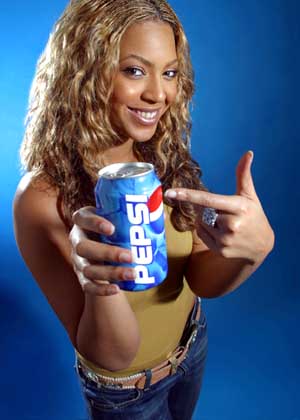
Postman then goes on to describe the greatness of the written word. One of his arguments is that typography necessarily requires statements that bear an inherent truth or falsity. For example, an advertisement that claims, “Drinking this beverage will make attractive people desperately want to have sex with you” is either true or false. Compare that to an image of a celebrity holding a beverage which is neither true nor false, but empty of any real content.
PEOPLE KNOWLES PEPSI

“Beyonce is holding a beverage and pointing at it.” That is the textual equivalent to this image. Doesn’t work so great in text, but as an image it conveys something beyond rational argument.

Images, and television which is simply a series of them, don’t convey truth but rather emotion. Beyonce holding a Pepsi and pointing at it makes you feel a certain way, and Pepsi is hoping that feeling is going to be associated with their product. The two ways of communicating, differences innocuous at first, are radically distinct. One necessarily requires rational argument (however blatantly absurd the propositions within it may be), the other requires entertainment value.

Postman goes into significantly more detail than I have here, and offers many more examples, but I just wanted to give an idea as to how the medium of an idea affects the type of communication available within it. The written word requires context and logic; television requires quick cuts and soundtracks. However, 1985 was a long time ago, and communication has come a long way. How does the medium of social media define the content of ideas within it?

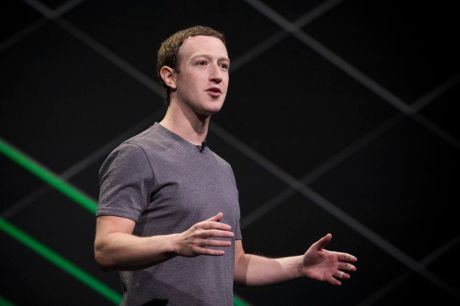
Those familiar with this blog will know that I have shown many different limitations imbued within the communication framework of social media, but I want to discuss one thing further that is quite topical in today’s news. If you’ve been paying attention, you’ll know that data firm Cambridge Analytica gathered information on 50 million Facebook users without their consent (stole it, hacked it, whichever), and then used that information to aid both the Trump presidential campaign and the Brexit Leave campaign. Social Media is notorious for selling its users’ data to advertisers, so allowing it to be harvested for political gain, regardless of consent, is not all that surprising.
mark-zuckerberg-oculus-connect-venues-concert-music-7505

By reading this blog, you are telling whichever organization that’s tracking your online habits that you are a chump. Sell that to the Russians, Zuckerberg you pasty-faced twat!

In addition to this, Twitter tends toward fake news, and YouTube’s algorithms tend toward conspiracy. The explanation for this seems to be that far-fetched ideas are more entertaining, and thus receive more hits. Getting more hits means it’s more popular, and popular things receive more attention from data algorithms. Conspiracy nuts like InfoWars can take advantage of this, and get away with promulgating stories like Hillary Clinton and the Democrats are operating a sex-trafficking ring out of a pizza parlour. Bullshit sells, and so the owners of social media allow this manipulation to dominate their programming because social media is ultimately a business.

Which brings us to how the medium of social media determines the content of the ideas within it. Social media are owned by monopolies that make their business by harvesting information that people willingly give them, and then manipulate those people based on that information. A collection of Facebook ‘likes’ can predict personality better than a person’s spouse, and that information is owned by an amoral, profit-driven monolith. Those who communicate within the medium of social media are inherently being driven by behind-the-scenes machinations of whoever has the money to do so, be it advertisers, political parties, or foreign influences. The content is inherently bent, the longer we participate. It is no longer our message, but becomes that of another.

This is not entirely new. He who owned the printing press determined the content of its papers. The oligarchy that developed from media consolidation owns American news media, and they determine what we consume in traditional media. The difference with social media is that we are the content creators. The manipulation of communication has become far more intimate. We determine what is produced, therefore we must become the thing determined by others.
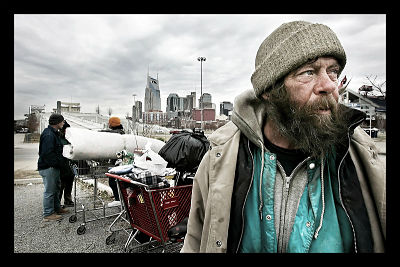
“Not In My BackYard” is a sentiment among the middle class that refers to their liberal recognition that yeah, I guess we should probably do something for the poors, just so long as I never have to see them, interact with them, or have any cognition that they even exist. Poverty works best as an abstraction in the mind, a reminder of how blessed we are, rather than something concrete and immediate that maybe we ought to deal with. The homeless, to quote former British Finance Minister Sir George Young, are “the people you step over when you come out of the opera.” They shouldn’t be your neighbours because they don’t belong in your community. NIMBYism is the reactionary backlash when the middle class fantasy of pristine civilization is disrupted by evidence-based policy that says class integration promotes social mobility. It’s all well and good to have, say, detox facilities, but it is imperative that they are placed in the neighbourhood where drug dealers will be beckoning to their old clients through the windows. My sense of civilized entitlement demands it.

poverty_us_opt

I will help you on the condition that you never leave the situation you find yourself in, AND I don’t have to see, hear, or smell you. Deal?

However, pristine middle class civilization is just a fantasy. To continue with our example, drug use is still prevalent in middle class neighbourhoods. In fact, because of the willful ignorance, the situation could even be considered worse. South Vancouver is a middle class neighbourhood that has 1 in 9 deaths due to drug overdose per 911 call. Compare this to the Downtown Eastside that has 1 overdose death in 29. There are certainly more deaths overall in the DTES, but when aid is required, that neighbourhood is flooded with resources and education that is forbidden in South Vancouver due to class anxiety and NIMBY hand-wringing. Pretending that substance abuse, domestic violence, child neglect, and all of the other problems that “Other People” have don’t exist in the bubble you’ve created for yourself is harmful to this “perfect” community because it prevents needed supports from being implemented that might help those who are already in your “backyard.” Never mind those who are seen to be invading it.

FINAL-1-1024x724

Nobody invited you, shadow people. Stop harshing my buzz!

Let’s assume for a moment that we’ve created a neighbourhood where no poor people could dare enter. A gated community that never has to worry about property devaluation due to social justice because no politician would ever slight this demographic: an upper class neighbourhoodWe’ll also assume that they don’t want social resources in their neighbourhood for the same reason as the middle class; they don’t want to be conscious of class inequality. Except Sir George Young is upper class, and he still had to deal with the homeless because people generally don’t spend their entire lives in their backyard. Sometimes they go to the opera, and if you don’t want people stabbing you in the junk as you step over them, you probably want to make sure “those people” have the best resources available to prevent that junk-stabbing moment. As it turns out, integration does pretty well for that sort of thing. Like the detox housed right next to the drug dealers, those stuck in substandard social situations with all the compounding effects of crime, reduced access to health services, underfunded education, etc. will be worse off than if they were in a different environment with better social determinants. For like, really obvious reasons!

What might reduce this NIMBY attitude? Wolfenschiessen, a small town in Switzerland, was asked in 1993 if they would accept a nuclear waste repository in their town, and a slim majority of them said yes. Later, some economists surveyed the town again, asking if pecuniary compensation would sway them further still. This lead to the approval rating dropping from 51% to 25%. Even increasing the compensation did nothing to change their new NIMBY attitude. Being part of a community requires universal responsibility for that community. Accepting social burden requires a connection to that community, and a culture that commodifies everything, even civic responsibility, will be doomed to collapse into itself as more and more neighbourhoods embrace NIMBYism at the cost of the whole. What is required is a reduction in libertarian individualism, and an increase in communal relationships.

social-studies-lesson-14-citizenship-lessons-tes-teach-bristol-community-health

There! Much better. Hold up, there are still shadow people! God dammit!

We need to start seeing our neighbours as our neighbours. Just because someone doesn’t live next door doesn’t mean they do not belong. A community is necessarily inclusive of everyone within it. Let’s not abandon ourselves to segregated ghettos. At no point in history has that ever been a good idea.

Post-Script: It’s a good idea to mention NIMBY attitudes against real threats to the community, such as poisonous industry near water supplies or hell, even nuclear waste sites. The difference is everyone agrees that things like detox facilities and homeless shelters are a good idea; the argument goes against where to place them. Pollutants are being condemned specifically because they destroy their surrounding environment, but they destroy the world at large as well. A global NIMBY attitude, where we collectively agree that certain developments are unwelcome anywhere, is a different story.

Another Post-Script: Class antagonism toward the poor is often racially driven. My use of “segregated ghettos” was not a coincidence. A lot of NIMBY attitude comes from wishing to avoid race integration just as much as class. You can watch Show Me A Hero on HBO for an intelligent and compelling dramatization of a real-life class integration attempt in New York to see what I mean.

The role of leadership is often left unquestioned as a noble pursuit. Leaders are heroes, heroines, paragons of virtue whom we admire from afar. Even the vicious and corrupt, those leaders who govern by fear and intimidation, they too achieve a pernicious admiration, infamy in the maintenance of their tyrannical claim. They stand above us, statuesque, leaving no choice but to look up to them.

A leader is someone whom others follow, but if everyone’s goal is the same, why not walk in tandem, side by side? Why create an exploitable hierarchy at all? Leadership bestows upon us certain privileges, and in creating that role, we dilute our common goals with aims of obtaining those privileges, abandoning our original pursuit for the sake of immodest greed. If our goals diverge, obtaining followers would require coercion, and leadership would be simple charlatanism; deception, bribery, and extortion becoming our highest virtues. If we are on common ground, leaders are an unnecessary risk. If we differ, they are charming despots, apathetic in their oppression of our autonomy.

The first justification is wisdom. Leaders are knowledgeable, and so are justified in their position. This role is the teacher or the guide who provides us with knowledge that would be difficult to obtain on our own. Yet the goal of the teacher is not to hoard their position of prestige over the student, but to give of themselves until the student becomes their equal. The goal of the guide is that one day the trail may be shared with a peer. The intrinsic hierarchy of intellectual authority is tempered by its altruistic directive toward equality.

The second justification is that of stratagem. Leaders are keepers of the big picture, overseers of the forest while others focus on the trees. However, this is not a position of power; it is a different vantage point. If everyone’s goals are ultimately the same, the overseer serves more as a conductor of an orchestra, guiding the beauty of the process. Others follow because they see their goals fulfilled, not because of any power being exerted over them. If the goals diverge, or the leader ignores the minutia of the trees at the expense of their followers, those followers are well within their rights to adopt or elect new, more conducive, leadership.

3-1-2-standard-staunton-chess-pieces-5-21184341121_1024x1024

In a game that’s mostly pawns, you think they’d have some issue with their expendability. Maybe instead of marching forward against others just like themselves, they ought to turn around and demand change from those behind them sending them to their deaths.

The third justification is the figurehead. This is the leader people rally behind. The leader as symbol. One action or event may have thrust them, even unexpectedly, into the front of the crowd. This is not a position one can seek, since it is most often an accident. They are those who inspire us, never asking for followers because their goal is not actually to lead.

The fourth justification is organization. This is the person who takes the first step. The leader who sees where progress needs to be made, and seeks other like-minded people to share in this goal. This is a leader with initiative. They are not one step in front of everyone else, as the organizer might see that a figurehead ought to be the most visible in achieving their shared goal. The organizer simply sets up the march.

The final justification is change. This leader is someone who makes a difference. The world follows the new path that this leader has laid down. This leader is anybody. To quote the historian and social activist Howard Zinn, “Missing from such histories [of social activism] are the countless small actions of unknown people that led up to those great moments. When we understand this, we can see that the tiniest acts of protest in which we engage may become the invisible roots of social change.”

A leader stands above others not because they exist in some power hierarchy over the rest of us, but because they embody one or more of these characteristics. Power within leadership is inherently coercive and corrupting. A leader is a friend who inspires us to be better; a parent who teaches us how to tie our shoe; someone who cleans up the mess, not because they made it, but because it needs to be cleaned. Or a leader can be you, making a tiny difference in the lives around you.