Conceding that the internet will never be suitable for anything other than cute animal pictures, I am giving up my raison-d’être for delivering social and philosophical insight into the nature of our culture, our universe, and our selves. People do not wish to contemplate their purpose, nor do they long for a just society if it means having to think critically about the world around them. I have failed to stop the tides, and it seems the only course of action is to give in to the mindlessness of hedonistic distractionism.

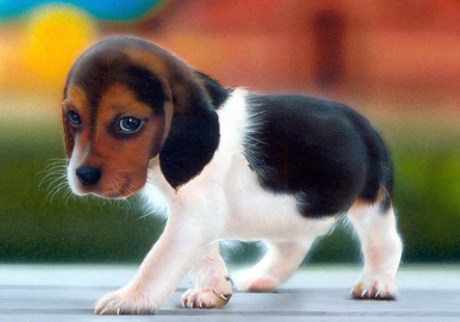
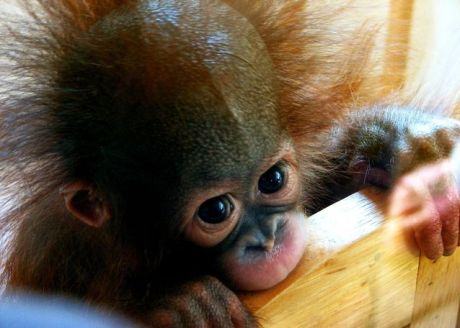
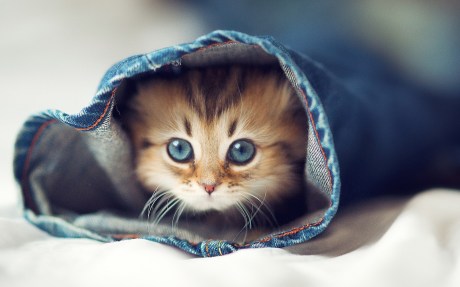
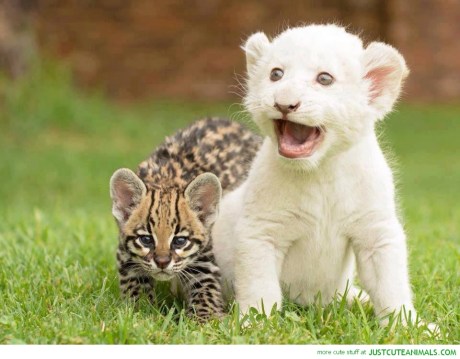
So, here is a list of cute animal pictures. They are numbered because breaking everything down into manageable chunks is the only way to communicate within the insipidness of the internet age.

1.

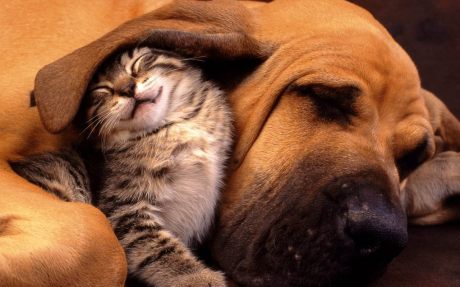
Can caring about this kitten and caring about the societal decay that surrounds us coexist? No. It's one or the other.

Convince the people of the beneficence of your tyranny, and they will wage your wars against the oppressed for you.

2.

Substituting direct human contact for digital communication has been the greatest failure of the technological age.

Substituting direct human contact for digital interaction has been the greatest failure of the technological age.

3.

Human fragility is not the lack of stoic endurance, but the fear of the inevitable. The fear of death. Only when we accept the end do we become strong.

Human fragility is not the lack of stoic endurance, but the fear of the inevitable. The fear of death. Only when we accept the end do we become strong.

4.

Is fear of the Other intrinsic to the human condition, or conditioned into us by the power elite? We may destroy ourselves before the answer is discovered.

Is fear of the Other intrinsic to the human condition or learned? We may destroy ourselves before the answer is discovered.

5.

The isolation we suffer due to the competitive nature of society leads us to believing happiness is only available through mindful exertion, rather than connecting with a greater purpose.

The isolation begotten from our culturally-imposed competitiveness leads us to believe happiness is only available through mindful exertion, rather than connecting with a greater purpose.

6.

Fighting for our differences will only serve to obfuscate our similarities.

7.

If we believe in the supremacy of our current paradigm, then history is nothing but a long series of misinterpretations. Given this trend, what merit does our 'truth' really hold?

If we believe in the supremacy of our current paradigm, then history is nothing but a long series of misinterpretations. Given this trend, what value does our ‘truth’ really hold?

8.

When the end comes, both sides will look to the other and say, “I told you so!”

Regardless of whether you think he’s the only legitimate use of Godwin’s law, Donald Trump’s success has turned politics into the real-life circus that newspaper cartoonists have been prophetically satirizing for decades. I won’t bother explaining why Donald Trump is terrible. I figure if you’re a supporter of Trump and you’ve miraculously stumbled across this blog, your literacy levels would have prevented you from progressing past the word “legitimate”, and you have already given up reading. Thus it’s a safe bet we’re all in political agreement so far.

Where we might differ is that I don’t believe that Donald Trump is the failure of democracy, but the culmination of it. Plato in his Republic decries democracy as pandering to the masses, where the success of a leader is determined not by their ability to lead or their wisdom, but by their ability to appeal to the bulk of the people. Considering the Greeks invented the damn thing, it seems that even in its infancy democracy has borne the seed of the pupating Trump.

Donald Trump is unique among politicians in that he isn’t one. Trump is heralded as a man who brazenly speaks his mind among sleazy, lying politicians. Except Trump makes just as many false promises as those sleazy politicians and flip-flops on controversial topics depending on who he is speaking to. He is more overtly racist and misogynistic than his peers, but surely that can’t be his method of success.

Donald Trump is not a politician, but a salesman, and in a political system that inherently relies on image over substance, we see how his popularity is not an anomaly but is almost predestined by our adherence to it. And Trump is an amazing salesman. A linguist analyzed Trump’s response to a simple question, and found that he uses repetition, punchy, simplistic language, and a speaking style that subconsciously elicits agreement. Again, there is little of substance in what he says, but the way he says it manipulatively charms those who aren’t paying attention.

We live in an age where advertising has the finest tools of psychology behind it. I mean, ads directed to kids have so much psychological juju that they can sell cereal that is just a few grams away from being bowls of actual sugar under the guise of being a nutritionally healthy choice. Trump knows all these tricks; how else could it be explained that several bankruptcies, a grocery list of failed business plans, and pending lawsuits don’t dissuade people from associating the name Trump with success? John Oliver dedicated an entire segment to showcasing this phenomenon, and he concluded that the brand is so well marketed that disassociating Donald from the name Trump is the optimal solution since convincing people to rebel against their advertorial mind-control is a depressingly futile endeavour.

One might argue that the stupidification of the American public is more to blame than the problems inherent to the democratic system, and this is a fair point. A nation full of well-educated, critical thinking individuals would more than likely vote for someone better qualified than Trump. Though, a nation full of baboons would vote for someone better qualified than Trump, so maybe it’s a moot point. In any case, America exists in political and economic systems that profit from the pliability of its populace, and so dedicates its efforts to enforcing that attribute. As Plato predicts, any system existing under a democracy will eventually develop into one where someone like Trump will flourish.

In a bid to overthrow the democratic system, Republicans are actually contemplating blocking Trump’s nomination if he wins. Thwarting the will of the populace may become the last resort of a political party desperately clinging to shreds of sanity. And they are not alone. Isaac Asimov is floating around the internet as a bonafide meme, declaring that “There is a cult of ignorance in the United States, and there always has been. The strain of anti-intellectualism has been a constant thread winding its way through our political and cultural life, nurtured by the false notion that democracy means that “my ignorance is just as good as your knowledge.” This notion that intelligence or sanity supersedes another’s right to vote is thoroughly undemocratic, and suggests some kind of neo-aristocracy to rule over the vulgar masses.

Winston Churchill once said, “Democracy is the worst form of government, except for all the others.” In the West, we started with democracy, and after a few affairs with some monarchies, theocracies, and the odd dictatorial despot, we decided to stick with it. Now we seem to be reaping what we’ve sewn. Trump would never be able to attain power in any other form of government outside of a democracy.

So now we are faced with a question: do we continue with Churchill’s worst form of government and just desperately hope that when the inevitable Trumps appear on the ballot that our nations have not reach Idiocratic levels of docility, or do we dream up a better way?
 

No, not the long running comic strip featuring the flamboyantly purple-spandexed crimefighter immortalized by the dashing Billy Zane, but Andrew Lloyd Webber’s tragic hero from The Phantom of the Opera.

Ignoring the extortion, terrorism, and double homicide because these obvious trivialities do not require a second thought, let’s focus on the expression of the Phantom’s inexhaustible love for Christine. The Phantom’s love arc seems like he watched Beauty and the Beast and figured that was a solid strategy for meeting women. Unfortunately, it turns out Raoul’s Gaston is actually the healthier choice, and Christine has no problem choosing between the man who would die for her and the man who would kill for… any reason, really. To be clear, the Phantom threatens to murder Raoul via hanging unless Christine chooses to stay with him, citing that fear can turn to love in the most glaring satire of Hollywood’s romantic comedy trope where the stalker-ish dude is somehow considered romantic by the leading lady. I mean, I bet if they made The Phantom of the Opera into a movie, the Phantom would be played by a handsome, charming man from the UK to really belabour that point. Oh wait!

But Christine, a sane person, ditcheshttps://upload.wikimedia.org/wikipedia/en/thumb/7/7f/PS_I_Love_You_%28film%29.jpg/220px-PS_I_Love_You_%28film%29.jpg the Phantom for the supportive and caring Raoul BECAUSE OBVIOUSLY. However, most, if not all, audiences support the Phantom in his sympathetic plight. He is the outcast, shunned by contemporary beauty standards due to his grody disfigured face. We forgive his murder(s); we forgive his terrorizing of the bumbling theatre managers; we forgive his extortion and deranged control issues; we forgive all his sins. Why do we do this? Being gross looking isn’t an excuse, and the body positivity movement certainly wasn’t around when this production was released to make him a really counter-intuitive poster boy.

Of course, any romantic already knows the answer. The Phantom’s love, talent, and dedication are all uniquely genuine, and are made even more arresting by being enveloped in this otherwise miserable and tortured soul. We celebrate his passion, however explosive, as he yearns in his own misguided way for happiness. Despite his admittedly horrifying flaws, the Phantom possesses hope that, overcoming his despair, he too might have a chance at life. His martyrdom in the finale of the play shows his all-encompassing dedication to love, even over his own needs to feel human. We see that there is no black and white in this tale as old as time, this song as old as rhyme… er… hold on, I’m getting confused again… anyway, there is no black and white, and we see the Phantom as a tragic hero because that’s exactly what he is.

Were The Phantom of the Opera a reality in this post-9/11 world, the Phantom would be described as a lone nut, encumbered by mental illness and a symbol for the noose-control debate raging across America. He would be pilloried and vilified, and no one would dare take a sympathetic stance toward his plight because abducting white women is about the worst crime you can commit. But in the magic of the theatre, we do. We are exposed to his totality, warts and all, and we accept him regardless.

Yet how do we know that the monsters in our world do not have their own passions, their own loves for which they would abandon their humanity? Who is to say that each individual condemned in the media doesn’t have their own tragic heroism, worthy of any audience’s heartfelt sympathy? When we forget the life and isolate the crime, it’s easy to make a devil out of anyone, but the Phantom is an operatic reminder that we shouldn’t be so quick to demonize the Beasts of our society… crap, I did it again. I mean they’re both musicals too, come on!