Part I

Vancouver is Dying starts with a threat to its viewers. You are not safe; every day there is a statistically improbable risk that you will be assaulted by a stranger. The cops have been castrated by woke mandates to avoid overt brutality, and so the city has run amok. There are no consequences to the choices people make, so we mourn the passing of a once great city. The reason for all of this… is drugs. Not poverty; not the civil disenfranchisement of a particular neighbourhood; not the modern cumulation of centuries of colonialism. It’s drugs. Possibly woke-ism too, since the defecator of this trash, Aaron Gunn, literally says that the Left believes opiates are a good thing, but he focuses on drugs as the root of Vancouver’s degeneration. Drugs, we are told, are bad.

Lest we forget!

Despite being the alleged cause of everything evil that’s happening in Vancouver, Gunn doesn’t actually spend all that much time talking about them. What is a drug? Alcohol has been shown to be the most destructive addictive substance, but I guess alcohol is irrelevant to the Downtown Eastside (it’s not). Both sugar and caffeine hit the same dopamine receptors in your brain as crystal meth, but those also don’t count (how many people reading this rely on caffeine to enable their daily functioning?). We can also safely ignore process addictions too, like gambling and video games. When Gunn talks about drugs, he only means the highly unregulated ones, the ones they don’t advertise on TV. Seeing the harms of addiction in a wider context of mass consumerism might lead to… a criticism of capitalism! And we can’t have that.

So of course Gunn avoids that context to the best of his ability. In the few brief interactions he has with active drug users, he asks one what she thinks about addiction. She brushes off the harms that everyone already knows about with street drugs to talk about global addictions, like the equally suicidal addiction humanity has with oil and gas, or the addiction to money in the financial markets, or the addiction to consumer goods we might indulge in after losing our life’s purpose during a midlife crisis. Rather than discuss the threads linking micro and macro addiction, Gunn says, behind her back, that she must be in denial. She didn’t deny that her drug use was harmful; she just wanted to talk about the context as to why all of these problems exist, and Gunn absolutely does not. So he calls her delusional without giving her an opportunity to respond – but who cares; she’s just a supid junkie, right?

Only one of these counts as a person.

According to Gunn, addiction is a silo that only impacts a ‘certain type’ of person, and isn’t connected at all to the culture or global habits surrounding it. So where does it come from? Why do people use drugs? Drugs seem kind of bad, so how come so many Vancouverites… sorry, people specifically in the DTES and nowhere else… how come they do the drugs? Par for the course, Gunn doesn’t really explain. He makes one inference, and expects the viewer to figure it out for themselves.

The closest Gunn comes to explaining where drug use comes from is by talking about the choices that some homeless people make to stay in the street. Our old friend Colonel Quaritch has the unmitigated gall to suggest that it’s easy to get housing in Vancouver (as a social worker, I found this to be particularly offensive), and Gunn doubles down on this by showing that there has been 1,400 new supportive housing built over the past four years, with 350 new ones being built. Of course, those 1,400 are already full (the waitlist for supportive housing is a couple of years), and there are an additional 2,000 homeless people that need help, so his optimism is… misplaced. We can also combine his bullshit with another ignored statistic that about 7,000 housing units are in need of replacement, and we can see that the rumours about the challenge of housing in Vancouver are in fact true. Turns out it is expensive and difficult to find housing in Vancouver! Who could have guessed!?

I will put this in every single one of my blogs from now on if I have to.

Okay that rant was mostly for my own benefit, but let’s return to Gunn. He wants to show that the chaos is a choice – that the option for stability is there for those who want it, but that people live in squalor and disease because… they’re crazy, I guess? A DTES resident tells him that people sometimes choose to live in the streets because of the restrictions in a lot of the supportive housing units, and then that’s enough for him. No point in exploring what those restrictions might be, or what the benefits of the streets might be otherwise, just enough that we have captured a DTES “resident” confirming what we already know. People who use drugs are just completely irrational.

It turns out though, that even people who use drugs are rational in their choices – they are just too often limited in the choices they can make. If a drug user has a choice between using drugs in such a way that it is likely to kill them, or to use drugs in a way that is likely to not, they’re going to choose the way that allows them to avoid death. Rational! Same thing with homelessness. If we talk to people who do choose that lifestyle, they are often fleeing violence that is pervasive in shelters and some SROs, or they want to live in a community of mutual aid amongst their peers without officious oversight. The restrictions that Gunn avoids talking about are typically restrictions on visitors, meaning that your loved ones aren’t allowed to visit. This means you essentially can’t have a partner or children or friends. If I foreshadow a bit that the opposite of addiction is connection, then we can see that these restrictions would actually encourage drug use rather than help eliminate it. It would be rational for someone to choose their loved ones over rat/lice/bedbug/cockroach infested housing, wouldn’t it? Gunn even acknowledges that a lot of the housing is awful, that it’s filled with drug dealers and drug users, but then seems vindicated in degrading homeless people when he’s able to confirm that people don’t want to live there because of that very awfulness. He doesn’t offer a clarion call for better housing in more suburban neighbourhoods where people might escape violence, addiction, and poverty because presumably that would entail the spread of their disease into the ‘purer’ neighbourhoods.

Good miniseries on this very topic!

If people don’t use drugs because they’re just cuckoo-bananapants, then why? It’s a question that should have been at the forefront of anything trying to be a documentary about drugs.

The secret they don’t tell you about drugs is that they’re not actually bad. Drugs are amazing. You’ve likely at least had sugar, caffeine, and alcohol, and most people have a lot of fun with those things! The trouble with drugs isn’t that they’re so amazing that they become addictive, it’s that they’re a problem for those people whose lives are so awful, so that when they do take drugs, their amazing-ness brings them to about normal. Heroin feels like a warm, loving hug; imagine what that must be like for someone who has never felt a secure connection. The first experience of drugs that people who often become addicted is usually, “this must be what everyone else feels like all of the time!”

Addiction typically begins around adolescence when teenagers are supposed to be learning how to cope with complex emotions, and if someone with a lot of complex emotions learns that drugs are an incredibly effective way at dealing with them, that’s how they learn. Just like it’s hard to learn a new language once our first becomes so ingrained into our way of navigating the world, so too is it a challenge to learn a new way to process our emotions once we’ve already established something that works. The physical dependence of drugs can be overcome in a few days, and for drugs like crystal meth, you literally just sleep it off and then you’re done. The psychological dependence, the need to numb yourself from all those accumulated feelings, that’s what causes relapse. You may have heard that an addiction is a behaviour that continues despite negative consequences; well, the negative consequences of not using are often worse. Feeling decades of trauma all at once when the drugs wear off is more often than not still worse than any infected absess. Drugs are not the problem of addiction. It’s just that people with addiction have drugs as their only workable solution to help them cope with what they’re going through, and it’s hard to learn other ways – particularly when drugs work so well and so quickly. Some call addiction a learning disorder rather than a disease for this very reason.

When I was a child, I had a fever. My hands felt just like two balloons. Now I’ve got that feeling once again. I can’t explain, you would not understand; this is not how I am!

Rat Park is an experiment that sought to question the original idea of addiction. We once understood addiction as absolute – a rat was put in a cage, and had two options: a regular water, and water laced with cocaine. Those rats consistently chose the cocaine water until they died. Rat park was an alternative: rats were put in a cage with tubes and balls and other fun rat activities and, most importantly, with other rats. The two water options were the same, but these rats only had the cocaine water every once in a while. The rats lived full and healthy lives, and occasionally got to have wild parties when they opted to go for the cocaine water. Remarkably, rats from the first cage could be put into Rat Park, and they would lose their addiction relatively quickly. To sum up, it’s never been about the drugs, but about the lives of the people who use them.

What if we understand addiction as a response to something rather than the problem itself? Looking at process addictions and less stereotyped substances might become relevant to our thesis. Global patterns that impact culture might contribute to the so-called disease. If we are told to always be consuming more and more to avoid loneliness, grief, to find meaning, then perhaps a comparison to a midlife crisis sports car is actually quite apt, and it is Gunn that is actually the one in denial. What is addiction a response to? If it is getting worse, what is going on in the world that is exacerbating it? I guess if we never ask what addiction or drugs are, then we avoid that pesky subject entirely.

Enough trauma can manifest itself anywhere to produce an addiction, but the most visible problems from it sure do seem to crop up in one particular demographic. I’m sure it’s nothing!

Drugs start out as the rational choice to cope with childhood trauma, to the point where drugs can even save someone from suicide. That becomes their only method of coping, and then they become stuck in that lifestyle even past the point when its consequences start to outweigh its benefits. Ending drug use is only ever really an option if the person has meaningful activities and connection waiting for them on the other side, in an environment stable enough to maintain it. Do police and jail sound like the optimal environment to provide that? Is Gunn right that we should be bullying people into quitting drugs? Or should we recognize that a sober lifestyle just isn’t a reasonable option for a lot of people given their circumstances within capitalism, and do our best to support them in the world they’re stuck with, recognizing and respecting their rational choice in opting to live this way? Perhaps we could make sure that the drugs they take don’t kill them, since they’re human beings still worthy of dignity, perhaps more worthy given the wars they’ve lived through.

Fuck them, says Gunn. They will live and die as he decrees. Join us next time, when Aaron Gunn will try to suggest that having more harm for people who have endured so much already is a good thing actually.

Part III

Vancouver is Dying. The title of this appalling video evokes so much – social decay, grief for the loss of a vibrant city, and, of course, quite literally in the number of opioid deaths that Vancouver has been suffering since the Public Health Emergency was declared in 2016. From a certain perspective, it rings of Canada being “broken“, another pithy right-wing talking point that evokes the trendy, new conservatism cropping up around the world. Vancouver needs a rejuvenation; what was once great about this city has been lost, died even, and that greatness needs to be reclaimed. A call to arms for the nostalgic toward a never elucidated golden age. MVGA.

This is a real hat being sold right now. Hold on to your butts, eh?

But as I said, Vancouver is literally dying. Toxic drug deaths have more than doubled from 994 when the emergency was declared in 2016 to 2,272 in 2022. There is a catastrophic need for change, and everyone is going to have an opinion on what that change ought to look like – whether a return to a foggy idea of a bygone age, or an attempt at something new. Some opinions will be based on historical trends, data, studies, and the needs of those most impacted as described by them, and others will be based on moral panic. Vancouver is Dying is firmly entrenched in the latter, and while that may seem unfair given its noble misnomer of being a “documentary”, I am dedicating several blogs to breaking this shit down, and I expect my biting sarcasm is only going to get worse.

Vancouver is Dying is a lot. It’s only 55 minutes long, and even watching on 1.5x speed, it took me a full day to finish because I had to keep stopping it out of anger and disbelief. I can’t do this response all in one go, and rather than make a failed attempt at cramming too much into one article, I’m going to break it down thematically to make sure I’ve vomited all my opinions about it onto the page (screen?), and my stomach can finally settle.

Strap in, folks!

I’m beginning with its focus on crime. I see this as a good place to start both because the propaganda itself begins there, but also because its manipulation of facts is the most obvious in this case. Let me give you an example: Our Hero and creator of this nonsense, Aaron Gunn, meets with a “leading crime analyst” for the Vancouver Police Department. After telling him that there have been about about four stranger attacks a day in Vancouver in recent years, she then tells Gunn, and I quote, “Your likelihood of being a victim of a random assault is one in four if you are a Vancouver resident.” Let that sink in. Vancouver has a population of about 675, 000 people, and there is a 25% chance that we will be assaulted? I feel like the number of stranger attacks would be a lot higher than four per day if that was the case. That is an insane statistic. If there are four assaults a day, that doesn’t mean that if you go out of the house, there is a one in four chance you’re going to be assaulted. There’s a four in 675, 218 chance you’ll be assaulted, and that’s only if the assaults are truly mathematically random. That is significantly lower than one in four. Math! Maybe our “leading crime analyst” misspoke – Vancouver would truly be dying if our leading crime analyst for the VPD can’t coherently analyze statistics! To give her the benefit of the doubt, I don’t want to suggest that she is actively misleading people because maybe she’s not – I want to suggest that Gunn is actively misleading people because he left that quote in his show, and his only response is “wow.” No follow up questions, no clarity on what 168, 804 daily stranger attacks would actually mean for the city, just wow. And so I too must deliver a similar message: wow.

It doesn’t help that one of their inside-scoops on policing is coming from a less handsome version of the villain from Avatar.

Crime is scary. Even without the absurd hyperbole, stranger attacks are some Texas Chainsaw Massacre shit. And we have to know how this fear is impacting the world around us, so Gunn cites a statistic that 44% of businesses are saying that crime and public safety are the top issue they’re dealing with. Of course, he doesn’t cite the top concern, which are permitting, licensing, and red tape issues at 50%. And I have to imagine the crimes businesses are thinking of aren’t actually stranger attacks because that is mostly irrelevant to their day to day. They care about things like graffiti, theft, and destruction of property. Businesses give a fuck about how they can make money, and crime is obviously going to be a threat to that, but only very specific types of crime. For a context that Gunn will never give you, the options available on this survey are: licensing/red tape, housing, crime, economic policy, and taxes. These options don’t seem like they would be entirely relevant to the subject Gunn wants to talk about, yet this is still the survey he cites. Gunn is trying to frame crime as this serious public concern, and uses something that doesn’t even list climate change as an option. He’s using something he knows is going to have an inflated number since it’s being asked in a very specific context, and it doesn’t even end up being the greatest concern among the milquetoast social problems listed. It’s kind of like saying that Napster is the greatest threat to civilization by citing Metallica. For comparison, across Canada around the time when this swill came out, the top unprompted concerns Canadians had were healthcare, inflation, and the environment. Crime was not listed.

The other thing to keep in mind is that concern over something does not necessarily translate into that thing being a real problem. I could be scared of ghosts, that doesn’t mean that I’m actually under any kind of real threat. Luckily, Gunn pulls out all of the statistics comparing today’s crime rate to that of… 2018 and 2019. And it’s higher, sure – I’m not going to contest his data on this one, because ultimately it’s irrelevant. Of course crime rate is higher compared to those years, and it’s fairly easy to guess why. What was the biggest difference between the years 2019 and 2020? And guess what Gunn never mentions throughout his entire polemic?

Nothing to see here! Move along!

I am not going to dignify that with an actual answer, because the context of the last few years is so universally obvious that I can’t actually tell if its omission is more egregious than suggesting there is a 25% chance I’m going to be attacked by a rando each time I walk out my door. But that’s exactly the point. If you start talking about the context surrounding crime and why it might be happening, that’s going to challenge any maliciously idealistic solution you might think of.

Gunn wants there to be more police. It’s the solution for recidivism, stranger attacks, drugs, you name it, the police will solve it. When you see every problem as a nail, you’ll always go for the hammer. That’s what this paucity of context provides – justification for brutality. Gunn is quite specific: he wants the return of “consequences” for people’s behaviour. Police aren’t supposed to be “friends” with the public – or, I suppose, certain populations within the public – they’re supposed to control the population the only way they know how.

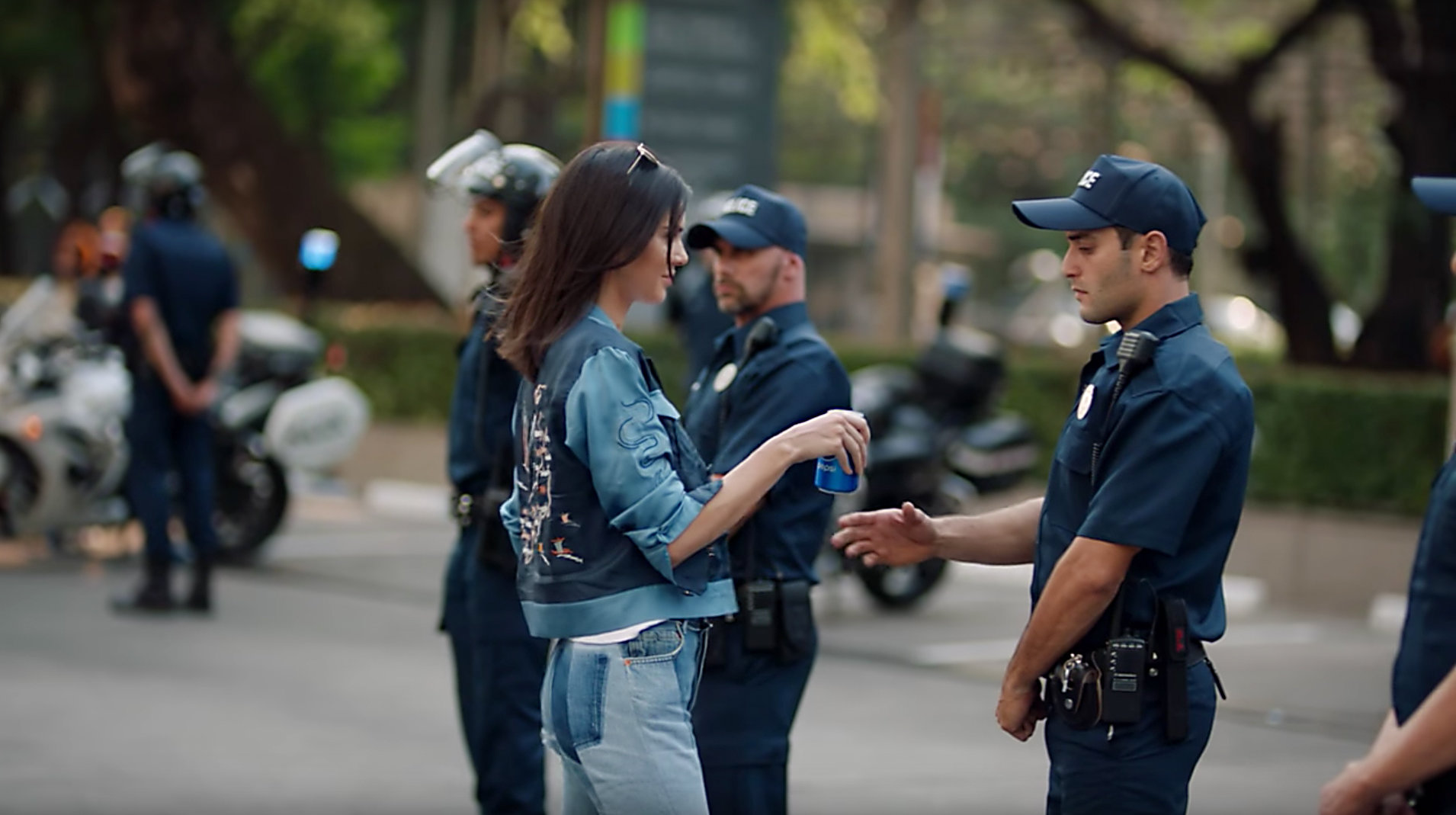
With Pepsi!

Gunn’s cartoon villain of a retired police officer gives the answer. Some time in the 1990s, things changed and cops had to be nice; they had to be friends even if the people they were policing didn’t want to be friends with them. This was apparently a bad thing. They are explicitly saying that police need to be crueler to the populations they are policing. Since citations are only a ‘sometimes food‘ in this parody of a documentary, Colonel Quaritch doesn’t actually provide the specific policy that changed. I looked online, and the best I could find from that time period that suggested a kinder approach to policing was an increase in the educational requirements for police, and a Chief Constable walking in a Pride parade. The additional kindness required seems to be implied, I guess. Maybe a policy exists out there that demands the pussification of the VPD, and I would read it and surely condemn it, but from what I found, it just looks like they just can’t be homophobic, dumb bruisers anymore. Truly a tragedy.

The police have had it rough. They can’t “stop and talk to people in the street” anymore, referring to carding, a practice that is notorious for its disproportionate impact on darker-skinned folks, and has no actual evidence to support that it does anything to reduce crime. They were also almost defunded, but then weren’t, and have had increasing budgets reliably for years. They are one of the most expensive police forces in Canada (per capita), but even suggesting alternative approaches to crime means that we’re blind to the danger of all those “nails” out there that need a hammerin’! This isn’t an exageration – Gunn is clear with the audience that the police never lost a cent, but that just the idea of Defund the Police demoralized the poor, fragile police department. Their feelings were hurt that other alternatives might be needed to address these social problems that we’re facing, and so their budget was saved. Stranger attacks still increased regardless of this increasing budget, but that’s for reasons that must not be named – but somehow is still maybe related to those dastardly impotent abolitionists?

So… carry on as normal. I’m sure that’s working out great for everyone equally!

So what constitutes a nail? It’s so damn important that we hammer those fuckers, it sure seems like it would be important to determine what we’re looking for. According to Gunn, the problem is the residents of the Downtown Eastside of Vancouver. When discussing the increase in stranger attacks, it’s not that more and more people are becoming desperate due to some unnamable global force, but that the DTES is “spreading.” Literally: “What was once contained to the Downtown Eastside, is now spreading into the rest of Vancouver.” It’s a phrase that’s thrown up more than once. It’s not that people in wealthy neighbourhoods could possibly commit violent acts, it’s that the DTES is a virus. They are coming for you. They run out to assault the ‘normal’ citizens, and then return to “hide in their tent cities” where they’re hiding weapons and drugs up and down the street; “You can only imagine what else is lingering nearby.” Spooky, scary shit!

This is what people mean when they talk about a thin blue line. There are real citizens who need to be kept safe, and those on the other side who only serve as a threat, who dirty the city, who don’t count as ‘real’ residents – as Gunn is clear when he literally puts “resident” in quotation marks when describing a homeless person. “These people” will never learn when they keep getting away with all their crimes – another quote. The smoke from this garbage fire is not subtle. When we talk about public safety, we have to be clear in whose safety we’re talking about, and safe from what threat. Safe from toxic drugs? Safe from police brutality? Safe from the elements? Fuck no! We need to be safe from them. They are the crime. They are what’s scary.

If only there was some visible way to tell which groups of people were evil since nobody has devil horns in real life! What could possibly give us a visible clue about how to divide groups of people into morally defined categories??

I don’t need to tell you the racial makeup of the residents of the DTES. You can guess. Much in the same way that Donald Trump spoke about “Chicago” to describe the threat that Black people pose to their whiter counterparts, so too the DTES becomes shorthand for the threat of BIPOC to the rest of Vancouver. These nails are not non-descript.

Gunn wants to be clear though. The police are not racist, nay, cannot be racist because racial diversity exists in the police board. Sure. But that’s not how systemic racism works, which Gunn would know if he ever actually looked into opposing viewpoints. Systemic racism is the idea of a thin blue line that needs violence to enforce – when you have a them, they will always, always, always disproportionately look different from the mainstream. You can avoid sounding racist by hiding it in racially-neutral language like Chicago, the Downtown Eastside, or criminals, but the clue really should have been describing any group, even one defined by city limits rather than skin colour, as a fucking disease. It doesn’t matter the tint of the person advocating for that because it’s the methodology of the entire system that’s the problem.

Okay now point to the place where the racism is! You can’t!

What happens if we look at context? What happens if we abandon our nail metaphor and look at other factors that might contribute to an increase in random, violent crime? One thing that Gunn never mentions is that police-involved deaths have risen 700% since 2012. Maybe that would be interesting to consider in the context of police allegedly being forced to be friends with the DTES residents.

Oh, and yeah, everyone’s supports got canned for two years. They weren’t even running Alcoholics Anonymous meetings! You couldn’t see your doctor; you couldn’t see your friends or family; you couldn’t even see your coworkers. Everyone’s lives shut down in an event that apparently has no impact on the increase in violent crime. Police can’t stop a disease, only human beings defined as a disease!

Maybe we should be focusing on rebuilding connections that were lost during that time? Or revolutionizing the way people get mental health supports, or adjusting the way we live to the point where mental health concerns are reduced proactively? Maybe if people got sick leave, or had secure employment, or a better safety net was in place, more people wouldn’t have succumbed to desperation and lashed out accordingly? Maybe those things could be addressed!

…I have no idea what these are supposed to be.

But Gunn doesn’t want context because he has an agenda. He wants more, violent police. He is explicit in this. I’d show you clips, but I don’t want to give him the traffic, so hopefully my quotes show how open he is about emboldening police in their brutality toward a particular demographic of people. He wants the police to be more violent toward drug users because, in his words, he cares about them. He wants to literally bully them into abstinence. Perhaps he wants the police to violently control other social ills as well, but what he explores next is drug use, so that’s where we’ll go too! Stay tuned while I go cry in the shower for a bit.

Part II

I assume you had a life before we met

Filled with love, pain, victories, and defeats

But for me your story began when I entered into it

A transient visitor of your present

Your past existed solely in stories, your future in dreams

It’s alluring to assume that your life became frozen in time when I left, a cross-section of a whole calcified into my comfortable solipsism

.

I know now you had a life after that insular present

Filled with more pain, your victories warped to accommodate it

My solipsism violently denied

.

You bore your cross while my back was turned

Not our sins, but mankind’s shame, weighed heavy on your shoulders

Stumbling toward your needless crucifixion

.

The news of your passing is no gospel

A martyr without a cause, a death without passion

Your suffering brings no redemption; we are not yet saved

We continue to drift along without you, oblivious

Your glory exists only in memory of the names once held by statistics

.

In gratitude for that memory,

RIP Vir Thongpheng, February 28, 1979 – April 6, 2023