Archives for posts with tag: Anarchism

Power is typically seen as the capacity to act – with obviously varying degrees. A prisoner can pace their cell, do push-ups, and so on, but can’t act outside the limits of their cage. The President of the United States might not have the power to verbalize a complete thought, but he can do all the things the prisoner can, and more besides. They both have power, but one of them has far more power than the other.

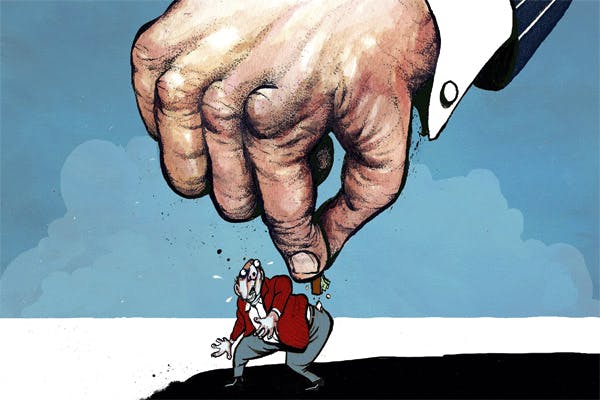
I think this is a narrow view of power that is lacking one of its key components: need. The variations in power aren’t so much across the capacity to act per se, but the capacity to act without considering the needs of others. The prisoner must accommodate the needs of the warden, the guard, the parole board, and so on. His needs are ranked quite low when contemplating which actions to take. The President of the United States, on the other hand, can skate by without acknowledging the needs of most of the planet. He might have to consider the needs of Benjamin Netanyahu, to a degree, as the Israeli Prime Minister has considerable power in this regard as well, but he certainly does not need to consider the needs of the Palestinians who are, for all intents and purposes, power-less.

How power is depicted goes a long way

Taking this needs-focused perspective of power opens up further understandings of how power works, and how impotent our approach to it actually is. If we consider our human needs (using Maslow’s hierarchy for the sake of simplicity), what we consider powerful can really only help us meet our most basic needs: food, water, safety, shelter. This can also help us define what might be considered ‘power’ as anything that can help us obtain these things without considering the needs of others – money, celebrity, access to opportunity (think Harvey Weinstein), and so on.

In case you need a refresher

There are way more needs than the basic ones, and power is useless in obtaining them. Love is elusive to those whose identity is based solely in their power, and this is highlighted in the common trope of the rich person worrying over whether they are loved as themselves or if those close to them are only after their money. Similarly with esteem: we think we respect power, but we really only respect what one does with it. Elon Musk isn’t respected because of his money, but because of his advocacy for free speech and his pursuit of a better world for humanity through clean energy and space exploration; or, he’s not, because of his advocacy for racism and his massive ego whose projects offset any climate good his cars might produce. His power is irrelevant; he is judged by his actions based on the capacity that he has to act – as anyone would be. Self-actualization goes without saying.

Someone with only their very most basic needs being met – such a thing to strive for…

So why is there this fixation on power? Why do so many people strive for it, often at the cost of their other needs? Why do we delude ourselves that power is somehow going to fulfill our lives when it literally cannot? The answer is obviously capitalism, you goons; it’s always capitalism.

Capitalism as an ideology requires an underclass to use their labour to produce the things needed by the more powerful. This required scarcity forces people into a situation of never having enough power, so our most basic needs can never be met. A housing market that makes shelter out of reach; low wages to make food and security luxuries; a “flexible labour market” (i.e. gig work) to make the underclass even more precarious in their ability to meet their basic needs.

We are then told that in order to get our needs met, we must compete laterally with others in our class. We must gain power by any means necessary, and that’s the only way we’ll be able to afford rent. Do not consider the needs of your neighbour; they are in competition with you! The only way for society to function is if there are winners and losers, and winners don’t need to accommodate anyone. This is the way.

Baby Yoda’s famous catchphrase, “Fuck you. I got mine!”

This isn’t to say that power didn’t exist prior to capitalism. Feudalism obviously had lords going head to head to obtain more power – it’s just that the regular people didn’t give a shit because they had their basic needs met. More people had access to a more diffuse power: land. If you had access to land, you had food, security, family, and so on, and didn’t see the point in striving for anything else. If you didn’t have land, there was still the commons which allowed a degree of needs to be met. There wasn’t as much wealth as we understand it today, but there didn’t really need to be; people had enough. Industrialization created urbanization which increased inequality and poverty which reduced the average person’s power, and the shrinking of the commons increased commodification which reduced normal people’s ability to get their needs met as basic needs became more and more unaffordable. As the West went through this transition, we peasants and proletarians gained political power through the institution of democracy, but lost it economically as the means of production shifted more and more to the ownership class.

This blog is technically more anarchistic than communistic, but Party Marx will always be welcome for discussions around the ownership of the means of production

This manufactured scarcity and proselytized ideology has deluded us into thinking that with power, we’ll finally be able to live the lives we want to have. To a degree this is true: we cannot achieve anything without our basic needs being met, and power is required to obtain them. The delusion arises when we forget that our goal is to get our needs met, and not power in-and-of itself. We want money in seeming ignorance that the entire purpose of money is to buy stuff – do we want the money or do we want the stuff? Do we want the power or do we want to have our needs met?

Also, wasn’t this article supposed to be about superheroes?

It has been this whole; you just had no idea!

Superheroes have superpowers which would include them in this analysis. It’s a little campy, but being more powerful than a locomotive is technically a power. As David Hume said, “Strength is a kind of power; and therefore the desire to excel in strength is to be considered as an inferior species of ambition.” Could Superman achieve his basic needs without taking into consideration the needs of others? Absolutely! That’s how we get Injustice and Homelander. This shit counts, however nerdy an ambition it might be.

Superman, of course, would never do such a thing in the traditional canon. That’s what makes him heroic. He doesn’t use his power for himself, and I’m going to argue that he doesn’t do it for the people of Metropolis either. The people of Metropolis don’t exist – they’re fictional. Superman doesn’t technically exist either, but the story of Superman does. The writers are producing this power, and the power of Superman is used to meet the needs of person reading his story. We feel secure against the threat of Zod. We feel safe from the machinations of Lex Luthor. This is how empathy works.

If our needs don’t supersede the needs of the hero, they become the villain. This is why the villain Homelander is still seen as a hero in an ever-increasing fascistic America – the people who watch The Boys don’t see any issue with what he’s doing, and their needs remain met by his actions. But traditional villains rob banks and try to take over the world, using their superpowers to meet their own needs. Disney’s new “sympathetic” Marvel villains have high ideals, but don’t consider the needs of others in their quest for it – this is how their villainy is displayed despite the validity of their ideology.

The face of accommodating the needs of others

The thing is, this glomming on to the powerful with the assumption that they’ll meet our needs exists outside the world of the superhero as well. In the traditional model, women (who are limited in their power) will seek out powerful men as a means of linking themselves with his power to help them get their own needs met in a world that wouldn’t allow them to be met otherwise. If there is abuse or violence, it is often endured out of a fear that her needs won’t be met without him – his power is all she has to keep herself from becoming powerless.

Under capitalism, there are more powerless people than just trad wives. Many of us live our lives with the bare minimum of power, scraping by as best we can. Wouldn’t it be nice to attach ourselves to some hero who would use their power to uplift our own? This is the allure of the tyrant. Surely I’ll be taken care of if we give more power to this person with whom I identify! Surely my station will be reduced if they are overthrown! We connect to the tyrant as we would to Superman, as some of us bizarrely do with Homelander – they will use their power to keep us safe. Our needs will be considered; the needs of the outsider be damned. But is the solution to our abusive boyfriend to make sure we land a nice one, or to adjust society so that women and men are equitable in their power, limiting the potential for abuse to happen in the first place? Such a world appears to be possible!
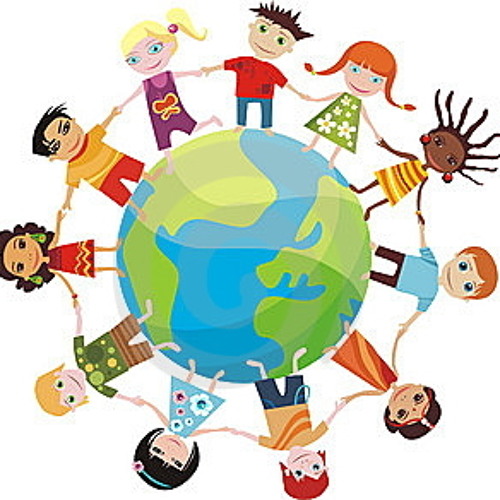
People are alive today who have witnessed significant changes in systems of power

The thing is, power is the capacity to act without considering the needs of others. The powerful don’t need to consider us, so why would they? That’s how power maintains itself, so why abandon the working model? We, however, as a collective have more power than any individual. This is why platitudes are made about how the powerful will take care of us, as a manipulation. We are given speeches and scraps to delude us into thinking that we are better off with them having all the power, with us remaining powerless and allowing them to go unchallenged. Superman is a propagandic myth: the boyfriend who tells his girlfriend to never leave him, he’s going to take care of her, trust him.

Power cannot escape what it is; we have to escape power. We have to recognize the value of our neighbour and accommodate them accordingly. We have to recognize the life beyond our basic needs. Both of these perspective require giving up our pursuit of power. Power will never go away, our basic needs will always need to be met, but we can diffuse it. Just as democracy diffused political power, we must identify other aspects of power and diffuse them as well. Power where it exists today must be counterbalanced – this is often the project of the Left as we try to convince governments to allow the otherwise powerless access to their basic needs. It’s a faulty system as power remains relatively undisturbed, and this liberal redistribution does not address the root causes of the concentration of that power, but it’s what the system currently allows. We still have room to dream for more.

To quote a super-villain (notably, one later purchased by Disney), “When everyone is super, no one will be.” And we’d be better off for it.
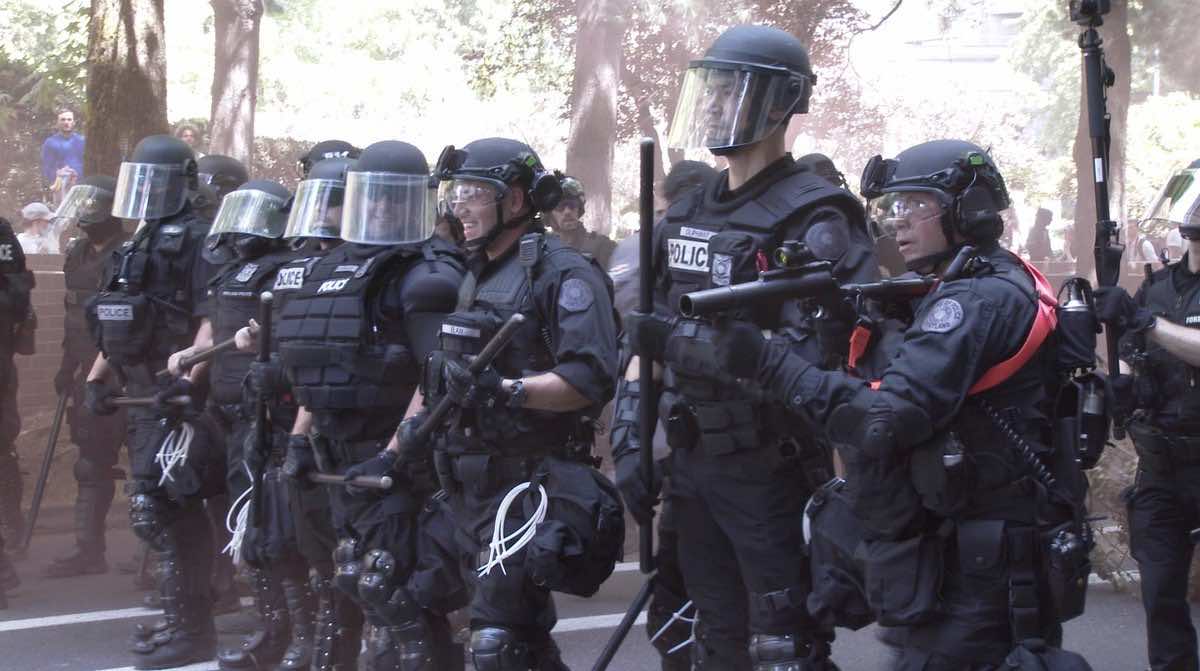
The traditional motto of the police department is to “Serve and Protect.” The police are supposed to protect the innocent from the criminal, so it might come as shocking that the Hong Kong protesters are calling for the abolition of the Hong Kong police department. Of course, Westerners might read this and think, “Well, obviously they would want to get rid of the police! They live under the tyrannical regime of COMMUNISTS!” No one would bat an eye at someone wanting to abolish the Gestapo in Nazi Germany. Not in a modern context, anyway. The police becomes the arm of government oppression when the system is rigged against the people (or a specific demographic of people). Whoever dictates what is legal and what is criminal uses the intrinsic violence of the police (to either restrain, detain, or attack) as the power to enforce its decision.

fascit police

Don’t look at me, I just enforce what’s right and wrong. Who decides what’s right or wrong? Stop asking questions.

For added nuance, the Black Lives Matter movement made a similar call to abolish the police in the United States. When white supremacy is the systemic norm, black people become viewed as criminally-inclined compared to their white counterparts, so the police become the manifestation of that racist imbalance. When race is criminalized, when poverty is criminalized, when mental health is criminalized, when drug abuse is criminalized, then intrinsic police violence becomes directed at those demographic. Getting rid of the cops, in theory, would force us to confront the problems within these demographics non-violently.

If drug use was no longer illegal, then we would need to help drug addicts instead of locking them up. Treatment would become the default. If we could no longer lock up the poor, we would have to find them stable housing and make sure they had enough to support themselves so they would no longer need to game the system in order to survive. Mental health would somewhat ironically become a health issue, and those whose underlying issues causes them to act out in anti-social behaviours could only be helped instead of punished. We would probably have to shift our cultural view of violence as being the solution to all our problems so that those who commit violence to solve their problems would do less of that, too. We would need to refocus on rehabilitation as a solution, on help as a solution, on compassion as a solution. Cuz if we didn’t, society would collapse into a miasma of inhuman chaos and brutality!!

And that’s the thing about abolishing the police. If the monopoly on “legitimate” violence dissolves, a power vacuum appears. It’s why libertarianism is a terrible idea: if the government is abolished, then those with the most power (corporations) would step up and dominate with their unchecked and unregulated sovereignty. If the police disappear, then those currently with power, and this could be as little power as an abusive husband to as much power as a drug kingpin, will be able to execute that power without regulation.

emot-ab

Quick! Call the BLM movement to remove him from the house!

This isn’t to disregard the absolutely solid arguments that both the Hong Kong protesters and Black Lives Matter movement make. The police, without a doubt, are the arm of systemic oppression within the state apparatus. The goal should always be anarchism. The issue is always the method of achieving that. The problem with libertarianism (or anarcho-capitalism) is that it wishes for anarchy within the cultural context of today. If we cede police power to anarchism within our current societal context, the violence that exists within our world now will continue to manifest itself; simply in new, unchecked ways.

I believe in a more incrementalist approach: similar to social workers whose goals are ultimately to end the apprehension of children from families, the goal of the police should be to work themselves out of a job. We obviously need to work on cultural transition, poverty reduction, race relations, mental health issues, and so on, but so long as power imbalances exist, then having a police force that is even minimally under popular control (in that we in the West have a small say in who writes their paychecks and holds them accountable) is better than allowing the unchecked power of some other violent agency to shape our legal and social framework. What we need is a new world. In order to reach that new world, we should no longer look at the police as a static necessity, but as a dynamic institution geared towards its own demise.

Perhaps you’ve heard it said that taxes are theft. We work hard for our income, and the government just comes right in and takes the money that we earned without our consent! That’s stealing! The government steals. Now, the government can legally do many things that private individuals cannot do. It can confine and relocate people against their will. It can kidnap children. It can even commit violence if it deems it necessary for a safe society. However, the one thing people cannot abide over any other crime is theft. Nobody cares about foster kids, criminals, and immigrants, and so state intervention only matters where my finances are concerned!

Not-Your-Money-copy_SE

Big Government when it comes to people I don’t like; small government when it comes to me

One of the more prominent libertarian thinkers that popularized the concept of illicit taxation is Robert Nozick in his book Anarchy, State, and Utopia (so titled because libertarianism, as an extreme reduction of state, is inherently anarchistic). Nozick presents a thought experiment which I will paraphrase in order to use really simple maths. You work 40 hours a week, making $100 an hour. You’re doing all right. That’s $4000 a week, but the government decides that it’s going to tax you 10% of your earnings, and takes away $400. What this essentially means is that for the last four hours of your work week, you’re working for free under the authority of the government. The higher the taxes, the more unpaid working hours. This isn’t just theft, it’s slavery! Maybe this is why people just fuck about on Friday afternoons, as a means of sticking it to the The Man for having to endure slavery wages just before the weekend.

While there are certainly problems with this argument, we’ll leave it as is for now.

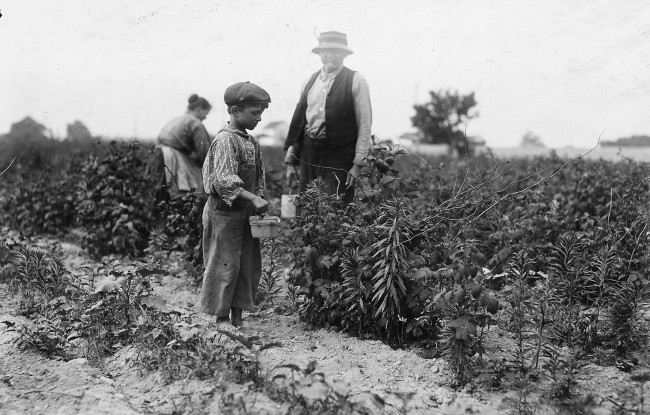
Let’s turn to the feudal system. The peasant produces $4000 worth of goods, and has to pay his lord $400 each week. Similar to the slavery tax system illustrated above. Now, let’s mix it up a bit. The peasant is still producing $4000 worth of goods, but instead of paying the lord taxes, the lord collects the $4000, and pays the peasant $3600 for his labour. Ha! Ridiculous, right? Okay, let’s be a bit more realistic.

The peasant is still producing $4000 worth of goods, but instead of paying the lord taxes, the lord collects the $4000, and pays the peasant $400 for his labour.

poor-farm-e1405106120539

If that. Isn’t it nice having a say in how taxation will affect the community? Democracy sure is great. I wonder if such a concept has ever been imagined in the second scenario?

If the peasant’s labour really only costs $400 a week, then the extra $3600 is what famed beard-haver Karl Marx called surplus value: money that is added on to the cost of production basically so the person (or minority of people) who own that production can continue to grow their wealth without having to actually do anything. In a word, profit. This money, more or less equivalent to the stolen taxes of our initial example, does not go to community projects, however, but to the pockets of a private owner.

The issue that people are going to take with my examples is likely going to be that of consent. So you might think, well, I didn’t agree to no social contract, why should I abide by it and pay these exorbitant taxes!? And you’re right, that is a legitimate criticism of the social contract theory. Abide by the social contract under which you are born or go to jail is not a meaningful choice in any sense. Social contracts are not inherently just, and resistance against them may be legitimate. Universal acquiescence is no form of morality.

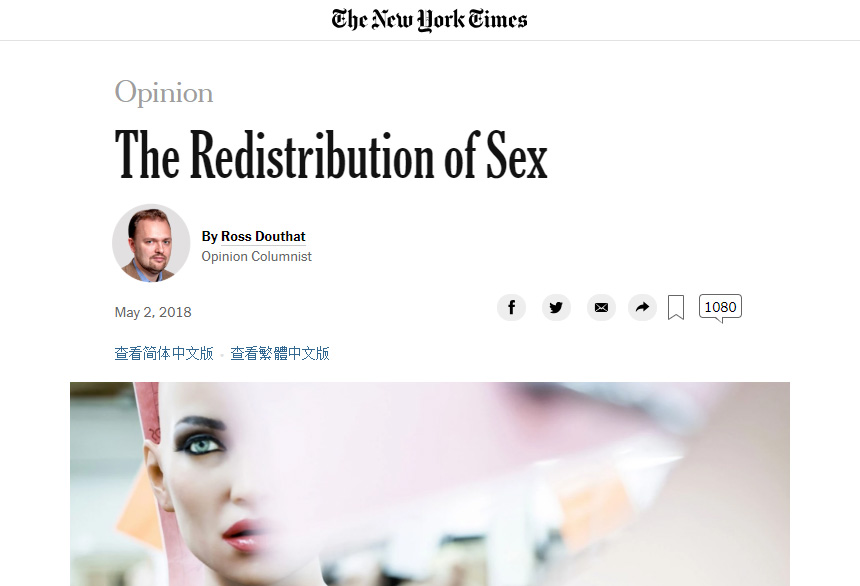
What about our second peasant who is paid wages instead of owning his own labour and paying taxes? Nozick and other libertarians would say that they agreed to this contract with the lord, and if they don’t like it, they could quit and get another job as like a blacksmith or something. Nozick says that not getting a livable wage is like being rejected by the prettiest girl at the dance. Everyone wants to date the prom queen, but if that doesn’t work out, you just keep going down the list of available women until finally you get to the partner that is manipulative and abusive, and you stay with them because nobody wants to die alone. Again, this is a paraphrase of his argument, but he literally says that since it’s fair for women to reject us (he’s big into hetero masculinity), it’s fair for companies to reject us from livable conditions too. Kind of important to consider this the next time the libertarians in the alt-right talk about being entitled to women’s bodies.

redistribution of sex

Or the liberal media, apparently

Nozick’s argument makes all kinds of terrible assumptions. For example, ownership is often inherited or influenced by nepotism, even entrepreneurs typically come from already wealthy families, which would be the equivalent of the prom queen being passed down through the generations of prom kings rather than through any merit-based wooing process; women don’t have a systematic incentive to be abusive and manipulative the way profit-driven companies do; and nobody’s child will starve if their parent can’t get a date. If the dating system is rigged so that the suitor has only the most abysmal options available, and they’ll die if they don’t pick one, then the metaphor might be more appropriate. It would also make those dating shows that much more interesting to watch.

the-bachelor-nick-viall

But this time, if you’re voted off, you can’t afford your kid’s desperate medical operation

If we acknowledge that the “choice” between accepting the social contract or jail is not a choice, then it follows that the “choice” between accepting tyrannical labour conditions or death is not much of a choice either. If taxation is theft, it’s not much of a stretch to use the same argument against surplus value. Both involve others profiting off of labour in which they take no part.

Except, in order for a community to function as a community, participation in its maintenance is required. Communities are a collective. It’s not something that’s debatable. Taxation is a fairly straightforward and simple measure to extract funding for that maintenance, and income tax is a fairly equitable way of going about it. Universal acquiescence is certainly dumb, but thinking for two seconds about how a community works and what that would require very quickly reveals the need for public options funded by the collective.

The theft of the ownership class has no other motive beyond personal gain. If you had to choose between one theft or the other, why are we so quick to pounce on taxes instead of the exploitation of labour? Denouncing the community while advocating greed is the whispered maxim of capitalists.

650x650_5acbe07fd9fb6b7c137e05d830891e4a186fa5623b050136d8bded54

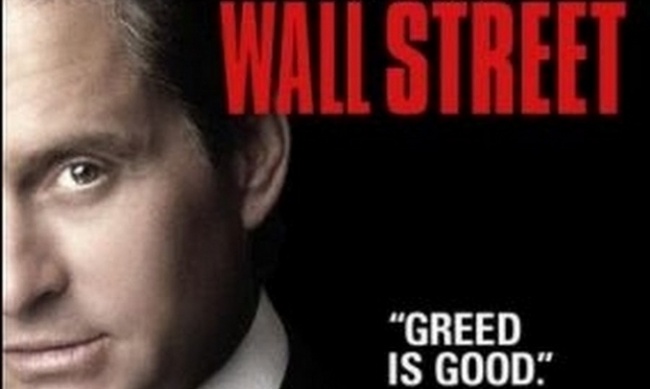
Maybe not so much whispered as shouted from the rooftops. Remember when unbridled avarice was considered a bad thing?

Or you could abandon both forms of theft and embrace true anarchism. Not the anarcho-capitalism of modern libertarianism, but left libertarianism. Libertarian socialism. Anarchy. Take it for a spin. See how you feel.