Archives for posts with tag: Capitalism

Part I

Vancouver is Dying starts with a threat to its viewers. You are not safe; every day there is a statistically improbable risk that you will be assaulted by a stranger. The cops have been castrated by woke mandates to avoid overt brutality, and so the city has run amok. There are no consequences to the choices people make, so we mourn the passing of a once great city. The reason for all of this… is drugs. Not poverty; not the civil disenfranchisement of a particular neighbourhood; not the modern cumulation of centuries of colonialism. It’s drugs. Possibly woke-ism too, since the defecator of this trash, Aaron Gunn, literally says that the Left believes opiates are a good thing, but he focuses on drugs as the root of Vancouver’s degeneration. Drugs, we are told, are bad.

Lest we forget!

Despite being the alleged cause of everything evil that’s happening in Vancouver, Gunn doesn’t actually spend all that much time talking about them. What is a drug? Alcohol has been shown to be the most destructive addictive substance, but I guess alcohol is irrelevant to the Downtown Eastside (it’s not). Both sugar and caffeine hit the same dopamine receptors in your brain as crystal meth, but those also don’t count (how many people reading this rely on caffeine to enable their daily functioning?). We can also safely ignore process addictions too, like gambling and video games. When Gunn talks about drugs, he only means the highly unregulated ones, the ones they don’t advertise on TV. Seeing the harms of addiction in a wider context of mass consumerism might lead to… a criticism of capitalism! And we can’t have that.

So of course Gunn avoids that context to the best of his ability. In the few brief interactions he has with active drug users, he asks one what she thinks about addiction. She brushes off the harms that everyone already knows about with street drugs to talk about global addictions, like the equally suicidal addiction humanity has with oil and gas, or the addiction to money in the financial markets, or the addiction to consumer goods we might indulge in after losing our life’s purpose during a midlife crisis. Rather than discuss the threads linking micro and macro addiction, Gunn says, behind her back, that she must be in denial. She didn’t deny that her drug use was harmful; she just wanted to talk about the context as to why all of these problems exist, and Gunn absolutely does not. So he calls her delusional without giving her an opportunity to respond – but who cares; she’s just a supid junkie, right?

Only one of these counts as a person.

According to Gunn, addiction is a silo that only impacts a ‘certain type’ of person, and isn’t connected at all to the culture or global habits surrounding it. So where does it come from? Why do people use drugs? Drugs seem kind of bad, so how come so many Vancouverites… sorry, people specifically in the DTES and nowhere else… how come they do the drugs? Par for the course, Gunn doesn’t really explain. He makes one inference, and expects the viewer to figure it out for themselves.

The closest Gunn comes to explaining where drug use comes from is by talking about the choices that some homeless people make to stay in the street. Our old friend Colonel Quaritch has the unmitigated gall to suggest that it’s easy to get housing in Vancouver (as a social worker, I found this to be particularly offensive), and Gunn doubles down on this by showing that there has been 1,400 new supportive housing built over the past four years, with 350 new ones being built. Of course, those 1,400 are already full (the waitlist for supportive housing is a couple of years), and there are an additional 2,000 homeless people that need help, so his optimism is… misplaced. We can also combine his bullshit with another ignored statistic that about 7,000 housing units are in need of replacement, and we can see that the rumours about the challenge of housing in Vancouver are in fact true. Turns out it is expensive and difficult to find housing in Vancouver! Who could have guessed!?

I will put this in every single one of my blogs from now on if I have to.

Okay that rant was mostly for my own benefit, but let’s return to Gunn. He wants to show that the chaos is a choice – that the option for stability is there for those who want it, but that people live in squalor and disease because… they’re crazy, I guess? A DTES resident tells him that people sometimes choose to live in the streets because of the restrictions in a lot of the supportive housing units, and then that’s enough for him. No point in exploring what those restrictions might be, or what the benefits of the streets might be otherwise, just enough that we have captured a DTES “resident” confirming what we already know. People who use drugs are just completely irrational.

It turns out though, that even people who use drugs are rational in their choices – they are just too often limited in the choices they can make. If a drug user has a choice between using drugs in such a way that it is likely to kill them, or to use drugs in a way that is likely to not, they’re going to choose the way that allows them to avoid death. Rational! Same thing with homelessness. If we talk to people who do choose that lifestyle, they are often fleeing violence that is pervasive in shelters and some SROs, or they want to live in a community of mutual aid amongst their peers without officious oversight. The restrictions that Gunn avoids talking about are typically restrictions on visitors, meaning that your loved ones aren’t allowed to visit. This means you essentially can’t have a partner or children or friends. If I foreshadow a bit that the opposite of addiction is connection, then we can see that these restrictions would actually encourage drug use rather than help eliminate it. It would be rational for someone to choose their loved ones over rat/lice/bedbug/cockroach infested housing, wouldn’t it? Gunn even acknowledges that a lot of the housing is awful, that it’s filled with drug dealers and drug users, but then seems vindicated in degrading homeless people when he’s able to confirm that people don’t want to live there because of that very awfulness. He doesn’t offer a clarion call for better housing in more suburban neighbourhoods where people might escape violence, addiction, and poverty because presumably that would entail the spread of their disease into the ‘purer’ neighbourhoods.

Good miniseries on this very topic!

If people don’t use drugs because they’re just cuckoo-bananapants, then why? It’s a question that should have been at the forefront of anything trying to be a documentary about drugs.

The secret they don’t tell you about drugs is that they’re not actually bad. Drugs are amazing. You’ve likely at least had sugar, caffeine, and alcohol, and most people have a lot of fun with those things! The trouble with drugs isn’t that they’re so amazing that they become addictive, it’s that they’re a problem for those people whose lives are so awful, so that when they do take drugs, their amazing-ness brings them to about normal. Heroin feels like a warm, loving hug; imagine what that must be like for someone who has never felt a secure connection. The first experience of drugs that people who often become addicted is usually, “this must be what everyone else feels like all of the time!”

Addiction typically begins around adolescence when teenagers are supposed to be learning how to cope with complex emotions, and if someone with a lot of complex emotions learns that drugs are an incredibly effective way at dealing with them, that’s how they learn. Just like it’s hard to learn a new language once our first becomes so ingrained into our way of navigating the world, so too is it a challenge to learn a new way to process our emotions once we’ve already established something that works. The physical dependence of drugs can be overcome in a few days, and for drugs like crystal meth, you literally just sleep it off and then you’re done. The psychological dependence, the need to numb yourself from all those accumulated feelings, that’s what causes relapse. You may have heard that an addiction is a behaviour that continues despite negative consequences; well, the negative consequences of not using are often worse. Feeling decades of trauma all at once when the drugs wear off is more often than not still worse than any infected absess. Drugs are not the problem of addiction. It’s just that people with addiction have drugs as their only workable solution to help them cope with what they’re going through, and it’s hard to learn other ways – particularly when drugs work so well and so quickly. Some call addiction a learning disorder rather than a disease for this very reason.

When I was a child, I had a fever. My hands felt just like two balloons. Now I’ve got that feeling once again. I can’t explain, you would not understand; this is not how I am!

Rat Park is an experiment that sought to question the original idea of addiction. We once understood addiction as absolute – a rat was put in a cage, and had two options: a regular water, and water laced with cocaine. Those rats consistently chose the cocaine water until they died. Rat park was an alternative: rats were put in a cage with tubes and balls and other fun rat activities and, most importantly, with other rats. The two water options were the same, but these rats only had the cocaine water every once in a while. The rats lived full and healthy lives, and occasionally got to have wild parties when they opted to go for the cocaine water. Remarkably, rats from the first cage could be put into Rat Park, and they would lose their addiction relatively quickly. To sum up, it’s never been about the drugs, but about the lives of the people who use them.

What if we understand addiction as a response to something rather than the problem itself? Looking at process addictions and less stereotyped substances might become relevant to our thesis. Global patterns that impact culture might contribute to the so-called disease. If we are told to always be consuming more and more to avoid loneliness, grief, to find meaning, then perhaps a comparison to a midlife crisis sports car is actually quite apt, and it is Gunn that is actually the one in denial. What is addiction a response to? If it is getting worse, what is going on in the world that is exacerbating it? I guess if we never ask what addiction or drugs are, then we avoid that pesky subject entirely.

Enough trauma can manifest itself anywhere to produce an addiction, but the most visible problems from it sure do seem to crop up in one particular demographic. I’m sure it’s nothing!

Drugs start out as the rational choice to cope with childhood trauma, to the point where drugs can even save someone from suicide. That becomes their only method of coping, and then they become stuck in that lifestyle even past the point when its consequences start to outweigh its benefits. Ending drug use is only ever really an option if the person has meaningful activities and connection waiting for them on the other side, in an environment stable enough to maintain it. Do police and jail sound like the optimal environment to provide that? Is Gunn right that we should be bullying people into quitting drugs? Or should we recognize that a sober lifestyle just isn’t a reasonable option for a lot of people given their circumstances within capitalism, and do our best to support them in the world they’re stuck with, recognizing and respecting their rational choice in opting to live this way? Perhaps we could make sure that the drugs they take don’t kill them, since they’re human beings still worthy of dignity, perhaps more worthy given the wars they’ve lived through.

Fuck them, says Gunn. They will live and die as he decrees. Join us next time, when Aaron Gunn will try to suggest that having more harm for people who have endured so much already is a good thing actually.

Part III

The woke left is merciless in their destruction of sacred institutions: marriage and education, obviously; the institution of baby making; and of course, language. In a world where everyone is is a Nazi just for harmlessly protesting against draconian mask mandates, the word has lost all meaning. If everyone is racist, then no one is, and we can all go home. It’s safe and warm at home, and the woke left can’t get you because of Stand Your Ground laws.

It takes a good guy with a gun to stop a bad guy with a chainsaw and a liberal agenda

Now. Marriage is obsolete in that it serves only to legitimize through legal recognition particular and rigid definitions of relationships. Education is classist and functions only to produce efficient workers for the ownership class. Abortion is health care and functions only to provide women control over their means of production. And finally, only racist things are racist. But Blog For Chumps, you might ask, not knowing that a human being with a name and feelings is writing this, how can we know what is and is not racist when the woke left keeps calling helpless truckers Nazis?

I agree. Racism can be hard to point out, but not always – sometimes it is really obvious! When the NFL handles concussion payouts racistly by paying black players less because they are assuming that black people have fewer brain cells than their white counterparts and therefore don’t require as much relative compensation for their loss, that’s pretty heckin’ racist! That was in 2021, after Trump was robbed of his permanent leadership position, and racism in America was supposed to have ended for the second time. I guess we’re still reaching for that rainbow that I don’t see the colour of.

If you see them, you’re a racist

Easy stuff! But like, now climate change is racist? Apparently rich, whiter countries only superficially care about the climate even as poorer, darker countries are literally disappearing into the ocean! It seems like this just might be a world-ending emergency that ought to have an equivalent urgency, but like… the value of bank-owned debt is going down, so let’s focus on that instead. Entire countries can be underwater, either temporarily or on the verge of permanency, but so long as predominantly white countries only have slightly warmer weather, it is politically and socially “no biggie.” Racism!

Also journalism is racist. Again, sometimes very obviously. But not always, because sometimes all racism needs is a mostly white authorship being edited by a mostly white editing team for a mostly white audience, and with all those blind-spots and biases, POOF! You’ve got yourself a racism! What gets labeled as “exotic” or “undiscovered”? Undiscovered by whom? How are stories about race treated? What language gets used? When the authors are a monolith, you typically get the same kind of answers.

How do you think they pronounce ‘pho’?

But Blog For Chumps, you might persist, ruthlessly obstinate in your sobriquet, how can climate change or journalism call someone the N word? If abstract ideas are racist, does that mean we have to actually educate ourselves on how systems work in order to understand why rabid woke mobs keep calling random things racist? Probably. I mean you could take their word for it, I suppose. Who has time for a university degree?

But you don’t have to worry about going into impossible amounts of debt, forcing a lifetime of indentured servitude to your capitalist masters, just to learn about racism, so long as you understand the most racist abstract concept of all: capitalism. It’s capitalism. It’s always capitalism. I just said it like, within the same run-on sentence. You really should have seen this coming.

A fair and reasonable depiction.

Capitalism is all about private ownership and the profit motive. If a business owner is content with their normal amount of sales, they’re not innovating new and exciting logos for their carbonated beverage, and a disaster worse than climate change will befall us all if Apple stops releasing numerically-sequential iPhones until the sun goes out. Capitalists always need more – that’s the profit motive. And the ownership of these businesses needs to be centralized to a minority who make all the decisions because… reasons. I guess maybe to sell the illusion that you too can become a billionaire? With so few of them, it’s a lot easier to learn their names, so we all can aspire to be just like Jim Emerald-Mine Jr.! You too can escape the grind if you just keep that grindset!

How can a violently-enforced hierarchy that exploits and oppresses its lowest rungs to maximize profit be categorized as racist? To understand this head scratcher, we have to turn to a controversial historical economist with an extremist ideology who would have strong criticisms of today’s capitalism: Adam Smith.

Smith teaches us that value comes from labour. When a miner extracts a mineral from a mountain, they are adding value to the rock by turning it into, say, lithium. When the driver takes that lithium from the quarry to the battery factory, they are adding value by changing the location of that lithium to a place where more shit can be done to it. When the factory worker turns that lithium into a battery, they are adding even more value to what was once a far-away rock. If that battery was sold as is, each labourer would get back what they added to the product. With capitalism, the owner of this operation needs money too, so they add what’s called surplus value on top of all this already-established value, and they get that money just for tagging along.

It was a Christmas miracle!

Now, the labour theory of value isn’t actually how market prices are determined: they’re determined by supply and demand. However, the importance of Adam Smith’s Marxist idea of a labour theory of value comes from how it shows the relationship of profit to labour. If the price of that battery is determined by supply and demand, the profits of the organization still need to supersede the value of the labour added to the original mountain rock (through wages, benefits, etc… the intrinsic value of the labourer to the labour process, i.e. the price of human dignity).

But what if… what if, Blog For Chumps, what if… we cut down on human dignity in a market where prices are determined by supply and demand? If we ignore the value of the labourers, ignore their dignity, then we could make MORE profit. If the price is fixed elsewhere, but the value of labour is lessened, then the surplus increases regardless of how the market sets the price! Capitalism, as established, is built on the profit motive, so the idea of ignoring the dignity of workers is inherent to the process. Crucial to the definition of capitalism, workers are not in charge of making any decisions, so they are necessarily secondary to the primary mandate – to make the owners money.

Of course, someone needs to buy that battery. That’s why Henry Ford decided that maybe the local community ought not to be entirely destitute, and decided to pay his workers a living wage. Talk about a rock bottom moment when capitalism is forced to take care of its workers because its contradictions have gotten to the point where no one has any money except for the ownership class who already get their Model Ts at the corporate rate.

This accident is perpendicular to the road, without an apparent intersection. This must have been before drunk driving laws were a thing.

Luckily for capitalism, it gets to have its cake and eat it too! What if there could be a middle class to buy all the random garbage we keep producing at a planetary expunging rate, and also a class of people that we could mercilessly exploit for profit? Enter racism, stage left.

What if we could move labour to countries of colour, murderously exploit the people there with low wages and inhumane working conditions, and then sell that shit back to white people? Seems like the best of both worlds! We can even utilize dog whistles like saying that these foreigners are taking the jobs of white people, and then the white people here will get angry at them coloured folks rather than the system that makes this method of doing business the most profitable! Remember how Asians took all our manufacturing jobs? They took them. It’s not that corporations moved their operations to where labour is cheaper and has fewer safety regulations, they took them. If we want those jobs back, we have to lower our OWN wages and eliminate our OWN safety regulations! That’s harder to pitch (though they will try!) so capitalists will keep killing Asian people, either by suicide or by explosion, just because the people buying the products made by these dying Asians do not give a single fuck – because, perhaps you’ve noticed the theme, of carefully manufactured racism.

If things are bad, it’s not because of anything we’re doing, it’s because of those funny looking people over there!

Radical Adam Smith fanatic Noam Chomsky argues that capital crossing borders under the guise of corporate personhood, with intra-corporate “trade” crossing the Mexican border unperturbed by any wall, reveals the hypocrisy of this ideology. There is unanimous political agreement that capital ought to be able to cross any border to maximize this exploitative phenomenon. The lithium ought to go to where it is cheapest to manufacture into batteries, and so rich countries need “free trade” deals with poorer countries in order to have the absolute minimal amount of value-added to their product before they sell it. But human persons can’t cross the border; they are told, “Do not come.” It’s equally unanimous. I mean, they do actually want you to come – who else is going to clean toilets on the cheap? They just want you to be desperate. The less value as a person you have, the more worth you have to capitalism. Republicans know that a wall won’t stop desperate people, they just want them to be that much more desperate so that they will complain less about the conditions of their exploitative labour. Or compete with white folks who will then have to accept worse conditions in competition with these desperate migrants and refugees! Wouldn’t it be wild if we convinced those white folks that this was the fault of the family running away from a cartel-backed death squad instead of seeing them as allies against those who would exploit them both? Wouldn’t it be absolutely wild? Such a group would likely fixate on culture war issues like the threats of race and immigration, pedophiles within the LGBT community, and the depiction of women in superhero movies while the policies they implement would focus on tax cuts for wealthy individuals and corporations, anything to make their followers myopically fixate on a hated Other. Surely such tactics would be so obvious that they would never be considered a serious organization.

I’m clearly hilariously satirizing the Republican party, but the Democrats aren’t much better. Welfare capitalism is at its core a strategy to ensure that those on the bottom rungs are just comfortable enough that they don’t rebel against the system that determines their lot. It’s the Henry Ford version of capitalism – adding a bit of seasoning to the scraps so that the poors have just enough to still participate within capitalism. Liberals are still very capitalistic, but the Right will still misname welfare spending as socialist because irrespective of how capitalistic it remains, they recognize the anti-capitalist nature of acknowledging basic human rights.

If we admit that we don’t want human beings to die, they might actually thrive and then demand even more rights like decent wages or living conditions! Better to dehumanize them to the point where their deaths are actively sought.

In theory, a free market would require the free mobility of labour equivalent to the free mobility of capital to ensure the invisible hand is determined by market forces appropriately, but because capitalism utilizes racism to maximize the profit motive, we get the Chinese Head Tax and all sorts of other racisms to keep racialized workers desperate enough to accept poor wages. I almost wrote “slave wages” there! Haha that would have been a goof! That would allude that capitalism has been relying on racist machinations for much longer than globalization has been around! I mean, is slavery an obvious example that I didn’t even touch on that highlights the blatant exploitation of a racialized class labouring for the profits of a rich, white minority? Have capitalists been using racism since slavery ended to divide a diversity of workers against their natural class solidarity? The answer, of course, is yes.

BECAUSE CAPITALISM IS A VIOLENTLY-ENFORCED HIERARCHY REQUIRING AN EXPLOITED CLASS TO ENSURE MAXIMUM PROFITS, AND IS SYSTEMATICALLY GEARED TOWARD DEMONIZING OTHERED GROUPS TO PERPETUATE THAT EXPLOITATION BECAUSE THAT’S MORE PROFITABLE THAN PROPERLY VALUING THE HUMAN DIGNITY OF A WORKER!

Deep breaths.

I mean… if a business was structured in such a way that there was no hierarchy and instead functioned democratically… that kind of a horizontal system would no longer require a necessarily exploited group! I mean, it wouldn’t be capitalist because businesses would be collectively owned instead of privately, but private ownership of the means of production is… kinda racist. It’s not that everything is racist, just the things that propagate capitalism are racist! Mystery solved!

More reflective criticisms of communism, outside of the absurd mainstay of communism being the antithesis to “America” that most critics rely on, focus on the centralized government being in complete control of the economy. Economies work best when dictated by the invisible hand of supply and demand, and if a powerful bureaucracy were to attempt to fumble their way through managing the intricacies of varying economic factors, they would inevitably fail. An economy inherently cannot be managed by a centralized power. Just look at the Soviet Union, or Cuba, or Venezuela, or any of the other “failed” communist states who weren’t able to trade with other countries due to economic sanctions. It was The Communism that crippled their economy because their governments were too hands on; it wasn’t their isolation from markets. Also, don’t look at China because they seem to be managing their economy fine and are one of the most prosperous nations in the world.

IGNORE US! MILLIONS OF PEOPLE OUT OF POVERTY NEVER HAPPENED!

I’m not here to be a defender of communism or to detail about how it isn’t even necessarily linked to a managed economy (I’ve already done that). Nor am I trying to defend China (the Muslim-minority Uyghurs don’t seem to benefit from a prosperous GDP) or get into a debate about the extent of capitalism that exists under a self-described “communist” government (that’s why Western governments are totally fine with Huawei’s networks in their countries and are fully supportive of the Belt and Road Initiative – there is no government management in their economy whatsoever). I want to talk about managed economies in general as someone who has never formally studied economics. Strap in!

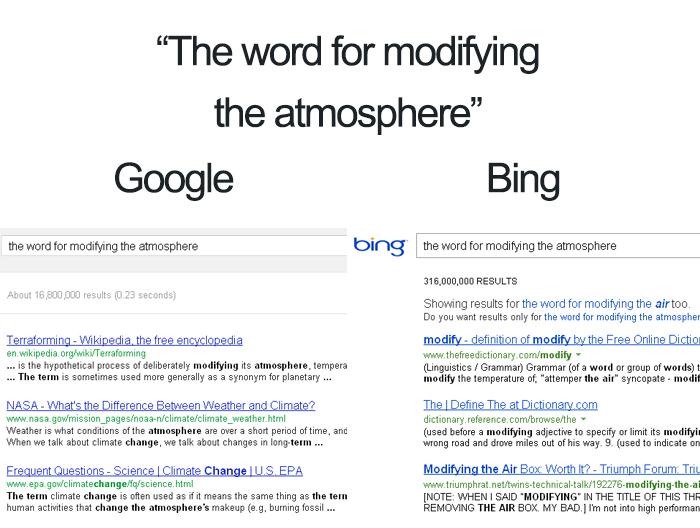
Let’s take the conservative view that any kind of government oversight is going to hinder economic growth. We’ll imagine the libertarian paradise where government finally leaves companies and corporations alone to competitively spar with grit and vigour. Of course, in competitions there are winners and losers, and when a company loses, it either folds or is bought up by the winning company it was competing against. Once a company wins, it dominates its market and becomes more powerful making it harder for newer, innovative companies to compete. It would sort of be like if Mike Tyson ate the heart of everyone he beat in a boxing match and gained their strength on top of his own. Or I guess the literal plot of the movie Highlander. And much like the film, there can be only one, and that’s why capitalism tends toward monopoly. You can look at Alphabet Inc., the corporation that owns Google, for instance: they’ve cornered the market, and bought up 243 companies that came up with innovative ideas related to internet-y type stuff. If some young entrepreneur working in their parents’ garage came up with some new technology that improved the way searching works, you think they’d be able to compete with Google? Or not be bought out in an instant? Even a trillion dollar company like Microsoft can’t compete with Google in its market, and if you use Bing, you’ll know why.

Most of the memes comparing Google and Bing are pretty dark, I’ve just now discovered, looking for an image to break up this text. I went with one that illustrates my point instead.

With further expansion of corporate assets, one can imagine quite a spread. Amazon, an online retailer, has made inroads into grocery chains, robotics, video streaming, and news media. With this diverse portfolio already existing within a world with already too much nanny-ing in its state, it’s easy to see these big corporations building their own empires of employment were governments to dissolve. The abolition of government in favour of capitalism wouldn’t lead to any kind of libertarian paradise, but to more of a corporate feudalism where one’s national identity would be better defined by where they worked rather than where they lived.

Jeff Bezos would be king, the managerial class would be his aristocracy, and the workers would be his peasants. Bill Gates, Elon Musk, and the other b(tr)illionaire owners would be neighbouring monarchies. The metaphor works quite well. Current day governments are the centralized Catholic church; the church had control over the identity of their subjects for hundreds of years. Then the individual, national monarchies got stronger and stronger, and identity was shifting. In the end, Henry VIII wanted to divorce his wife, the Pope said no, and King Henry said fuck you and started his own damn church. We’re at the stage now where there is an uneasy alliance between the two superpowers of government and corporation, and there is a real possibility that some corporate lord is going to have his own Henry VIII moment where he doesn’t want to do what governments are regulating and decides to secede.

Anti-trust laws are the only thing standing between me and my Anne Boleyn

Maybe this isn’t so bad because capitalism relies on pecuniary wealth as its measure of power rather than land ownership, right? Well, that’s not technically correct because capitalist power resides in ownership just as much as feudal power; Jeff Bezos is powerful because he has a say in how Amazon, the Washington Post, and Blue Origin are run. And within capitalism, this power manifests itself much in the same way as between warring monarchies. When Iran’s Prime Minister Mossadegh wanted oversight on his country’s oil reserves, the Anglo-Iranian Oil Company (now BP) pushed American and British forces to assassinate him to accommodate their corporate interest. When the United Fruit Company (now Chiquitas Brands International) didn’t like how the democratically-elected government of Guatemala was challenging its monopoly of their arable land, they lobbied the American government to arrange a coup. Both instances led to the installation of brutal dictatorships – notably, brutal to their people, but quite friendly to corporate interests.

This capitalist utopia would ultimately be a regression of civilization, and more importantly, the economy would still be managed! Jeff Bezos is already talking about it! He wants to solve global warming by sending industries into space, which, however unreasonable it might be given the timeframe that climate change has allowed us, is a goal he intends to use his vast wealth and influence to realize. The examples I listed above were governments working in tandem with corporate management of the economy, and that could be the only reason we haven’t had our King Henry moment – governments are quite content to whore themselves out to corporate mercenary interests. They’ve got fewer scruples than the Borgias.

By “we” I obviously mean the West, since Iran and Guatemala did actually have their own King Henry moments. Quite viscerally, in fact.

The thing is, Chiquitas is still around. BP is still around. Greenpeace recently tricked an Exxon lobbyist into admitting the ways that the oil industry manages the economy by curtailing green initiatives and reducing oil regulations in government. We’re already living in a plutocracy where the wealthy and ownership class manipulate government to exert their will. Cutting back government will only make their manipulations more open because they will be able to act on the economy much more directly.

Economies will always be managed; whether it’s by a communist government or a Keynesian one, whether by a feudal king or a corporate one. Once we accept that there is no such thing as a free market within capitalism due to accumulations of power, we can approach the problem of a managed economy with open eyes. I think everyone is in agreement that a concentration of control and power is bad and corrupt. Even Bezos’s “benevolence” toward climate change is myopic and likely influenced by an echo chamber of sycophants and power hungry trolls.

I think Bezos’s real goal is to make Elysium just as prophetic as Idiocracy.

The right happens to think that this concentration of power exists in government and calls it communist, and the left sees it in corporations more subtly exerting their influence. When the government and corporations work hand in glove, the distinction really becomes inconsequential. Both right and left even seek the same goal: a diffusion of that control. It’s just that the right wants that diffusion to take place in an environment where power cannot be diffused due to the tendency of monopoly within capitalism. The left seeks democratic control to replace this concentration, democracy in both community and organizational levels.

A managed economy isn’t such a scary thing because they always have been and they always will be. The invisible hand doesn’t exist – Adam Smith was a naïve idealist. The question you have to ask yourself is, who should be in charge?