Archives for posts with tag: drugs

I wrote something for the BC election, and had it published by a small independent online news outlet. You can read the published copy here:

I’d also like to include the original article. A lot of the vitriol was removed from the piece, and I’d like to share my anger with my sweet Chumps. Cheers!

There appears to be a surreal and growing consensus between the two poles of British Columbian politics. Presumably as a preamble to fully dissolving the party and endorsing the Conservatives, the NDP has embraced a series of regressive policies that leaves one wondering if the party of the radical woke Marxists is truly living up to the moniker. This whiplash shift in the Overton Window began when the NDP caved to political pressure and ended their decriminalization pilot project halfway through its run time, then caved to pressure and abandoned the life-saving harm reduction vending machines providing discreet access to disease-free supplies, then caved to pressure and pledged to withdraw from the carbon tax at the earliest possible convenience, and then finally the latest surrender to conservative pressure has been the promise to, once again, force people who use drugs into treatment. If it is not consensus, it is – at the very least – brazen cowardice.

As mentioned, the latest endeavour of this Craven Coalition is to snatch all the people off the street who use drugs and jail them, allegedly for their own good. It’s “treatment,” after all! Of course, they can’t send anyone to actual drug and alcohol treatment centres because there aren’t even enough beds for the voluntary clients, nor can they place them in dedicated mental health facilities or hospitals because those are all spilling over too! I suppose jails were chosen through a process of elimination. The NDP will retort that it won’t be prison guards or wardens administering these units but licensed medical professionals – as if that somehow changes the facility this all takes place in or the dearth of licensed medical professionals in the hiring pool. It will be a locked unit with many security personnel, and it sure won’t be an ambulance bringing in the new inmates! Following the trend of recriminalization, the NDP is choosing to meet the Public Health Crisis that was declared in 2016 with the full force of the carceral system.

Perhaps I’m being unfair. This is a deadly serious problem, and there is a treatment for it! It’s literally in the name! If we can overcome the logistical impossibilities of this kind of program and force these recalcitrant sticks-in-the-mud to just get a little help, then so many lives will be saved, so many families will be happily reunited, and so many people will continue to vote for the incumbent government. Is that not something noble worth striving for?

I worry that when people hear the word “treatment” when it refers to addiction, they think it works like an antibiotic: you party too hard over the weekend, catch a smidge of an addiction, you take some penicillin as prescribed, and it clears right up! Forcing someone into treatment under those circumstances might make some sense; if someone stubbornly refuses their dialysis, they’re often assessed as incapable, forced into the medical procedure, then sent back into the world until their organs start failing again. The coercive dream seems to be a brief intervention that measurably prolongs a life through medically-sound practices.

This is not, however, what drug and alcohol addiction treatment looks like. I worked for a couple of years in a licensed treatment centre, and continue to work as a social worker with people who use drugs. In my experience with treatment centres, they typically have programs like art therapy, music therapy, trauma-informed yoga, group therapy, one-to-one counselling, Cognitive Behavioural Therapy to help establish healthier links between thoughts, feelings, and actions, Dialectical Behavioural Therapy to help regulate overwhelming emotions, and so on. A pattern is beginning to emerge here! Even 12 Step-based programs (like Alcoholics Anonymous and the facilities that embrace it) function along the lines of non-judgemental and accepting communities that provide a caring environment for residents who typically feel isolated and stigmatized out among the rest of society. I believe if John Rustad ever learns how much Social and Emotional Learning goes into addiction treatment, he would abandon the whole project.

Going into a bed-based treatment centre means going into a 90 day therapy session. The reason for this is that addiction arises from trauma. In fact, all the people who use drugs that I’ve worked with use them to cope with that trauma. Drugs are the treatment for trauma. I will say it again: drugs are the treatment that people with addiction use to help them live with their debilitating trauma. These facilities exist as 90 day therapy sessions to provide alternative coping skills to the numbing and euphoric effects of drugs – quite tempting when sobriety is a living hell. The reason these facilities aren’t always effective is because addiction manifests itself over years or potentially decades, accumulating compounding trauma throughout the process, and three months of therapy before returning to the same environment that spawned all that trauma and drug use in the first place is unfortunately not the “cure” that people want it to be. Remember, if they have them, people have to go home when they’re done. If people are being taken off the street, where does the NDP intend to send them once their “treatment” is complete?

If the NDP thinks forcing people who use drugs into therapy is a good idea, I would invite David Eby to tell his wife, “Just calm down!” the next time they’re having an argument and report back on how well it went. There is a reason that 99% of treatment facilities are unlocked: people need to want to be there. The idea is to regain control of your life, and taking away that control at the outset is so obviously counterintuitive to the therapeutic process that it makes me wonder if the NDP actually knows any more about addiction treatment than John Rustad. Abducting people off the street, forcing them into jails, telling them this is for their own good, all of this is going to add to their trauma, not reduce it. Calling this “treatment” in line with the other resources that are available is going to terrify people struggling with addiction away from getting any kind of legitimate help. Rather than force people into addiction recovery, the results from this would have the NDP forcing people away from it.

Who is this for? This anti-therapeutic model was clearly not designed with people who use drugs in mind, so what is the NDP’s goal here? The reason this disaster of a policy was introduced was because a 13 year old girl fled her foster care and overdosed in a homeless encampment. Why not promise improvements to the foster care system? Why not promise additional supports for families so that kids don’t end up in care? Why not promise additional funding to Child and Youth Mental Health services to cut down on wait times? Why resort to this asinine model? Unsurprisingly given the NDP’s sea-change from orange to yellow, we’re following the traditional conservative trope of being Tough On Crime: ignore all the complex reasons that the scary thing is happening and warehouse the scary people so that they’re out of sight and out of mind. If we can stoke people’s fears and promise simplistic solutions to resolve them, we’re sure to win!

This provincial election is an embarrassment. With Kevin Falcon having sabotaged his own party into oblivion, the two surviving contenders appear in lockstep to dehumanize and discard people who use drugs. I’m not so naive to think that the Conservatives will provide any kind of reasonable or humane drug policy, nor any kind of other policy, so as a progressive voter, I will likely swallow the caustic bile festering in the back of my throat and vote NDP – only because the Greens are not viable in my riding. We desperately need to do better. We desperately need to actually look at the evidence when trying to address addiction, and start addressing trauma. If there are any politicians remaining who are capable of feeling shame, I hope they’re crippled by it.

Part IPart IIPart III

I have outlined in broad terms why Aaron Gunn’s propagandistic pseudo-documentary fails to even begin to address the drug crisis in Vancouver. It ignores the actual causes of drug use, it cherry-picks data from already irrelevant sources, and it does not even attempt to rebut the massive amount of evidence supporting harm reduction, and, to a lesser extent, safe supply (mostly because it is a new, statistically small project with little data currently available). Instead, it demonizes drugs and through them the drug user, painting them as violent and unpredictable. He films tent cities, likely without consent, and never actually asks any of the residents how or why they’re in that situation. Drug users are a pornographic threat, dirty and alluring, and the only solution he offers is to utilize state violence to enforce abstinence by any means necessary.

The pornographic content that I know you’re here for!

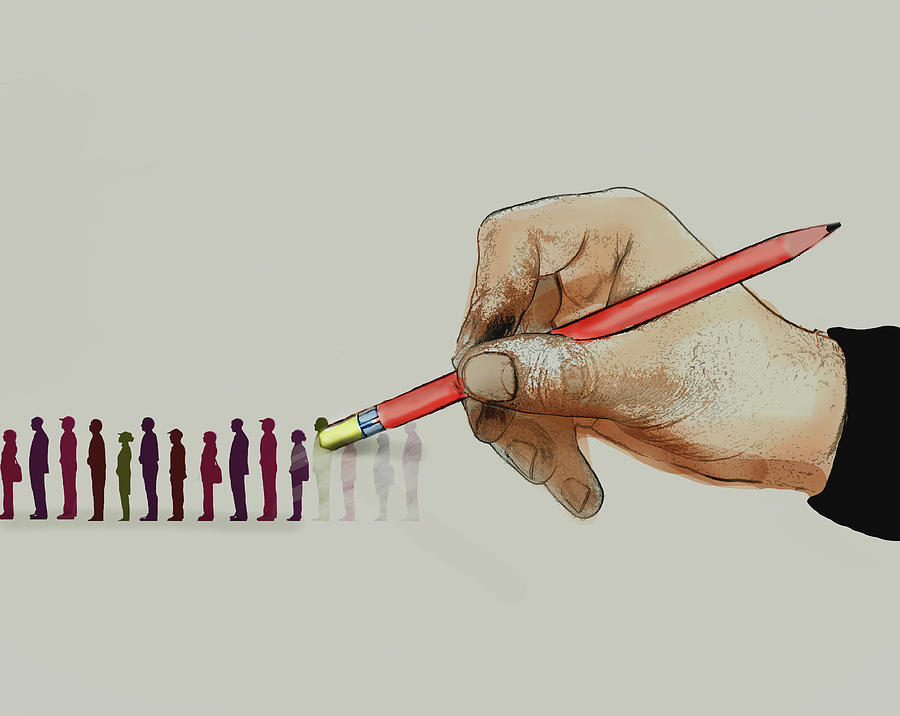
Gunn suggests that he and those ideologically akin to him are the only ones who actually care about drug users. He claims the Woke Left want to keep drug users in the slums, stuck in addiction, stuck in poverty, and it is only by making drug users “better” that they can be saved. Much in the same way that infamous LGBT antagonist Anita Bryant claimed that she didn’t hate homosexuals, Gunn seeks salvation for the morally fallen. This is why there is so much emphasis in the real world of right-wing politics to force people who use drugs into treatment – they need to be saved! Of course, there aren’t enough beds out there for those who want to go into treatment voluntarily, but despite this miniscule logistical anomaly, we must force these sinners into repentance for their own good. You’ll hear talk of treatment beds as a panacea to the drug crisis without anyone actually pointing to solid evidence that bed-based/residential treatment actually works any better than anything else people are doing, with some evidence showing that the risk of overdose increases after treatment because the person’s opiate tolerance has evaporated. This is because treatment isn’t treatment in this context; it’s conversion therapy. “Beds” are only a measure of our capacity to eliminate sin. The goal is erasure, and erasure on a massive scale does not consider pesky irritants like research, studies, or the voices of the people being erased.

When the threat of hellfire isn’t enough!

This is why analyzing this kind of propaganda is important. Gunn released this trash leading up to the Vancouver municipal election, and the right-leaning ABC Party under Ken Sim won a solid majority on a platform nearly identical in ideology to that of Vancouver Is Dying – we need law and order to combat drug use and random violence! Interestingly, in trying to find years old news coverage about Sim’s platform, I stumbled on a fun little update to all those stranger attacks so prominent in the film – apparently there was a massive decrease in stranger attacks when the pandemic was winding down in 2022, and the police just didn’t release those statistics during the election campaign of the right-wing candidate they had endorsed. Remember how Gunn neglects the pandemic when talking about crime? Perhaps the fear of crime was sensationalized by opportunists hoping to push emotionally-driven policy with no regard for what the truth actually is. ANYWAY, I DIGRESS!

Who could have guessed??

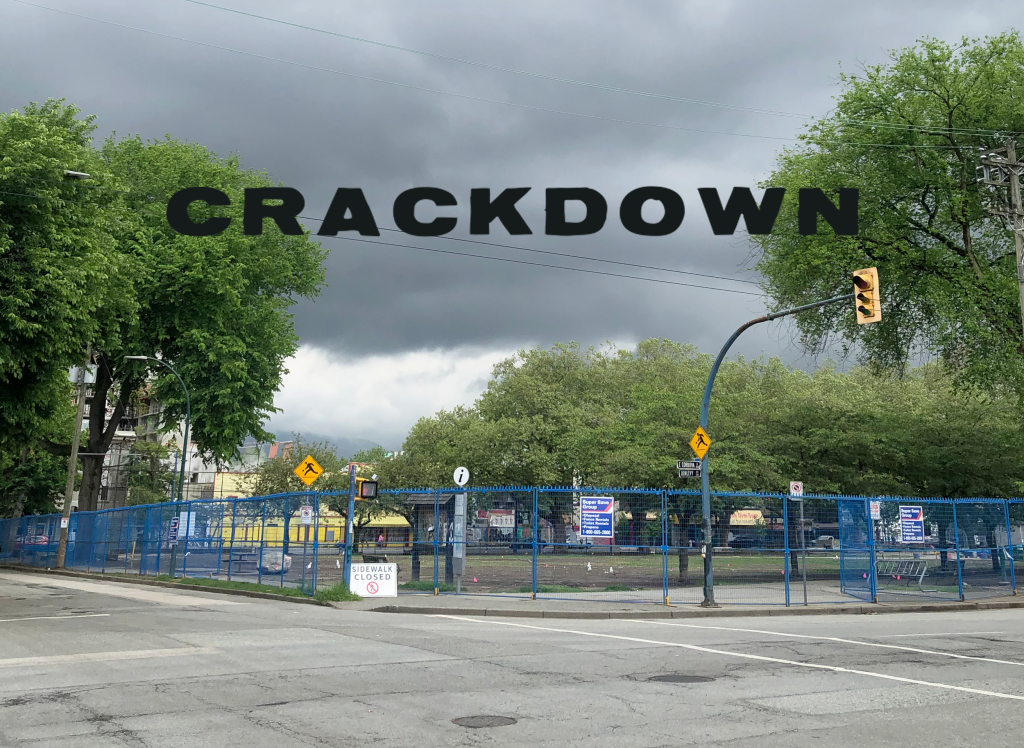
So what does erasure look like in real world scenarios? Perhaps the event that received the most news coverage was the police sweep that cleared the encampment from Hastings Street which Gunn so callously captured in his more voyeuristic shots. This was completed without any thought as to where these human beings might go, and as expected, the problem didn’t go away – people just didn’t have their tents and meager belongings anymore. But there’s more: Vancouver’s ABC party shut down a street market that many homeless people utilized to acquire cheap secondhand goods, moving it to a less accessible indoor location with fewer stalls for vendors. These goods could be the result of theft and organized crime, dontcha know, which is scary! Getting rid of the observable and centralized market is obviously not going to reduce theft, but there is only one outcome that matters: erasure. The city of Vancouver also chose not to renew the lease for the Thomus Donaghy Overdose Prevention Site which has a centralized location close to an abundance of drug users. With overdose deaths through the roof, it sure would make sense to have a space where it could be done safely with some medical oversight! But alas, erasure demands the elimination of anything that might support the scary and bad thing. There’s more: Vancouver downsized CRAB Park – the only sanctioned tent city – for safety reasons. Tent cities are the never-ending symbol of erasure as they pop up and are cleared off with metronomic consistency, from Oppenheimer to Strathcona Park to one that popped up and was shut down near to where I live – all eventually cordoned off by the blue metal fence.

Seriously though, check out the Crackdown podcast linked above about Oppenheimer Park being shut down

It’s not just Vancouver, and that’s my point. An encampment in Prince George was evicted as well, leading the federal housing advocate to call it a “human rights violation” based solely on the fact that it was evicting people from somewhere with nowhere else for them to go. Federally, the Conservatives have been railing against the science of harm reduction, going so far as to blame every last drug overdose death in BC on decriminalization – a pilot project meant to reduce police interactions with drug users (not actually reduce drug deaths) which was a thrilling success, with a 77% decrease in possession charges and a 96% decrease in drug possession seizures! The problem was that people started to see more drug use – the exact opposite of erasure – and that made them uncomfortable. This discomfort unfortunately is the perfect gateway drug to emotionally-driven tripe like that being peddled by Gunn! (Of note, Gunn claims that police don’t actually harass drug users, which is clearly not borne out by the statistic that 96% of police seizures were under the 2.5 grams for personal use before that amount was decriminalized – perhaps this was part of when he mentions that police will “stop and talk to people on the street.” Even if someone isn’t being locked up, that doesn’t eliminate the harassment!)

I’m sure Gunn would comply without complaint to enduring this repeatedly and without reason

What if we could reduce the harms of hard drugs to such an extent that they were no more harmful than alcohol (which in social costs is technically higher than heroin, but haha who cares, right!?). Anyway, let’s say that the drug supply was sufficiently harmonized that it was no longer causing overdoses, that the tools to use it safely were widely available to eliminate the threat of diseases, that the crimes associated with its sale were eliminated, and so on. It is possible – remember we literally used to give legal opiates to children! This is what Gunn fears – he’s actually quite explicit in this when he cites the dangers of “normalization.” What if opiates became so banal that their use was equivalent to enjoying a beer at a hockey game? Or equivalent to cigarettes, where they were discouraged but still mostly tolerated? Perish the God damned thought!

To bring things back to Anita Bryant, it’s important to remember that talking about doing anything about the AIDS epidemic was fearfully seen to be “normalizing” homosexuality. If the homosexuals are dying, well, that’s only because they’re sinners. We’re the only ones trying to save them by praying the gay away, and anyone trying to increase their life expectancy is actually endorsing homosexuality – they’re basically sinners themselves. The parallels to Vancouver Is Dying are endless, and the previous allusion to conversion therapy is depressingly apt. If drug use becomes normal, then people might start being accepting toward drug users!!

Eagerly awaiting the parody that sings about how everyone has unmanaged childhood trauma to a catchy tune!

In my professional life as a health care social worker, I came across multiple people who saw this film and were swayed by it – people who ought to have known better – but I get it! Emotions run deep, and playing to them is a likely way to win in politics, particularly on the right. Crime is scary! The stereotypical drug user, an unkempt man covered in filth and drool with a needle sticking out of his arm, is gross! These are valid emotions! But manipulating those emotions to erase a vulnerable population because you think their lifestyle is a sin has been done before with similarly deadly consequences. Between 1981 and 1988 in the United States, there were 46,134 deaths related to AIDS. In Canada, with a fraction of the American population, there have been 42,494 deaths between 2016 and 2023 related to opiates. I know that it’s not a contest, but my point is that the fear, the moralizing, and the disinformation being put out is just as disgusting now as it was then and that this shit matters. These deaths matter. Anyone who seeks to erase a population is contributing to those deaths because the outcome is essentially the same – the drug user exists no longer by one means or another, and the likes of Gunn don’t seem to mind which route they follow. They don’t see a disease, just a people they define as a disease.

To conclude this excruciatingly long series of posts, Aaron Gunn, your film is toxic and manipulative, degrades human beings, and encourages their deaths. Now you are hoping to become a federal Conservative, with looming control over these people’s lives. A pie to your face is the least you deserve.

Part I

Vancouver is Dying starts with a threat to its viewers. You are not safe; every day there is a statistically improbable risk that you will be assaulted by a stranger. The cops have been castrated by woke mandates to avoid overt brutality, and so the city has run amok. There are no consequences to the choices people make, so we mourn the passing of a once great city. The reason for all of this… is drugs. Not poverty; not the civil disenfranchisement of a particular neighbourhood; not the modern cumulation of centuries of colonialism. It’s drugs. Possibly woke-ism too, since the defecator of this trash, Aaron Gunn, literally says that the Left believes opiates are a good thing, but he focuses on drugs as the root of Vancouver’s degeneration. Drugs, we are told, are bad.

Lest we forget!

Despite being the alleged cause of everything evil that’s happening in Vancouver, Gunn doesn’t actually spend all that much time talking about them. What is a drug? Alcohol has been shown to be the most destructive addictive substance, but I guess alcohol is irrelevant to the Downtown Eastside (it’s not). Both sugar and caffeine hit the same dopamine receptors in your brain as crystal meth, but those also don’t count (how many people reading this rely on caffeine to enable their daily functioning?). We can also safely ignore process addictions too, like gambling and video games. When Gunn talks about drugs, he only means the highly unregulated ones, the ones they don’t advertise on TV. Seeing the harms of addiction in a wider context of mass consumerism might lead to… a criticism of capitalism! And we can’t have that.

So of course Gunn avoids that context to the best of his ability. In the few brief interactions he has with active drug users, he asks one what she thinks about addiction. She brushes off the harms that everyone already knows about with street drugs to talk about global addictions, like the equally suicidal addiction humanity has with oil and gas, or the addiction to money in the financial markets, or the addiction to consumer goods we might indulge in after losing our life’s purpose during a midlife crisis. Rather than discuss the threads linking micro and macro addiction, Gunn says, behind her back, that she must be in denial. She didn’t deny that her drug use was harmful; she just wanted to talk about the context as to why all of these problems exist, and Gunn absolutely does not. So he calls her delusional without giving her an opportunity to respond – but who cares; she’s just a supid junkie, right?

Only one of these counts as a person.

According to Gunn, addiction is a silo that only impacts a ‘certain type’ of person, and isn’t connected at all to the culture or global habits surrounding it. So where does it come from? Why do people use drugs? Drugs seem kind of bad, so how come so many Vancouverites… sorry, people specifically in the DTES and nowhere else… how come they do the drugs? Par for the course, Gunn doesn’t really explain. He makes one inference, and expects the viewer to figure it out for themselves.

The closest Gunn comes to explaining where drug use comes from is by talking about the choices that some homeless people make to stay in the street. Our old friend Colonel Quaritch has the unmitigated gall to suggest that it’s easy to get housing in Vancouver (as a social worker, I found this to be particularly offensive), and Gunn doubles down on this by showing that there has been 1,400 new supportive housing built over the past four years, with 350 new ones being built. Of course, those 1,400 are already full (the waitlist for supportive housing is a couple of years), and there are an additional 2,000 homeless people that need help, so his optimism is… misplaced. We can also combine his bullshit with another ignored statistic that about 7,000 housing units are in need of replacement, and we can see that the rumours about the challenge of housing in Vancouver are in fact true. Turns out it is expensive and difficult to find housing in Vancouver! Who could have guessed!?

I will put this in every single one of my blogs from now on if I have to.

Okay that rant was mostly for my own benefit, but let’s return to Gunn. He wants to show that the chaos is a choice – that the option for stability is there for those who want it, but that people live in squalor and disease because… they’re crazy, I guess? A DTES resident tells him that people sometimes choose to live in the streets because of the restrictions in a lot of the supportive housing units, and then that’s enough for him. No point in exploring what those restrictions might be, or what the benefits of the streets might be otherwise, just enough that we have captured a DTES “resident” confirming what we already know. People who use drugs are just completely irrational.

It turns out though, that even people who use drugs are rational in their choices – they are just too often limited in the choices they can make. If a drug user has a choice between using drugs in such a way that it is likely to kill them, or to use drugs in a way that is likely to not, they’re going to choose the way that allows them to avoid death. Rational! Same thing with homelessness. If we talk to people who do choose that lifestyle, they are often fleeing violence that is pervasive in shelters and some SROs, or they want to live in a community of mutual aid amongst their peers without officious oversight. The restrictions that Gunn avoids talking about are typically restrictions on visitors, meaning that your loved ones aren’t allowed to visit. This means you essentially can’t have a partner or children or friends. If I foreshadow a bit that the opposite of addiction is connection, then we can see that these restrictions would actually encourage drug use rather than help eliminate it. It would be rational for someone to choose their loved ones over rat/lice/bedbug/cockroach infested housing, wouldn’t it? Gunn even acknowledges that a lot of the housing is awful, that it’s filled with drug dealers and drug users, but then seems vindicated in degrading homeless people when he’s able to confirm that people don’t want to live there because of that very awfulness. He doesn’t offer a clarion call for better housing in more suburban neighbourhoods where people might escape violence, addiction, and poverty because presumably that would entail the spread of their disease into the ‘purer’ neighbourhoods.

Good miniseries on this very topic!

If people don’t use drugs because they’re just cuckoo-bananapants, then why? It’s a question that should have been at the forefront of anything trying to be a documentary about drugs.

The secret they don’t tell you about drugs is that they’re not actually bad. Drugs are amazing. You’ve likely at least had sugar, caffeine, and alcohol, and most people have a lot of fun with those things! The trouble with drugs isn’t that they’re so amazing that they become addictive, it’s that they’re a problem for those people whose lives are so awful, so that when they do take drugs, their amazing-ness brings them to about normal. Heroin feels like a warm, loving hug; imagine what that must be like for someone who has never felt a secure connection. The first experience of drugs that people who often become addicted is usually, “this must be what everyone else feels like all of the time!”

Addiction typically begins around adolescence when teenagers are supposed to be learning how to cope with complex emotions, and if someone with a lot of complex emotions learns that drugs are an incredibly effective way at dealing with them, that’s how they learn. Just like it’s hard to learn a new language once our first becomes so ingrained into our way of navigating the world, so too is it a challenge to learn a new way to process our emotions once we’ve already established something that works. The physical dependence of drugs can be overcome in a few days, and for drugs like crystal meth, you literally just sleep it off and then you’re done. The psychological dependence, the need to numb yourself from all those accumulated feelings, that’s what causes relapse. You may have heard that an addiction is a behaviour that continues despite negative consequences; well, the negative consequences of not using are often worse. Feeling decades of trauma all at once when the drugs wear off is more often than not still worse than any infected absess. Drugs are not the problem of addiction. It’s just that people with addiction have drugs as their only workable solution to help them cope with what they’re going through, and it’s hard to learn other ways – particularly when drugs work so well and so quickly. Some call addiction a learning disorder rather than a disease for this very reason.

When I was a child, I had a fever. My hands felt just like two balloons. Now I’ve got that feeling once again. I can’t explain, you would not understand; this is not how I am!

Rat Park is an experiment that sought to question the original idea of addiction. We once understood addiction as absolute – a rat was put in a cage, and had two options: a regular water, and water laced with cocaine. Those rats consistently chose the cocaine water until they died. Rat park was an alternative: rats were put in a cage with tubes and balls and other fun rat activities and, most importantly, with other rats. The two water options were the same, but these rats only had the cocaine water every once in a while. The rats lived full and healthy lives, and occasionally got to have wild parties when they opted to go for the cocaine water. Remarkably, rats from the first cage could be put into Rat Park, and they would lose their addiction relatively quickly. To sum up, it’s never been about the drugs, but about the lives of the people who use them.

What if we understand addiction as a response to something rather than the problem itself? Looking at process addictions and less stereotyped substances might become relevant to our thesis. Global patterns that impact culture might contribute to the so-called disease. If we are told to always be consuming more and more to avoid loneliness, grief, to find meaning, then perhaps a comparison to a midlife crisis sports car is actually quite apt, and it is Gunn that is actually the one in denial. What is addiction a response to? If it is getting worse, what is going on in the world that is exacerbating it? I guess if we never ask what addiction or drugs are, then we avoid that pesky subject entirely.

Enough trauma can manifest itself anywhere to produce an addiction, but the most visible problems from it sure do seem to crop up in one particular demographic. I’m sure it’s nothing!

Drugs start out as the rational choice to cope with childhood trauma, to the point where drugs can even save someone from suicide. That becomes their only method of coping, and then they become stuck in that lifestyle even past the point when its consequences start to outweigh its benefits. Ending drug use is only ever really an option if the person has meaningful activities and connection waiting for them on the other side, in an environment stable enough to maintain it. Do police and jail sound like the optimal environment to provide that? Is Gunn right that we should be bullying people into quitting drugs? Or should we recognize that a sober lifestyle just isn’t a reasonable option for a lot of people given their circumstances within capitalism, and do our best to support them in the world they’re stuck with, recognizing and respecting their rational choice in opting to live this way? Perhaps we could make sure that the drugs they take don’t kill them, since they’re human beings still worthy of dignity, perhaps more worthy given the wars they’ve lived through.

Fuck them, says Gunn. They will live and die as he decrees. Join us next time, when Aaron Gunn will try to suggest that having more harm for people who have endured so much already is a good thing actually.

Part III