Archives for posts with tag: ethics

I am a social worker in Canada, and with some frequency I am told that I work in a noble profession. And it’s always that word, too: noble. Social workers are paragons of virtue simply by dint of how we make a paycheck. We don’t toil monotonous labour; we don’t exploit those same labourers for surplus value – we transcend the capitalist dichotomy. Doctors, firefighters, and the like may be heroes, but social workers are noble. We’re not glamourously saving lives; we’re in the trenches helping the less fortunate. We sit among both the lepers and the crooks. It’s unclear what we actually do, as I find when talking to even those who work intimately with social workers, but our virtue is assumed – whatever it is we’re doing with those lepers and crooks is irrelevant. Our proximity to pain is enough.

So what do social workers do? Are we really so noble? Am I secretly a monster??
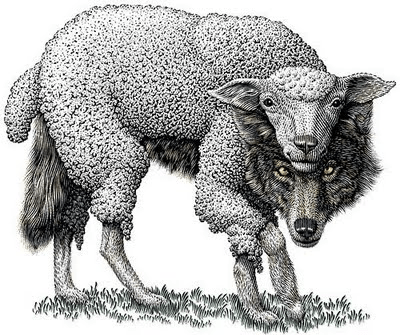
Pictured: a social worker

The Sixties Scoop refers to direct policies of colonial Canada to remove indigenous children from their homes and place them into white foster families or fully adopt them into other, equally white families. It ran from about the 1950s until the 1990s. It represented a shift in approach from the residential school policy which was established to follow the maxim, “Kill the Indian, save the man.” This approach aimed to “save” the indigenous person by “killing” everything that was indigenous about them, and the residential school program aimed to do exactly that by removing children from their families and culture, abusing them if they spoke their native tongue, and presenting them as superficially white with shorn hair and new clothes.

As abducting children from their homes and imprisoning them in abusive facilities became more and more gauche, the Canadian government needed a new methodology to “save” them. In comes the social worker to investigate indigenous homes, and when the indigenous parents are found lacking by white colonial standards, abducting the children from their homes and imprisoning them in abusive white families. This practice continues to this day in what’s called the Millennium Scoop, as the majority of youth in care across the country remain indigenous despite being a small fraction of the Canadian population. Social workers as a profession are responsible for this.

Pictured: another social worker

But surely social workers must do more than whisk babies away in the dead of the night to feed the endlessly hungry maw of settler colonialism! And we do! Socials workers are in schools, healthcare, all over the place. We even do more than just report new moms to child welfare when they’ve given birth while poor! We also connect those without an income to regular, adult person welfare which in British Columbia adds up to… $560 a month.

Now, I know what you’re thinking: that seems like less than table scraps. But there’s more! Social workers can also support low-income people in getting housing that is arguably worse than homelessness: insufficient temperature controls that have residents freezing during the winter and cooking in the summer; illegal practices by landlords including unlawful evictions; restrictions on guests preventing loved ones from ever visiting; health issues arising from mold, bed bugs, vermin, and general lack of upkeep; the list goes on. Those helped by social workers can enjoy their fraction of a scrap living in deplorable squalor.

The resources that social workers can actually provide to the people they’re “helping” are so insufficient it seems somewhat surreal to refer to it as helping at all. This is the parsimonious bounty the system provides, and social workers are the smiling face of the miser doling it out. People don’t typically know what social workers do because even in the best case scenario, the real answer is so close to “nothing” that we would all collectively die of embarrassment if anyone actually looked into it.

Pictured: still another social worker

If our jobs are so trivial, how did we become noble? In this instance, it’s useful to look at the etymology of the term. Noble comes from the Latin nobilis, referring to the high-born families of the time: the nobility, duh! It is a moral framework steeped in hierarchy. Noble people are those who embody the ethic of the aristocracy, and social workers do exactly that.

The idea of the welfare state is to help the less fortunate, but capitalism can’t actually address any of the root causes of poverty and inequality because that would upend capitalism itself. Welfare is the compassion of capitalism whose sole purpose is to never solve anything. Monetary policy requires a percentage of the population to be unemployed; when there is inflation, the central bank raises interest rates in order to produce more poor people. Our system requires poverty, and if any of the methods utilized by that system ever did anything to address it, society would collapse into itself in a Dadaist paradox. Social workers are the systemic representation of that compassionate farce. We are noble because we are the morality of the capitalist elite. When approaching indigenous population, we are the ethic of the white settlers, taking up the white man’s burden to serve our captives’ need. We ease the worries of an otherwise apathetic middle-class, comforted knowing that social workers are there as a bulwark against the cognitive dissonance from class and racial guilt.
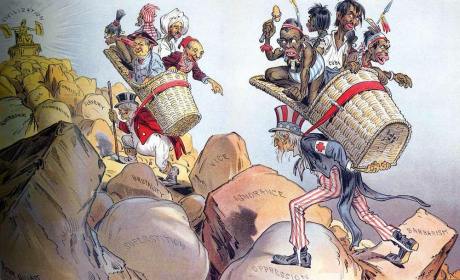
Pictured: a final disparaging caricature of social workers

We are not, however, a moral profession. As compassionate and as genuine as social workers tend to be, our “help” is often harm. Indigenous families do not look upon social workers as saviours but as destroyers, tearing up their families in the name of an oppressive fantasy of “doing good.” The impoverished do not see social workers as angels coming down from on high, but merely as a means of drowning less quickly. We try to be good, but good on whose terms? We try to help, but we’re in denial, cogs maintaining the facade of a benevolent state. True solutions would not involve social workers at all, but a restructuring of the world so that the horrifying outcomes of colonial capitalism would not be produced in the first place.

If the ethic of nobility is the delusion social workers use to sleep at night, it is useful to look at the Latin once more to try to break free from that corrupted reverie. We traditionally think of the vulgar as the offensive, the crass, the unclean. In its origin, however, it referred to the low-born, everyone else outside of the nobility. These are the people social workers are supposed to support, yet we remain detached and aloof. How can we bridge that gap? What would an ethic of the vulgar look like? What would social work practice look like if it embraced the vulgar instead of the noble?

I often find myself thinking about the Haitian Revolution. Not because I’m a historian, nor do I feel any particular personal connection to slavery. I am quite Caucasian, thank you, and my natural empathic connections lay in far more privileged in-groups. Frankly, I have more in common with the French slavers than I do the Haitians, and that is precisely my point.

Hello comfort zone!

The Haitian Revolution was vicious. When the slaves rebelled, they did so with ferocious gusto. The Haitians tortured and slaughtered every single French family on the island, ostensibly to prevent further enslavement, but arguably as revenge for the crimes of their colonial nation. The only White folks who were spared were the Germans and Poles. In retaliation, the French set up a blockade around the island with their navy of warships and forced reparations from the new republic, demanding the former slaves pay their slavers approximately $3.5 billion USD in today’s currency, with Haiti only paying it off finally in 1947. Haiti’s modern day impoverishment was imposed by a jilted nation bitter about losing the people they owned as property.

The Haitians brutalized French civilians, killing entire families including children. Did France have the right to defend itself? In a just world, should they have invaded the poor nation to reestablish the status quo? Let’s say for the sake of argument that the French would have been delicately proportionate in their response, and avoided killing civilians, targeting only the militants who overthrew the slaver regime. They were one of the few republics globally at that point, deposing their own tyrannical rulers in their own notably dovish way; surely their cause must have been just – they were an oasis of democracy in the world! Would their resolute nobility justify returning the Haitian people to enslavement? Should we condemn the Haitians for their revolution? Surely a peaceful solution was possible, and while we may mourn the tragedy of French retaliation, devastating in its reality, we cannot abide the violence of a slave revolt. Surely.

I don’t think the Haitians had truly exhausted their kumbaya resources

Slavery is now considered one of the greatest evils humanity has ever perpetuated. To respond to it with violence isn’t actually at all controversial. When America eventually caught on that slavery is bad, it had a whole war against itself in order to reject it. To talk about the Haitian Revolution without the context of slavery is just about the most absurd thing anyone could ever do; even the worst student in a high school history class would still include the word “slavery” somewhere in their failing final paper, perhaps even in the title. When we look at the slave revolt, the keyword is already present in the phrasing. To pretend it erupts in an ahistorical vacuum would require significant leaps of racism to ignore.

My parallel is not subtle, and the criticisms are predictable. What the French did, slavery, is objectively wrong, and the Israeli treatment of Palestinians is a false equivalence. Perhaps, but we must look at the context to determine whether or not that is actually true. In the occupied territories of the West Bank (deemed illegal under international law), Israeli settlers are forcibly evicting Palestinians from their homes in order to claim the land for their own, often using violence to do so. In Gaza, one has to wonder how Israel had the power to eliminate access to drinkable water from entering the region after Hamas’s attack, along with other trifles like fuel, food, and medicine. This blockade has been in place since 2007. What do you call it when one group controls the necessities of life of another, removing access to it when they disapprove? It is driving a people into submission, reminding them who has the power over their lives. While there is no forced labour, the comparison to slavery does not feel too outrageous. There is a word that is commonly bandied about though, apartheid, as described by Human Rights Watch, Amnesty International, and even the Israeli human rights group B’tselem. What does it mean to use violence against such a state of oppression?

This surrounds Gaza. This is why it’s often compared to an open-air prison with unlivable conditions even at the best of times. What kind of moral equivalence should we attribute to the imprisonment without charge of an entire people?

Which leads me to the second predictable criticism. We’ve grown as a species since the days of colonialism and slavery! We don’t need violence anymore! Even the apartheid in South Africa was resolved through the peaceful actions of the great Nelson Mandela! Violence, in any context, is inherently evil and should never be used as a political tool.

There is an old philosophical adage that states that ought implies can. This is a simple maxim that stipulates that only someone capable of acting ethically is responsible for doing so. If I can’t lift a boulder that’s crushing you to death, I am not responsible for saving you. If I’m Superman and just don’t bother to lift the boulder, then I am acting unethically. It’s fairly straightforward – we can’t perform moral duties that we are unable to perform, therefore we are not obligated to follow them.

Holding people to literally impossible standards?! Something something joke about relationships

Can Palestinians use non-violent means to end the apartheid imposed upon them? I mean they’ve tried. The United States has vetoed every single United Nations Security Council resolution that would hamper Israel’s ability to oppress them. The International Criminal Court has been rendered essentially impotent in their investigations into the matter due to America’s opposition, sanctioning prosecutors. Israel also flatly rejects the jurisdiction of the court, denying any international legitimacy to the complaints of the Palestinians. The Boycott, Divest, and Sanction (BDS) movement that attempts to use similar tactics that ended apartheid in South African is often legally impermissible, or at the very least culturally frowned upon rendering it inconsequential as peaceful protest. When Palestinians protest peacefully locally, they are often shot for their troubles. Journalists covering the situation are also killed with impunity. The list goes on.

What exactly ought the Palestinians to do? When we condemn Hamas, we’re saying they ought not to have done what they did, but the follow-up question becomes: what ought they to do instead? There does not appear to be any effective measure Palestinians can take that will alter their situation in any meaningful way. Are they simply to sit passively by? Allow history to unfold as it will, without their input? Should the Haitians simply have waited for the French to determine on their own that slavery is morally bankrupt? France ended slavery in 1848, 44 years after the Haitian revolution. Would we ask them to endure another couple generations of slavery to avoid any wearisome violence? How long do you think it will be for the Palestinians to wait, or will the historical narrative have them driven out of their homes forever? The idea of forcibly relocating a people out of their homes under threat of death has terrifying precedent.

Don’t you know that patience is a virtue?

The third and final predictable criticism is that I am justifying the terrorism of Hamas; what Hamas did was good actually, and innocent Israeli families deserve to die. Hopefully by now you’ve been able to ascertain the entire point of this article. We cannot justify the acts of Hamas in the same way we cannot condemn them. We cannot say they ought to have committed such atrocities just as much as we can’t offer an alternative. If ought implies can, and Palestine is forbidden any action whatsoever, then there can be no ethical component to their deeds. The October 7th attack can neither be condemned nor justified because it does not exist in the ethical realm. The violence of Palestinians transcend any ethical deliberation because ethics have long been unattainable for them. Hamas acted in what amounts to a state of nature, and people died. We are allowed an emotional reaction to be sure, but not an ethical one. If we want an ethical option for Palestinians to embrace, perhaps we should give them one. We can act.

If I was alive in Haiti in the early 19th century, me and my family likely would have been tortured and killed by dint of nothing more than our racial identity. I certainly wouldn’t have enjoyed it, and I would appreciate people mourning the deaths of me and my loved ones. I’ve long questioned, however, even before October 7th, 2023, the justifications for my survival in that context. What is my life or death in the face of the giant of slavery? How ought I to be treated as an accessory to slavery? What would my own moral obligations be if I survived the slaughter? How does one condemn a slave revolt in a world without ethics?

Virtue ethics has been a thing for a long time. It’s about embodying certain characteristics that make someone a good person. Aristotle, who coined the whole system, advocated admiring the virtuous sage and copying their behaviour; the sage being someone who embodies characteristics that ought to be copied. It’s a bit of a circular process that certainly deserves some criticism, but it’s hard to shake the notion that there are certain characteristics that make a person more virtuous. Aristotle gave out a list, but I’m not going to focus on every single one because some of them are dumb.

I mean, you can have a look… try to figure out the dumb ones!

The thing about virtues is that they require personal sacrifice. Courage is the best example, because courage without risk to the self is incoherent. It no longer functions as a concept. Honesty, for instance, is certainly not incoherent when there isn’t any risk, but lying about something benign would usually typify some kind of pathology. Honesty is only a virtue when the sage has something to lose by being honest (we’ll call “something to gain” the loss of an opportunity to gain to keep our sacrificial theme simple). Patience is only a virtue when it would feel real good to lose our shit on someone. Temperance is literally the sacrifice of indulgence, which, if you’ve ever indulged, is a lot of fun. While loyalty is not on Aristotle’s list, it is a common sense virtue that only has value during instances of temptation; its value coming from the sacrifice associated with it. Aristotle liked to think of virtues as the perfect balance of moral homeostasis, but it is very easy to frame them instead as the subjugation of the self for the sake of a higher purpose.

Ask yourself: is this a better depiction of virtue than a soldier throwing themselves on a grenade to save their peers?

To be virtuous then, is to act for the benefit beyond oneself. What this means is that individualism is inherently an unethical philosophy, and systems built on individualism are by definition immoral. By focusing entirely on ourselves, we limit the risks we are willing to absorb for others. We may want to think of the tenets proselytized by individualism such as efficiency and productivity as virtues, but we would be sacrificing the core of virtue ethics. Personal sacrifice for the boss’s profit may seem virtuous to admirer’s of “good work ethic“, but where is the reciprocity necessary in an ethical system? Do bosses exist outside of that system? Probably wouldn’t be great if they did! What’s good for General Motors is not good for the group; I mean, unless General Motors became a collective… *cough*.

Hm. This collective may be a bit problematic.

Again, there are problems with virtue ethics. For one, they’re very tribal. Loyalty to the group may detract from perfectly good or better alternatives, for instance. Friendliness literally points to a circle of friends, and no one can tell me that the same level of friendliness extends outside of that group. For those wondering about which of Aristotle’s virtues are dumb, they’re the ones only attainable by rich people like liberality, magnificence, and magnanimity (listed as great-souledness in that weird list I found on Google). Dude made a living selling philosophy lectures to those with the means to pay for fucking philosophy lectures; he had to play to his audience. However, this illustrates very well the problems of virtue ethics as a system. Virtues develop within the tribe for the benefit of that tribe, giving them a degree of subjectivity as well as a parochialism that I certainly reject.

Our virtuous ethics; their dishonourable sinfulness

I may not be a virtue ethicist, but despite my reservations, I can’t argue with the fundamental principle that ethics require a vision beyond oneself. If we recognize this truth, then we become much more resilient to socially destructive propaganda trying to pass itself off as virtues: independence, self-interest, etc. If a character trait seems designed to prevent unionization, it probably is!