Archives for posts with tag: LGBT

Those in the West live fairly comfortably in democracies. Sure, some of us are technically constitutional monarchies, but our overall vibe is still pretty democratic. Partisan politics always seem to claim to be the voice of the people and not the voice of the king, so there are at least overtures to democracy. And yet, we still tell kid stories that revolve around princesses. Disney has a veritable pantheon of them and isn’t seen as an enemy of democracy (barring the inanity that is the state of Florida). Celebrating someone in the queer community is to call them a “queen.” The monarchy remains embedded in our culture across the spectrum, from the capitalists to the queer dissidents.

The usage of these monarchist tropes certainly don’t aim to be anti-democratic. Disney princesses rarely do any actual governing or promote policy measures; they typically go on adventures, solve mysteries, and sing songs about how many thingamabobs they own. If there is a queen or king involved, they may even have a short temper you certainly wouldn’t want in an autocrat, but it’s never viewed in that context – they’re just a mean ol’ parent who doesn’t let their teenage daughter have any fun! The monarchies in these stories are about as apolitical as you can get.
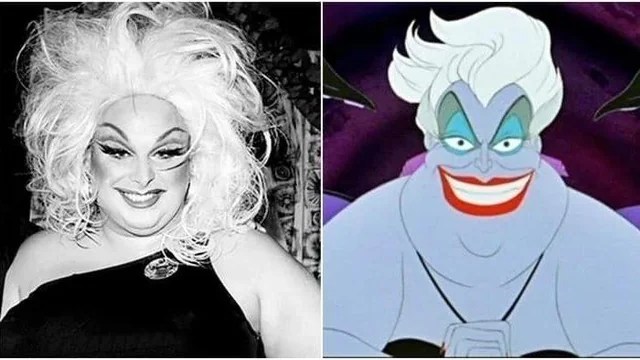
The queer coding for villainy, on the other hand, is far more obvious.

So why have the story told through the lens of monarchism at all if its function as a form of government is completely irrelevant to the plot? Why is Ariel a princess when she can just be some random girl with an overprotective father? The same story works if they’re poor and Triton is a working single father who is trying to raise his daughter alone, but she isn’t focused on taking care of herself or her future; she’s focused on hoarding useless junk. These stories don’t need monarchism, so why romanticize a form of dictatorship most countries killed a whole bunch of people to overcome? Monarchies are bad, you guys! Remember? Remember how America fought a war and France killed a lot of people to get rid of them? Democracy and monarchy are antithetical toward one another, and we’re supposed to love democracy!

The Beauty and the Beast fairytale takes place only a couple of decades before this happened in France. Let’s just say that those two did not live happily ever after, and you know, maybe they shouldn’t have!

Edmund Burke is the father of modern day conservatism, and he was a staunch opponent of democracy in his time and opposed the French revolution. He recognized the failures of the contemporary monarchies that were being resisted, but believed ultimately that there still ought to be an elite governing the masses, and if the current group were a failure, then they were just the wrong kind of elites. Monarchism, and the aristocracies that are associated with that type of rule, are elites who dictate how the world ought to be run. When viewed in this context, we can see that this ideology can actually be applied quite comfortably to our capitalist system. The elites are the rich, and it is right and good that they influence our democracy, because they are better than the rest of us. They’ve proved it by being richer than us in a competitive market. They won; we lost. They earned their place in the aristocracy, and therefore their voices count more than ours. Forget democracy, we shall be governed by those who can buy out the most of their competitors.
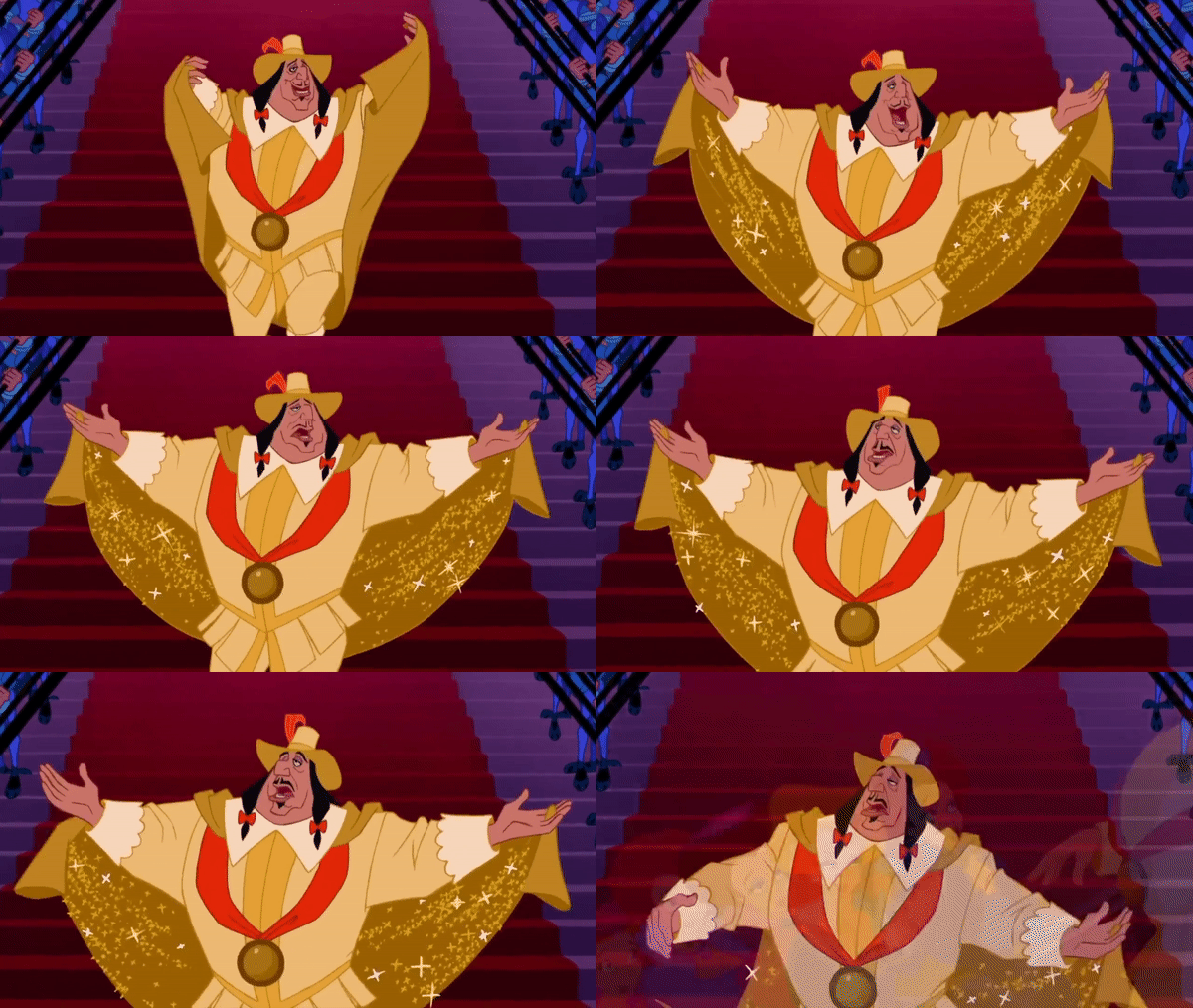
A bad elite whom ought to be resisted, in comparison to all the good elites that we should never resist because their rule is natural and righteous

This is why queer people call each other “queen,” to infer that their peer is an elite. Queer people are often downtrodden and dispossessed, and reclaiming some power by stealing the language of elitism is a way to overcome that. It could even be argued that the usage is satirizing the idea of elites, as drag satirizes gender and patriarchy. I expect each person who calls out, “Yas Queen!” has their own reason for doing so, but at its core, it is a reference to an elite, whether ironic or genuine. I’ve also started seeing people refer to men as “kings,” and this trend does not appear to have any of the irony that it really ought to.

Similarly, with no hint of irony, stories about princesses create an image in a child’s mind that there are groups of people who are simply better than others. If there’s a dragon or a mer-witch, then thank God we have a class of people capable of handling them. We wouldn’t want to trust that kind of responsibility to the peasants! Readers naturally empathize and insert themselves as the hero of the story, and so they believe themselves to be that class of person: it doesn’t matter what station in life you’re born into, when you read a story with monarchical characters, all of a sudden, you’re an elite too. And if you’re not, you could be! Just say your prayers and take your vitamins, and by God, maybe you’ll be rich some day too!

Poverty is real and brutal in Agrabah. You can be extrajudicially killed by the police for stealing a loaf of bread, but that certainly can’t be the fault of the monarch! See, if you want to escape poverty, just find a magical lamp! Aladdin proves his worthiness and becomes royalty through merit, his poverty a miscalculation rather than a systemic injustice.

These stories naturalize power imbalances. That’s why monarchism is still included in these “tales as old as time” despite being irrelevant to the story. Kings historically claimed a divine right to their rule, and while that trope has fallen out of fashion, cultural monarchism still seeks to naturalize the righteousness of the elites of today’s society. Our modern princess stories might have empowered women wearing the tiara, no longer requiring to be saved, but it’s the empowerment of the Girl Boss who still functions within an unequal capitalism. She deserves to be the She-E-O; she’s better than those seamstresses making fast fashion out of Bangladesh, and don’t you question it! If you are born into a situation where succeeding in capitalism is essentially out of the question, well, you’re just destined to peasantry. Accept it. Your betters will make all the important decisions about your life. Here’s a fun song about living under the sea to explain why.
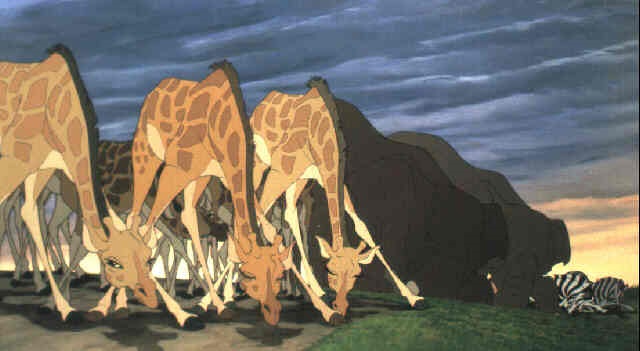
See? The peasants are happy because they get to eat the grasses that the corpses of decadent and opulent kings fertilized. Those kings may live longer and have more of their needs met because of their wealth, but the important thing is it’s natural and therefore cannot be questioned.

Democracy necessarily requires equitable access to the functions of power. If someone isn’t able to have their voice heard, then that’s not a democracy. These stories are not subtle about being anti-democratic: they literally have kings and queens in them. We celebrate and romanticize the monarchy because some groups of people benefit from undemocratic structures cementing their neo-aristocratic roles as pseudo-lords within a plutocracy. To even compliment someone as a king or queen is to normalize that these hierarchies are natural and good, and that we ought to celebrate whatever power, however small, we have within them. Who benefits from people thinking that humanity is divinely segregated into natural categories? Certainly not the vast majority of us.

To call me “queen” is to call me tyrant. To idolize a princess is to deify the robber barons. Perhaps instead, Yas comrade!
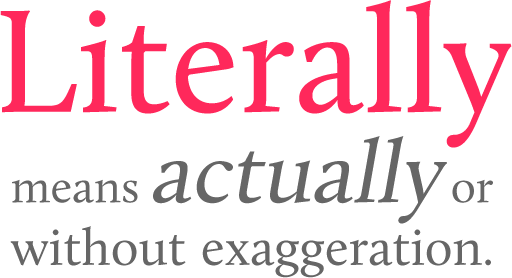
We all know what words mean, right? They mean whatever it says next to them in the dictionary. This definition is agreed upon by professional dictionary writers which must be the objective truth, because, as we all know, there is never any debate, disagreement, or human error within academic bodies. The divine wisdom of these truth-holders means that the dictionary definition is more infallible than the Pope. Dictionary writers are ordained by God to give the final decree on language, and that’s why language is static and unchanging.

Except words are just the socially agreed upon tags that we attribute to concepts. Like a “river” for instance, is still called a river whether it floods, dries out to a trickle, is polluted to the point where the H2O is barely detectable within it, or whether it changes course entirely. The make-up of a thing barely impacts what we call it, unless we possess an alternative concept like that of a canal, in which case a river just needs some specific minor changes (like some walls and human direction), and voila! It’s no longer a river. Or if it remained a trickle for too long, we might start calling it a stream because we have a word for that concept too. We might use adjectives to convey the connection between multiple concepts, a “flooded” “river” is still not a “lake.” Our history with a concept will alter our viewpoints as well. An old timer who remembers the stream when it once was a river might still have an understanding of it as a river, while a newcomer might think the old timer is simply delusional. A stream is a stream!

literally

Until enough people decide that it means “figuratively“, and then it means “figuratively,” and there is literally nothing you can do about it.

This brings us to language as it is applied within the LGBT community. Wouldn’t you know it, there just so happens to be a debate around the definition of words: like marriage! If you believe that “marriage” is defined as being between a man and a woman, then gay marriage becomes a nonsensical concept. A triangle is defined as having three sides, and along comes these degenerates who think that it can have four? Linguist Willard Quine tells us that human language in a community is like a collection of sculpted plants. Even if they all look the same on the outside, the branches and twigs on the inside that make up the sculpture will be different in every instance. How we learn our language shapes our understanding of that language, and even if we have a pragmatic functionality that allows us to get by in day to day conversation, those differences can create problems.

If marriage is defined not as between a man and a woman, but instead as being a loving relationship between two people that is recognized as legitimate by its having legal validation, then not only is gay marriage entirely reasonable, it is positively oppressive for them not to be able to access it. Of course, this definition eliminates polyamorous relationships from being recognized as legitimate, as well as defining legitimacy as something that the state applies through legal policy. Do I really need the government to tell me that my love is real???? How we define things has real world social implications beyond just conversational understanding.

dreamstime_s_18882968

I asked him, “when?” and he told me, “After the midterm elections, baby. I promise!”

When I have a concept, and you have a concept, and we use the same word to describe both our contradictory concepts, then yeah, there are going to be problems. This can be solved by either changing the socially accepted definition of the word, which involves changing society around the word, or it involves inventing a new word (like “canal”) to accommodate the minor changes in concept. I have actually heard an argument saying that gays should have the same legal relational rights as straights, but that their relationships should just be called something else. Unfortunately, the history of a concept and its legitimacy can’t just be erased like that. If there was “married” and “gay married,” you can guess it would follow the same “separate but equal” treatment of water fountains. There are certainly instances where new terms are required for new concepts (it is unlikely there was any controversy when the term “canal” was introduced), but when it comes to forcing whole categories of people into a term they never agreed to, then you’re creating bigger problems than semantics.

Another perfect example is gender. What is a “woman”? Is a woman someone who was born with the XX chromosome? Is a woman someone who looks and behaves like a woman? Is a woman someone who feels like a woman, regardless of how she was born or how she looks and behaves? Two people can be talking about women and may never discover that their definitions are incompatible. Branches within a sculpted plant, remember. How we define “woman”, however, is going to have a distinct social impact on transgendered human beings. Cisgender, the term, was coined only recently because there was seen a need for a new concept. For those who believe that gender is related to birth sex, the term is unnecessary, or even offensive because they do not see the need for a conceptual distinction. This shows the difficulty of introducing new terms because all of society needs to accept the distinction.

canal

I’m sorry, but this is a RIVER because even if you dress it up, it’s still made up of H2O! Facts don’t care about your feelings, libtards.

What is a woman? We could always have a distinction between “woman” and “transwoman,” right? Who cares? We’re just hashing out concepts, and in the end, the definition doesn’t really matter all that much because human society can just adapt. The problem is that there are casualties to this debate. Transgender people are dying while this linguistic nitpicking rages on. Why don’t we choose a definition where nobody gets hurt?

They’re just words, folks. Remember: sticks and stones may break my bones, but words are the foundation of my ideological system, and any fluctuation in their social acceptance means that that ideological system is in peril. Meanwhile, others are enduring sticks and stones, so maybe hurry the fuck up with your existential crisis, k?

Pride is a canonically sinful act, yet this must be understood in the context of a time when passivity and conformity were considered virtues. Pride is no sin. Arrogance is the destructive assumption that, “I am better!” whereas pride is a pure, “I am!” Pride is the act of looking at ourselves and celebrating who that person is, who that person can be. It is acknowledging the beauty of our differences, as history has proven that pride cannot exist in conformity.

With difference, however, comes fear. With fear comes hate, and violence. But rather than cower or be shamed, pride rises against it. Pride exists in defiance, as a challenge to those who, out of their fear, seek to belittle or degrade those beautiful differences in which pride thrives. To be proud is to stand up no matter the number of times we are knocked down.

Pride demands the courage to be different. Pride demands the integrity to be the best possible version of ourselves we can muster. Pride demands the honesty to bare our genuine souls to the world. All these attributes are the most admirable qualities a human being can embody, and it these aspects of ourselves that we honour.

To tell others to be proud is to empower authenticity in a world overrun by self-doubt and humiliation. It asks that you celebrate yourself, that you celebrate your community. Celebrate what separates you from your neighbour, and celebrate what separates your neighbour from you. So be brave. Be true. Be proud.