Archives for posts with tag: Monarchy

Those in the West live fairly comfortably in democracies. Sure, some of us are technically constitutional monarchies, but our overall vibe is still pretty democratic. Partisan politics always seem to claim to be the voice of the people and not the voice of the king, so there are at least overtures to democracy. And yet, we still tell kid stories that revolve around princesses. Disney has a veritable pantheon of them and isn’t seen as an enemy of democracy (barring the inanity that is the state of Florida). Celebrating someone in the queer community is to call them a “queen.” The monarchy remains embedded in our culture across the spectrum, from the capitalists to the queer dissidents.

The usage of these monarchist tropes certainly don’t aim to be anti-democratic. Disney princesses rarely do any actual governing or promote policy measures; they typically go on adventures, solve mysteries, and sing songs about how many thingamabobs they own. If there is a queen or king involved, they may even have a short temper you certainly wouldn’t want in an autocrat, but it’s never viewed in that context – they’re just a mean ol’ parent who doesn’t let their teenage daughter have any fun! The monarchies in these stories are about as apolitical as you can get.
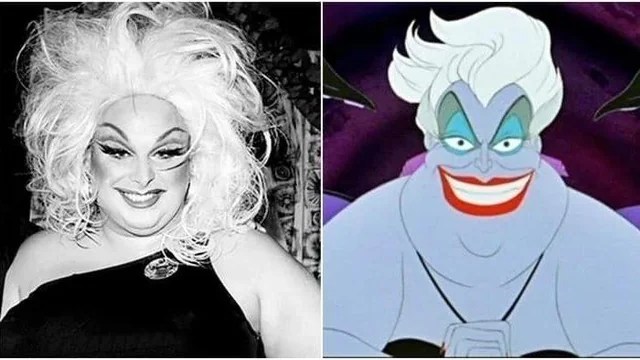
The queer coding for villainy, on the other hand, is far more obvious.

So why have the story told through the lens of monarchism at all if its function as a form of government is completely irrelevant to the plot? Why is Ariel a princess when she can just be some random girl with an overprotective father? The same story works if they’re poor and Triton is a working single father who is trying to raise his daughter alone, but she isn’t focused on taking care of herself or her future; she’s focused on hoarding useless junk. These stories don’t need monarchism, so why romanticize a form of dictatorship most countries killed a whole bunch of people to overcome? Monarchies are bad, you guys! Remember? Remember how America fought a war and France killed a lot of people to get rid of them? Democracy and monarchy are antithetical toward one another, and we’re supposed to love democracy!

The Beauty and the Beast fairytale takes place only a couple of decades before this happened in France. Let’s just say that those two did not live happily ever after, and you know, maybe they shouldn’t have!

Edmund Burke is the father of modern day conservatism, and he was a staunch opponent of democracy in his time and opposed the French revolution. He recognized the failures of the contemporary monarchies that were being resisted, but believed ultimately that there still ought to be an elite governing the masses, and if the current group were a failure, then they were just the wrong kind of elites. Monarchism, and the aristocracies that are associated with that type of rule, are elites who dictate how the world ought to be run. When viewed in this context, we can see that this ideology can actually be applied quite comfortably to our capitalist system. The elites are the rich, and it is right and good that they influence our democracy, because they are better than the rest of us. They’ve proved it by being richer than us in a competitive market. They won; we lost. They earned their place in the aristocracy, and therefore their voices count more than ours. Forget democracy, we shall be governed by those who can buy out the most of their competitors.
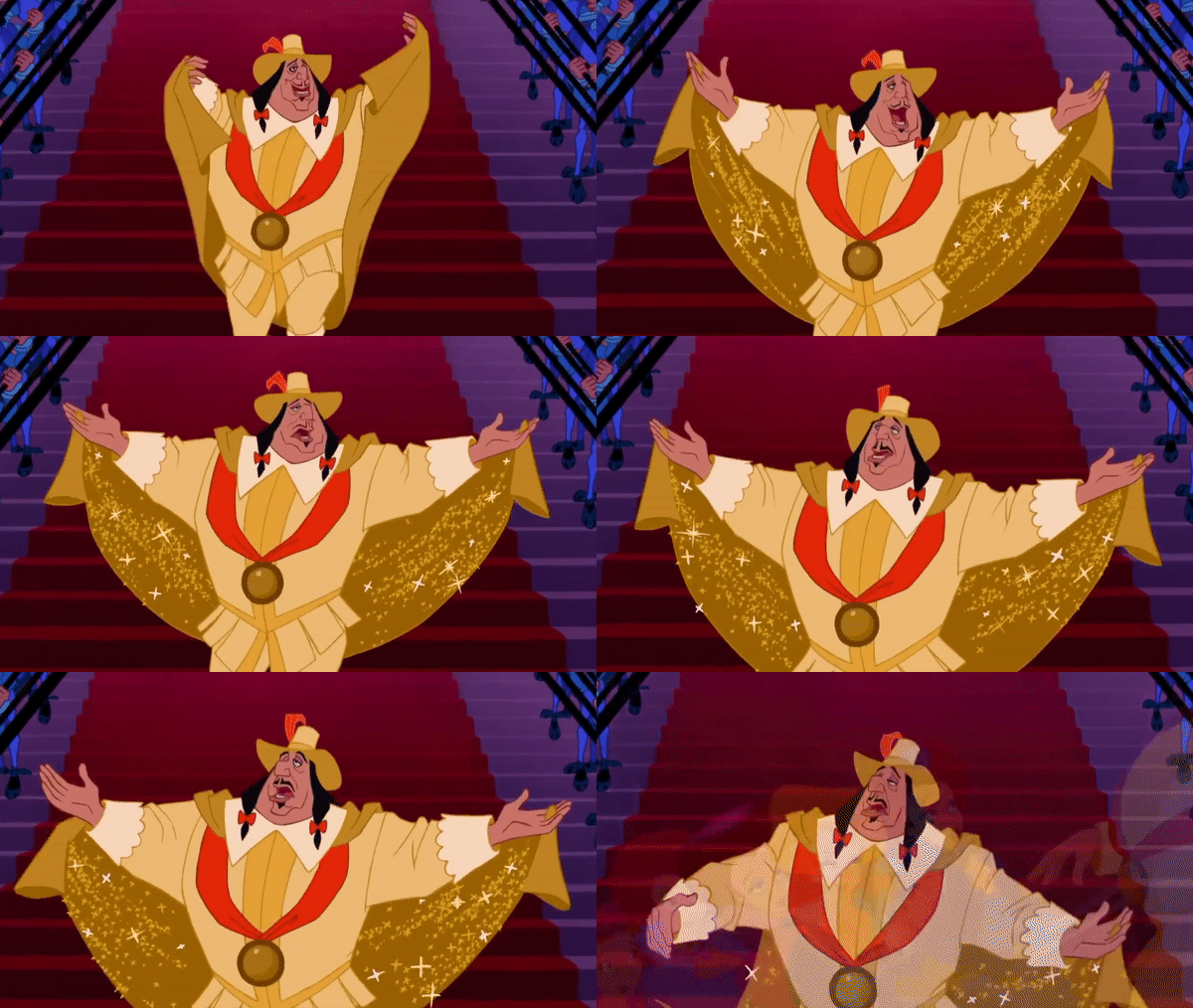
A bad elite whom ought to be resisted, in comparison to all the good elites that we should never resist because their rule is natural and righteous

This is why queer people call each other “queen,” to infer that their peer is an elite. Queer people are often downtrodden and dispossessed, and reclaiming some power by stealing the language of elitism is a way to overcome that. It could even be argued that the usage is satirizing the idea of elites, as drag satirizes gender and patriarchy. I expect each person who calls out, “Yas Queen!” has their own reason for doing so, but at its core, it is a reference to an elite, whether ironic or genuine. I’ve also started seeing people refer to men as “kings,” and this trend does not appear to have any of the irony that it really ought to.

Similarly, with no hint of irony, stories about princesses create an image in a child’s mind that there are groups of people who are simply better than others. If there’s a dragon or a mer-witch, then thank God we have a class of people capable of handling them. We wouldn’t want to trust that kind of responsibility to the peasants! Readers naturally empathize and insert themselves as the hero of the story, and so they believe themselves to be that class of person: it doesn’t matter what station in life you’re born into, when you read a story with monarchical characters, all of a sudden, you’re an elite too. And if you’re not, you could be! Just say your prayers and take your vitamins, and by God, maybe you’ll be rich some day too!

Poverty is real and brutal in Agrabah. You can be extrajudicially killed by the police for stealing a loaf of bread, but that certainly can’t be the fault of the monarch! See, if you want to escape poverty, just find a magical lamp! Aladdin proves his worthiness and becomes royalty through merit, his poverty a miscalculation rather than a systemic injustice.

These stories naturalize power imbalances. That’s why monarchism is still included in these “tales as old as time” despite being irrelevant to the story. Kings historically claimed a divine right to their rule, and while that trope has fallen out of fashion, cultural monarchism still seeks to naturalize the righteousness of the elites of today’s society. Our modern princess stories might have empowered women wearing the tiara, no longer requiring to be saved, but it’s the empowerment of the Girl Boss who still functions within an unequal capitalism. She deserves to be the She-E-O; she’s better than those seamstresses making fast fashion out of Bangladesh, and don’t you question it! If you are born into a situation where succeeding in capitalism is essentially out of the question, well, you’re just destined to peasantry. Accept it. Your betters will make all the important decisions about your life. Here’s a fun song about living under the sea to explain why.

See? The peasants are happy because they get to eat the grasses that the corpses of decadent and opulent kings fertilized. Those kings may live longer and have more of their needs met because of their wealth, but the important thing is it’s natural and therefore cannot be questioned.

Democracy necessarily requires equitable access to the functions of power. If someone isn’t able to have their voice heard, then that’s not a democracy. These stories are not subtle about being anti-democratic: they literally have kings and queens in them. We celebrate and romanticize the monarchy because some groups of people benefit from undemocratic structures cementing their neo-aristocratic roles as pseudo-lords within a plutocracy. To even compliment someone as a king or queen is to normalize that these hierarchies are natural and good, and that we ought to celebrate whatever power, however small, we have within them. Who benefits from people thinking that humanity is divinely segregated into natural categories? Certainly not the vast majority of us.

To call me “queen” is to call me tyrant. To idolize a princess is to deify the robber barons. Perhaps instead, Yas comrade!
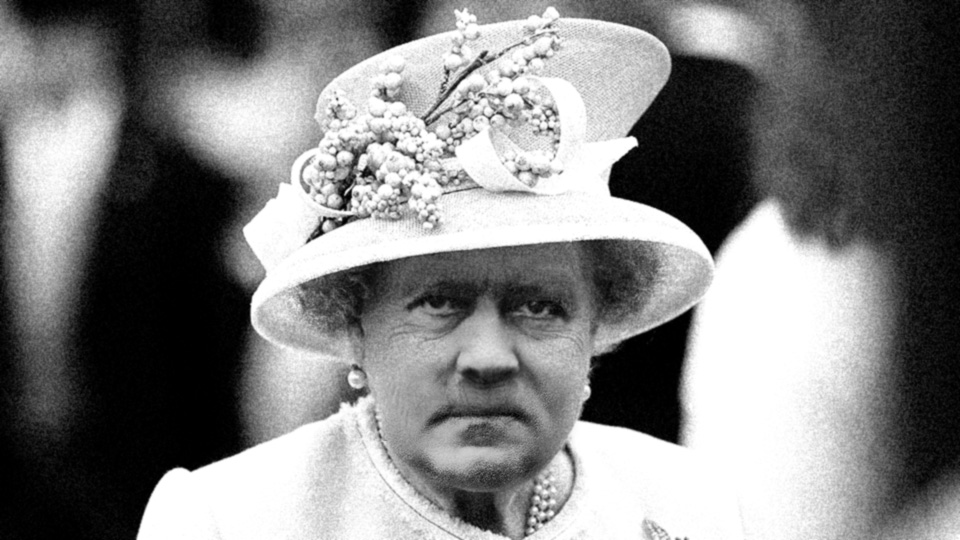
Imagine if the Nazis won the second World War. They lay claim to several African countries, in addition to the European ones they had already blitzed the krieg out of, and planted the Nazi flag in perpetuity. Adolf Hitler, not one to give up power easily, decides to leave the rule of the Nazi party to his children, and his children’s children. The Nazis govern over a solid percentage of the globe, and while those similar enough to an Aryan complexion do okay, the Indigenous populations, racialized populations, and of course the remaining Jews and gypsies are relegated to ghettos to continue to wallow in poverty and oppression. While the direct influence of the Nazi party might wane over time, the influence of its imperialism, genocide, and white supremacy would linger, infecting the cultures of its descendants. Now let’s imagine the great-granddaughter of Adolf, Elizabeth Hitler, was the head of the Nazi party, and she died as a sweet, old woman. Not in a bunker in glorious suicide, but of old age, mere days after performing her duties in on-going Nazi ceremonies.

Artist’s rendition

Would it be appropriate to disparage the good name of Elizabeth Hitler upon her death? Her family mourns her, as all families do, and by all accounts, she was a graceful, dignified Nazi who performed her duties well. In our universe, even making reference to the name Hitler or Nazi is a slur. Those most ideologically similar to the Nazis even reject the term, preferring Western Chauvinists or other such nonsense, to avoid the negative connotation of the Nazi party and their unequivocally evil deeds. Elizabeth Hitler could and should never shed the shame of her surname, so long as the legacy of the Nazi party remained legitimate. And yet the Windsors bear no similar shame.

Am I falling into the Godwin trap? We have collectively agreed that a Nazi comparison is ill-equipped to win arguments because so few tragedies bear commonality to the systematic genocide of six million Jews. If only there were a comparable genocide meted out against a demographic the British Crown considered sub-human, my argument would be saved! Given that I’m a white man whose ancestors settled in a land that wasn’t always bustling with white folks, I think there just might be something there.

It doesn’t count as genocide if you remember it as a gift!

According to some estimates, between 1492 and 1900, approximately 175 million Indigenous people were killed by colonial forces in the Western hemisphere. While the Spanish and Portuguese are certainly responsible for their fair share, I think given the massive Indigenous genocide, it’s fair to make a comparison between the British Empire and the Nazis. Now, it’s hard to say how many the Nazis would have killed if they had 400 years to get all the genocides out of their system, but it’s also hard to say how many the British would have killed if they had the industrial tools the relatively modern Nazi party had at their disposal too. If systematic genocide is the prerequisite for a Nazi comparison, the House of Windsor ought morally to be an equivalent slur to the House of Hitler.

I’m hoping my comparisons have conveyed that there is never an inappropriate time to disparage a royal, since the term “royal” ought to be an insult in and of itself. Monarchy apologists really should be finding euphemisms to hide their ideology similar to our wily “Western Chauvinists”. In addition, while any time is a good time to disrespect the Queen, her death makes it even more appropriate to get nasty about the monarchy because death is the only form of accountability available under a monarchic system.

I’m not a monarchist! I’m a Windsor Enjoyer

Donald Trump infamously stated that he could shoot someone on Fifth Avenue and not lose any votes. Given he could instigate a failed coup and not lose any votes, I think he’s probably right. Then Ron DeSantis would throw a hand grenade into a school bus just to ride on his coattails. The thing is, Trump doesn’t need to lose votes when his supporters are the minority; Trump lost the election, despite all of the hullabaloo. In a Monarchy, the Queen could shoot someone on the London equivalent of Fifth Avenue, her popularity could plummet to zero, and she would still remain in power. That’s the reality of a dictatorship. The only way to get rid of a monarch is either through a violent coup or revolution, or to wait for them to die on their own.

Death is the only opportunity for change in a monarchy outside of the guillotine… which I guess is also death. It’s even illegal in the UK to imagine getting rid of the Queen, which, while practically irrelevant for the entirety of the Queen’s life, is now back to being relevant as those publicly questioning the legitimacy of King Charles are being arrested for it. While I doubt the republican repression will last, its enforcement during this vulnerable transition of power is telling.

Charles is an old guy. He won’t be king for as long as Elizabeth. When he dies, I hope many more of us will find it in our hearts to be a bit more rude over it. And keep being rude over it, until the legitimacy of the British Empire and its symbols get the recognition they deserve.

Long may he reign

Post-Script: I do not give a single fuck if any of you Windsor-Enjoyers out there point out that different Houses of Lords had different surnames throughout the British Empire. I’m trying to keep my metaphors simple. Chill your balls.

The Queen is dead. Long live the King. The monarchy must endure because reasons.

The Queen is fondly eulogized by continents of people because she was symbolically connected to so many of them. Not for anything in particular she did; she is remembered for her grace, dignity, etc. all the things that can’t actually be pointed to. She’s a celebrity, famous for being famous. Like if Paris Hilton had a colonial empire, but for whatever reason, was mourned like Robin Williams.

You might gather by my tone that I am a republican, in the European sense of the word, with no apparent shame in demeaning the recently deceased. But this is no ordinary death, it is the death of a dictator. An autocrat by any other name would smell as sweet. I would be just as sardonic over the death of Vladimir Putin, I assure you. However, for the sake of argument, let’s say she was just a sweet old lady, and all those stories about racism are irrelevant. A benevolent Queen, a loving shepherd tending to her flock.

Don’t worry baby, you know I always treat you right!

There are a surprising number of people who want to believe in the benevolent dictator. The millions of Trump supporters hoping to overthrow democracy to install their glorious leader see him as benevolent to their interests, at least, apathetic to the interests of everyone else. But even on the left, there exists among some the wish for a politician who could get into power and just ram through environmental protections irrespective of lobbyist interference or whiny pipeline apologists. The world is dying, and the efficiency of a single-minded focus to overrule the profit-driven oil and gas industries and enforce measures to ensure our existential survival is quite seductive. And honestly pretty logical too, since accommodating the bad faith actors and those with suicidal profit motives may mean we don’t make it as a species given our limited timeframe. A benevolent dictator also means we don’t have to worry about these problems because we’ve got absolute power taking care of things for us – it’s the allure of a kind and caring god, answering our prayers, and abdicating us of any responsibility.

The problem with autocracy is that there’s just one ruler with absolute power. And despite millennia of precedent, we won’t assume that absolute power is going to corrupt our benevolent dictator because benevolence is right there in the name. Our hypothetical framework does not extend to advisors, sycophants, and other surrounding officials, however. Even a dictator with good intentions is still open to corrupting influences, especially if our ruler is siloed away in some government office or palace or whatever era you want to place our hypothetical. People are going to seek to gain from that absolute power, and it’s beyond even the naivety of those who believe in benevolent dictators to suggest that they will all bear equal levels of benevolence to our ruler. With an institution of absolute power, coups are inevitable, and benevolence does not provide immunity from harm.

Caesar counts as a benevolent dictator, right?

Let’s indulge that naivety and suggest that our wise ruler is incorruptible, impervious to influence, and their aristocrats or children don’t think to overthrow them. Our autocrat, however close to a god their champions want them to be, is not omniscient. Benevolence is a mere disposition, and while there requires a degree of wisdom to impose philanthropic decrees, being one person limits our dictator in what they can possibly be philanthropic about. Our environmental autocrat from earlier may have spent their life studying environmental engineering to determine what practical solutions are necessary to reverse climate change, but ultimately that means that they’re pretty ignorant in a lot of other areas. What do they know of labour relations, racial equity, First Nations sovereignty, prison and police reform (or abolition), and all those other things our leftist dreamers might want from a benevolent dictator? No matter how benevolent or wise, it’s impossible for one person to know enough about everything to be benevolent toward every facet of society.

Along similar lines, our ruler is going to come from a certain location that is going to influence the way they see the world. Our dictator will necessarily come from a culture, and from this, will necessarily have an in-group. This doesn’t imply that our dictator will be malevolent toward the out-group, we’ve established our parameters forcing them otherwise, but it does imply they will have biases and blind spots. That’s why people love Trump: he shares and reinforces their biases, so they’re not worried about a tyranny with him at the helm, blind spots be damned. But even our benevolent dictator won’t be able to act on things alien to them, leaving the out-group at a disadvantage in reaping the benefits of their lord’s benevolence.

It might be argued that our benevolent dictator would delegate in arenas where they lack the expertise or background to be effective rulers. However, that leads us back to our original problem: we can’t extend benevolence indefinitely, nor can we assume that our autocrat would have the wisdom to appoint appropriate delegates to the right position. Sycophants gonna sycophant, after all. If we allow other factors to determine how these people become appointed, then our dictator is no longer such, and the hypothetical fails.

I’m sure giving a German absolute power has no possibility of backfiring!

Let’s indulge in comatose levels of naivety and suggest that everything up until this point is irrelevant, and our dictator is righteous enough to avoid influence, knowledgeable enough to implement policy across all fields, and is connected to their people enough to avoid bias and blind spots. An omnipotent leader who is all-good, all-knowing, and ever-present across their realm. I’ve essentially described God, not-so-subtly alluding to the fictitious nature of our hypothetical dictator. However, even if all of these things were miraculously true, our divine dictator has one fatal flaw: mortality. Even Jesus Christ died on the cross, leaving His rule to the fallible.

Constructing an institution of absolute power means that even if such a fantasy as a benevolent dictator came to life like Geppetto’s marionette, they too would then die, leaving in place a vacuum which would need to be filled. Monarchs typically leave their power to their progeny, just as the British kingdom will inevitably pass to Elizabeth’s children once Charles kicks the bucket. Can you imagine if the next in line was Jeffrey Epstein’s buddy Andrew rather than William? Queen Elizabeth could have been the best fucking monarch the world had ever seen, but it means nothing if her successor pisses it all away.

Who would want a King that couldn’t sweat?

I like to think of the great Shah Akbar, the third Mughal ruler of India. He unified the subcontinent, was loved by non-Muslims and Muslims alike for his fair accommodation to diversity, and invested in art and culture to create a peaceful, prosperous land. He was succeeded by his son, Jahangir, who was fine, but the cracks began to form as he had to stave off his own son who attempted a coup against him. He had similar interests in art and culture to his father, but he didn’t have the same authority. Next up was a non-coup son, who became Shah Jahan. He started being a bit more militaristic, expanding the empire – up to you whether you think it’s still benevolent to violently seize and annex new territory. He’s the guy who commissioned the Taj Mahal for his favourite dead wife, so he left behind some pretty architecture at least, but it does seem like we’re starting to lose track of the citizenry here.

The next son is Aurangzeb, who basically ignored his father’s wishes of who would succeed next, and took leadership by force, imprisoning his father in the process. He was very militaristic, and expanded the Mughal empire to its largest point. Aurangzeb was a strict Muslim, and demolished a bunch of Hindu temples during his reign, abandoning all pretenses of tolerance once proudly exhibited by his great-grandfather. His militarism drove the empire to bankruptcy, and he didn’t name a successor so his sons fought it out amongst themselves: a civil war that effectively cemented the downfall of the Mughal dynasty.

He has a bird! What could possibly go wrong?

When looking at those with power, we must keep in mind the institutions that legitimize them. The Queen no longer governs in the traditional sense, ruling now only symbolically, but still: a symbol of what? What does her elegance and grace mean to the people of India or Palestine, to the Indigenous peoples of British colonies? Hell, what does it mean to the working classes of England who derive no benefit from, or indeed are actively harmed by, an institution of incestuous nepotism? We’ve romanticized Kings and Queens, knights and princesses, to the point where the fiction feels more real than the reality. The best kind of power is the one that is diffused as thinly as possible among those who are impacted by its influence. Pretending a dictator can be benevolent ignores the tyranny inherent in the institution.

The nicest thing one can say about Queen Elizabeth is that she existed as a benign tumor. The cancer remained dormant. How long do we have to wait before it begins to metastasize? Even if we want a god to save us from ourselves, such a thing is impossible. God is dead; the Queen is dead. Maybe we should start taking responsibility.