Archives for posts with tag: movies

The Todd Phillips Joker-verse and HBO’s The Penguin create their respective monsters out of very similar clay. The world is unfair: society is heavily stratified, inequality is high, and the odds of transcending the hell of your poverty are grotesque – or laughable, depending on your rogue. These two pieces of entertainment understand the tragedy of modernity, and portray us with depressing accuracy. Our world is dying, and the thoughts of too many are perseverating only on how to profit off our deaths. We vulgar plebeians are damned, cogs in the machine generating our own demise. The West and its contradictions are primed for villainy, and there is no Batman to crash through the sky light. No one is coming to save us. How these two DC antagonists are manifested in their barely-fictional worlds is probably one of the better lenses to understand the monsters in our own.

And no Kevin Conroy to save us! RIP Best Batman…

The Joker begins his foray into villainy in a way that I’m fairly confident was not intended by the creators of the film. Arthur Fleck is a man struggling in poverty, loneliness, and despair. He has a shitty job and worse prospects. His arc culminates in violent anarchism, rebelling in fury against his condition. Arthur lashes out as The Joker against an elite that has only ever looked down on him, smug in the certainty of their position as arbiters of the structures of the world; banker bullies whose material success has come at Arthur’s expense, and Murray Franklin, the talk-show media figure who laughs at and degrades him.

In short, this is Trump’s story of America. The establishment has taken advantage of you; liberal elites look down their noses at you, laugh at you. Any kind of systemic reform is secondary to simply turning it all to ashes. As an Alfred once said, “Some men just want to see the world burn.” Arthur Fleck is representative of the so-called Basket of Deplorables who are judged by the mainstream, and this is their response to it: fuck you. The only reason that I’m confident that the creators didn’t intend to celebrate Trumpism’s bloody revolution is that Arthur is an unreliable narrator, and the scenes that consistently show his delusions are the ones in which he’s connected to others, where he’s loved. The devoted crowd cheering at Joker’s murderous performance is not real. I believe the original intention of Joker was not to valorize a Trumpian antihero, but to show and empathize with the unhinged mind of a school shooter. Joker is canonically a villain. The appropriate response to a broken world is to fix it, not to break with it. Somehow that villainy was missed, and my interpretation has not been the popular response to the film. A sequel was required.
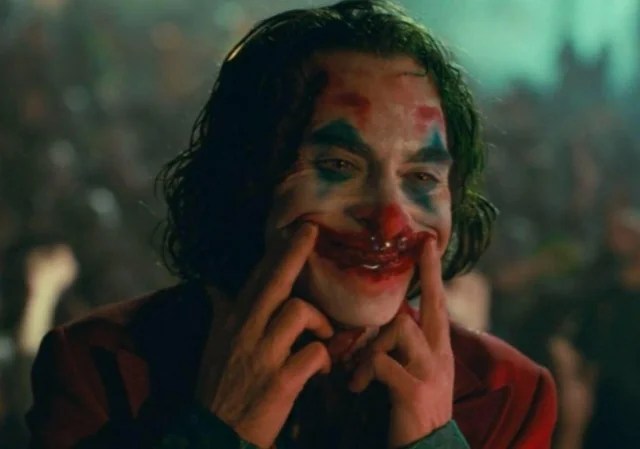
Clearly a man to be emulated

Joker: Folie à Deux has been universally panned, and for good reason. It’s a bad movie! But also for very bad reasons because some people seem to think that it is a rejection of the first film, and that’s simply not true. Arthur as a character rejects the lessons of the first film, but it’s ambiguous if the film does so as well. The second film canonizes the celebratory mob at the end of the first film as real, and, fine. Sure. Arthur gets caught up in the fantasy of his own greatness in response, but ultimately rejects that fantasy because he recognizes that his homicidal approach was incredibly traumatizing to his only friend, Gary Puddles. Joker isn’t a revolutionary, he’s a bully too. His approach to the broken world is to embrace what broke it in the first place: cruelty, degradation, and all of it at the expense of vulnerable populations. It’s this insight that enlightens Arthur to the meaninglessness of his crusade, that he is reinforcing the harms of society rather than rebelling against them. But being the Joker is out of his hands now. His corruption had already infected the populace, and Joker’s revolution continues without him. Viewers are confused that perhaps the minor character Ricky was supposed to be the canonical Joker all along, but in truth, all of the clowns dressed in their makeup who blow up the court house are the Joker. His ideology has won, even if he himself now sees it as folly. The explosion at the court house is indicative of this new ideology’s rejection of establishment institutions, highlighting their dystopic vision of a new America. Trump parallels continue to abound.

Accountability for crimes!? I thought this was America!!

Folie à Deux is a psychiatric condition where two people with mental illness are enmeshed together who begin to share the same psychotic delusions about the world. While it is assumed that Harley Quinn is the second ill person in this dyad, she is only an individualized symbol of the broader delusional support for Joker’s Robespierrean justice; the delusion that this savagery is a worthwhile response to systemic oppression. They are all of them enmeshed into this cult of vengeful destruction.

This is why the second film is not a rejection of the first. It does what any sequel is supposed to do and expands on the themes of the first one. Joker’s Trumpian philosophy has broadened in appeal, and regardless of its instigator’s opinions, it will continue without him. Trump’s chaos is here to stay. The film is also just as ambiguous of its support for this ideology as the first one. The singing in the film is an obvious metaphor for the mania that drives Joker’s methods. In the end when Arthur confronts Harley (I refuse to call her Lee), he asks her to stop singing, to come back to earth, and she refuses. Whether the singing was any good or not is irrelevant; singing is always more fun! Joker’s revolution, however violent, however cruel, has a mischievous joy to it. The memes about cats and dogs in Springfield, Ohio are fun, and who cares about any school children who receive bomb threats along the way?

It’s just a joke! Don’t get so triggered, liberals! Why so serious?

The Penguin begins his own journey along more antiheroic tropes. He is an underdog, and while it’s clear that his lies are ubiquitous and sociopathic from the beginning, we root for him because he comes from a similar background to Arthur. He’s easy to applaud as the antithesis to the opulence of the Falcone family. He’s dirty in a way that poverty dirties everyone it touches; his grimier aspects are not something our modernity rejects, but something it connects to and empathizes with as we too scrounge in the dirt in envy of the wealthy. Oswald also loves his mother and takes as his ward the young Victor, allegedly sharing a journey to transcend their lot as all of us yearn to. He could easily have been a nuanced hero.

But Oswald Cobb(lepot) is a villain. He murders his brothers. He murders his ward. He feels nothing for other people, even the ones he’s convinced us he does. He keeps his mother alive in her vegetative state despite her wishes in order to fulfill the dream that he has projected onto her. It’s always been his dream, not hers. The Penguin does not understand how to connect to other people, only how to fake it well enough for the cameras. We are comfortingly assured otherwise because he is a very convincing grifter, and the pathway to power that he sees as the most efficient is the one where he aligns himself with the working class. There is not a single revolutionary bone in his body, only frigid calculus. His populist deed to restore power to Crown Point was done only for his own ends and adjacent benefits toward others were not considered; Victor’s enthusiastic gratitude appears to genuinely confuse him before he catches himself and finds a way to take advantage of that edge. There is no ambiguity to The Penguin. He is clearly an unapologetic monster, and Sophia Falcone’s sarcastic scoff at him being a Man of the People is illuminating in how obvious it is in its falsehood.
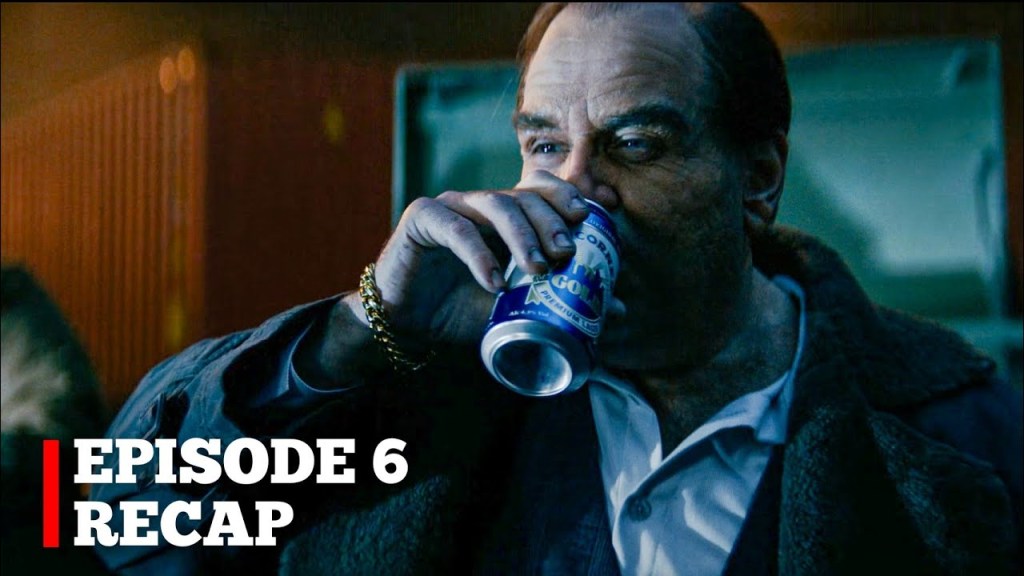
The kind of guy you’d want to have a beer with!

Where Joker is a representation of Trumpism and its followers, The Penguin is emblematic of the man himself. Trump was certainly never working class, nor has he had to work hard to elevate himself above his station, but the sociopathic exploitation of working class consciousness to raise himself to grotesque power is clear. Oswald Cobblepot in the comics is an established elite, as wealthy as Bruce Wayne, but he doesn’t need to be in the show to be comparable to the president-elect because his methods are identical, regardless of his background. A grifter by any other pedigree would sound as sweet. In a broken world, the Penguin takes advantage in a way that people are desperate for. They want him to be what he’s pretending to be because they see his elevation as their own. If Oswald wins, then Victor wins – the grift only becoming obvious when the life is strangled out of him. Trump’s own escalating lies put Penguin’s to shame, but despite their obvious contradiction to reality, people cling to them as a life preserver on a sinking ship. The delusion of his proffered transcendence is a siren’s song. But they are villains; they’re both only in it for themselves.

What’s not to trust?

Villainy has certainly evolved over time. Nowadays, damsels can manage their own distress, and devils only exist in fantasy. But monsters still exist, and understanding our world means understanding the monsters that it creates. We live under the exploitation of the elites. We are, as individuals, powerless to stop them. How will we choose to respond to this? Will we gaze too long into the abyss and become monsters ourselves? Or will we settle into passive reverence at the feet of the devil, spellbound by his honeyed lies?

How do we resist in a world without heroes?

The maxim that “the personal is political” has been around since its origin in the 1960s feminist movement. It postulates that what happens in one’s personal and private life is actually quite relevant to and influenced by the larger, structural factors at play on a macro scale. But really, everything is political. Mezzo level institutions and organizations are political. Media is political. Neutrality is political. Everything is interconnected, and what happens anywhere is going to be shaped by, and will shape in its own discrete way, the world and its ideology.

When it comes to film and television, the same holds true. In general terms, action and horror films are inherently conservative. I appreciate a wide diversity exists across all genres, and some great films are great because they subvert common tropes, but by and large, action and horror films are inherently conservative. There is some threat to the in-group from an outside force, and the only difference between the two is whether the protagonist goes on the offensive or the defensive. Action films are usually a bit more broad in that the threat is typically to upset the status quo (think of the Joker who wants to change the world, and Batman who wants it to stay the same – Batman’s ‘solution’ to the world’s problems is ultimately to remove all the deviants). Or you can think of Captain America: Civil War which is one long advertisement for libertarianism (don’t let oversight committees hold me accountable; I, as an individual, know best). Horror films are more personal in that the threat is much more intimate. The threat is more overwhelming and overpowering. The viscera is embellished. But the overarching theme between the two is clear: the Other is dangerous, and you better fight or the bogeyman will get you. Think about it this way, conservative politicians and pundits use horror movie rhetoric to justify action movie policies.

They may seem like us, but there is just enough of a difference that their inhumanity is truly revealed

In contrast, adventure films are inherently progressive. The protagonist leaves their comfort zone, goes on their hero’s journey, and learns something from having experienced the different. Consider the original trilogy of Star Wars which would be incredibly problematic by today’s standards of identity politics: every human is white except for the one black guy who is pretty shady. Yet by the end of the story, Luke has found friends, teachers, and allies across a wide range of species with different languages, cultures, and lifestyles. The final confrontation is an overcoming of hatred, and the humanity of the antagonist is very literally revealed when Darth Vader connects with his son in his dying moments. It isn’t an outsider that is the villain of Star Wars, it’s hatred. It’s an ideology that can be overcome through non-violent resistance – Luke wins by refusing to fight.

The politics of a thing doesn’t have to be overt. It can be baked into the structure of the way a story is told. A character can have an exploratory relationship with the different, or it can be a threat. Protagonists in stories are paragons of how to interact with the world, and the way that the storytellers frame that interaction will inherently be political one way or another. Even the really obvious political messages like in Civil War don’t seem obvious because it is the framework of the story shaping the message rather than a character yelling at you that libertarianism is amazing. Though the beard Steve Rogers grows afterward may be telling…

Sharks, the Thanoses (Thanii?) of the sea, being shown here in a radical propaganda film that tells us that even those maligned as unthinkingly violent can be our friends… if we leave our comfort zone

Superficial politics is what is commonly associated with politics in movies today. Movies that base their entire marketing campaign on how much of a woman their protagonist is, or ensure that a minor character is Asian, or show a brief allusion to the existence of homosexuality in the corner of their film: these are what instigate the great political debates of our time.

When a film goes to great lengths to include every identity, it feels hollow. Films are finite, which means they have only so much time for character development, and peppering the screen with diverse, one-line characters is far more tokenistic than it is a genuine political statement. Even a television series doesn’t have enough time to invest in all the colours of the rainbow. Representation is important in films, but tokenism is not representation. Better to have less representation than just a rich tapestry of background characters, and then produce greater depth.

There is just… boy! There is just one of every kind of you, isn’t there?

I’ve written previously about feminist ethics in ‘feminist’ films. In this case I want to look at the politics. Replacing the male lead of an action film with a female doesn’t change the inherently conservative nature of the format. This likely contributes to the intense backlash that these types of films receive from white men: they are no longer presented as the in-group, which means they must be part of the out-group, which means they are closer to the one-dimensionally monstrous villains than to the heroine saving her own status quo. When Captain Marvel destroys the patriarchy with her laser fists, she isn’t creating a new, brighter future because the world she is saving belongs only to the in-group of the comfortable female watching the film from home. The world isn’t actually changed in any meaningful way, it just doesn’t have Jude Law in it anymore. The dynamic of the out-group threat remains the same; it is simply the content that is shifting. Here the narrative is exulting my elimination, and it doesn’t feel all that great. Hence, backlash.

Jonathan Haidt paints purity as an inherently conservative virtue, and I agree that it is, but it exists within progressive circles as well. When the left cancels itself on Twitter because someone isn’t being the perfect incarnation of allyship, that is the same manifestation of out-group exclusion found in any conservative diatribe. Framing old, white men as the dastardly fiends to be destroyed by a quick-witted teenage white girl and her motley crew of minority friends and LGBT acronyms is a shallow political message of identity and a deeper presentation of group categorization. The categories may be new and turn traditional categorization on its head, but the process remains the same.

A girl!? Inventing things!? Harumph and such!

Superficial politics in media will never change anyone’s mind because it isn’t intending to. It’s probably encouraging further divisiveness because conservative ideology is inherently divisive. Its intentions are to make money. Is it such a shock that billion dollar corporations aren’t actually as progressive as they pretend to be? Controversy breeds money, and enough people buy into shallow political pandering to turn a profit because they’re thrilled to be a part of an in-group for once, and their political education has come from triple-digit character count polemics on social media. Plus it pisses off the alt-right, and therefore it must be good! This kind of film will continue to be made so long as this continues to be the state of our world. If Fox News really wanted to end this manufactured culture war, they’d just stop ranting about it, and it would probably go away. I guess they have their own ratings to consider.

The thing is, though, more people probably learned how to open up to the outside world and fight against fascism from Star Wars than they did from the Ghostbusters remake. Ideology has a place in film, but it needs good storytelling to be effective. The right complains about Hollywood’s conversion to ‘woke’ culture, but progressive ideals have always found their home in fiction. The issue is panderous, bad writing and tired conservative tropes dressed up in progressive clothing that are alienating to the new out-group.

My political activism involves liking movies with really rabid comment sections on their YouTube trailers

I like action movies. Batman is my favourite superhero, and I thought Civil War was better than Infinity War. I dislike horror movies for the most part, but not for the reasons listed here. You can enjoy things and ignore the politics within them, but that doesn’t mean that the politics aren’t there. Those who don’t recognize them are going to be much more susceptible, and that sounds ominous, but it goes both ways. Maybe people will learn to be kind to strangers if they saw it in a movie once? There is a difference between good politics and bad politics, despite what those evil, relativistic postmodernists think!! Good politics represented as preachy and tokenistic only reinforces bad politics. Good politics embedded in a good story will go infinitely further.

Movies shape our view of the world. We are socialized not just by our parents and peers, but by the stories we consume, and movies are one of the most predominant storytellers of our current era. This makes the content of films of paramount importance. We can learn courage and determination from John McClane. We can learn responsibility from Spider-Man. We can learn about changing the world from Neo. Our virtues are shaped by the heroes we learn to emulate, since the very practice of storytelling puts the protagonist on a pedestal. A generation growing up on anti-heroes is likely to be as cynical and morose as their paragons, learning that these are admiral qualities to embody.

Rick

Rick is genuinely a bad and miserable person. The show is quite clear on that. Fans struggle to emulate against him rather than from him because of the nature of the protagonist pedestal. Similar things can be said of Bojack Horseman. I know these are TV shows. Shut up.

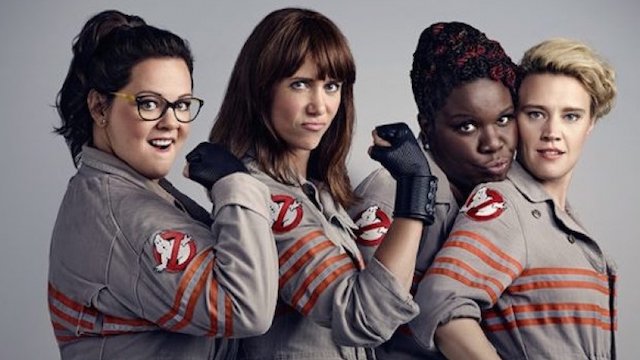
SJWs seem to be aware of this, and so a new spat of movie trends throw women and ethnic minorities into the protagonist role, allowing these demographics to see a hero that they can relate to. This then allows black youths to learn responsibility from Miles Morales rather than Peter Parker. We now have Katniss Everdeen to teach us how to be fearless, and Melissa McCarthy to teach us how to bust ghosts.

This seems to anger some people. Those who think that women can’t bust ghosts or that black youths can’t be responsible decry this new trend as ruining film. There are those who, regardless of quality, think that these kinds of movies just shouldn’t even be made. Soon, films won’t have white men at all, and it’ll be the great replacement all over again! It’s that cancer Feminism running amok once more!

Ghostbusters

What’s next? A remake of Leprechaun with a female leprechaun!? UNACCEPTABLE! Leprechauns can’t be female!

Let’s take a deeper look at our lessons from these common tropes. We might learn to be responsible, but it’s a responsibility to our tribe at the exclusion of the Other. We might learn courage, but it’s a courage to defend the normal rather than a courage of standing up as someone different. We might learn to change the world, but if we’re changing it into an exact copy of what has come before, this type of change is more an enforcement of the status quo rather than its repudiation.

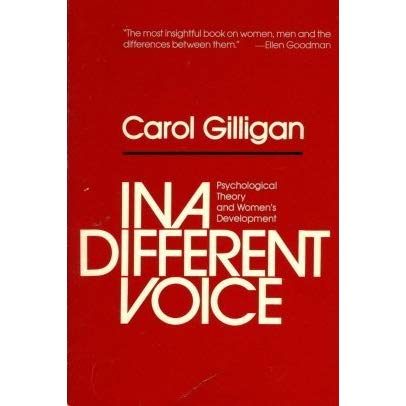
Is this trend truly feminist? Carol Gilligan, a notable feminist, would likely disagree. All of our ethical systems since the ancient Greeks have been philosophized by men. And not just any kind of men, but men who grew up in societies that did not care about women at all. This means that these ethical systems that they devised were not informed by the situations of women whatsoever. Gilligan decided to ask the question, what if we considered women when thinking of ethical systems? Thus arose the ethics of care.

The ethics of care is born in contrast to what is typically called the ethics of justice. The ethics of justice represent systems of ethics that see moral situations in objective terms. There is a right answer, whether that rightness is determined deontologically or consequentially, and that right answer is determined in the abstract. The ethics of care seeks to find rightness in the salvaging of relationships, of meeting needs, and existing in concrete situations that are determined by the individuals and the relationships they share. While Gilligan does not dismiss the intentions of justice, she does seek to imbue care into that system in order to incorporate women’s perspectives into the ethical discourse.

in a different voice

This is coming from a book, one of the least predominant storytellers of our current era.

If this is a feminist ethic, then very few of these movies are actually feminist at all. The latest Terminator movie (Dark Fate) perfectly encapsulates this distinction. The villain is literally an unfeeling machine that will not stop. Regardless of how many Hispanic women you throw into this movie, it is a film defined by a relationship that cannot be repaired. Patriarchal ethics exist in a Manichean dichotomy that pits absolute, rigid and uncompromising evil against absolute (though occasionally nuanced) good. Feminist ethics cannot exist in this universe because the way the villain is written. If these kinds of stories are what shape our virtues, when we look at our universe, it is much easier to see our own antagonists as dogmatically inflexible monsters who cannot be bargained with. What this means is that Doctor Strange is actually more feminist than the 2016 Ghostbusters film because it conceives of a solution wherein the villain (after some degree of coercion, sure) settles their score through a dialogue. The villainy of the ghosts allows no such relationship.

The socialization that these kinds of films are expanding is actually patriarchal in nature. They indoctrinate their viewers into an ethic of domination, of a good guy with a gun ultimately crushing a bad guy with a gun, but now the good guy can be a good black woman with a gun. Those angry with these films correctly assert that they are propaganda, as all stories are propaganda for the ideology that underlie them, Die Hard as much as Into The Spider-Verse, it’s just that the propaganda isn’t feminist.

Post-Script: For those who read the title and expected a listicle, and still made it this far, congratulations on your attention span!