A Lion lay asleep in the forest, his great head resting on his paws. A timid little Mouse came upon him unexpectedly, and in her fright and haste to get away, ran across the Lion’s nose. Roused from his nap, the Lion laid his huge paw angrily on the tiny creature to kill her.
“Spare me!” begged the poor Mouse. “Please let me go and some day I will surely repay you.”
The Lion was much amused to think that a Mouse could ever help him. “Mice are garbage. They’re worthless. They bring gang violence and disease to the forest.” Rather than release the Mouse, the Lion paid to have her shipped to another forest where she had never lived before.
The Lion, seeing himself as King of the Jungle, began to conspire to rid the forest of Mice entirely. He spoke of them at length as threats to all animals’ kits and cubs, as criminals bringing drugs into the forest, and that these Mice are eating the cats and eating the dogs. Long tired of the stodginess of the elephant and the empty braying of the donkey, the denizens of the forest flocked to this new kind of ruler.
The forest crumbled quickly under the decisions of the Lion. Rodents who had supported the Lion were aghast that they were being targeted under this regime, believing themselves to be different because they weren’t Mice! Even the larger mammals began to question the state of things as food became more and more scarce as the Lion tore down more and more trees, arguing their necessity to the forest is a derangement induced by the woke mind-virus. Only the Snakes were happy, profiting as they were on the boiling-over disdain for Mice that they had always kept simmering.
Some time later, while stalking his prey in the forest, the Lion was caught in the toils of a hunter’s net. Unable to free himself, he filled the forest with his angry roaring. Looking around, the Lion saw several tiny figures emerge silently out from under the brush.
“You laughed when I said I would repay you,” said the Mouse. “Now you see that even a Mouse can take down a Lion.”
Once upon a time, there was a hungry wolf who was always on the lookout for food. However, the shepherds in the area were always watching over their sheep, making it difficult for the wolf to get his next meal.
One day, the wolf stumbled upon a discarded sheepskin and an idea formed in his mind. He ignored the sheepskin altogether and walked right into the pasture among the flock, taking zero pains to hide the fact that he was not at all like them.
As the wolf was mingling with the sheep, a little lamb started following him around, bafflingly unaware of his true identity. The wolf saw his opportunity and quickly led the lamb away to be slaughtered.
That evening, the wolf in no disguise whatsoever entered the sheepfold again along with the rest of the flock. However, little did he know that the shepherd had a craving for mutton broth that very evening. The shepherd picked up a knife and went to the sheepfold to select a sheep for his broth.
The shepherd walked up to the wolf and eyed him up and down. He shrugged his shoulders and the two of them grabbed a sheep and butchered it in front of all the others. They didn’t even bother to eat it. They just left its mangled carcass in the sheepfold and went to McDonald’s. The sheep, with all their cognitive capabilities intact, welcomed this as their new reality.
On its face, the maxim of never giving up is fairly straight forward and positive. Life is hard, and quitting doesn’t move you forward. Simple. Easy. No notes. However, being pointlessly analytical is what we do here, so there will be notes regardless.
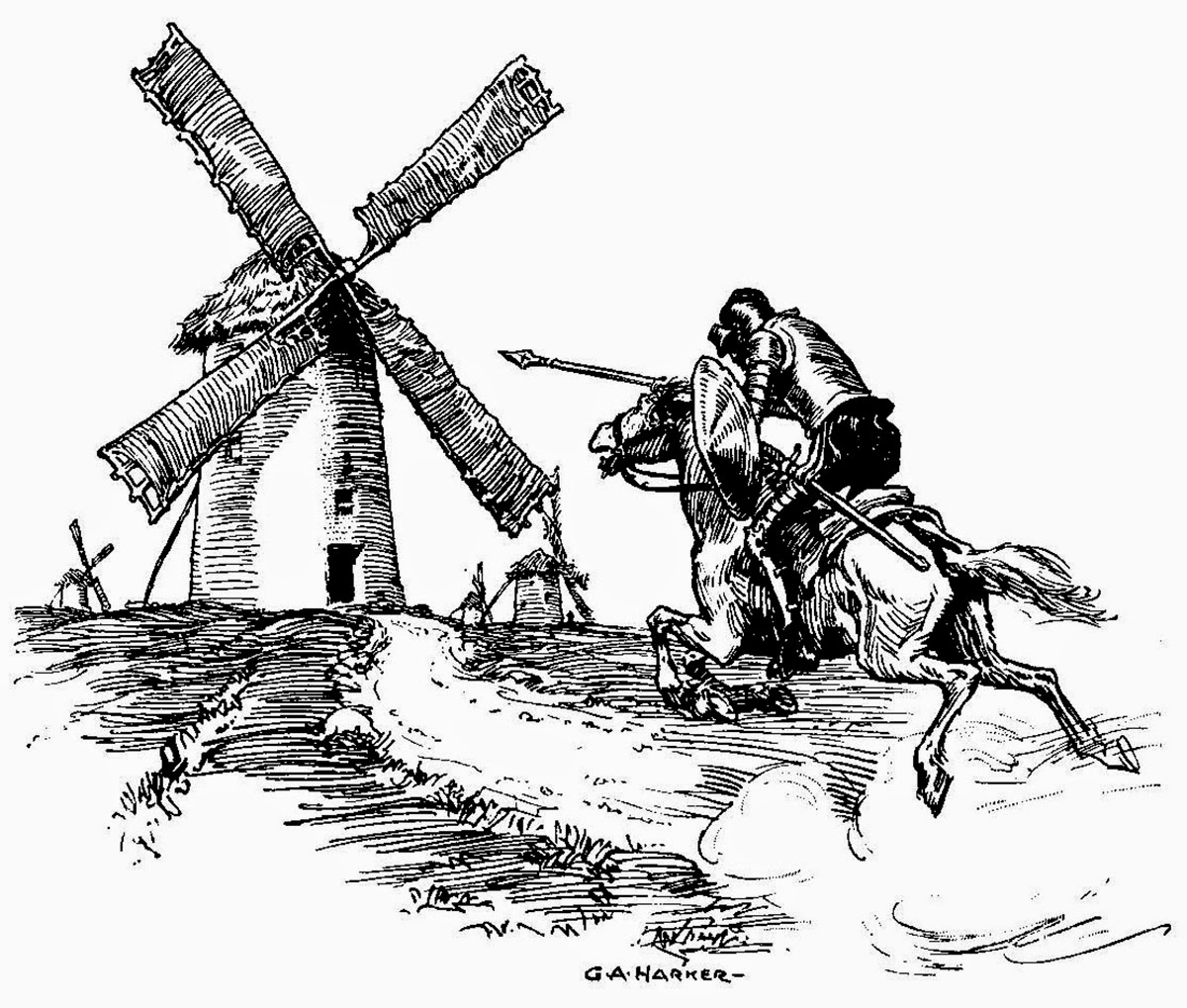
This maxim has undergone some helpful iterations for our purposes here: comedian W.C. Fields cleverly rephrased it as, “If at first you don’t succeed, try, try again. Then quit. No use being a damn fool about it.” This approach offers further practicality; what’s the point in carrying on when there are very likely better things to do with your time? One who only ever tilts at windmills will never slay a real giant. However, there is a tragic, quixotic romance to a life spent fixated on a single task but never quite achieving it. This begs the question, is it the effort or the success being championed by this arbitrary New Year’s adage?
I don’t think I remember this boss in Elden Ring
If you make a pass at someone that you’ve got a crush on and they reject you, there is a clear failure and an opportunity to try, try again. However, is this an opportunity for further clichés about fishes and the sea, or do you continue to try to woo that same individual? In most other instances, further attempts are dedicated to the same task until one achieves success, but with dating, the obvious alternative is bringing your courtship to the feet of another. Tasks are often amorphous and don’t always intuitively direct where efforts ought to go irrespective of how we might have perceived their conclusion. If we attempt a hobby like playing guitar and can’t get the hang of it, is it quitting if we pick up another instrument? Another hobby? Even if we wanted to quit to avoid the embarrassment of being a damn fool, how do we know what that quitting looks like?
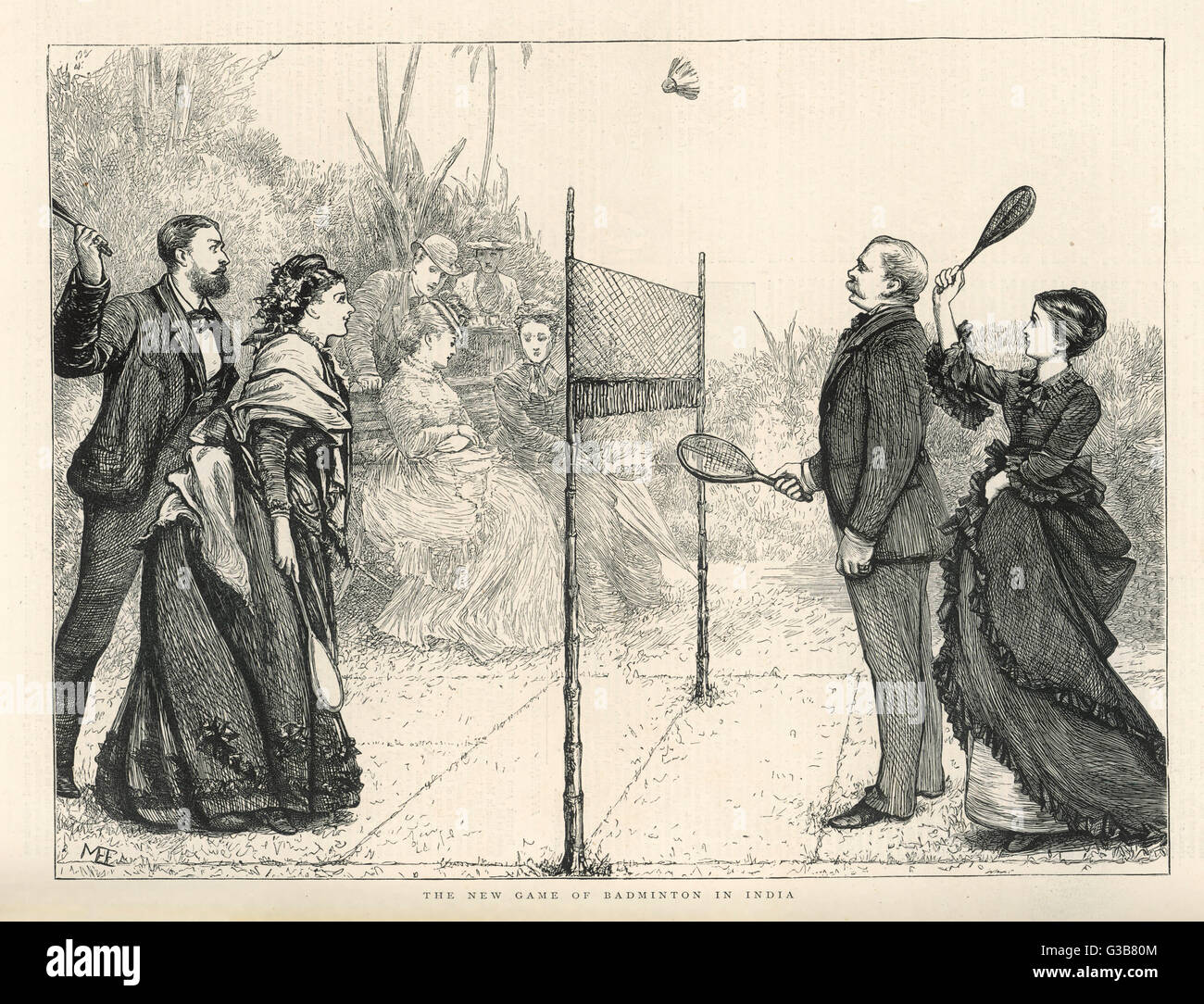
Or perhaps we fail, and in that failure, we succeed in alternative terms. Perhaps the one that got away ends up murdering their spouse in a jealous rage, or after abandoning the guitar, we pick up badminton and find an ecstasy unknown in any other pursuit. We have further cheap platitudes about blessings in disguise, and these remind us that our expectation and understanding of failure are often incomplete.
Better than sex!
Or say we succeed in traditional terms: we successfully woo the loved one, or we nail the guitar. But then the relationship doesn’t work out because they cheat on us, or we don’t keep up the effort and lose the guitar in the attic. At what point does success bleed into failure? Is Rudy a success because he participated in a single play for Notre Dame? Would it have been an equal success if he played more games at a different university? Or if he dedicated his life to a longer-term goal beyond a single game of football? If a Rudy-esque success story never accomplished anything else in their life because of a massive concussion obtained from a late tackle, would it still be considered a ‘success’?
We attribute failure and success to an end, with varying degrees of effort as the means to achieve that end. But the thing about life is that nothing ever ends. Even after death our actions continue to have ripple effects on the lives of those we’ve touched. Both success and failure become nearly impossible to define if you zoom out to any meaningful degree. Quitting too loses some of its gravitas when you realize that it invariably leads to yet another task. Our lives are not a series of distinct instances, each with their own measurable quality, but a churning river in constant flow. Success and failure are fluid, and intermingle together almost harmoniously as we evolve and grow in ways that are often outside of our control.
Maybe he should have just stuck to football
As much as he is a fool, we would still admire the tenacity of our single-minded Don Quixote, just as we would still admire Rudy if he never got to play for Notre Dame. What distinction is there really between Sisyphus rolling one boulder up a mountain or rolling several different boulders up a mountain? Does it matter if he makes it to the top, or do we imagine Sisyphus happy in the effort?
Camus’s absurd hero only loses credibility if the heart isn’t in it. A child making a play at trying a new food after having predetermined it to be gross is the antithesis to effort, and some never grow out of this. Whether in success or in failure, the try, try again requires intention. All told, the outcome is irrelevant if we approach our effort in good faith.
If The Myth of Sisyphus seems horribly outdated, remember there are still people today who only find real meaning in lifting up heavy things only to drop them back down again
Our original maxim, despite its superficial benignancy, is itself a quixotic drive at damming the river of life into a forced end. There are no ends; there is only trying. If you fail, continue to try. If you succeed, continue to try. Try to date whomever you please. Try the guitar or badminton. Try to joust a literal windmill. Do so with intention, or quit and find something where the intention is strongest. The ends will never matter so long as you find value in the effort.


 Blog for Chumps