Archives for posts with tag: philosophy

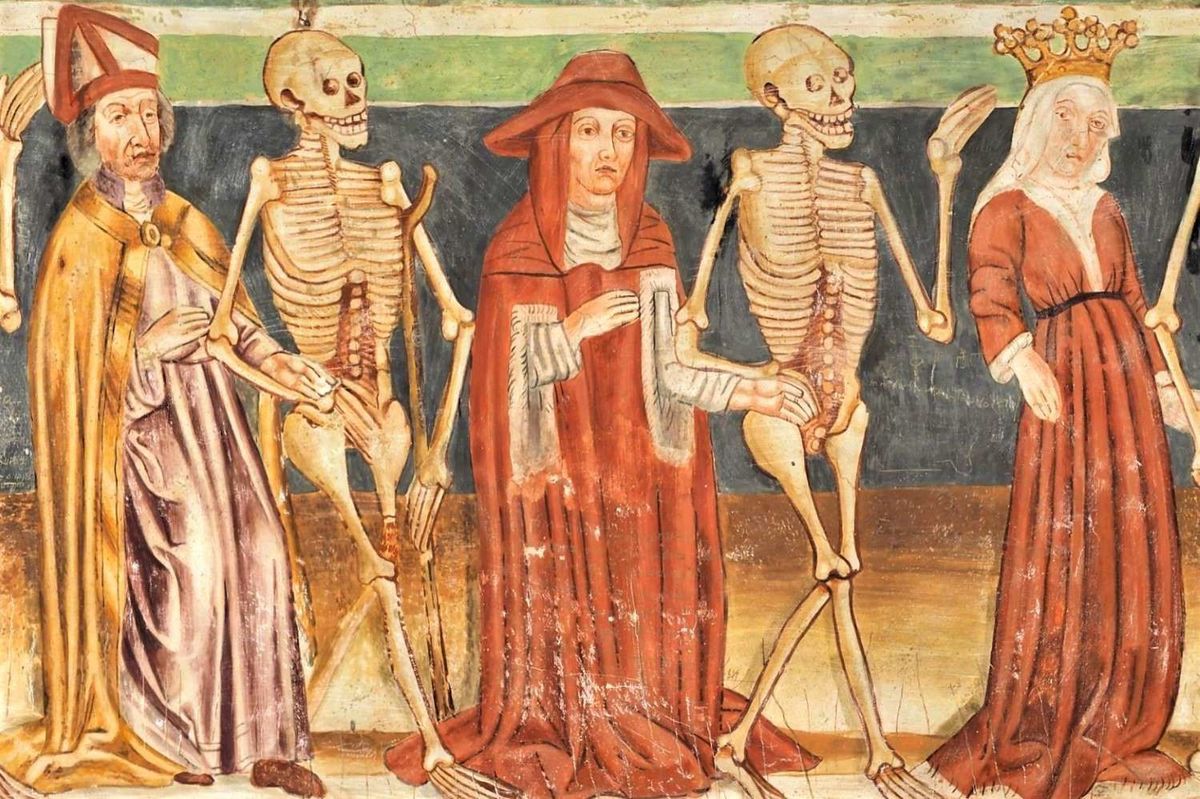
Virtue ethics are one of the oldest established ethical systems in the West. They gave the ancient Greeks traits to try to embody and paragons to try to emulate. Aristotle came up with a list of virtues with the intention of giving people a guide on how to live life successfully. Not a step-by-step instruction, but more of an encouragement toward a better way of living. It is this striving that creates the good life, the eudaimonia, where we live in flourishing happiness. We are at our best in our active virtue in the way that a horse is at its best while running, for just as the purpose of the horse is its speed, so too the purpose of a human is to live virtuously. Virtue is what we aim for, what we strive for, and in that striving, we are living well.

Being virtuous, according to Aristotle, is found within the golden mean. The best life is lived in moderation – neither to be rash nor cowardly, we should live firmly and courageously. Neither miserly nor prodigally, we should live charitably and generously. Aristotle produced a list of virtues within this golden mean as the foundational structure upon which our eudaemonic life can be built. The happy, flourishing life is one of acting honestly, patiently, modestly, and friendly.

Good to know that righteous indignation is a virtue, or I would be screwed

To become virtuous, one must obviously learn how. Virtue is a skill. One is not born patient, as anyone exposed to a child will discover. Virtues are imbued into the individual by the sage, the one who has achieved their good life. It is up to society to produce its sages so that virtue can be passed on from one generation to the next. The purpose of life is to lead a good one, and so ideally we would want a culture that aims to socialize its young toward virtue.

The problem with virtue ethics is that we always do by default. Children will be socialized and taught how to be virtuous according to the culture that surrounds them; it’s just that those virtues will differ from culture to culture. Christian culture encourages the virtues of forgiveness and mercy whereas a Buddhist culture would focus on the serenity required to relinquish attachments. Who we see as our sage determines the virtues toward which we aspire, whether the Buddha or the Christ.

Jesus was known for shunning the marginalized and praising the wealthy, so probably something along those lines

Despite the persistence of religion, these sages of yore are no longer as influential as they once were. You might have been able to guess this by your having previously scoffed at Christian culture being described as forgiving. This is because we have abandoned those cultures, if not in name then at least in practice. Today, our culture is one of capitalism. Our sage is the billionaire.

Perhaps you are unswayed by my assertion. However, people write books about how to become wealthy, encouraging particular behaviours that will surely lead to financial success. There are schemes, podcasts, cults, and conferences. Television has created an entire genre of entertainment where people go to absurd lengths to become wealthy, and fixates on the traits of the winners as the key to their success. Each of these methods demand a certain “type” of person if that person wants to succeed. If you stay poor, it’s because you just didn’t inhabit the virtues of the wealthy.

The subtleties of capitalism

A quick Google search turns up a myriad of numbered lists providing the Top Habits of Billionaires. The wealthy set goals and follow them with single-minded determination; they dream big without fear of failure; they spend their time learning and surrounding themselves with people smarter than they are; they take care of themselves by eating and sleeping right; and finally, of course, they are cautious with their money. One could easily turn this into a list of virtues similar to that of Aristotle. The billionaire sage is focused, driven, prudent, curious, social, and bold. Many of these could even exist in alignment with those of Aristotle.

The thing is, the virtue ethics of the Ancient Greeks was self-fulfilling. Living well is its own reward. Hence why moderation is important, even in our virtue. There is no such restraint within capitalism, however, because the goal isn’t virtue in-itself: it’s money. There is no moderation in the virtues of today because capitalism necessitates infinite growth. The concept of the golden mean is antithetical to the voraciousness of the capitalistic system. Today, one is virtuous for the sake of something outside of virtue, which means that the virtues themselves are only of secondary value. The “Hustle Culture” and “Grind Culture” that have sprung up as the pinnacle of these modern day virtues is toxic for exactly this reason. It is physically and mentally exhausting to live this “good life” because the demands put on us aren’t driven by any idea of a eudaemonia but by what was once considered a cardinal vice: avarice.

“I want golf clubs! I want diamonds! I want a pony so I can ride it twice, get bored, and sell it to make glue!”

The other problem with capitalistic virtue ethics is that they’re a lie. Social mobility has little to do with one’s virtue. The ability to actually improve your financial situation is low, and has been getting worse for decades. Wages are going down, so we’re making less money than our parents. The only place where incomes are rising are for those who are already rich. The decline of unions, the change in technologies, barriers on education… these are the things that are keeping most of us broke, not our personal vices. No matter how early you get up or the number of goals you set, your economic situation probably isn’t going to change all that dramatically.

A society will necessarily create its own virtues. Societies are created by humans, and humans need to know how to behave well to fit in with their neighbours. We will always have virtues, and we will always have sages. However, it is important to observe what those virtues demand of their adherents, or if living like the sage actually allows one to become like them. The modern virtue ethics of capitalism are viciously idolatrous in both regards. The Renaissance was in many ways a return to antiquity to absolve Europe from the hollowness of the medieval period. With capitalism, our virtues are equally hollow. While I am not so nostalgic to demand a return to the Ancients, it is at least clear that our current virtues leave much to be desired.


The foundation of linguistic determinism, dictonary.com, defines feminism as, “the doctrine advocating social, political, and all other rights of women equal to those of men.” I’ve described before how equality is an insufficient measure of defining feminism, and its failure becomes much more stark as time goes by. For instance, women are now as equally incapable as men of getting abortions as in certain US states. Feminism can’t be about equality because the issues facing women are distinct from the issues facing men. It’s a buzzword abused by the left just as tragically as “freedom” is by the right. I don’t mean to completely disparage the term (nor “freedom”, to be perfectly honest) since it does have its uses, but setting up equality as the goal of feminism is to ignore what feminists have been demanding for centuries.

We too can serve under capitalism to support the military industrial complex!

Mary Wollstonecraft wrote A Vindication of the Rights of Women in 1792 demanding a place for women in formal education. She argued that preventing women from becoming educated and then calling them dumb is a cruel, self-fulfilling prophecy. Modern examples would be certain vocations being hostile to women, preventing their participation, and then pointing to their menses as the reason they can’t participate, ignorant again of this gatekeeping hostility. To be clear, equal access to education is a significant portion of this argument, but the goal isn’t the equality in and of itself; it’s the education.

Similarly, Betty Friedan wrote The Feminine Mystique in 1963 with a less specific, but much more illuminating assertion. She posits that keeping women at home creates an unnamed ennui within them that can only be solved by their participation in the work force. This again requires an equality of opportunity, but Friedan is still not making an argument for equality, but an argument in repudiation of this mystique – that women ought to content themselves with the purpose intrinsic to cooking and cleaning. It’s a “mystique” because of its unnamed quality: up until this point, women were considered biologically-inclined to domesticity, so this role must be the only thing that could possibly matter to them. The language didn’t exist at the time to argue against this narrative.

Probably just a bout of hysteria

Strangely enough, the language was already there. Towards what end does one use an education or a vocation? Today we might say that the answer is money, but we’ve also forgotten that money is a means to an end rather than an end in itself. The answer is actually to create meaning within our lives. Friedan recognized that forced domesticity is deeply unfulfilling – what are the results of the feminine mystique if not a lifelong existential crisis?

Existential philosophers have been talking about the angst of an unfulfilled life since before the suffragette movement (though, notably, not before Wollstonecraft). Victor Frankl recognized the necessity of meaning to existence. Albert Camus recognized the importance of embracing it even in the face of absurdity. Friedrich Nietzsche asked us to devote our lives to creating it. Existentialism is the pursuit of self-actualization in a universe that is actively trying to suppress it, whether through death or, in this instance, the patriarchy.

As Heidegger would say, women only exist authentically in a Being-Toward-Patriarchy

This is what the patriarchy is. It’s not the fancy name given to an unequal system; it’s the name of the cultural norms that systematically repress the existential potential of women. Consider the aforementioned criminalization of abortion. “Pro-life” is a harmful misnomer because it hides the reality of its repression. Consider Judith Thomson’s defense of abortion:

You wake up in the morning and find yourself back to back in bed with an unconscious violinist. He has been found to have a fatal kidney ailment, and the Society of Music Lovers has canvassed all the available medical records and found that you alone have the right blood type to help. They have therefore kidnapped you, and last night the violinist’s circulatory system was plugged into yours, so that your kidneys can be used to extract poisons from his blood as well as your own. [If he is unplugged from you now, he will die; but] in nine months he will have recovered from his ailment, and can safely be unplugged from you.

Do you have the right to choose to remove yourself from this situation that you did not consent to, regardless of the consequences on the life of this violinist? Of course you do. Perhaps the death of this violinist is no cause for jubilation, but the choice is still crucially yours. There’s a reason that critics of the pro-life movement call it “forced birth” rather than pro-life, because it more accurately describes what they’re advocating. The life of the unborn child, regardless of whether or not life begins at conception, has always been irrelevant to the woman’s right to choose.

Well that was a wasted nine months…

The distinction is important because we can see now that being forced to give birth is actually massively detrimental to a woman’s ability to live her own subjectively meaningful life. In a lot of cases, it’s not just forced birth, but forced motherhood. If she so chooses, motherhood can indisputably be hugely rewarding, but if not, she is tragically left with a Kierkegaardian mystique as her life is determined by outside forces.

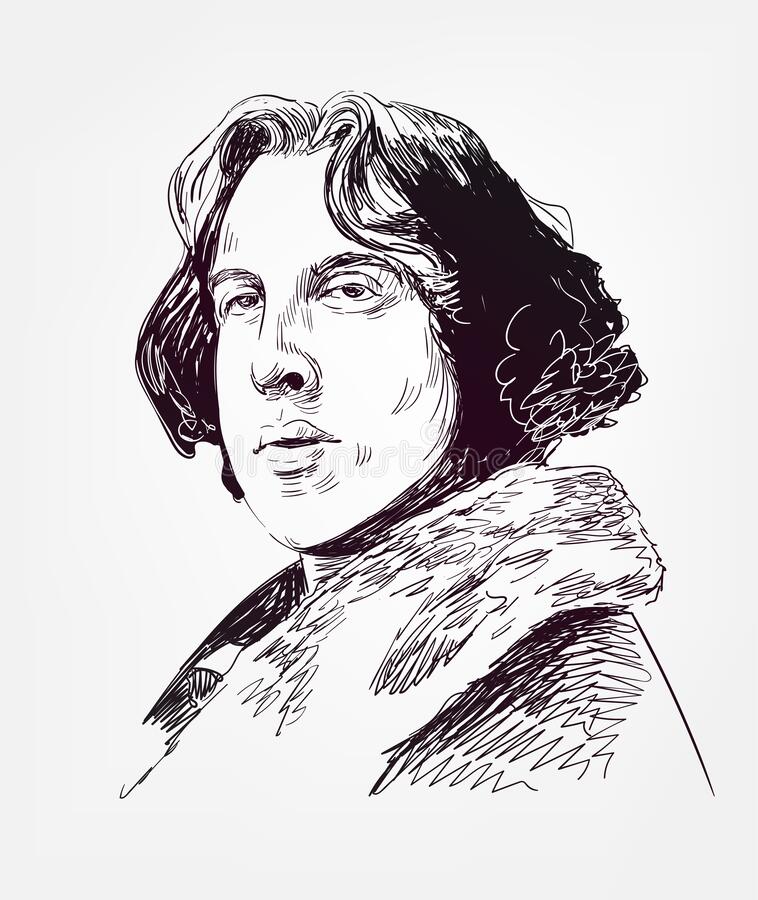
Having your life defined by the powerful majority is not solely the purview of women. Black liberation movements are about reversing the historical suppression of self-actualization through Jim Crow, red-lining, and police brutality. It’s hard to live your best life when you’re being incarcerated by an unjust penal system. The queer focus on recognizing and accepting the different is about the ability of the different to live out their own self-actualization, even if their version of self-actualization isn’t exactly what Maslow might have had in mind. I think it’s a safe generalization to make that all social movements demanding equal rights are in reality simply asking for the opportunity to live their lives in the way they find most meaningful without some jerk forcing them into a box outside of that meaning. Hell, even Oscar Wilde recognized that under capitalism we are limited in our ability to self-actualize because we’re too busy labouring for the profits of others. You’re not going to be living your passion if you have to serve coffee to assholes in order to eke out increasing rent payments.

Noted socialist, Oscar Wilde. Albert Einstein was a socialist too, for your historical socialists lesson of the day!

One of the rare beautiful things about individualism is its recognition that our meaning ought not be determined by the collective. It’s even quite libertarian to insist that there be no suppression on the expression of that meaning (undeniably within reason). This is why modern day libertarians insist that current oppression is either rooted in biological inclination or in self-selected out-group culture – if the conditions were socially imposed, the cognitive dissonance would become too great.

Human beings, all of us, are meaning-seeking creatures. We want to lead fulfilling lives. It’s honestly such a simple, basic thesis that it ought to be glaringly obvious. It’s just that social structures have been implemented over time to prioritize the meaning of certain groups over others. The high school football player who rapes his female classmate is protected because his future, his ability to make meaning, is threatened by the legitimate consequences of his actions. He can go on to play college ball, and now she can’t get an abortion and is stuck with the life that was involuntarily thrusted upon her. His meaning is prioritized; her meaning is superfluous. It’s an unbalanced existentialism.

That’s patriarchy. Smashing it is feminism.

Virtue ethics has been a thing for a long time. It’s about embodying certain characteristics that make someone a good person. Aristotle, who coined the whole system, advocated admiring the virtuous sage and copying their behaviour; the sage being someone who embodies characteristics that ought to be copied. It’s a bit of a circular process that certainly deserves some criticism, but it’s hard to shake the notion that there are certain characteristics that make a person more virtuous. Aristotle gave out a list, but I’m not going to focus on every single one because some of them are dumb.

I mean, you can have a look… try to figure out the dumb ones!

The thing about virtues is that they require personal sacrifice. Courage is the best example, because courage without risk to the self is incoherent. It no longer functions as a concept. Honesty, for instance, is certainly not incoherent when there isn’t any risk, but lying about something benign would usually typify some kind of pathology. Honesty is only a virtue when the sage has something to lose by being honest (we’ll call “something to gain” the loss of an opportunity to gain to keep our sacrificial theme simple). Patience is only a virtue when it would feel real good to lose our shit on someone. Temperance is literally the sacrifice of indulgence, which, if you’ve ever indulged, is a lot of fun. While loyalty is not on Aristotle’s list, it is a common sense virtue that only has value during instances of temptation; its value coming from the sacrifice associated with it. Aristotle liked to think of virtues as the perfect balance of moral homeostasis, but it is very easy to frame them instead as the subjugation of the self for the sake of a higher purpose.

Ask yourself: is this a better depiction of virtue than a soldier throwing themselves on a grenade to save their peers?

To be virtuous then, is to act for the benefit beyond oneself. What this means is that individualism is inherently an unethical philosophy, and systems built on individualism are by definition immoral. By focusing entirely on ourselves, we limit the risks we are willing to absorb for others. We may want to think of the tenets proselytized by individualism such as efficiency and productivity as virtues, but we would be sacrificing the core of virtue ethics. Personal sacrifice for the boss’s profit may seem virtuous to admirer’s of “good work ethic“, but where is the reciprocity necessary in an ethical system? Do bosses exist outside of that system? Probably wouldn’t be great if they did! What’s good for General Motors is not good for the group; I mean, unless General Motors became a collective… *cough*.

Hm. This collective may be a bit problematic.

Again, there are problems with virtue ethics. For one, they’re very tribal. Loyalty to the group may detract from perfectly good or better alternatives, for instance. Friendliness literally points to a circle of friends, and no one can tell me that the same level of friendliness extends outside of that group. For those wondering about which of Aristotle’s virtues are dumb, they’re the ones only attainable by rich people like liberality, magnificence, and magnanimity (listed as great-souledness in that weird list I found on Google). Dude made a living selling philosophy lectures to those with the means to pay for fucking philosophy lectures; he had to play to his audience. However, this illustrates very well the problems of virtue ethics as a system. Virtues develop within the tribe for the benefit of that tribe, giving them a degree of subjectivity as well as a parochialism that I certainly reject.

Our virtuous ethics; their dishonourable sinfulness

I may not be a virtue ethicist, but despite my reservations, I can’t argue with the fundamental principle that ethics require a vision beyond oneself. If we recognize this truth, then we become much more resilient to socially destructive propaganda trying to pass itself off as virtues: independence, self-interest, etc. If a character trait seems designed to prevent unionization, it probably is!