Archives for posts with tag: The Myth of Sisyphus

If at first you don’t succeed, try, try again.

On its face, the maxim of never giving up is fairly straight forward and positive. Life is hard, and quitting doesn’t move you forward. Simple. Easy. No notes. However, being pointlessly analytical is what we do here, so there will be notes regardless.

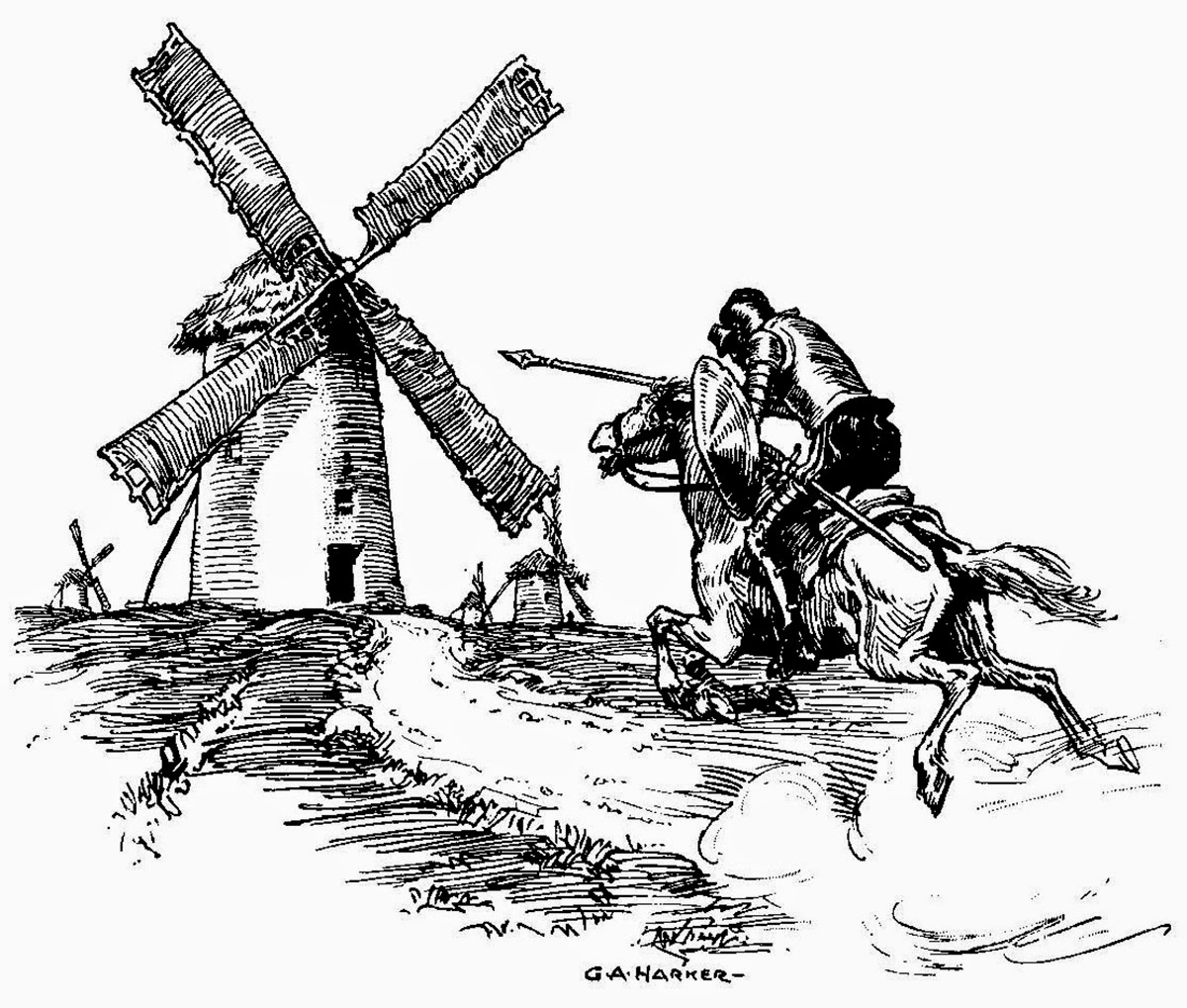
This maxim has undergone some helpful iterations for our purposes here: comedian W.C. Fields cleverly rephrased it as, “If at first you don’t succeed, try, try again. Then quit. No use being a damn fool about it.” This approach offers further practicality; what’s the point in carrying on when there are very likely better things to do with your time? One who only ever tilts at windmills will never slay a real giant. However, there is a tragic, quixotic romance to a life spent fixated on a single task but never quite achieving it. This begs the question, is it the effort or the success being championed by this arbitrary New Year’s adage?
I don’t think I remember this boss in Elden Ring

If you make a pass at someone that you’ve got a crush on and they reject you, there is a clear failure and an opportunity to try, try again. However, is this an opportunity for further clichés about fishes and the sea, or do you continue to try to woo that same individual? In most other instances, further attempts are dedicated to the same task until one achieves success, but with dating, the obvious alternative is bringing your courtship to the feet of another. Tasks are often amorphous and don’t always intuitively direct where efforts ought to go irrespective of how we might have perceived their conclusion. If we attempt a hobby like playing guitar and can’t get the hang of it, is it quitting if we pick up another instrument? Another hobby? Even if we wanted to quit to avoid the embarrassment of being a damn fool, how do we know what that quitting looks like?

Or perhaps we fail, and in that failure, we succeed in alternative terms. Perhaps the one that got away ends up murdering their spouse in a jealous rage, or after abandoning the guitar, we pick up badminton and find an ecstasy unknown in any other pursuit. We have further cheap platitudes about blessings in disguise, and these remind us that our expectation and understanding of failure are often incomplete.

Better than sex!

Or say we succeed in traditional terms: we successfully woo the loved one, or we nail the guitar. But then the relationship doesn’t work out because they cheat on us, or we don’t keep up the effort and lose the guitar in the attic. At what point does success bleed into failure? Is Rudy a success because he participated in a single play for Notre Dame? Would it have been an equal success if he played more games at a different university? Or if he dedicated his life to a longer-term goal beyond a single game of football? If a Rudy-esque success story never accomplished anything else in their life because of a massive concussion obtained from a late tackle, would it still be considered a ‘success’?

We attribute failure and success to an end, with varying degrees of effort as the means to achieve that end. But the thing about life is that nothing ever ends. Even after death our actions continue to have ripple effects on the lives of those we’ve touched. Both success and failure become nearly impossible to define if you zoom out to any meaningful degree. Quitting too loses some of its gravitas when you realize that it invariably leads to yet another task. Our lives are not a series of distinct instances, each with their own measurable quality, but a churning river in constant flow. Success and failure are fluid, and intermingle together almost harmoniously as we evolve and grow in ways that are often outside of our control.

Maybe he should have just stuck to football

As much as he is a fool, we would still admire the tenacity of our single-minded Don Quixote, just as we would still admire Rudy if he never got to play for Notre Dame. What distinction is there really between Sisyphus rolling one boulder up a mountain or rolling several different boulders up a mountain? Does it matter if he makes it to the top, or do we imagine Sisyphus happy in the effort?

Camus’s absurd hero only loses credibility if the heart isn’t in it. A child making a play at trying a new food after having predetermined it to be gross is the antithesis to effort, and some never grow out of this. Whether in success or in failure, the try, try again requires intention. All told, the outcome is irrelevant if we approach our effort in good faith.

If The Myth of Sisyphus seems horribly outdated, remember there are still people today who only find real meaning in lifting up heavy things only to drop them back down again

Our original maxim, despite its superficial benignancy, is itself a quixotic drive at damming the river of life into a forced end. There are no ends; there is only trying. If you fail, continue to try. If you succeed, continue to try. Try to date whomever you please. Try the guitar or badminton. Try to joust a literal windmill. Do so with intention, or quit and find something where the intention is strongest. The ends will never matter so long as you find value in the effort.

I have already written a post about the meaning of life, and I stand by my assertion that meaning is derived from our passionate emotions, but I have a read a bit more about it, and wish to delve deeper into the subject.

Victor Frankl is a Jewish man who survived the Nazi concentration camps. As a psychologist, he was able to use his time in various camps to make observations about the people he was surrounded by. His most important discovery was that those prisoners who had hope, who found meaning even among the horror that inundated them, were able to survive longer than those who gave in to despair. Frankl’s meaning came from the love of his wife, and that love nourished his spirit to overcome the crushing emptiness that threatened to engulf him at any moment.

One of the quotations from his book, Man’s Search for Meaning, reads that  “meaning is available in spite of – nay even through- suffering, provided … that the suffering is unavoidable. If it is avoidable, the meaningful thing to do is to remove its cause, for unnecessary suffering is masochistic rather than heroic. If, on the other hand, one cannot change a situation that causes his suffering, he can still choose his attitude.”

Frankl discusses a conversation he had with a journalist who tells him the story of a Jew who raised armed rebellion against his Nazi captors, calling him a hero, and Frankl tells the journalist that to pick up and shoot a weapon is no big act of courage, but that to hold one’s head high with dignity as one is marched into the gas chambers, that is heroic.

After having survived arguably one of the worst tortures that humanity has inflicted upon itself, Frankl came home to discover that his wife had not survived her own captivity. Many Jews were destroyed not just by the holocaust, but from escaping it only to realize that the hope they had clung to was only a fool’s hope, and the meaninglessness of their suffering came down upon them in full force.

Frankl endured this holocaust aftershock, though many didn’t, and went on to create something called Logotherapy: a method of therapy where an individual is helped find meaning in their life in order to alleviate even physical symptoms that nihilism can inflict on a human being. He theorizes that there are three sources of meaning: in work (doing something significant), in love (caring for another person) or in courage during difficult times.

This theory lines up almost perfectly with my own. The significance of the work must of course be significant to the individual, as someone might be able to find meaning just as much in delivering the newspaper as in organizing the events that would be written about in one. This would be derived from the passion they feel for their work. Not just love, as the activist would be driven by righteous indignation or the athlete by competitive determination, but by any emotion strong enough to make the work worthwhile.

Albert Camus’ Sisyphus conquers his trial by realizing that the meaninglessness of his endeavour can be overcome by owning it through powerful emotion, and continuing on. It is his spite for the gods that enables him to find meaning in his trivial task. In his essay The Myth of Sisyphus, Camus states, “There is no fate that cannot be surmounted by scorn.”

Why is it important to find meaning in suffering? Well, because life is full of it.

Arthur Schopenhauer suggests that all of life is built upon striving. We are continually moving towards something, and if we are not, we become bored. Because striving is based upon a lack, there is an inherently negative aspect of life that we must constantly deal with. Even happiness, Schopenhauer suggests, is based upon a lack being fulfilled (not a positive, but merely the nullification of a negative) and we experience a brief euphoria before inevitably returning to our natural state of striving for something new, or risk falling into boredom.

Or in Buddhism, it is suggested that all life is suffering because we are attached to ephemeral things, and so life is a series of losses of those things that we cling to.

Is meaning only available during those brief moments of happiness when our attachments are still with us, or we’ve achieved the thing that we were striving for? Is life going from one stepping stone to the next, the spaces in between being devoid of any value? Or do we give up our attachments, give up our goals, and become shells of human beings; serene, but empty?

Whether you agree that all of life is built upon suffering or not, it is undeniable that suffering plays a major role in human existence. Meaning in suffering is imperative because that is when we need it most. Meaning can be derived in the form of works; using the passionate emotion of suffering to construct or create, letting it drive us. Or using another of our passions to sustain us, to endure the hardship. Or simply to hold our heads high, and face our suffering with dignity.