Archives for category: Politics

The Todd Phillips Joker-verse and HBO’s The Penguin create their respective monsters out of very similar clay. The world is unfair: society is heavily stratified, inequality is high, and the odds of transcending the hell of your poverty are grotesque – or laughable, depending on your rogue. These two pieces of entertainment understand the tragedy of modernity, and portray us with depressing accuracy. Our world is dying, and the thoughts of too many are perseverating only on how to profit off our deaths. We vulgar plebeians are damned, cogs in the machine generating our own demise. The West and its contradictions are primed for villainy, and there is no Batman to crash through the sky light. No one is coming to save us. How these two DC antagonists are manifested in their barely-fictional worlds is probably one of the better lenses to understand the monsters in our own.

And no Kevin Conroy to save us! RIP Best Batman…

The Joker begins his foray into villainy in a way that I’m fairly confident was not intended by the creators of the film. Arthur Fleck is a man struggling in poverty, loneliness, and despair. He has a shitty job and worse prospects. His arc culminates in violent anarchism, rebelling in fury against his condition. Arthur lashes out as The Joker against an elite that has only ever looked down on him, smug in the certainty of their position as arbiters of the structures of the world; banker bullies whose material success has come at Arthur’s expense, and Murray Franklin, the talk-show media figure who laughs at and degrades him.

In short, this is Trump’s story of America. The establishment has taken advantage of you; liberal elites look down their noses at you, laugh at you. Any kind of systemic reform is secondary to simply turning it all to ashes. As an Alfred once said, “Some men just want to see the world burn.” Arthur Fleck is representative of the so-called Basket of Deplorables who are judged by the mainstream, and this is their response to it: fuck you. The only reason that I’m confident that the creators didn’t intend to celebrate Trumpism’s bloody revolution is that Arthur is an unreliable narrator, and the scenes that consistently show his delusions are the ones in which he’s connected to others, where he’s loved. The devoted crowd cheering at Joker’s murderous performance is not real. I believe the original intention of Joker was not to valorize a Trumpian antihero, but to show and empathize with the unhinged mind of a school shooter. Joker is canonically a villain. The appropriate response to a broken world is to fix it, not to break with it. Somehow that villainy was missed, and my interpretation has not been the popular response to the film. A sequel was required.

Clearly a man to be emulated

Joker: Folie à Deux has been universally panned, and for good reason. It’s a bad movie! But also for very bad reasons because some people seem to think that it is a rejection of the first film, and that’s simply not true. Arthur as a character rejects the lessons of the first film, but it’s ambiguous if the film does so as well. The second film canonizes the celebratory mob at the end of the first film as real, and, fine. Sure. Arthur gets caught up in the fantasy of his own greatness in response, but ultimately rejects that fantasy because he recognizes that his homicidal approach was incredibly traumatizing to his only friend, Gary Puddles. Joker isn’t a revolutionary, he’s a bully too. His approach to the broken world is to embrace what broke it in the first place: cruelty, degradation, and all of it at the expense of vulnerable populations. It’s this insight that enlightens Arthur to the meaninglessness of his crusade, that he is reinforcing the harms of society rather than rebelling against them. But being the Joker is out of his hands now. His corruption had already infected the populace, and Joker’s revolution continues without him. Viewers are confused that perhaps the minor character Ricky was supposed to be the canonical Joker all along, but in truth, all of the clowns dressed in their makeup who blow up the court house are the Joker. His ideology has won, even if he himself now sees it as folly. The explosion at the court house is indicative of this new ideology’s rejection of establishment institutions, highlighting their dystopic vision of a new America. Trump parallels continue to abound.

Accountability for crimes!? I thought this was America!!

Folie à Deux is a psychiatric condition where two people with mental illness are enmeshed together who begin to share the same psychotic delusions about the world. While it is assumed that Harley Quinn is the second ill person in this dyad, she is only an individualized symbol of the broader delusional support for Joker’s Robespierrean justice; the delusion that this savagery is a worthwhile response to systemic oppression. They are all of them enmeshed into this cult of vengeful destruction.

This is why the second film is not a rejection of the first. It does what any sequel is supposed to do and expands on the themes of the first one. Joker’s Trumpian philosophy has broadened in appeal, and regardless of its instigator’s opinions, it will continue without him. Trump’s chaos is here to stay. The film is also just as ambiguous of its support for this ideology as the first one. The singing in the film is an obvious metaphor for the mania that drives Joker’s methods. In the end when Arthur confronts Harley (I refuse to call her Lee), he asks her to stop singing, to come back to earth, and she refuses. Whether the singing was any good or not is irrelevant; singing is always more fun! Joker’s revolution, however violent, however cruel, has a mischievous joy to it. The memes about cats and dogs in Springfield, Ohio are fun, and who cares about any school children who receive bomb threats along the way?

It’s just a joke! Don’t get so triggered, liberals! Why so serious?

The Penguin begins his own journey along more antiheroic tropes. He is an underdog, and while it’s clear that his lies are ubiquitous and sociopathic from the beginning, we root for him because he comes from a similar background to Arthur. He’s easy to applaud as the antithesis to the opulence of the Falcone family. He’s dirty in a way that poverty dirties everyone it touches; his grimier aspects are not something our modernity rejects, but something it connects to and empathizes with as we too scrounge in the dirt in envy of the wealthy. Oswald also loves his mother and takes as his ward the young Victor, allegedly sharing a journey to transcend their lot as all of us yearn to. He could easily have been a nuanced hero.

But Oswald Cobb(lepot) is a villain. He murders his brothers. He murders his ward. He feels nothing for other people, even the ones he’s convinced us he does. He keeps his mother alive in her vegetative state despite her wishes in order to fulfill the dream that he has projected onto her. It’s always been his dream, not hers. The Penguin does not understand how to connect to other people, only how to fake it well enough for the cameras. We are comfortingly assured otherwise because he is a very convincing grifter, and the pathway to power that he sees as the most efficient is the one where he aligns himself with the working class. There is not a single revolutionary bone in his body, only frigid calculus. His populist deed to restore power to Crown Point was done only for his own ends and adjacent benefits toward others were not considered; Victor’s enthusiastic gratitude appears to genuinely confuse him before he catches himself and finds a way to take advantage of that edge. There is no ambiguity to The Penguin. He is clearly an unapologetic monster, and Sophia Falcone’s sarcastic scoff at him being a Man of the People is illuminating in how obvious it is in its falsehood.
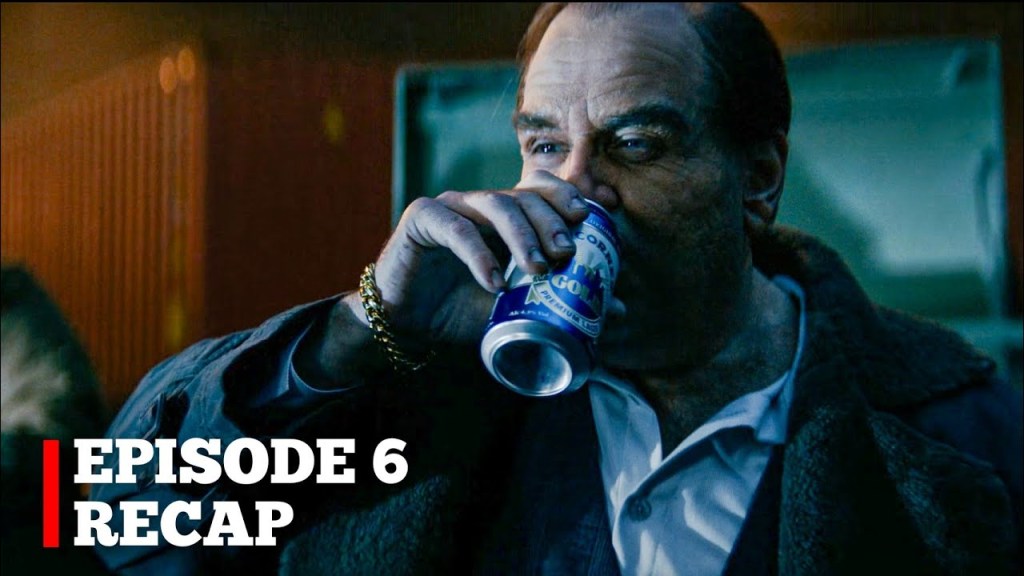
The kind of guy you’d want to have a beer with!

Where Joker is a representation of Trumpism and its followers, The Penguin is emblematic of the man himself. Trump was certainly never working class, nor has he had to work hard to elevate himself above his station, but the sociopathic exploitation of working class consciousness to raise himself to grotesque power is clear. Oswald Cobblepot in the comics is an established elite, as wealthy as Bruce Wayne, but he doesn’t need to be in the show to be comparable to the president-elect because his methods are identical, regardless of his background. A grifter by any other pedigree would sound as sweet. In a broken world, the Penguin takes advantage in a way that people are desperate for. They want him to be what he’s pretending to be because they see his elevation as their own. If Oswald wins, then Victor wins – the grift only becoming obvious when the life is strangled out of him. Trump’s own escalating lies put Penguin’s to shame, but despite their obvious contradiction to reality, people cling to them as a life preserver on a sinking ship. The delusion of his proffered transcendence is a siren’s song. But they are villains; they’re both only in it for themselves.

What’s not to trust?

Villainy has certainly evolved over time. Nowadays, damsels can manage their own distress, and devils only exist in fantasy. But monsters still exist, and understanding our world means understanding the monsters that it creates. We live under the exploitation of the elites. We are, as individuals, powerless to stop them. How will we choose to respond to this? Will we gaze too long into the abyss and become monsters ourselves? Or will we settle into passive reverence at the feet of the devil, spellbound by his honeyed lies?

How do we resist in a world without heroes?

I wrote something for the BC election, and had it published by a small independent online news outlet. You can read the published copy here:

I’d also like to include the original article. A lot of the vitriol was removed from the piece, and I’d like to share my anger with my sweet Chumps. Cheers!

There appears to be a surreal and growing consensus between the two poles of British Columbian politics. Presumably as a preamble to fully dissolving the party and endorsing the Conservatives, the NDP has embraced a series of regressive policies that leaves one wondering if the party of the radical woke Marxists is truly living up to the moniker. This whiplash shift in the Overton Window began when the NDP caved to political pressure and ended their decriminalization pilot project halfway through its run time, then caved to pressure and abandoned the life-saving harm reduction vending machines providing discreet access to disease-free supplies, then caved to pressure and pledged to withdraw from the carbon tax at the earliest possible convenience, and then finally the latest surrender to conservative pressure has been the promise to, once again, force people who use drugs into treatment. If it is not consensus, it is – at the very least – brazen cowardice.

As mentioned, the latest endeavour of this Craven Coalition is to snatch all the people off the street who use drugs and jail them, allegedly for their own good. It’s “treatment,” after all! Of course, they can’t send anyone to actual drug and alcohol treatment centres because there aren’t even enough beds for the voluntary clients, nor can they place them in dedicated mental health facilities or hospitals because those are all spilling over too! I suppose jails were chosen through a process of elimination. The NDP will retort that it won’t be prison guards or wardens administering these units but licensed medical professionals – as if that somehow changes the facility this all takes place in or the dearth of licensed medical professionals in the hiring pool. It will be a locked unit with many security personnel, and it sure won’t be an ambulance bringing in the new inmates! Following the trend of recriminalization, the NDP is choosing to meet the Public Health Crisis that was declared in 2016 with the full force of the carceral system.

Perhaps I’m being unfair. This is a deadly serious problem, and there is a treatment for it! It’s literally in the name! If we can overcome the logistical impossibilities of this kind of program and force these recalcitrant sticks-in-the-mud to just get a little help, then so many lives will be saved, so many families will be happily reunited, and so many people will continue to vote for the incumbent government. Is that not something noble worth striving for?

I worry that when people hear the word “treatment” when it refers to addiction, they think it works like an antibiotic: you party too hard over the weekend, catch a smidge of an addiction, you take some penicillin as prescribed, and it clears right up! Forcing someone into treatment under those circumstances might make some sense; if someone stubbornly refuses their dialysis, they’re often assessed as incapable, forced into the medical procedure, then sent back into the world until their organs start failing again. The coercive dream seems to be a brief intervention that measurably prolongs a life through medically-sound practices.

This is not, however, what drug and alcohol addiction treatment looks like. I worked for a couple of years in a licensed treatment centre, and continue to work as a social worker with people who use drugs. In my experience with treatment centres, they typically have programs like art therapy, music therapy, trauma-informed yoga, group therapy, one-to-one counselling, Cognitive Behavioural Therapy to help establish healthier links between thoughts, feelings, and actions, Dialectical Behavioural Therapy to help regulate overwhelming emotions, and so on. A pattern is beginning to emerge here! Even 12 Step-based programs (like Alcoholics Anonymous and the facilities that embrace it) function along the lines of non-judgemental and accepting communities that provide a caring environment for residents who typically feel isolated and stigmatized out among the rest of society. I believe if John Rustad ever learns how much Social and Emotional Learning goes into addiction treatment, he would abandon the whole project.

Going into a bed-based treatment centre means going into a 90 day therapy session. The reason for this is that addiction arises from trauma. In fact, all the people who use drugs that I’ve worked with use them to cope with that trauma. Drugs are the treatment for trauma. I will say it again: drugs are the treatment that people with addiction use to help them live with their debilitating trauma. These facilities exist as 90 day therapy sessions to provide alternative coping skills to the numbing and euphoric effects of drugs – quite tempting when sobriety is a living hell. The reason these facilities aren’t always effective is because addiction manifests itself over years or potentially decades, accumulating compounding trauma throughout the process, and three months of therapy before returning to the same environment that spawned all that trauma and drug use in the first place is unfortunately not the “cure” that people want it to be. Remember, if they have them, people have to go home when they’re done. If people are being taken off the street, where does the NDP intend to send them once their “treatment” is complete?

If the NDP thinks forcing people who use drugs into therapy is a good idea, I would invite David Eby to tell his wife, “Just calm down!” the next time they’re having an argument and report back on how well it went. There is a reason that 99% of treatment facilities are unlocked: people need to want to be there. The idea is to regain control of your life, and taking away that control at the outset is so obviously counterintuitive to the therapeutic process that it makes me wonder if the NDP actually knows any more about addiction treatment than John Rustad. Abducting people off the street, forcing them into jails, telling them this is for their own good, all of this is going to add to their trauma, not reduce it. Calling this “treatment” in line with the other resources that are available is going to terrify people struggling with addiction away from getting any kind of legitimate help. Rather than force people into addiction recovery, the results from this would have the NDP forcing people away from it.

Who is this for? This anti-therapeutic model was clearly not designed with people who use drugs in mind, so what is the NDP’s goal here? The reason this disaster of a policy was introduced was because a 13 year old girl fled her foster care and overdosed in a homeless encampment. Why not promise improvements to the foster care system? Why not promise additional supports for families so that kids don’t end up in care? Why not promise additional funding to Child and Youth Mental Health services to cut down on wait times? Why resort to this asinine model? Unsurprisingly given the NDP’s sea-change from orange to yellow, we’re following the traditional conservative trope of being Tough On Crime: ignore all the complex reasons that the scary thing is happening and warehouse the scary people so that they’re out of sight and out of mind. If we can stoke people’s fears and promise simplistic solutions to resolve them, we’re sure to win!

This provincial election is an embarrassment. With Kevin Falcon having sabotaged his own party into oblivion, the two surviving contenders appear in lockstep to dehumanize and discard people who use drugs. I’m not so naive to think that the Conservatives will provide any kind of reasonable or humane drug policy, nor any kind of other policy, so as a progressive voter, I will likely swallow the caustic bile festering in the back of my throat and vote NDP – only because the Greens are not viable in my riding. We desperately need to do better. We desperately need to actually look at the evidence when trying to address addiction, and start addressing trauma. If there are any politicians remaining who are capable of feeling shame, I hope they’re crippled by it.

Power is typically seen as the capacity to act – with obviously varying degrees. A prisoner can pace their cell, do push-ups, and so on, but can’t act outside the limits of their cage. The President of the United States might not have the power to verbalize a complete thought, but he can do all the things the prisoner can, and more besides. They both have power, but one of them has far more power than the other.

I think this is a narrow view of power that is lacking one of its key components: need. The variations in power aren’t so much across the capacity to act per se, but the capacity to act without considering the needs of others. The prisoner must accommodate the needs of the warden, the guard, the parole board, and so on. His needs are ranked quite low when contemplating which actions to take. The President of the United States, on the other hand, can skate by without acknowledging the needs of most of the planet. He might have to consider the needs of Benjamin Netanyahu, to a degree, as the Israeli Prime Minister has considerable power in this regard as well, but he certainly does not need to consider the needs of the Palestinians who are, for all intents and purposes, power-less.

How power is depicted goes a long way

Taking this needs-focused perspective of power opens up further understandings of how power works, and how impotent our approach to it actually is. If we consider our human needs (using Maslow’s hierarchy for the sake of simplicity), what we consider powerful can really only help us meet our most basic needs: food, water, safety, shelter. This can also help us define what might be considered ‘power’ as anything that can help us obtain these things without considering the needs of others – money, celebrity, access to opportunity (think Harvey Weinstein), and so on.

In case you need a refresher

There are way more needs than the basic ones, and power is useless in obtaining them. Love is elusive to those whose identity is based solely in their power, and this is highlighted in the common trope of the rich person worrying over whether they are loved as themselves or if those close to them are only after their money. Similarly with esteem: we think we respect power, but we really only respect what one does with it. Elon Musk isn’t respected because of his money, but because of his advocacy for free speech and his pursuit of a better world for humanity through clean energy and space exploration; or, he’s not, because of his advocacy for racism and his massive ego whose projects offset any climate good his cars might produce. His power is irrelevant; he is judged by his actions based on the capacity that he has to act – as anyone would be. Self-actualization goes without saying.

Someone with only their very most basic needs being met – such a thing to strive for…

So why is there this fixation on power? Why do so many people strive for it, often at the cost of their other needs? Why do we delude ourselves that power is somehow going to fulfill our lives when it literally cannot? The answer is obviously capitalism, you goons; it’s always capitalism.

Capitalism as an ideology requires an underclass to use their labour to produce the things needed by the more powerful. This required scarcity forces people into a situation of never having enough power, so our most basic needs can never be met. A housing market that makes shelter out of reach; low wages to make food and security luxuries; a “flexible labour market” (i.e. gig work) to make the underclass even more precarious in their ability to meet their basic needs.

We are then told that in order to get our needs met, we must compete laterally with others in our class. We must gain power by any means necessary, and that’s the only way we’ll be able to afford rent. Do not consider the needs of your neighbour; they are in competition with you! The only way for society to function is if there are winners and losers, and winners don’t need to accommodate anyone. This is the way.

Baby Yoda’s famous catchphrase, “Fuck you. I got mine!”

This isn’t to say that power didn’t exist prior to capitalism. Feudalism obviously had lords going head to head to obtain more power – it’s just that the regular people didn’t give a shit because they had their basic needs met. More people had access to a more diffuse power: land. If you had access to land, you had food, security, family, and so on, and didn’t see the point in striving for anything else. If you didn’t have land, there was still the commons which allowed a degree of needs to be met. There wasn’t as much wealth as we understand it today, but there didn’t really need to be; people had enough. Industrialization created urbanization which increased inequality and poverty which reduced the average person’s power, and the shrinking of the commons increased commodification which reduced normal people’s ability to get their needs met as basic needs became more and more unaffordable. As the West went through this transition, we peasants and proletarians gained political power through the institution of democracy, but lost it economically as the means of production shifted more and more to the ownership class.

This blog is technically more anarchistic than communistic, but Party Marx will always be welcome for discussions around the ownership of the means of production

This manufactured scarcity and proselytized ideology has deluded us into thinking that with power, we’ll finally be able to live the lives we want to have. To a degree this is true: we cannot achieve anything without our basic needs being met, and power is required to obtain them. The delusion arises when we forget that our goal is to get our needs met, and not power in-and-of itself. We want money in seeming ignorance that the entire purpose of money is to buy stuff – do we want the money or do we want the stuff? Do we want the power or do we want to have our needs met?

Also, wasn’t this article supposed to be about superheroes?

It has been this whole; you just had no idea!

Superheroes have superpowers which would include them in this analysis. It’s a little campy, but being more powerful than a locomotive is technically a power. As David Hume said, “Strength is a kind of power; and therefore the desire to excel in strength is to be considered as an inferior species of ambition.” Could Superman achieve his basic needs without taking into consideration the needs of others? Absolutely! That’s how we get Injustice and Homelander. This shit counts, however nerdy an ambition it might be.

Superman, of course, would never do such a thing in the traditional canon. That’s what makes him heroic. He doesn’t use his power for himself, and I’m going to argue that he doesn’t do it for the people of Metropolis either. The people of Metropolis don’t exist – they’re fictional. Superman doesn’t technically exist either, but the story of Superman does. The writers are producing this power, and the power of Superman is used to meet the needs of person reading his story. We feel secure against the threat of Zod. We feel safe from the machinations of Lex Luthor. This is how empathy works.

If our needs don’t supersede the needs of the hero, they become the villain. This is why the villain Homelander is still seen as a hero in an ever-increasing fascistic America – the people who watch The Boys don’t see any issue with what he’s doing, and their needs remain met by his actions. But traditional villains rob banks and try to take over the world, using their superpowers to meet their own needs. Disney’s new “sympathetic” Marvel villains have high ideals, but don’t consider the needs of others in their quest for it – this is how their villainy is displayed despite the validity of their ideology.

The face of accommodating the needs of others

The thing is, this glomming on to the powerful with the assumption that they’ll meet our needs exists outside the world of the superhero as well. In the traditional model, women (who are limited in their power) will seek out powerful men as a means of linking themselves with his power to help them get their own needs met in a world that wouldn’t allow them to be met otherwise. If there is abuse or violence, it is often endured out of a fear that her needs won’t be met without him – his power is all she has to keep herself from becoming powerless.

Under capitalism, there are more powerless people than just trad wives. Many of us live our lives with the bare minimum of power, scraping by as best we can. Wouldn’t it be nice to attach ourselves to some hero who would use their power to uplift our own? This is the allure of the tyrant. Surely I’ll be taken care of if we give more power to this person with whom I identify! Surely my station will be reduced if they are overthrown! We connect to the tyrant as we would to Superman, as some of us bizarrely do with Homelander – they will use their power to keep us safe. Our needs will be considered; the needs of the outsider be damned. But is the solution to our abusive boyfriend to make sure we land a nice one, or to adjust society so that women and men are equitable in their power, limiting the potential for abuse to happen in the first place? Such a world appears to be possible!

People are alive today who have witnessed significant changes in systems of power

The thing is, power is the capacity to act without considering the needs of others. The powerful don’t need to consider us, so why would they? That’s how power maintains itself, so why abandon the working model? We, however, as a collective have more power than any individual. This is why platitudes are made about how the powerful will take care of us, as a manipulation. We are given speeches and scraps to delude us into thinking that we are better off with them having all the power, with us remaining powerless and allowing them to go unchallenged. Superman is a propagandic myth: the boyfriend who tells his girlfriend to never leave him, he’s going to take care of her, trust him.

Power cannot escape what it is; we have to escape power. We have to recognize the value of our neighbour and accommodate them accordingly. We have to recognize the life beyond our basic needs. Both of these perspective require giving up our pursuit of power. Power will never go away, our basic needs will always need to be met, but we can diffuse it. Just as democracy diffused political power, we must identify other aspects of power and diffuse them as well. Power where it exists today must be counterbalanced – this is often the project of the Left as we try to convince governments to allow the otherwise powerless access to their basic needs. It’s a faulty system as power remains relatively undisturbed, and this liberal redistribution does not address the root causes of the concentration of that power, but it’s what the system currently allows. We still have room to dream for more.

To quote a super-villain (notably, one later purchased by Disney), “When everyone is super, no one will be.” And we’d be better off for it.