Archives for category: Politics

Part I

Vancouver is Dying starts with a threat to its viewers. You are not safe; every day there is a statistically improbable risk that you will be assaulted by a stranger. The cops have been castrated by woke mandates to avoid overt brutality, and so the city has run amok. There are no consequences to the choices people make, so we mourn the passing of a once great city. The reason for all of this… is drugs. Not poverty; not the civil disenfranchisement of a particular neighbourhood; not the modern cumulation of centuries of colonialism. It’s drugs. Possibly woke-ism too, since the defecator of this trash, Aaron Gunn, literally says that the Left believes opiates are a good thing, but he focuses on drugs as the root of Vancouver’s degeneration. Drugs, we are told, are bad.

Lest we forget!

Despite being the alleged cause of everything evil that’s happening in Vancouver, Gunn doesn’t actually spend all that much time talking about them. What is a drug? Alcohol has been shown to be the most destructive addictive substance, but I guess alcohol is irrelevant to the Downtown Eastside (it’s not). Both sugar and caffeine hit the same dopamine receptors in your brain as crystal meth, but those also don’t count (how many people reading this rely on caffeine to enable their daily functioning?). We can also safely ignore process addictions too, like gambling and video games. When Gunn talks about drugs, he only means the highly unregulated ones, the ones they don’t advertise on TV. Seeing the harms of addiction in a wider context of mass consumerism might lead to… a criticism of capitalism! And we can’t have that.

So of course Gunn avoids that context to the best of his ability. In the few brief interactions he has with active drug users, he asks one what she thinks about addiction. She brushes off the harms that everyone already knows about with street drugs to talk about global addictions, like the equally suicidal addiction humanity has with oil and gas, or the addiction to money in the financial markets, or the addiction to consumer goods we might indulge in after losing our life’s purpose during a midlife crisis. Rather than discuss the threads linking micro and macro addiction, Gunn says, behind her back, that she must be in denial. She didn’t deny that her drug use was harmful; she just wanted to talk about the context as to why all of these problems exist, and Gunn absolutely does not. So he calls her delusional without giving her an opportunity to respond – but who cares; she’s just a supid junkie, right?

Only one of these counts as a person.

According to Gunn, addiction is a silo that only impacts a ‘certain type’ of person, and isn’t connected at all to the culture or global habits surrounding it. So where does it come from? Why do people use drugs? Drugs seem kind of bad, so how come so many Vancouverites… sorry, people specifically in the DTES and nowhere else… how come they do the drugs? Par for the course, Gunn doesn’t really explain. He makes one inference, and expects the viewer to figure it out for themselves.

The closest Gunn comes to explaining where drug use comes from is by talking about the choices that some homeless people make to stay in the street. Our old friend Colonel Quaritch has the unmitigated gall to suggest that it’s easy to get housing in Vancouver (as a social worker, I found this to be particularly offensive), and Gunn doubles down on this by showing that there has been 1,400 new supportive housing built over the past four years, with 350 new ones being built. Of course, those 1,400 are already full (the waitlist for supportive housing is a couple of years), and there are an additional 2,000 homeless people that need help, so his optimism is… misplaced. We can also combine his bullshit with another ignored statistic that about 7,000 housing units are in need of replacement, and we can see that the rumours about the challenge of housing in Vancouver are in fact true. Turns out it is expensive and difficult to find housing in Vancouver! Who could have guessed!?

I will put this in every single one of my blogs from now on if I have to.

Okay that rant was mostly for my own benefit, but let’s return to Gunn. He wants to show that the chaos is a choice – that the option for stability is there for those who want it, but that people live in squalor and disease because… they’re crazy, I guess? A DTES resident tells him that people sometimes choose to live in the streets because of the restrictions in a lot of the supportive housing units, and then that’s enough for him. No point in exploring what those restrictions might be, or what the benefits of the streets might be otherwise, just enough that we have captured a DTES “resident” confirming what we already know. People who use drugs are just completely irrational.

It turns out though, that even people who use drugs are rational in their choices – they are just too often limited in the choices they can make. If a drug user has a choice between using drugs in such a way that it is likely to kill them, or to use drugs in a way that is likely to not, they’re going to choose the way that allows them to avoid death. Rational! Same thing with homelessness. If we talk to people who do choose that lifestyle, they are often fleeing violence that is pervasive in shelters and some SROs, or they want to live in a community of mutual aid amongst their peers without officious oversight. The restrictions that Gunn avoids talking about are typically restrictions on visitors, meaning that your loved ones aren’t allowed to visit. This means you essentially can’t have a partner or children or friends. If I foreshadow a bit that the opposite of addiction is connection, then we can see that these restrictions would actually encourage drug use rather than help eliminate it. It would be rational for someone to choose their loved ones over rat/lice/bedbug/cockroach infested housing, wouldn’t it? Gunn even acknowledges that a lot of the housing is awful, that it’s filled with drug dealers and drug users, but then seems vindicated in degrading homeless people when he’s able to confirm that people don’t want to live there because of that very awfulness. He doesn’t offer a clarion call for better housing in more suburban neighbourhoods where people might escape violence, addiction, and poverty because presumably that would entail the spread of their disease into the ‘purer’ neighbourhoods.

Good miniseries on this very topic!

If people don’t use drugs because they’re just cuckoo-bananapants, then why? It’s a question that should have been at the forefront of anything trying to be a documentary about drugs.

The secret they don’t tell you about drugs is that they’re not actually bad. Drugs are amazing. You’ve likely at least had sugar, caffeine, and alcohol, and most people have a lot of fun with those things! The trouble with drugs isn’t that they’re so amazing that they become addictive, it’s that they’re a problem for those people whose lives are so awful, so that when they do take drugs, their amazing-ness brings them to about normal. Heroin feels like a warm, loving hug; imagine what that must be like for someone who has never felt a secure connection. The first experience of drugs that people who often become addicted is usually, “this must be what everyone else feels like all of the time!”

Addiction typically begins around adolescence when teenagers are supposed to be learning how to cope with complex emotions, and if someone with a lot of complex emotions learns that drugs are an incredibly effective way at dealing with them, that’s how they learn. Just like it’s hard to learn a new language once our first becomes so ingrained into our way of navigating the world, so too is it a challenge to learn a new way to process our emotions once we’ve already established something that works. The physical dependence of drugs can be overcome in a few days, and for drugs like crystal meth, you literally just sleep it off and then you’re done. The psychological dependence, the need to numb yourself from all those accumulated feelings, that’s what causes relapse. You may have heard that an addiction is a behaviour that continues despite negative consequences; well, the negative consequences of not using are often worse. Feeling decades of trauma all at once when the drugs wear off is more often than not still worse than any infected absess. Drugs are not the problem of addiction. It’s just that people with addiction have drugs as their only workable solution to help them cope with what they’re going through, and it’s hard to learn other ways – particularly when drugs work so well and so quickly. Some call addiction a learning disorder rather than a disease for this very reason.

When I was a child, I had a fever. My hands felt just like two balloons. Now I’ve got that feeling once again. I can’t explain, you would not understand; this is not how I am!

Rat Park is an experiment that sought to question the original idea of addiction. We once understood addiction as absolute – a rat was put in a cage, and had two options: a regular water, and water laced with cocaine. Those rats consistently chose the cocaine water until they died. Rat park was an alternative: rats were put in a cage with tubes and balls and other fun rat activities and, most importantly, with other rats. The two water options were the same, but these rats only had the cocaine water every once in a while. The rats lived full and healthy lives, and occasionally got to have wild parties when they opted to go for the cocaine water. Remarkably, rats from the first cage could be put into Rat Park, and they would lose their addiction relatively quickly. To sum up, it’s never been about the drugs, but about the lives of the people who use them.

What if we understand addiction as a response to something rather than the problem itself? Looking at process addictions and less stereotyped substances might become relevant to our thesis. Global patterns that impact culture might contribute to the so-called disease. If we are told to always be consuming more and more to avoid loneliness, grief, to find meaning, then perhaps a comparison to a midlife crisis sports car is actually quite apt, and it is Gunn that is actually the one in denial. What is addiction a response to? If it is getting worse, what is going on in the world that is exacerbating it? I guess if we never ask what addiction or drugs are, then we avoid that pesky subject entirely.

Enough trauma can manifest itself anywhere to produce an addiction, but the most visible problems from it sure do seem to crop up in one particular demographic. I’m sure it’s nothing!

Drugs start out as the rational choice to cope with childhood trauma, to the point where drugs can even save someone from suicide. That becomes their only method of coping, and then they become stuck in that lifestyle even past the point when its consequences start to outweigh its benefits. Ending drug use is only ever really an option if the person has meaningful activities and connection waiting for them on the other side, in an environment stable enough to maintain it. Do police and jail sound like the optimal environment to provide that? Is Gunn right that we should be bullying people into quitting drugs? Or should we recognize that a sober lifestyle just isn’t a reasonable option for a lot of people given their circumstances within capitalism, and do our best to support them in the world they’re stuck with, recognizing and respecting their rational choice in opting to live this way? Perhaps we could make sure that the drugs they take don’t kill them, since they’re human beings still worthy of dignity, perhaps more worthy given the wars they’ve lived through.

Fuck them, says Gunn. They will live and die as he decrees. Join us next time, when Aaron Gunn will try to suggest that having more harm for people who have endured so much already is a good thing actually.

Part III

The Left often gets labeled as the sentimental side of the political spectrum. They are the bleeding hearts, after all – shedding tears over every little injustice, naïve about the realities of the world. The Left doesn’t even really deny this, either. They will often use far-off injustices to try to shame the Right, attempting to claim an emotional universality. It’s normal to weep over the corpses of strangers on the other side of the planet, and if the world doesn’t weep with you, it’s because there just isn’t enough empathy and compassion. If the world cared a teeny bit more, then we would have that world peace that everyone keeps talking about. So really, it’s unanimous – the Left is too emotional, and the Right isn’t emotional enough. Bipartisan agreement means it must be true, right?

Karl Rove, the Deputy Chief of Staff during the Bush Jr. years and one of the architects of the Iraq war, famously quipped, “Conservatives saw what happened to us on 9/11 and said, We will defeat our enemies. Liberals saw what happened to us and said, We must understand our enemies.” Now, it might be argued that the liberals here are more emotional because they are presumably caring about the terrorists and want a more compassionate response, whereas the badass conservatives are leaping into action to solve the problem. But like… even on its face, the liberals are being painted here as the more cautious and cerebral of the two groups, no? Regardless of the motivation, they want to spend some time thinking on it. The impulsive action is in most other cases derided as the more emotional of the two actions described by Rove. Our gut reaction is the emotional reaction, and particularly in heated situations, the more rational thing to do is slow down, breathe, and try to understand the situation before saying or doing anything.

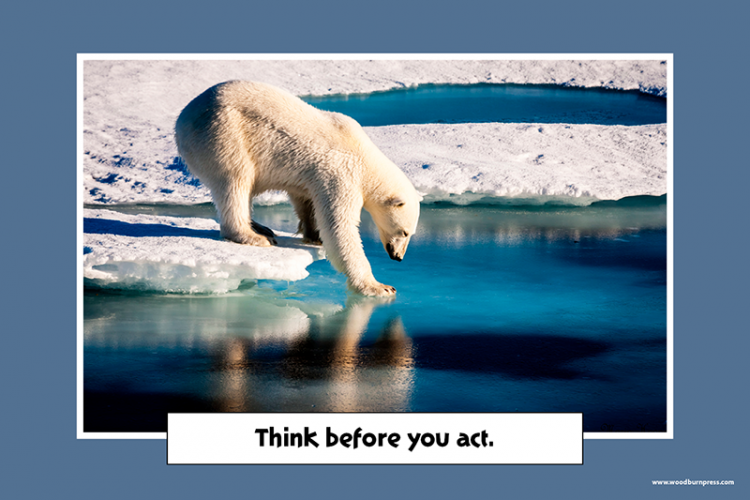
Pictured: a typical leftist bear throwing a tantrum

The Right does this often. Don’t try to understand why crime happens, be tough on crime! Don’t bother figuring out the root causes of addiction, force the addict into treatment! The more cynical leftist might argue that the Right is suggesting these paths after Machiavellian deliberation, recognizing that capitalism requires an under-class, and freeing people from the bondage of trauma and poverty would free up the working class more broadly, lowering the profit margins of the wealthy. I think the simpler and more likely answer is that the Right is being driven by its emotions, and coming up with action movie policies based on horror movie fears. Crime is scary! Addicts are scary! We need to get rid of them fast before they get us! While it may appear that the Right is often angry at these things they’re actively choosing not to understand (anger obviously doesn’t count as an emotion, but more on that later), that anger is an obvious mask for the underlying fear of the bogeyman driving their political agenda.

Frankly, that is probably enough evidence that the Right is more emotional than the Left, but it actually goes much deeper than that. Jonathan Haidt is a social psychologist who helped found the Moral Foundation Theory, which articulates that human beings have moral beliefs embedded in us that drive our moral perspectives. They are care/harm, fairness/cheating, loyalty/betrayal, authority/subversion, and sanctity/degradation. While the list fluctuates, we’ll stick with this version. According to Haidt, the Left prioritizes care/harm and fairness/cheating to the detriment of the others while the Right will accept them all about equally. We’re not going to explore the validity of Moral Foundation Theory today, but I think it’s safe enough to accept it on its own terms for our purposes in this article. The Right has a wider degree of moral options than the Left.

In order for this to be moral, she needs to be loyal to him as the patriarch of the family, otherwise this image is a sinful mess.

The thing about morals though, is that they’re emotionally driven. We are angry at injustice. We feel contempt for the socially disruptive. We are disgusted by the flagrant. There is no pool of objective morality that we draw from whenever we see some moral violation; we have an emotional response that we then define as moral based on our cultural upbringing. That’s how even though morality can shift quite radically across cultures, there is enough truth to the Moral Foundations Theory that some version of each appear pretty abundantly across the world – again, we’re not getting into the problems of the theory, and generalities are enough for today. All humans have basically the same emotions; therefore, all humans have basically the same bases for their morality (however it may develop within a local framework). The emotions line up quite nicely: love with care, fear/anger at harm, attachment with loyalty, indignation at cheating, reverence for authority, and disgust at degradation. Haidt is actually quite explicit in this as he develops the theory.

So if morals are emotionally driven, and the Right is driven by a wider set of morals, then the Right is inherently driven more by emotion. This makes a lot of sense. If you consider all the attempts to justify the existence of the LGBT community by the Left using facts and logic, they very rarely make any kind of impact on the Right. That’s because it’s not facts or logic driving the Right’s perspective: it’s disgust. They see LGBT people as degrading society. Same with drugs, same with sex work; pretty much all the things we might consider vice, the Right thinks is gross. That’s why they don’t want to find ways to live with these things, like through tolerance or harm reduction, they just want to get rid of them. If you saw a spider next to your plate at dinner time, you wouldn’t want to find a way to live harmoniously with that spider while you ate your meal, you would need to get rid of it. That’s the attitude the Right takes toward human beings with lifestyles alien to their own. It’s disgust. It’s emotional. It’s not driven by reason.

Maybe it would be more appealing if we knew for a fact that the spider identified as the gender it was assigned at birth

Same thing with authority. The Left isn’t actually against the idea of authority. Mikhail Bakunin, one of the founders of modern anarchism and thus not a huge proponent of authority as it is traditionally understood, said, “When it is a question of boots, I refer the matter to the authority of the cobbler; when it is a question of houses, canals, or railroads, I consult that of the architect or engineer. For each special area of knowledge I speak to the appropriate expert. But I allow neither the cobbler nor the architect nor the scientist to impose upon me. I listen to them freely and with all the respect merited by their intelligence, their character, their knowledge, reserving always my incontestable right of criticism and verification.” It’s the difference between Anthony Fauci and Donald Trump during the worst of the Covid-19 pandemic. Americans on the Left listened to Fauci because he had decades of experience in public health and immunology. Fauci himself as a person was irrelevant – it could have been anyone saying what he was saying; the experience and expertise were what mattered. The Right listened to Donald Trump because he was their leader, a moral trait he leaned into hard. Whenever he got anything wrong, it was forgiven because emotional reverence supersedes worldly concerns. Not to say that Anthony Fauci is infallible, or that the experts can’t get it wrong, it’s just that the motivation for the Left to respect an authority isn’t as emotionally driven as it is for the Right. The Left doesn’t have the same moral component to their respect for authority, therefore they also lack the emotional component.

So, if the Right is far and away more emotional than the Left, why does the myth of their stoic resolve win in almost every instance? Why is there bipartisan agreement that the Left is a bunch of whiny babies? I don’t have a concrete answer, but my personal theory is that emotions have a branding problem. When we think of emotions, we think of a woman crying or throwing a hissy fit. We don’t think of a manly anger (likely masking a fear), or a righteous indignation, or a social disgust – we think of girly girls who can’t handle a hard reality. The perceived stoicism of the Right is driven by essentially an anti-feminist hyper-masculinity that demands a numbness to the things the Left might care about. When men get angry enough to punch a wall, that’s not being emotional – that’s being tough. When the Right thinks two dudes holding hands is gross, that’s not emotional, that’s Godly. The Right can’t be emotional because emotions are for girls, and the Left has already claimed feminism. The Left embraces this divide because it’s like, “Heck yeah! Emotions! We’re girly feminists who cry sometimes and that’s empowering!”

This must be that Critical Race Theory that everyone keeps talking about

So how do we rectify a situation where the political ideology that is actually the more rational denies that categorization in favour of leaning into the Bleeding Heart narrative? How do we convince another political ideology that has severed itself from any perception of emotional “weakness” that most of its talking points are actually based on those same emotions they’re trying to hide from? We need to be honest about our emotions, and have a greater understanding of how emotions are infused into many areas of our lives that we might not fully understand. And also, that it’s okay to have emotions! You can think gay sex is gross – I promise you, you won’t be canceled. Just don’t have gay sex! It’s easier than you think! But it becomes a lot harder to justify moral impositions on society when we know that those morals are only grounded in our wholly subjective emotional responses. If I think salmon is gross, how monstrous would I be to make sure no one is ever allowed to eat salmon again? As for the bizarre hypocrisy of the Left? I dunno man, the Left is just weird.

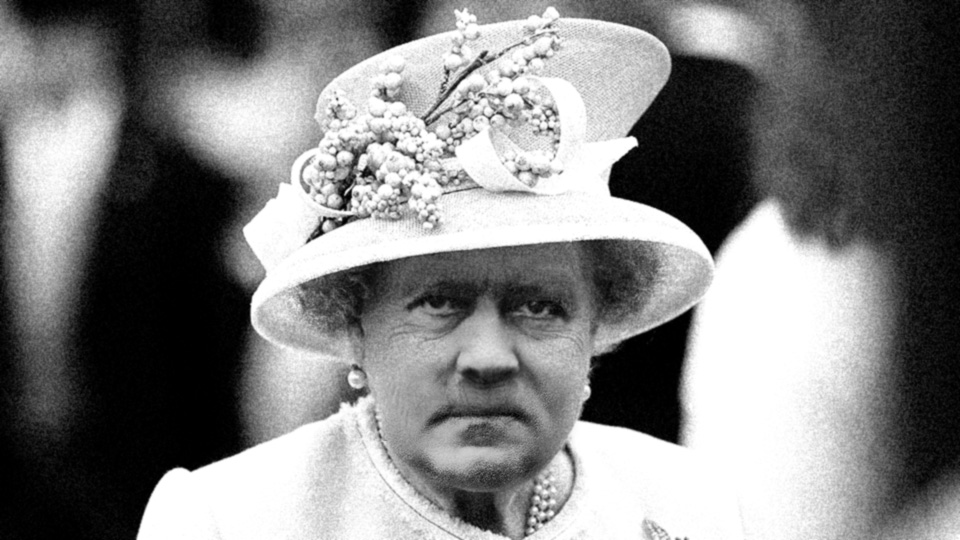
Imagine if the Nazis won the second World War. They lay claim to several African countries, in addition to the European ones they had already blitzed the krieg out of, and planted the Nazi flag in perpetuity. Adolf Hitler, not one to give up power easily, decides to leave the rule of the Nazi party to his children, and his children’s children. The Nazis govern over a solid percentage of the globe, and while those similar enough to an Aryan complexion do okay, the Indigenous populations, racialized populations, and of course the remaining Jews and gypsies are relegated to ghettos to continue to wallow in poverty and oppression. While the direct influence of the Nazi party might wane over time, the influence of its imperialism, genocide, and white supremacy would linger, infecting the cultures of its descendants. Now let’s imagine the great-granddaughter of Adolf, Elizabeth Hitler, was the head of the Nazi party, and she died as a sweet, old woman. Not in a bunker in glorious suicide, but of old age, mere days after performing her duties in on-going Nazi ceremonies.

Artist’s rendition

Would it be appropriate to disparage the good name of Elizabeth Hitler upon her death? Her family mourns her, as all families do, and by all accounts, she was a graceful, dignified Nazi who performed her duties well. In our universe, even making reference to the name Hitler or Nazi is a slur. Those most ideologically similar to the Nazis even reject the term, preferring Western Chauvinists or other such nonsense, to avoid the negative connotation of the Nazi party and their unequivocally evil deeds. Elizabeth Hitler could and should never shed the shame of her surname, so long as the legacy of the Nazi party remained legitimate. And yet the Windsors bear no similar shame.

Am I falling into the Godwin trap? We have collectively agreed that a Nazi comparison is ill-equipped to win arguments because so few tragedies bear commonality to the systematic genocide of six million Jews. If only there were a comparable genocide meted out against a demographic the British Crown considered sub-human, my argument would be saved! Given that I’m a white man whose ancestors settled in a land that wasn’t always bustling with white folks, I think there just might be something there.

It doesn’t count as genocide if you remember it as a gift!

According to some estimates, between 1492 and 1900, approximately 175 million Indigenous people were killed by colonial forces in the Western hemisphere. While the Spanish and Portuguese are certainly responsible for their fair share, I think given the massive Indigenous genocide, it’s fair to make a comparison between the British Empire and the Nazis. Now, it’s hard to say how many the Nazis would have killed if they had 400 years to get all the genocides out of their system, but it’s also hard to say how many the British would have killed if they had the industrial tools the relatively modern Nazi party had at their disposal too. If systematic genocide is the prerequisite for a Nazi comparison, the House of Windsor ought morally to be an equivalent slur to the House of Hitler.

I’m hoping my comparisons have conveyed that there is never an inappropriate time to disparage a royal, since the term “royal” ought to be an insult in and of itself. Monarchy apologists really should be finding euphemisms to hide their ideology similar to our wily “Western Chauvinists”. In addition, while any time is a good time to disrespect the Queen, her death makes it even more appropriate to get nasty about the monarchy because death is the only form of accountability available under a monarchic system.

I’m not a monarchist! I’m a Windsor Enjoyer

Donald Trump infamously stated that he could shoot someone on Fifth Avenue and not lose any votes. Given he could instigate a failed coup and not lose any votes, I think he’s probably right. Then Ron DeSantis would throw a hand grenade into a school bus just to ride on his coattails. The thing is, Trump doesn’t need to lose votes when his supporters are the minority; Trump lost the election, despite all of the hullabaloo. In a Monarchy, the Queen could shoot someone on the London equivalent of Fifth Avenue, her popularity could plummet to zero, and she would still remain in power. That’s the reality of a dictatorship. The only way to get rid of a monarch is either through a violent coup or revolution, or to wait for them to die on their own.

Death is the only opportunity for change in a monarchy outside of the guillotine… which I guess is also death. It’s even illegal in the UK to imagine getting rid of the Queen, which, while practically irrelevant for the entirety of the Queen’s life, is now back to being relevant as those publicly questioning the legitimacy of King Charles are being arrested for it. While I doubt the republican repression will last, its enforcement during this vulnerable transition of power is telling.

Charles is an old guy. He won’t be king for as long as Elizabeth. When he dies, I hope many more of us will find it in our hearts to be a bit more rude over it. And keep being rude over it, until the legitimacy of the British Empire and its symbols get the recognition they deserve.

Long may he reign

Post-Script: I do not give a single fuck if any of you Windsor-Enjoyers out there point out that different Houses of Lords had different surnames throughout the British Empire. I’m trying to keep my metaphors simple. Chill your balls.