Those who position themselves against anti-trans bigotry will often refer to the violence and discrimination toward trans-women as misogyny. It makes sense: trans-women are women, and the label we have assigned to describe the violence and discrimination perpetuated against women is misogyny. The science is sound. This hypothesis that hate against trans-woman is equivalent to traditional misogyny thus fits snugly into the already established movement of female solidarity striking against longstanding and predictable brutality, cis-women boldly holding hands with trans-women.

Except the language used against trans-women by anti-trans bigots does not align in the slightest with typical misogynistic tropes. According to misogyny, women are meek and dainty, hyper-emotional, catty, prone to irrationality, unfit for laborious or technical vocations, and naturally submissive. No one seems to be telling trans-women to get back in the kitchen, is what I’m saying. If an ideology looks nothing like misogyny, is it really appropriate to be using that term? Now, I’m not so opposed to the evolution of language that I would literally die if society adopts a new lens with which to view the tropes of misogyny, but I don’t think that’s what’s happening here. For one, misogyny in the usages that I’ve provided is still alive and well in its application toward cis-women. And two, the language used to demonize trans-women is almost always centred on their sexual predation, a trope typically used to vilify men. While this may puzzle some, given that trans-women are women, it may help us to remember that those who hold anti-trans ideas tend to see trans-women as the gender they were assigned at birth; namely, as men.

I mean, maybe I’m wrong, but to me this doesn’t look like someone portraying a trans-woman as a woman

Consider Schrodinger’s Rapist, the proposition that any unknown man approaching a woman walking down the street both is and is not a rapist until he proves himself otherwise. This has been debunked as common racism when applied to black men, but if we remove the racial modifier to leave him only as a non-descript male, the assertion still applies a prejudicial view against a particular group of people. This same fear is being applied to trans-women. Let’s look at the clarifying example provided by my link from earlier in this paragraph:

In this Russian roulette scenario, you, Reader Who Would Never Rape Anyone, are an empty bullet chamber. But not all of the chambers are empty, and on a given turn, the people playing the game have no idea whether the chamber that’s lined up to fire is you or one with a bullet in it. Until the gun is fired, Schrodinger’s Bullet. This is analogous to the type of situation Schrodinger’s Rapist is describing.

You see, men, or in this case trans-women, are like a gun. While most men and trans-women may be empty chambers, to play Russian Roulette would be pointlessly deadly. This is why we need to ban trans-women from “women only” spaces: because any penis is a murderous weapon, and appropriate caution must be used whenever a cock is in play. We’re simply being prudent because men aren’t human beings, they are instruments of death! This is the position put forward by someone advocating why Schrodinger’s Rapist isn’t misandrist, keep in mind. Perhaps there will be the argument that trans-women, being women, are excluded from the generalization, forgetting that again, anti-trans bigots don’t see it that way. In fact, this amplifies the misandry because these “biological men” are seeking access to feminine spaces; their desire sustains the predatory conviction and “proves” the generalization: that men will stoop to any level in order to get their rape on, even if it means “pretending” to be a woman.

They’re onto us!!

While this radical feminism may be trans-exclusionary, it still utilizes the same fear-based prejudices. In fact, to be critical of women protecting the sacred spaces of other women from the murder penis is actually the real anti-feminist misogyny, equivalent to that of Andrew Tate, according to an opinion piece in the mainstream newspaper, The Guardian. This air of progressivism gives a woke legitimacy to what would otherwise be a simple policing of gender roles, allowing an unholy alliances between progressive feminists on the left and the religious right.

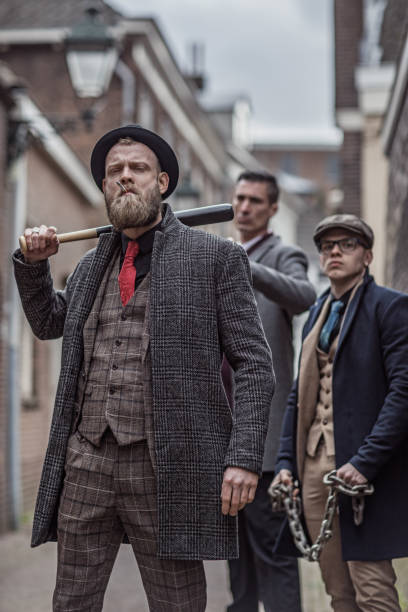
Bigotry against trans-women also plays into the misandry from the right that clutches its pearls in fear of the deviancy of male sexuality which, as discussed, is already in dubious repute. In this instance, it’s less about the predation of masculine heterosexuality, and more the dirty licentiousness of the queers. When a man strays from his role assigned by God or whatever, sin begins to unfold. This safeguarding of the proper way to be a man is strict: from not being able to wear a dress despite the commonplace nature of women in pants, to needing to tan your balls in order to have the appropriate amount of testosterone lest your masculinity slip. This policing of masculinity is an easy accomplice to the policing of men, and trans-women bear the brunt of both, their deviancy on full display.

In their defense, that is macho as fuck.

So, is it purely misandry that drives anti-trans bigotry? Of course not. Bigotry exists against trans people regardless of their assigned gender at birth, and for some, misandry barely enters into it. It is worth noting that morality is essentially driven by certain types of emotions, so anger drives our desire for justice, indignation our need for fairness, and so on. In this instance, disgust creates our moral desire for purity. Given this motivation, a lot of anti-trans bigotry comes from people just thinking that being transgender is gross, and the bigoted stories of misandry and gender policing are post-hoc justifications to provide some kind of rationale as to why those feelings of disgust ought to be taken seriously on a societal scale.

Anti-trans bigotry does not need misandry, but you have to wonder why you never hear stories about trans-men invading the men’s room, or trans-men in sports. The social unimportance of female sexuality and the pushback of mainstream feminism against overt policing of women’s gender roles creates a seeming apathy toward trans-men in this desert of coverage, yet somehow hating trans-women generates clicks – and it’s not being driven by misogyny! I do not believe that anti-trans bigotry would disappear if misandry was eliminated from our social discourse, but I do believe the bigots would have one fewer excuse if cis-men were allowed to wear a summer frock on a warm, breezy day without judgement or consequence, or if their heterosexual desire for women was not pathologized as intrinsically violent.
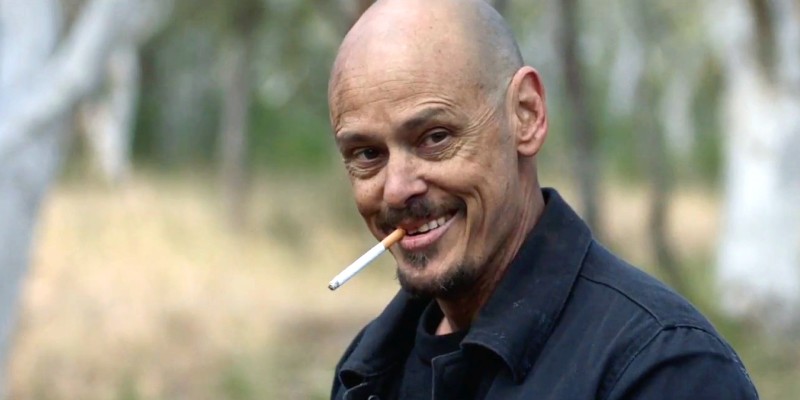
Youtube’s algorithm recommended me a clip from the television show Mr. Inbetween. Given that my life is an empty husk papered over by the addictive black hole of video social media, I watched it. In the clip, there is the character Ray sitting in what I assume is a court-mandated anger management class – I haven’t seen the show, I am making this assumption based on the context given in the clip. Ray is nonchalant about his violence, and sees himself justified in it as the people whom he is violent toward “have it coming.” He describes beating the shit out of two young men who swore at his daughter after knocking her ice cream off the cone, an almost cartoonish stereotype. Yet Ray is the hero of his own story; he is providing the just desserts that society no longer feels comfortable distributing. The group facilitator, whom I take to be the personification of society in this clip, doesn’t care to have looked into the full story of Ray’s assault, and can only pipe up strawman assumptions that everyone would agree are morally impermissible. Ray gently corrects him, and in the end, the facilitator – somewhat sardonically – thanks Ray on behalf of society for his service in ensuring consequences for the assholes among us. We are left with the impression that Ray is in the right to have used violence to resolve his conflict, and while society may not believe he is right, it is left without an argument against it. That impression is reinforced by the ubiquity of agreement with Ray in the Youtube comment section.

I’m not going to lie, I would probably enjoy the show if I watched it. It’s rated 8.6 on IMDB!

As hopefully everyone reading this knows, stories aren’t reflections of reality, but manifestations of the perception of reality of the people who produce them. There is ideology behind every piece of media, not just the endless emesis of woke remakes. The ideology behind this scene is actually pretty straightforward: might makes right. It might be argued that the show is trying to portray an absolutist sense of “right” that needs “might” to defend it against the decaying moral fabric of society brought on by decadence and degeneracy, but it’s… not. I mean, it is in the sense that it’s trying to put forward that position, but it’s not because the core of that argument is still that might makes right.

Ray’s position is that the two young men have touched a hot stove and will now think twice before doing so again, but that’s a false analogy. Ray’s argument that it’s wrong to swear at little girls isn’t an immutable objective fact like the searing heat coming off a lit stove, it’s a proposition only backed up by his physical dominance. All it takes for his argument to flounder is those two men jumping him in an alley with baseball bats, and all of a sudden it’s okay to swear at little girls again. He’s not “right”; he won a fight. He becomes wrong again immediately after a successful retaliation. The argument is only valid so long as he possesses the capacity for violence necessary to defend it. The lesson learned isn’t likely going to be that it’s wrong to swear at little girls; that is not the inherent consequence to losing a fight. The lesson could easily be that additional violence is necessary to retain ideological dominance.

An excellent point, sir! Now for my rebuttal.

This façade of justified violence to prevent social decay is endemic beyond the ideology of an individual bluffing his way through an anger management class. It is the ideology of Tough On Crime: criminals are the perfectly unreasonable; they are diametrically opposed to rational argument, and therefore can only be confronted and cowed by violence. It’s the only language they understand, dontcha know! When people demand Tough On Crime policies, they are demanding the irrefutable argument of violent state power. The reality is that it’s actually the abandonment of rationality because as discussed above, this approach is only a simplistic manifestation of might making right. It only appears more defensible because the government has a monopoly on violence – you can’t jump the State in a back alley if you disagree with your arrest.

This is only justifiable if we agree that people who commit crimes aren’t actually human in the Aristotelian sense. It necessarily demands the inherently flawed black and white thinking cognitive-behavioural therapists call a “cognitive distortion.” We must “show strength” against Russia because Putin is an unthinking monster and diplomacy is a waste of time! But in following this line of thought, we have to abandon our own rationality in order to justify it. We abandon our own humanity in order to pursue only the shakiest form of ideological dominance. Is then Putin not justified in his aggression against the West because we have ourselves become the unreasonable? How this self-perpetuating cycle of unexamined brutality has lasted throughout history is tragically obvious. The moral righteousness of imperialism always seems to have been determined by who has more guns.

It’s also how we determine which culture is more civilized!

Violence as an epistemology is a failure of civilization. Asserting its value as a first resort, as in Hawkish ideology or Tough On Crime rhetoric, is like beating the shit out of a waiter because your order was wrong. Even violence as a last resort is somewhat dubious in its discursive value. It’s anti-democratic in the sense that collective will and wisdom are secondary to the ideology of those directing the thugs with the batons. If you can’t convince or compromise, physically dominate.

The “why” behind someone’s actions matters. Even if the young men never verbally abused a child again, doing so out of fear of violence is the stupidest possible reason in the world. The rationale behind our actions, and the rationale behind our change, matters. When Ricky Gervais tweets about the absurdity of God’s threat of eternal punishment being the only inhibitor to social devastation, he’s making this same point. We have ways of measuring what is socially beneficial and destructive now, and it turns out that corporal punishment is quite categorically on the destructive side! Punishment does not deter crime; accountability does. It is measurably better to treat children with communal love and kindness because we know of its positive benefits to both the child and society – we’re far more likely to be accountable to that maxim if we are convinced of its merit.

Weirdly, there are some rather mainstream circles that decry that we’re not being violent enough in our noble pursuit of truth, with some even thinking it is the bedrock of discourse. Without the threat of violence, how will we even know how to behave rationally!? I guess fear drives rational thought better than a logical argument. Of course this is all nonsense, but the lamenting over the “pussification” of men and its impact on society at large has infected much of the right-wing discourse. Mr. Inbetween, at least in that one scene, is overt right-wing propaganda for exactly this. The facilitator, wanting to talk about feelings, fails to undermine the sanctity of violence as an epistemology. It is a celebration of posturing over reason. The strong construct castles of reality and defend them jealously and without thought, and this is encouraged. If someone says that maybe talking about your feelings is a good thing, punch them. Our castle walls must remain strong.

All in all

This is a crisis of masculinity. Society does not see violence as a particularly feminine trope, so its cultural obsolescence is only a threat to the men who don’t have anything else going for them. No one expects women to defend their ideas with violence; the sophists of violence don’t particularly expect women to have ideas worth defending at all. There’s a reason it’s called social pussification: the sacrosanct epistemology of masculine violence has been defiled by feminine influence. Personally, I’m offended, nay, triggered! that my gender has been inextricably associated with the laziest form of argument. The criticisms against feminists for their hysterical misandry pale in comparison to the notion that men need to stoop to the discursive style of chimpanzees in order to be considered men. Talk about an own-goal.

We don’t commit crimes or break social mores when we don’t have reasons to. When we understand those reasons, we’ll probably be a lot bettered prepared to actually address them. If we think we can fix complex social issues by beating up all the assholes, we ourselves have, by definition, become an asshole. If you can’t come up with a convincing argument as to why verbally abusing a child is wrong, then maybe you shouldn’t be chiming in at all.

There was once a Countryman who possessed the most wonderful Goose you can imagine, for every day when he visited the nest, the Goose had laid a beautiful, glittering, golden egg.

The Countryman took the eggs to market and soon began to get rich. But it was not long before he grew impatient with the Goose because she gave him only a single golden egg a day. He was not getting rich fast enough.

Then one day, after he had finished counting his money, the idea came to him that he could improve his profit margins by cutting the Goose’s feed budget, and only cleaning the Goose’s coop once a week instead of daily. Over time, the Countryman’s income soared as the Goose’s working conditions became worse and worse.

The Goose had had enough. The Countryman did nothing to contribute to the production of the golden eggs, but merely owned the barn wherein the eggs were produced! She determined she had one of two options: she could withhold her labour and stop producing golden eggs entirely until her working conditions improved, or she could gather the other farm animals to reclaim the right to their own labour, and end the Countryman’s exploitation for good.

The farm animals organized and constructed a simple but effective guillotine. With fire in their hearts, they grabbed the Countryman and provided him the just reward for his tyranny.

The farm animals lived in cooperative comfort forever after.