Archives for posts with tag: Batman

I’ve been watching the latest season of Daredevil: Born Again, and it’s forced me to contemplate the philosophy of superheroes once more. By dint of their title, superheroes are modern paragons of virtue. More than just heroes, these creatures of myth follow the long tradition of moral idols from Beowulf to Achilles to our boy Jesus Christ, guiding us using story toward redemption. Even the Iron Giant looked to Superman to determine what kind of robot he wanted to be.
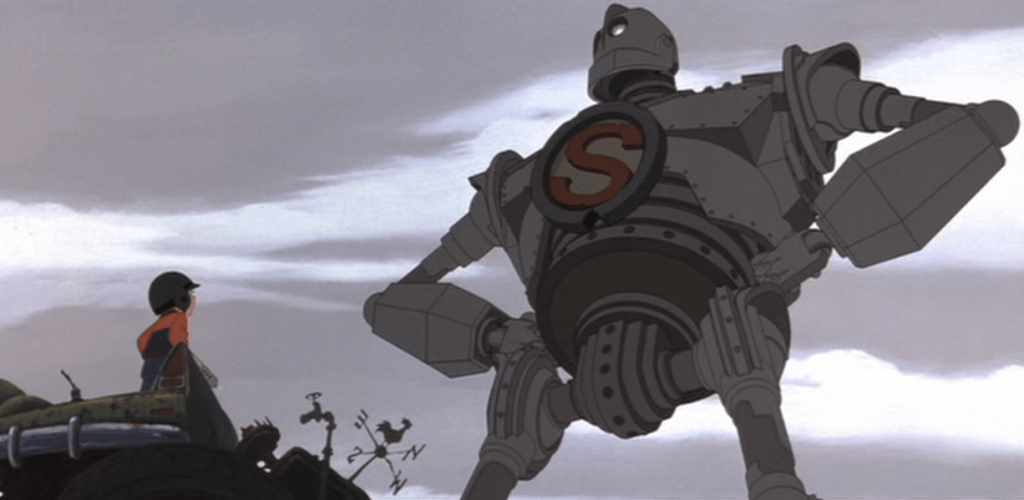
Arguably one of the best Superman movies ever made.

Yet the moral standards that many (though not all) heroes represent are actually quite simplistic in their deontology: do not kill. However broken the system might be, it must be upheld and upheld in such a way that the villains live to antagonize another day. Batman has sacrificed every Aristotelian virtue in his crusade for justice, Batman routinely tortures people, but Batman will never kill. In further abandonment of the Greeks, the meaning of that justice is never questioned, particularly in the turnstile carceral system of Gotham City, but there is one moral rule that supersedes all others. The ends of justice would never justify the means of obtaining it if those means involve killing in any way. All other means are seemingly totally fine.

The problem with our cultural heroes throughout time is that their stories are understood to be aspirational. A Greek warrior will never be Achilles but can strive to his bravery. A Christian will always be a sinner but can do their best to live in grace. We can fight for justice, and if one or two people get killed, well, we’re no Batman. If our moral theory is at a baseline low bar, then us mere mortals are justified in not living up to that standard, and all of a sudden literally everything is on the table. Christ had so many rules that a good Christian is forgiven for fudging a few, but the superhero has only one. Characters like the Punisher are revered in vicious applications of the law because there is a perceived authenticity in his approach in comparison to the other heroes who constantly have to dwell and gnash their teeth on the singular moral rule they are obligated to follow.
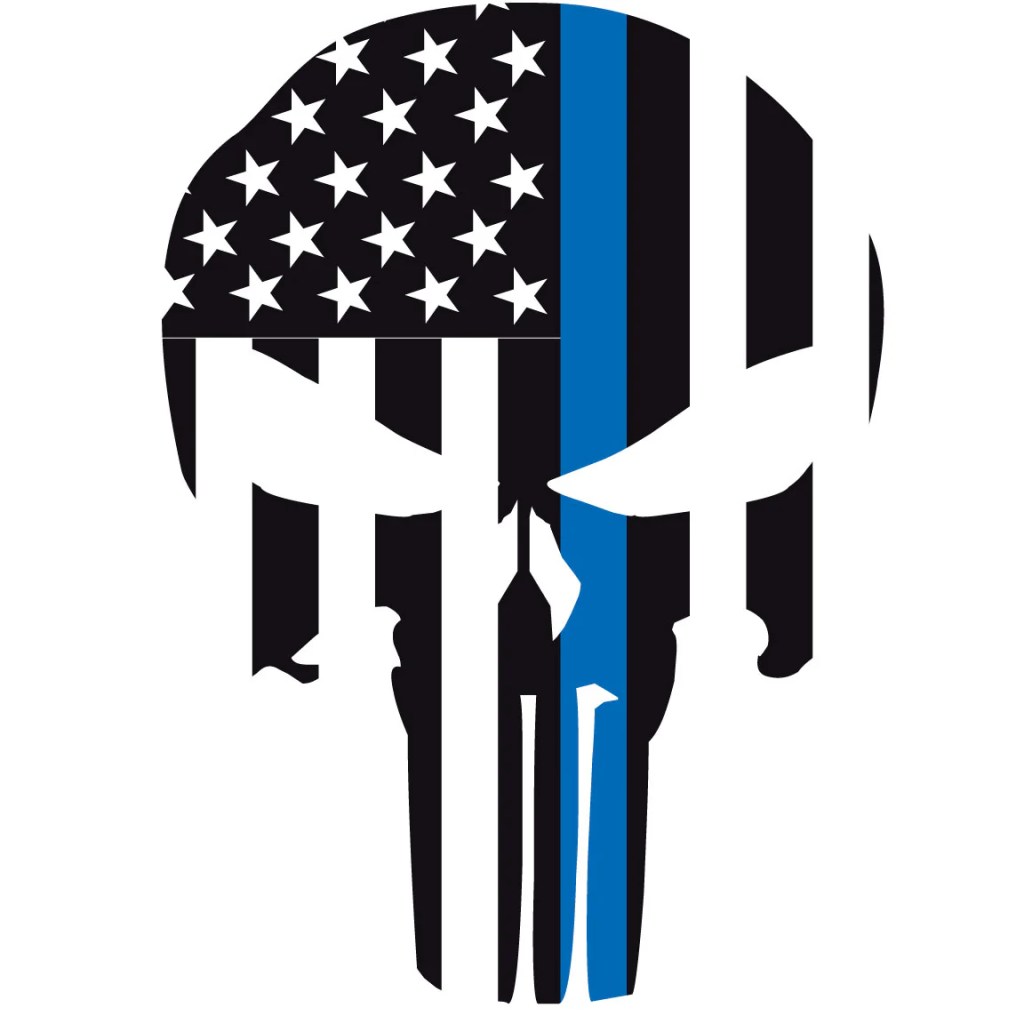
Literal fascism cosplaying as action heroes.

Batman is frequently accused of being a murderer by allowing the Joker to live – as if it were up to him. The Joker is an irredeemable killing machine that will continue to produce murders until the off-switch is flicked. This is a canonical truism. This isn’t a reflection of reality; real-life monsters have more nuance than this one-dimensional murderous madness, but with the in-universe laws of human psychology, it is an undeniable fact. Superman kills Zod in the Zach Snyder movie because there is no other possible solution to the problem of a deranged Kryptonian. Theoretically, Zod could have been written to be convinced of the error of his ways and apologized to the people of Earth, spending the denouement of the film trying to redeem himself. Stories are malleable. But that is not the moral lessons superheroes teach – villains are a constant, and the philosophy of letting them live is allowed to be an actual debate. This blurring of the singular moral rule, even within the universes where it’s held to be paramount, pushes the boundary beyond any justifiable moral rationale into outright advocacy for murder. A real-life Punisher is a school shooter, killing perceived bad guys driven by a hazy sense of permanent justice.

A little while ago, I watched the John Wayne film The Seachers. In the film, Indians (it feels inappropriate to use a politically correct term) murder a nice, white family and abduct their two young, white daughters. John Wayne must track down these Indians, but while searching, one of the daughters is killed (with more than that being implied), and the other “goes native” and John Wayne must now kill her himself for losing her whiteness – this is the literal plot of the film. In the end, John Wayne meets up with her, and in the moment of truth where the question of whether or not John Wayne will murder a young woman in cold blood for the sin of being accepted into an Indigenous band, John Wayne uses his stoic machismo to convert her back into a proper white woman. This film is considered a cinema classic, and reflecting on it, were the Indians to be replaced by vampires or aliens or some other such non-human group, it likely would have stood the test of time.
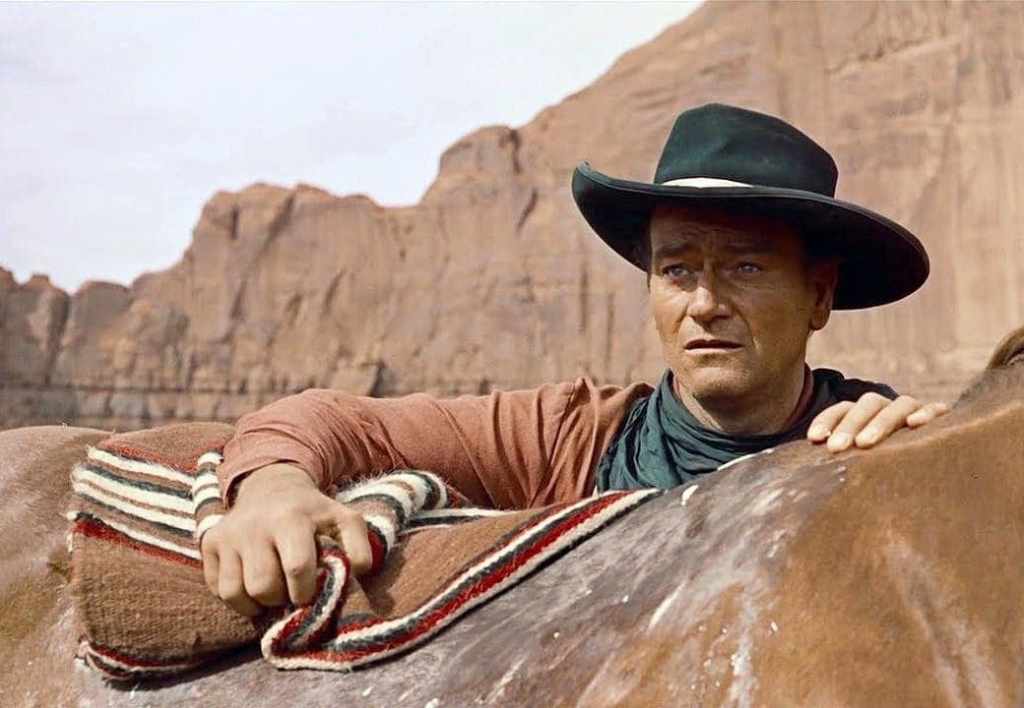
I mean, who wouldn’t turn into a white woman looking into those baby blues??

What does this say about our current fictional monsters who are morally irredeemable? Would Batman or Daredevil be considered incredibly progressive if their rogues gallery were replaced by black gangsters, and all the world demanded their deaths, but these heroes refused to succumb to the social pressures of meting out an extrajudicial death penalty to the Central Park Five? Critically, without providing justification that the Central Park Five should not have been framed this way in the first place? The grotesque moral framing of these stories is much more obvious when the cartoon villains are replaced by the very real human beings typically at the root of these kinds of life-and-death deliberations – and very much on the wrong side of that debate. Who is Zod if not the Supreme Leader of Iran, his death a necessity for the sake of the world? The official narrative tells us we had no other choice. Who are the Venezuelan fishermen if not replicants of the Joker, and all of us but men, resigned to the fallibility of having to dole out deaths that perhaps only a Bruce Wayne could have otherwise avoided?

Returning to the Greeks, Socrates casts doubt on traditional understandings of justice, but through his trademark condescending dialogue, is able to narrow the definition to the foundational structure of how a society is organized. Justice is a Just world. In Daredevil: Born Again, there is an obvious condemnation of Trump-style politics with paper-thin parallels to ICE abductions and unrepentant criminals being elected into public office. Of note, the overt racism of real-life Trump politics does not carry over into the show because Disney is a massive corporation that sees no financial benefit in chasing that allegory. Daredevil: Born Again follows the well-trodden path of Democratic lawmakers where they will be highly critical of the most obvious flaws of Trumpism (of note, while still ignoring much of the racism underlying American politics that brought us all to this point), but refusing to point to an alternative society that would be better than the one much of the world sees both Trump and Fisk as the answer to. In a binary choice between no option and a bad option to an unjust society, it turns out many people will turn to the bad option. As much as the narrative tries to frame it this way, Daredevil does not offer hope to New York City, he offers only negation.
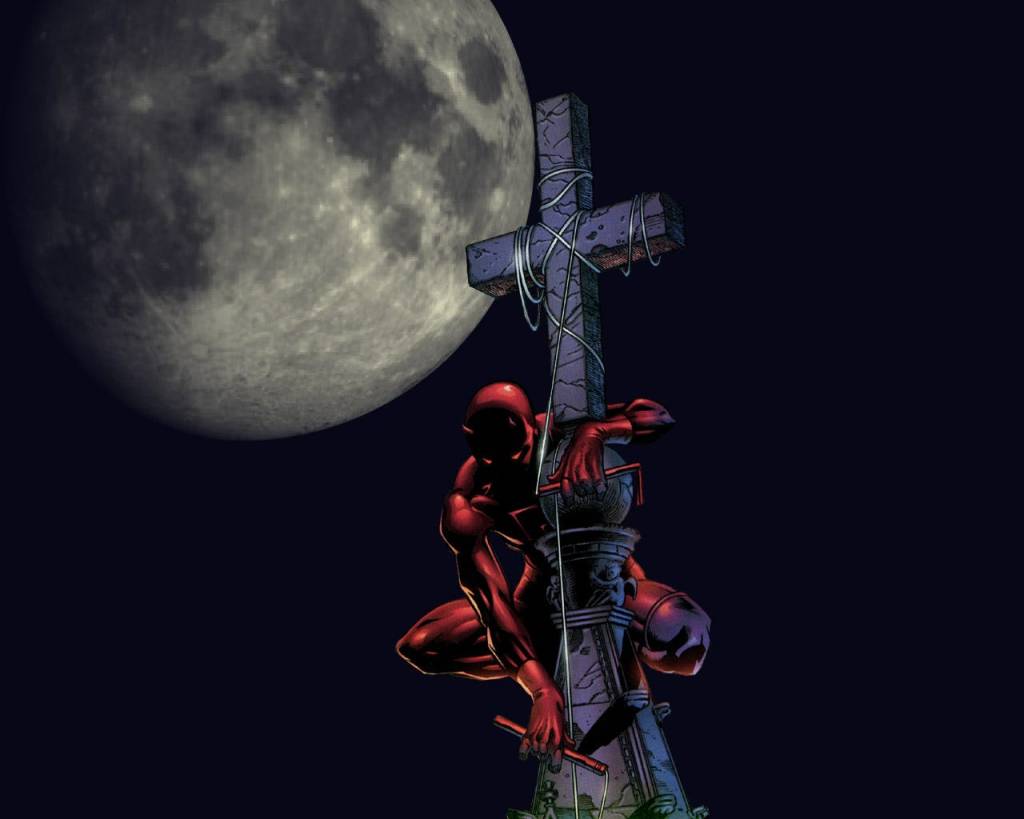
Also Catholicism.

I’m not saying that superheroes need to add utilitarian calculus to their cinematic feats of bravery and prowess; that would be incredibly boring. However, to not offer a vision of the just society they’re fighting for is moral myopia. Every single instance of democracy in this world was born in slaughter. America had a war with the British. The British had a civil war. Germany and Japan lost a world war. The French killed literally everyone. I’m not saying that superheroes need to start killing folks (nor that utilitarianism is a viable ethical framework – it ain’t), but the singular focus on killing as the only moral rule worth elevating is harmful on so many levels.

I’ve seen around the internet a “joke” that says that the left’s vision of a utopia is a world where everyone has enough to live well and take care of themselves; the right’s utopia is a world where white people work 80 hours a week and everyone else is dead. This is perhaps reductive on both sides, but useful to ask where along this spectrum the “justice” that all these superheroes are fighting for sits. If our moral paragons had real ideals, not living up to their standard would be less important than believing in the world that we all should be fighting for.
It should be fairly common knowledge that Batman is the greatest superhero of all time (Suck it, Achilles, you knock-off Beowulf). People have been trying to figure out why this truism exists since it’s fairly difficult to qualify superheroism outside of subjective preference. It has been argued that since he’s just a guy in a costume facing off against the same world-ending events as an invulnerable Kryptonian, it is his courage and willpower that makes him the greatest. He is the most at-risk, and continuing to fight in those circumstances is more noble than say, someone who is constantly protected by a lime-green hue.

I disagree. I don’t think people really believe that Batman is more at-risk – he’s fucking Batman. He figures it out. He’s fine. What makes Batman the greatest superhero of all time is his villains. What people love about Batman is he fights against Jungian versions of his shadow self. Batman represents humanity’s struggle to combat the darkness in ourselves, and that is what makes his character more relatable than being a braver-than-usual fleshy meat sack.

I_Am_the_Night-Title_Card

They are not at all subtle about it

Let me give you an example. Two-Face is a very clear symbol of the duality between darkness and light. Harvey Dent always begins as a friend to Bruce Wayne (in all the iterations of the character that I’ve seen, at least), and that’s why Bruce will pay for the plastic surgeries to repair the scarred side of Harvey’s face – to return the character to his lighter origins. However, thematically it’s always more than that. Bruce struggles to save Harvey from Two-Face because he needs to save the humanity in himself. Two-Face is the most obvious facsimile of Batman with one crucial difference that highlights the thesis of this post. Two-Face will always enact the dark side of his personal Manichean struggle, regardless of coin tosses, and Batman will always triumph in the light. That’s how the protagonist/antagonist relationship works.

BatmanTDKR1_055_The_Dark_Knight_Returns

It’s a comic about a guy in a bat-suit. It was never going to be subtle.

Our favourite Oswald that didn’t shoot a Kennedy, Penguin, fits into this thesis too. Penguin was born into the wealthy Cobblepot family. With that inherited privilege, he embodies the sin of greed and demands more. Penguin is the graphic representation of a Marxist wet dream excoriating the bourgeoisie. Bruce is again similar. He did nothing to earn the billions afforded to him from his familial inheritance, and he became the CEO of a mega-corporation rivaling LexCorp without any relevant education or business acumen. It is unclear what Wayne Enterprises actually does (Thomas Wayne was a practicing physician, not a businessman), but who cares. It’s been argued that a class critique of Bruce Wayne would prefer him systematically redistributing his wealth rather than acting out his well-funded revenge fantasy against “crime”, but within the liberal paradigm of Batman comics, Bruce Wayne is essentially a good, charitable dynasty billionaire to Penguin’s evil, selfish one.

Penguin

Batman is better. Batman is always better.

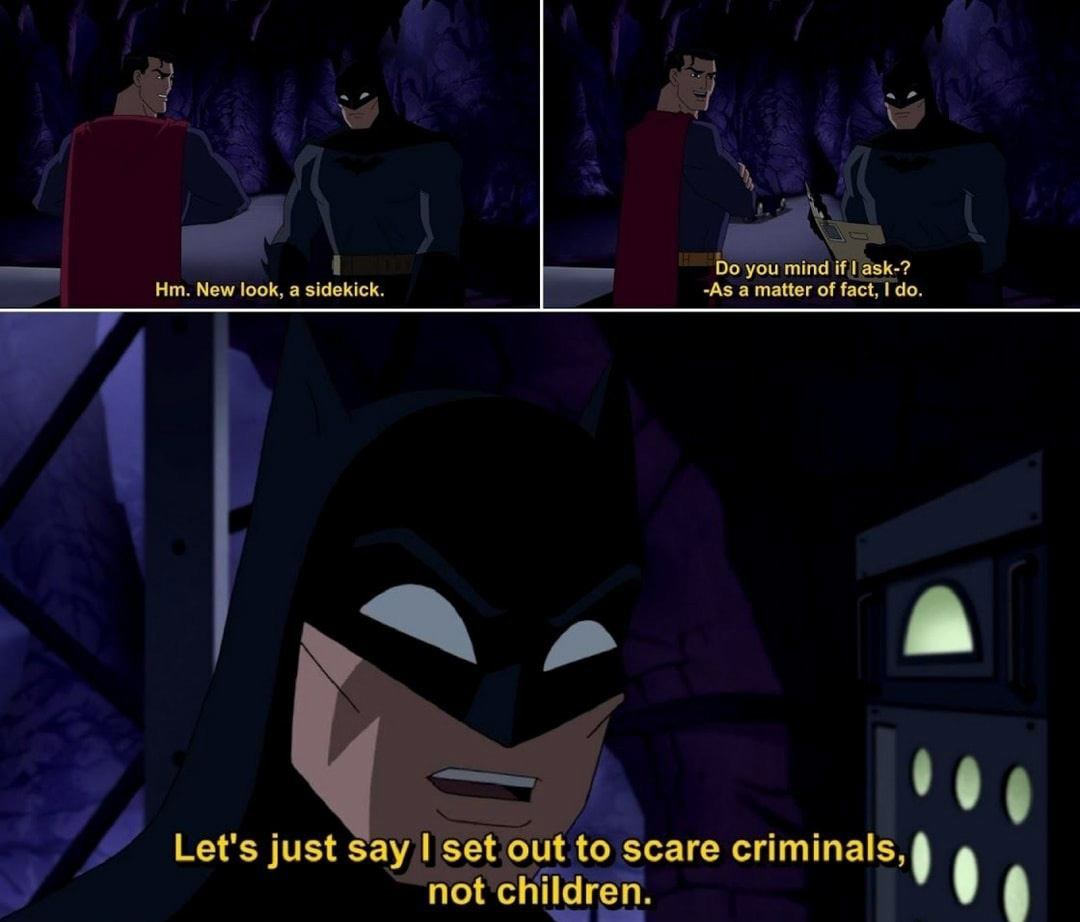
Scarecrow, Jonathan Crane, is another Jungian villain that begins to show the edge to Batman’s battle with himself. Scarecrow uses fear gas to terrify the populace into submitting to his criminal schemes. Batman dresses like a bat because he was scared of bats as a boy, and embodies that fear to intimidate his foes to make his vigilantism more effective. He uses fear just as intentionally as the Scarecrow, but on a different demographic. Fear is acknowledged as a devastating tactic, and must be precise in its implementation lest one slip into villainy. Batman walks that tightrope like a champ.

Superstitious and Cowardly

Children are a superstitious, cowardly lot

This leaves the Joker. The Joker’s whole deal is that he’s an insane clown, but not like the John Wayne Gacy type. He could have easily been a forgettable villain, overblown by too much camp and vanishing into the dustbin of history like the ICP, but against all odds, the Joker became the most iconic Batman villain. He did this by embodying Bruce Wayne’s madness. The Joker infamously believes that all it takes to drive a sane person mad is one bad day, and while he is proven wrong on many occasions, he is accurate in his analysis of Batman. Bruce had one bad day, and became a driven, megalomaniacal vigilante in response to it. He is held in check only by his single-minded focus on justice. The Joker broke under pressure, caving to unchecked violence, but Batman held on to his values just enough to stay in the light.

Two Guys in a Lunatic Asylum

What do you think I am? Crazy!? You’d turn it off when I was halfway across!

There are obviously a lot more Batman villains, and not all of them fit so neatly into this kind of categorization. Catwoman, sure, is as ethically grey as Batman, and her darkness slightly edges over the light much in the same way Batman’s light slightly edges over darkness, and as much as they want to, they can never quite meet in the middle. However, that’s just as much a Jungian conflict of coming to grips with one’s own ethical ambiguity as it is a Montague and Capulet love story. And I swear to God, if anyone brings up Calendar Man I’m going to lose it. The point isn’t that every villain perfectly represents Batman’s struggle with himself, but that the emblematic villains that define Batman as a character are lasting because they reflect his own inner demons.

This is what makes Batman the most interesting character that happens to be categorized as a superhero. The thing is, though, despite the socially agreed upon categorization, Batman is not a superhero. Not because he doesn’t have superpowers, but because a hero is someone you’re supposed to aspire to. Imagine genuinely believing that it is okay to terrify others in order to dominate and control their social behaviour – you’d be a monster. Who wants to aspire to madness? Or Manichean angst? Batman isn’t a hero, he’s a criminal. He knows he’s in the wrong, and strives for a world where he himself would not be welcome. If anything, Batman is a supervillain fighting against cartoon versions of himself in order to protect the world from his own potential for darkness.

BatmanTDKR3-135 Hunt The Dark Knight

Batman, the libertarian fantasy, pointing out the reality of the libertarian fantasy

The idea that Batman is a superhero has pretty dark implications. Kyle Rittenhouse was found innocent in his own vigilantism through claims of self-defense, which, legally speaking, would have similarly applied to the men he had killed if they had killed him instead – not exactly a glowing exoneration. The micro legality of it is less important than the macro perspective that sees a young boy leave his hometown with a semi-automatic rifle in order to protect property from those he sees as criminals. Kyle Rittenhouse and those who canonize him genuinely believe that it is right and good to basically pretend to be Batman. The reality is that Kyle Rittenhouse created a situation where people died because he wanted to live out his own revenge fantasy against “crime“. It doesn’t matter that he is legally innocent of murder, what he did is counterintuitive to the ongoing functionality of civilization.

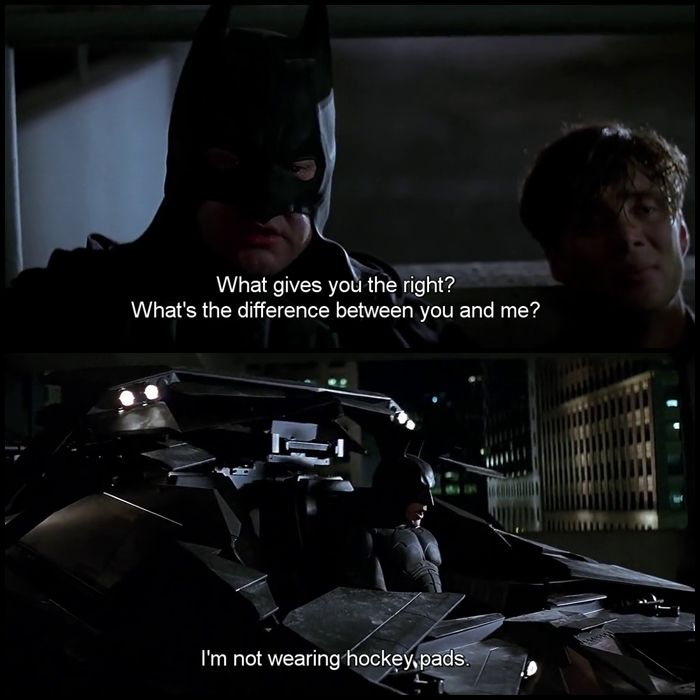
On a more abstract level, Batman is truly a villain in that the impact of the superficial ideals of superheroism he represents is a net negative on the world. People tend to look at Batman and don’t see a man fighting against himself, they see a man fighting against incorrigible criminals. They see social systems as not being sufficient and true justice requiring individual citizens to rise up against otherwise unstoppable evil. They don’t learn to fix the social systems through collective action, they learn to use violence to bully degenerates into conforming to normative standards. They see a fairly traditional superhero.

Hockey Pads

I mean, he is pretty often portrayed that way. This is really only my own opinion as a Batman apologist

What makes Batman great is that he doesn’t have to be a superhero. If we see him as a villain, then we recognize that he is no one to aspire to. He can just be an interesting character dealing with the loss of his parents by combating anthropomorphized versions of his inner demons. He can be someone we can relate to when we have to face our own shadow. He can help us find the light by repudiating himself rather than uncritically celebrating his single-minded madness. To borrow a phrase: Batman is not the villain that we deserve, but the one we need.

A dark knight.

No two superheros are more iconic than Batman and Superman. If you’re a Marvel fan, I’m here to tell you you’re wrong. Go home. Though both are similarly dedicated to the pursuit of justice and both similarly possess righteous infallibility, the ways they approach their superhero-ing business are quite opposite. Superman is good-natured and morally upstanding: the boy scout. Batman is broody and outside the law: the dark knight.

Now, as much fun as I would have talking about Batman for an entire blog with a few snippets about Superman here and there, I’m going to link the celebrity of each of these Superheros to the cultural state of mind of their respective eras. Though both originated in the late 1930s, the popularity of Superman was at its height probably from the 1940s until the 1970s, whereas Batman didn’t really come into his own until the late 80s/early 90s. You could argue that the Adam West Batman gained some popularity for the character, but I’m talking about when Batman really developed his own pathos. Adam West was an interchangeable guy in tights who solved mysteries akin to those solved by Scooby Doo and the gang. More camp than character. Batman is grim, spawned in heartbreak and isolation, and he is just as deranged as the villains he faces off against, with the only difference between them being Batman’s rigid and absolutist moral code.

Superman, on the other hand, landed just outside of Smallville: an idyllic, rural countryside where he was lovingly raised by two wonderful parents, Ma and Pa Kent. There are those who claim that Superman is exceptional because the Kryptonian, Kal-El, is the real persona of Superman, and it is Clark Kent that is the mask. This is contrary to all the other superheros out there, but I would disagree. Superman is Clark Kent, not the other way around. The boy raised in Smallville, who loves and intermingles with the populace, dedicating his life to humanity, is who Superman is. That’s what he fights for: humanity. Lex Luthor, as any good antagonist will be, represents the direct counterpart to his hero. Just as Superman represents the best aspects of humanity, truth and justice (and shut up, work with me here), Lex Luthor represents the worst, greed, power-mongering, and cruelty. They are two sides of the same coin, fighting for the perpetuation of their own version of human nature.

That’s why the symbol on Superman’s chest represents hope. Superman is the hope that humanity can overcome its dark side. That we can recognize the value of compassion, truth, and humility: the attributes of Clark Kent, and that they can survive the dark times we live in and be reborn anew when the time comes. This is why Superman was popular during the conflict years of World War 2 and Vietnam. We wanted to believe we could be better, and Superman was a symbol of that longing.

Then, in 1992, Superman died. As explained in the video in the hyperlink, DC was trying to make Superman relevant again. For some reason, the ideals of Superman had lost their allure. Cue the world’s greatest detective.

Batman is dark. Like, seriously dark. The Killing Joke in 1988 is a perfect example of that. Batman doesn’t fight for the happy return of ideals once lost because Batman’s past is filled with just as much suffering and strife as his present. Batman fights to keep his head above the water. There is an apathy, an unfeelingness, to his brand of justice as he resorts to scare tactics and bullying to dole it out. There is no hope in Batman, just the certainty that criminals are a superstitious cowardly lot, and that we are in an unending war against them.

Society today is deeply cynical. Possibly more cynical than we’ve ever been before. We suffer a deluge of horrors every day in the form of our news media coverage, and this oversaturation of atrocities has dulled our reaction to it. We are desensitized and demoralized. As much as we might think that we are more compassionate, our apathy and laziness reduces any idealism into a status update or a meme. We still recognize that the world is a terrible place, but there is no hope anymore. No wishful thinking of better days to come, just a melancholic acceptance of the state of the world. We idealize Batman because he maintains his Sisyphean battle against the ills of the world, but we embrace his mythology because of its recognition of the ultimate invariability of it.

Today, Batman is successful because he is as brutal and miserable as the world believes itself to be. We also haven’t had a good Superman movie since Christopher Reeve because now we’re trying to turn the boy scout into the dark knight, which is like trying to fit a square peg into a bat-shaped hole. So now we must ask ourselves, will a renascent Superman rekindle humanity’s hope for the future, or must we wait for a cultural revolution before we get a good Superman movie again?