Archives for posts with tag: Capitalism

Power is typically seen as the capacity to act – with obviously varying degrees. A prisoner can pace their cell, do push-ups, and so on, but can’t act outside the limits of their cage. The President of the United States might not have the power to verbalize a complete thought, but he can do all the things the prisoner can, and more besides. They both have power, but one of them has far more power than the other.

I think this is a narrow view of power that is lacking one of its key components: need. The variations in power aren’t so much across the capacity to act per se, but the capacity to act without considering the needs of others. The prisoner must accommodate the needs of the warden, the guard, the parole board, and so on. His needs are ranked quite low when contemplating which actions to take. The President of the United States, on the other hand, can skate by without acknowledging the needs of most of the planet. He might have to consider the needs of Benjamin Netanyahu, to a degree, as the Israeli Prime Minister has considerable power in this regard as well, but he certainly does not need to consider the needs of the Palestinians who are, for all intents and purposes, power-less.

How power is depicted goes a long way

Taking this needs-focused perspective of power opens up further understandings of how power works, and how impotent our approach to it actually is. If we consider our human needs (using Maslow’s hierarchy for the sake of simplicity), what we consider powerful can really only help us meet our most basic needs: food, water, safety, shelter. This can also help us define what might be considered ‘power’ as anything that can help us obtain these things without considering the needs of others – money, celebrity, access to opportunity (think Harvey Weinstein), and so on.

In case you need a refresher

There are way more needs than the basic ones, and power is useless in obtaining them. Love is elusive to those whose identity is based solely in their power, and this is highlighted in the common trope of the rich person worrying over whether they are loved as themselves or if those close to them are only after their money. Similarly with esteem: we think we respect power, but we really only respect what one does with it. Elon Musk isn’t respected because of his money, but because of his advocacy for free speech and his pursuit of a better world for humanity through clean energy and space exploration; or, he’s not, because of his advocacy for racism and his massive ego whose projects offset any climate good his cars might produce. His power is irrelevant; he is judged by his actions based on the capacity that he has to act – as anyone would be. Self-actualization goes without saying.
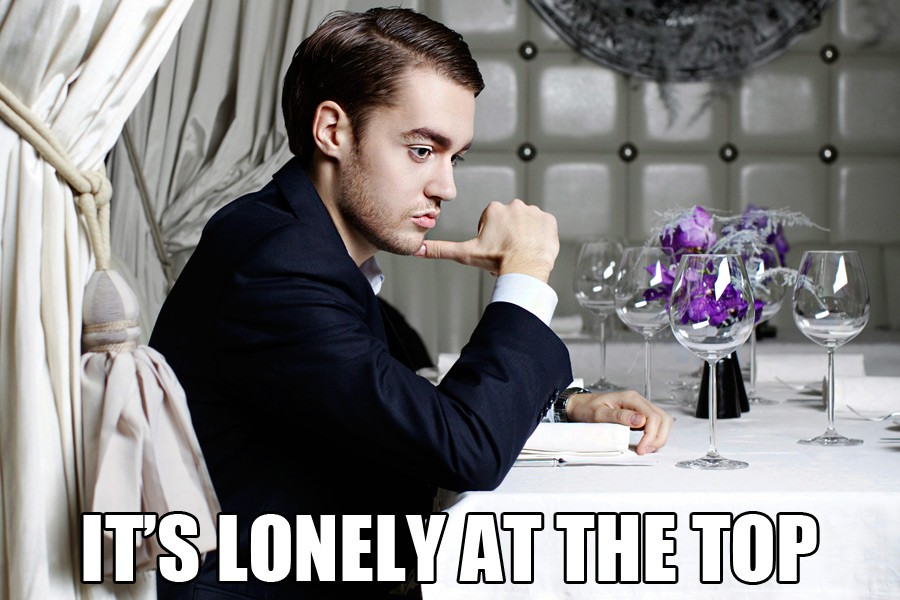
Someone with only their very most basic needs being met – such a thing to strive for…

So why is there this fixation on power? Why do so many people strive for it, often at the cost of their other needs? Why do we delude ourselves that power is somehow going to fulfill our lives when it literally cannot? The answer is obviously capitalism, you goons; it’s always capitalism.

Capitalism as an ideology requires an underclass to use their labour to produce the things needed by the more powerful. This required scarcity forces people into a situation of never having enough power, so our most basic needs can never be met. A housing market that makes shelter out of reach; low wages to make food and security luxuries; a “flexible labour market” (i.e. gig work) to make the underclass even more precarious in their ability to meet their basic needs.

We are then told that in order to get our needs met, we must compete laterally with others in our class. We must gain power by any means necessary, and that’s the only way we’ll be able to afford rent. Do not consider the needs of your neighbour; they are in competition with you! The only way for society to function is if there are winners and losers, and winners don’t need to accommodate anyone. This is the way.

Baby Yoda’s famous catchphrase, “Fuck you. I got mine!”

This isn’t to say that power didn’t exist prior to capitalism. Feudalism obviously had lords going head to head to obtain more power – it’s just that the regular people didn’t give a shit because they had their basic needs met. More people had access to a more diffuse power: land. If you had access to land, you had food, security, family, and so on, and didn’t see the point in striving for anything else. If you didn’t have land, there was still the commons which allowed a degree of needs to be met. There wasn’t as much wealth as we understand it today, but there didn’t really need to be; people had enough. Industrialization created urbanization which increased inequality and poverty which reduced the average person’s power, and the shrinking of the commons increased commodification which reduced normal people’s ability to get their needs met as basic needs became more and more unaffordable. As the West went through this transition, we peasants and proletarians gained political power through the institution of democracy, but lost it economically as the means of production shifted more and more to the ownership class.

This blog is technically more anarchistic than communistic, but Party Marx will always be welcome for discussions around the ownership of the means of production

This manufactured scarcity and proselytized ideology has deluded us into thinking that with power, we’ll finally be able to live the lives we want to have. To a degree this is true: we cannot achieve anything without our basic needs being met, and power is required to obtain them. The delusion arises when we forget that our goal is to get our needs met, and not power in-and-of itself. We want money in seeming ignorance that the entire purpose of money is to buy stuff – do we want the money or do we want the stuff? Do we want the power or do we want to have our needs met?

Also, wasn’t this article supposed to be about superheroes?

It has been this whole; you just had no idea!

Superheroes have superpowers which would include them in this analysis. It’s a little campy, but being more powerful than a locomotive is technically a power. As David Hume said, “Strength is a kind of power; and therefore the desire to excel in strength is to be considered as an inferior species of ambition.” Could Superman achieve his basic needs without taking into consideration the needs of others? Absolutely! That’s how we get Injustice and Homelander. This shit counts, however nerdy an ambition it might be.

Superman, of course, would never do such a thing in the traditional canon. That’s what makes him heroic. He doesn’t use his power for himself, and I’m going to argue that he doesn’t do it for the people of Metropolis either. The people of Metropolis don’t exist – they’re fictional. Superman doesn’t technically exist either, but the story of Superman does. The writers are producing this power, and the power of Superman is used to meet the needs of person reading his story. We feel secure against the threat of Zod. We feel safe from the machinations of Lex Luthor. This is how empathy works.

If our needs don’t supersede the needs of the hero, they become the villain. This is why the villain Homelander is still seen as a hero in an ever-increasing fascistic America – the people who watch The Boys don’t see any issue with what he’s doing, and their needs remain met by his actions. But traditional villains rob banks and try to take over the world, using their superpowers to meet their own needs. Disney’s new “sympathetic” Marvel villains have high ideals, but don’t consider the needs of others in their quest for it – this is how their villainy is displayed despite the validity of their ideology.

The face of accommodating the needs of others

The thing is, this glomming on to the powerful with the assumption that they’ll meet our needs exists outside the world of the superhero as well. In the traditional model, women (who are limited in their power) will seek out powerful men as a means of linking themselves with his power to help them get their own needs met in a world that wouldn’t allow them to be met otherwise. If there is abuse or violence, it is often endured out of a fear that her needs won’t be met without him – his power is all she has to keep herself from becoming powerless.

Under capitalism, there are more powerless people than just trad wives. Many of us live our lives with the bare minimum of power, scraping by as best we can. Wouldn’t it be nice to attach ourselves to some hero who would use their power to uplift our own? This is the allure of the tyrant. Surely I’ll be taken care of if we give more power to this person with whom I identify! Surely my station will be reduced if they are overthrown! We connect to the tyrant as we would to Superman, as some of us bizarrely do with Homelander – they will use their power to keep us safe. Our needs will be considered; the needs of the outsider be damned. But is the solution to our abusive boyfriend to make sure we land a nice one, or to adjust society so that women and men are equitable in their power, limiting the potential for abuse to happen in the first place? Such a world appears to be possible!
People are alive today who have witnessed significant changes in systems of power

The thing is, power is the capacity to act without considering the needs of others. The powerful don’t need to consider us, so why would they? That’s how power maintains itself, so why abandon the working model? We, however, as a collective have more power than any individual. This is why platitudes are made about how the powerful will take care of us, as a manipulation. We are given speeches and scraps to delude us into thinking that we are better off with them having all the power, with us remaining powerless and allowing them to go unchallenged. Superman is a propagandic myth: the boyfriend who tells his girlfriend to never leave him, he’s going to take care of her, trust him.

Power cannot escape what it is; we have to escape power. We have to recognize the value of our neighbour and accommodate them accordingly. We have to recognize the life beyond our basic needs. Both of these perspective require giving up our pursuit of power. Power will never go away, our basic needs will always need to be met, but we can diffuse it. Just as democracy diffused political power, we must identify other aspects of power and diffuse them as well. Power where it exists today must be counterbalanced – this is often the project of the Left as we try to convince governments to allow the otherwise powerless access to their basic needs. It’s a faulty system as power remains relatively undisturbed, and this liberal redistribution does not address the root causes of the concentration of that power, but it’s what the system currently allows. We still have room to dream for more.

To quote a super-villain (notably, one later purchased by Disney), “When everyone is super, no one will be.” And we’d be better off for it.

Virtue ethics are one of the oldest established ethical systems in the West. They gave the ancient Greeks traits to try to embody and paragons to try to emulate. Aristotle came up with a list of virtues with the intention of giving people a guide on how to live life successfully. Not a step-by-step instruction, but more of an encouragement toward a better way of living. It is this striving that creates the good life, the eudaimonia, where we live in flourishing happiness. We are at our best in our active virtue in the way that a horse is at its best while running, for just as the purpose of the horse is its speed, so too the purpose of a human is to live virtuously. Virtue is what we aim for, what we strive for, and in that striving, we are living well.

Being virtuous, according to Aristotle, is found within the golden mean. The best life is lived in moderation – neither to be rash nor cowardly, we should live firmly and courageously. Neither miserly nor prodigally, we should live charitably and generously. Aristotle produced a list of virtues within this golden mean as the foundational structure upon which our eudaemonic life can be built. The happy, flourishing life is one of acting honestly, patiently, modestly, and friendly.

Good to know that righteous indignation is a virtue, or I would be screwed

To become virtuous, one must obviously learn how. Virtue is a skill. One is not born patient, as anyone exposed to a child will discover. Virtues are imbued into the individual by the sage, the one who has achieved their good life. It is up to society to produce its sages so that virtue can be passed on from one generation to the next. The purpose of life is to lead a good one, and so ideally we would want a culture that aims to socialize its young toward virtue.

The problem with virtue ethics is that we always do by default. Children will be socialized and taught how to be virtuous according to the culture that surrounds them; it’s just that those virtues will differ from culture to culture. Christian culture encourages the virtues of forgiveness and mercy whereas a Buddhist culture would focus on the serenity required to relinquish attachments. Who we see as our sage determines the virtues toward which we aspire, whether the Buddha or the Christ.

Jesus was known for shunning the marginalized and praising the wealthy, so probably something along those lines

Despite the persistence of religion, these sages of yore are no longer as influential as they once were. You might have been able to guess this by your having previously scoffed at Christian culture being described as forgiving. This is because we have abandoned those cultures, if not in name then at least in practice. Today, our culture is one of capitalism. Our sage is the billionaire.

Perhaps you are unswayed by my assertion. However, people write books about how to become wealthy, encouraging particular behaviours that will surely lead to financial success. There are schemes, podcasts, cults, and conferences. Television has created an entire genre of entertainment where people go to absurd lengths to become wealthy, and fixates on the traits of the winners as the key to their success. Each of these methods demand a certain “type” of person if that person wants to succeed. If you stay poor, it’s because you just didn’t inhabit the virtues of the wealthy.

The subtleties of capitalism

A quick Google search turns up a myriad of numbered lists providing the Top Habits of Billionaires. The wealthy set goals and follow them with single-minded determination; they dream big without fear of failure; they spend their time learning and surrounding themselves with people smarter than they are; they take care of themselves by eating and sleeping right; and finally, of course, they are cautious with their money. One could easily turn this into a list of virtues similar to that of Aristotle. The billionaire sage is focused, driven, prudent, curious, social, and bold. Many of these could even exist in alignment with those of Aristotle.

The thing is, the virtue ethics of the Ancient Greeks was self-fulfilling. Living well is its own reward. Hence why moderation is important, even in our virtue. There is no such restraint within capitalism, however, because the goal isn’t virtue in-itself: it’s money. There is no moderation in the virtues of today because capitalism necessitates infinite growth. The concept of the golden mean is antithetical to the voraciousness of the capitalistic system. Today, one is virtuous for the sake of something outside of virtue, which means that the virtues themselves are only of secondary value. The “Hustle Culture” and “Grind Culture” that have sprung up as the pinnacle of these modern day virtues is toxic for exactly this reason. It is physically and mentally exhausting to live this “good life” because the demands put on us aren’t driven by any idea of a eudaemonia but by what was once considered a cardinal vice: avarice.

“I want golf clubs! I want diamonds! I want a pony so I can ride it twice, get bored, and sell it to make glue!”

The other problem with capitalistic virtue ethics is that they’re a lie. Social mobility has little to do with one’s virtue. The ability to actually improve your financial situation is low, and has been getting worse for decades. Wages are going down, so we’re making less money than our parents. The only place where incomes are rising are for those who are already rich. The decline of unions, the change in technologies, barriers on education… these are the things that are keeping most of us broke, not our personal vices. No matter how early you get up or the number of goals you set, your economic situation probably isn’t going to change all that dramatically.

A society will necessarily create its own virtues. Societies are created by humans, and humans need to know how to behave well to fit in with their neighbours. We will always have virtues, and we will always have sages. However, it is important to observe what those virtues demand of their adherents, or if living like the sage actually allows one to become like them. The modern virtue ethics of capitalism are viciously idolatrous in both regards. The Renaissance was in many ways a return to antiquity to absolve Europe from the hollowness of the medieval period. With capitalism, our virtues are equally hollow. While I am not so nostalgic to demand a return to the Ancients, it is at least clear that our current virtues leave much to be desired.

Part I

Vancouver is Dying starts with a threat to its viewers. You are not safe; every day there is a statistically improbable risk that you will be assaulted by a stranger. The cops have been castrated by woke mandates to avoid overt brutality, and so the city has run amok. There are no consequences to the choices people make, so we mourn the passing of a once great city. The reason for all of this… is drugs. Not poverty; not the civil disenfranchisement of a particular neighbourhood; not the modern cumulation of centuries of colonialism. It’s drugs. Possibly woke-ism too, since the defecator of this trash, Aaron Gunn, literally says that the Left believes opiates are a good thing, but he focuses on drugs as the root of Vancouver’s degeneration. Drugs, we are told, are bad.

Lest we forget!

Despite being the alleged cause of everything evil that’s happening in Vancouver, Gunn doesn’t actually spend all that much time talking about them. What is a drug? Alcohol has been shown to be the most destructive addictive substance, but I guess alcohol is irrelevant to the Downtown Eastside (it’s not). Both sugar and caffeine hit the same dopamine receptors in your brain as crystal meth, but those also don’t count (how many people reading this rely on caffeine to enable their daily functioning?). We can also safely ignore process addictions too, like gambling and video games. When Gunn talks about drugs, he only means the highly unregulated ones, the ones they don’t advertise on TV. Seeing the harms of addiction in a wider context of mass consumerism might lead to… a criticism of capitalism! And we can’t have that.

So of course Gunn avoids that context to the best of his ability. In the few brief interactions he has with active drug users, he asks one what she thinks about addiction. She brushes off the harms that everyone already knows about with street drugs to talk about global addictions, like the equally suicidal addiction humanity has with oil and gas, or the addiction to money in the financial markets, or the addiction to consumer goods we might indulge in after losing our life’s purpose during a midlife crisis. Rather than discuss the threads linking micro and macro addiction, Gunn says, behind her back, that she must be in denial. She didn’t deny that her drug use was harmful; she just wanted to talk about the context as to why all of these problems exist, and Gunn absolutely does not. So he calls her delusional without giving her an opportunity to respond – but who cares; she’s just a supid junkie, right?

Only one of these counts as a person.

According to Gunn, addiction is a silo that only impacts a ‘certain type’ of person, and isn’t connected at all to the culture or global habits surrounding it. So where does it come from? Why do people use drugs? Drugs seem kind of bad, so how come so many Vancouverites… sorry, people specifically in the DTES and nowhere else… how come they do the drugs? Par for the course, Gunn doesn’t really explain. He makes one inference, and expects the viewer to figure it out for themselves.

The closest Gunn comes to explaining where drug use comes from is by talking about the choices that some homeless people make to stay in the street. Our old friend Colonel Quaritch has the unmitigated gall to suggest that it’s easy to get housing in Vancouver (as a social worker, I found this to be particularly offensive), and Gunn doubles down on this by showing that there has been 1,400 new supportive housing built over the past four years, with 350 new ones being built. Of course, those 1,400 are already full (the waitlist for supportive housing is a couple of years), and there are an additional 2,000 homeless people that need help, so his optimism is… misplaced. We can also combine his bullshit with another ignored statistic that about 7,000 housing units are in need of replacement, and we can see that the rumours about the challenge of housing in Vancouver are in fact true. Turns out it is expensive and difficult to find housing in Vancouver! Who could have guessed!?

I will put this in every single one of my blogs from now on if I have to.

Okay that rant was mostly for my own benefit, but let’s return to Gunn. He wants to show that the chaos is a choice – that the option for stability is there for those who want it, but that people live in squalor and disease because… they’re crazy, I guess? A DTES resident tells him that people sometimes choose to live in the streets because of the restrictions in a lot of the supportive housing units, and then that’s enough for him. No point in exploring what those restrictions might be, or what the benefits of the streets might be otherwise, just enough that we have captured a DTES “resident” confirming what we already know. People who use drugs are just completely irrational.

It turns out though, that even people who use drugs are rational in their choices – they are just too often limited in the choices they can make. If a drug user has a choice between using drugs in such a way that it is likely to kill them, or to use drugs in a way that is likely to not, they’re going to choose the way that allows them to avoid death. Rational! Same thing with homelessness. If we talk to people who do choose that lifestyle, they are often fleeing violence that is pervasive in shelters and some SROs, or they want to live in a community of mutual aid amongst their peers without officious oversight. The restrictions that Gunn avoids talking about are typically restrictions on visitors, meaning that your loved ones aren’t allowed to visit. This means you essentially can’t have a partner or children or friends. If I foreshadow a bit that the opposite of addiction is connection, then we can see that these restrictions would actually encourage drug use rather than help eliminate it. It would be rational for someone to choose their loved ones over rat/lice/bedbug/cockroach infested housing, wouldn’t it? Gunn even acknowledges that a lot of the housing is awful, that it’s filled with drug dealers and drug users, but then seems vindicated in degrading homeless people when he’s able to confirm that people don’t want to live there because of that very awfulness. He doesn’t offer a clarion call for better housing in more suburban neighbourhoods where people might escape violence, addiction, and poverty because presumably that would entail the spread of their disease into the ‘purer’ neighbourhoods.

Good miniseries on this very topic!

If people don’t use drugs because they’re just cuckoo-bananapants, then why? It’s a question that should have been at the forefront of anything trying to be a documentary about drugs.

The secret they don’t tell you about drugs is that they’re not actually bad. Drugs are amazing. You’ve likely at least had sugar, caffeine, and alcohol, and most people have a lot of fun with those things! The trouble with drugs isn’t that they’re so amazing that they become addictive, it’s that they’re a problem for those people whose lives are so awful, so that when they do take drugs, their amazing-ness brings them to about normal. Heroin feels like a warm, loving hug; imagine what that must be like for someone who has never felt a secure connection. The first experience of drugs that people who often become addicted is usually, “this must be what everyone else feels like all of the time!”

Addiction typically begins around adolescence when teenagers are supposed to be learning how to cope with complex emotions, and if someone with a lot of complex emotions learns that drugs are an incredibly effective way at dealing with them, that’s how they learn. Just like it’s hard to learn a new language once our first becomes so ingrained into our way of navigating the world, so too is it a challenge to learn a new way to process our emotions once we’ve already established something that works. The physical dependence of drugs can be overcome in a few days, and for drugs like crystal meth, you literally just sleep it off and then you’re done. The psychological dependence, the need to numb yourself from all those accumulated feelings, that’s what causes relapse. You may have heard that an addiction is a behaviour that continues despite negative consequences; well, the negative consequences of not using are often worse. Feeling decades of trauma all at once when the drugs wear off is more often than not still worse than any infected absess. Drugs are not the problem of addiction. It’s just that people with addiction have drugs as their only workable solution to help them cope with what they’re going through, and it’s hard to learn other ways – particularly when drugs work so well and so quickly. Some call addiction a learning disorder rather than a disease for this very reason.

When I was a child, I had a fever. My hands felt just like two balloons. Now I’ve got that feeling once again. I can’t explain, you would not understand; this is not how I am!

Rat Park is an experiment that sought to question the original idea of addiction. We once understood addiction as absolute – a rat was put in a cage, and had two options: a regular water, and water laced with cocaine. Those rats consistently chose the cocaine water until they died. Rat park was an alternative: rats were put in a cage with tubes and balls and other fun rat activities and, most importantly, with other rats. The two water options were the same, but these rats only had the cocaine water every once in a while. The rats lived full and healthy lives, and occasionally got to have wild parties when they opted to go for the cocaine water. Remarkably, rats from the first cage could be put into Rat Park, and they would lose their addiction relatively quickly. To sum up, it’s never been about the drugs, but about the lives of the people who use them.

What if we understand addiction as a response to something rather than the problem itself? Looking at process addictions and less stereotyped substances might become relevant to our thesis. Global patterns that impact culture might contribute to the so-called disease. If we are told to always be consuming more and more to avoid loneliness, grief, to find meaning, then perhaps a comparison to a midlife crisis sports car is actually quite apt, and it is Gunn that is actually the one in denial. What is addiction a response to? If it is getting worse, what is going on in the world that is exacerbating it? I guess if we never ask what addiction or drugs are, then we avoid that pesky subject entirely.

Enough trauma can manifest itself anywhere to produce an addiction, but the most visible problems from it sure do seem to crop up in one particular demographic. I’m sure it’s nothing!

Drugs start out as the rational choice to cope with childhood trauma, to the point where drugs can even save someone from suicide. That becomes their only method of coping, and then they become stuck in that lifestyle even past the point when its consequences start to outweigh its benefits. Ending drug use is only ever really an option if the person has meaningful activities and connection waiting for them on the other side, in an environment stable enough to maintain it. Do police and jail sound like the optimal environment to provide that? Is Gunn right that we should be bullying people into quitting drugs? Or should we recognize that a sober lifestyle just isn’t a reasonable option for a lot of people given their circumstances within capitalism, and do our best to support them in the world they’re stuck with, recognizing and respecting their rational choice in opting to live this way? Perhaps we could make sure that the drugs they take don’t kill them, since they’re human beings still worthy of dignity, perhaps more worthy given the wars they’ve lived through.

Fuck them, says Gunn. They will live and die as he decrees. Join us next time, when Aaron Gunn will try to suggest that having more harm for people who have endured so much already is a good thing actually.

Part III