Archives for posts with tag: identity politics

I tend to dislike identity politics. I find it shallow and regressive, and as a straight, white man, it is none too fond of me either. I had heard rumblings about liberal backlash against identity politics after the election of Donald Trump, as if women of colour existing had suddenly brought about the rise of fascism, but I disregarded this because it’s stupid. Then, like too many stupid things, it became my problem when I had to listen to someone defend this position in a podcast that I follow. They asserted along similar lines that because the Democrats had too closely linked themselves to identity politics, that Trump was able to seize the economic narrative and soar to authoritarian heights on promises of increased prices through tariffs and trade wars with traditional allies. Clearly a persuasive argument.

This was promised and intentional, and was the bar Democrats needed to surpass in order to win the economic argument. I’m not saying that the stock market is representative of the financial situation of most people, but it’s a simple enough symbol for our purposes here.

At this point I think it’s important to define our terms because what was described in the podcast was any reference to white supremacy or gender issues as “identity politics.” This is never how I’ve ever understood the term. Identity politics in the pejorative sense is the inclusion of a traditional minority into the established mainstream and calling it progressive without changing anything real or substantial. So Disney remaking all of its classics with women of colour in the lead role is identity politics because it’s a shallow cash grab pretending to be something new and edgy because Ariel is black now. Or Hilary Clinton platforming her gender as the primary reason to vote for her in the “I’m With Her” campaign slogan. Or corporations coming out with rainbow-tinged logos for Pride month while raising prices to accommodate such woke largesse. All this capitalistic tokenism is then interpreted as leftism because homosexuality and vaginas are seen as intrinsically leftist concepts! It’s all stupid and fake, but because the people behind this empty astroturf ideology often have all of the money, it becomes the focus of political discourse because it’s so polarizing and in your face (Am I saying that women of colour shouldn’t be movie leads or run for president!?! How dare I!? Get at me in the YouTube comments!).

I’ve always felt there weren’t enough gays toppling leftists governments, but I guess that’s because of my woke mind virus!

I didn’t see a ton of that in the last election from the Harris and Walz campaign, and though I didn’t obviously see every single campaign ad, I certainly heard contemporary coverage approving of that campaign for not fixating on Harris’s identity as a Homeric blasian heroine. Somewhat ironically, the worst I saw were ads focusing on Tim Walz as the folksy white football coach, trying to pander to the superficial identity of the traditional right. Frankly, I saw more identity politics from the Republican side with Trump literally questioning Harris’s blackness, and their ad saying that, ”Harris is for they/them, and Donald Trump is for you!” using the identity of non-binary people in purely shallow framing to fearmonger an Us versus Them dynamic. Per this metric, identity politics were actually quite successful in this last election, and maybe the Democrats should have done more to categorize people into these simplistic labels for the sake of petty politics!

But… but… how can this be identity politics if Tim Walz doesn’t have a vagina of colour!?

The important thing to keep in mind during this tiresome deliberation is that class is a marker of identity! To suggest that the Democrats ought to focus solely on the economy and not “identity politics” is to miss the truism that all politics is inherently based on identity! The suffragette movement was identity-based. The civil rights movement was identity-based. The New Deal’s G.I. bill was identity-based – it was dedicated to veterans! Drug laws are for drug users; prostitution laws are for sex workers; healthcare is related to the spectrum of ability. All of us exist across intersections of identity, and all laws and policies bleed across them in varying ways. The G.I. Bill brought so many Americans into the middle class after World War II, but only if we define those Americans as white. So too the Nazis brought Germany out of the Great Depression, but their own infamous identity politics left much to be desired beyond the economic recovery. Class and more populist economic policy is something the Democrats certainly need to absorb into their political philosophy (as per their stunning defeat to Donald Trump on this issue), but this literally cannot be detached from identity, nor should it. We cannot talk about Trump barring refugees from everywhere in the world save for those “fleeing” from a manufactured genocide in South Africa without discussing white supremacy. We cannot talk about the impacts of overturning Roe without acknowledging that the people affected by that the most are those with a uterus. These are atrocities, and ignoring them is tantamount to ignoring the “identity politics” of the Nazis as they resurrected Germany’s economy. We cannot and should not. Identity is a web; class is connected to everything else which is in turn connected to class.

So what the fuck are people even talking about? The podcast guest later in the show gets in a heated argument with the host over how Palestinian deaths aren’t being fairly reported in American mainstream media, in blatant hypocrisy to his earlier dismissal of identity politics as worth mentioning. Per his meltdown, you would think he had forgotten that being Muslim or Palestinian is just as much an identity as being white or a woman. Should we ignore the genocide in Gaza? He would disagree, strenuously, but that is “identity politics” per his definition! I guess identity only matters when it’s one of your own. While this was not explicit in the show, and I think I’m just extrapolating this from the broader political discourse and think it’s irrelevant to what they actually think on that podcast, but this disregard toward identity is entirely about trans-people. When people say that Democrats should focus on the economy and not on “identity politics” without giving a definition of what that means, they mean that they’re fine with throwing trans-people under the bus if it means that everyone else can get the Medicare for all. This is the only thing that makes sense given the arguments and hypocrisies they are making.
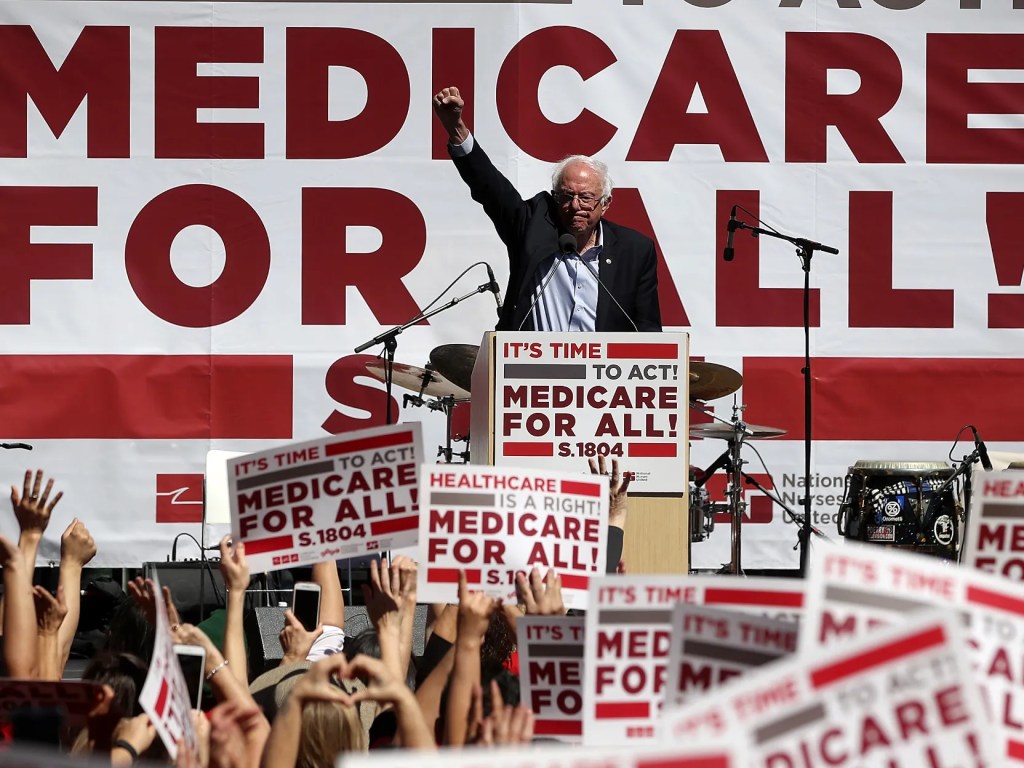
Unless you need it for hormone replacement therapy, in which case, tough shit

Harris was criticized because she believed prisoners should be able to access gender-affirming care if they needed it. This is not identity politics in the actual definition of the term, this is a genuine, honest-to-goodness policy. It’s policy for a particular identity, in the way that voting rights have historically been for particular identities, but it’s healthcare policy. People on the left and the right spoke about it as if it were superficial and unnecessary identity politics because acknowledging the healthcare needs of the transgender community is seen as superficial and unnecessary, akin to a rainbow Nike swoosh. If we don’t see transgenderism as a real thing, if it’s a disguise for attention or sexual predation, then it’s easy to dismiss their legitimate needs as shallow and fake. This isn’t something unique to the right. Much of the so-called left struggles with the needs of transgender people too, which, to be clear, is mostly social acceptance and healthcare and is not to participate in elite-level sports.

Democrats, and liberal governments across the globe, are failing in how they address the economic needs of their citizens, and it is fair and necessary to criticize them on that failure. More than criticize, disrupt and dismantle them for something better. Do not, however, try to suggest that “identity politics” is the barrier to that kind of economic and social change when you really mean acknowledging the existence of trans-people. Corporate gimmicks and Disney remakes should also be criticized too, but they are not leftist; the capitulation to fascism among the ownership class shows the hollowness of their “progressivism” quite clearly. You can continue to trash identity politics, as I am sure I will too, but be honest in your bigotry and stop pretending that you’re advocating for a social restructuring for all.

We all know what left-wing identity politics looks like. It’s someone saying, “I’m black, and that’s the only thing that’s important about me!” Or someone else saying, “I’m a woman, and therefore I’m oppressed!” Historically marginalized groups whining about how they’ve been historically marginalized, and how that marginalization bleeds into the present. Boo-freaking-hoo. Also, they’re all postmodern neo-Marxists on top of it. This doesn’t actually mean anything, but that doesn’t stop it from being the highest condemnation of left-wing identity politics that most people can think of.

hqdefault

Stalin’s best-kept secret was all the hidden pogroms for those who used the wrong gender pronoun

What’s interesting is the less-considered right-ring identity politics. And I don’t mean the, “I’m a straight, white male, and I’m being replaced by a black, dyslexic trans-woman!” kind of identity politics, though that certainly plays into it. I mean more the, “AH! That Muslim is going to blow up my twin towers!” or, “AH! That immigrant is going to rape my entire extended family!” or, “AH! That Mexican is going to bring the drugs into my delicate community!” Whereas left-wing identity politics is about the identity of the self, right-wing identity politics focuses on the identity of the Other.

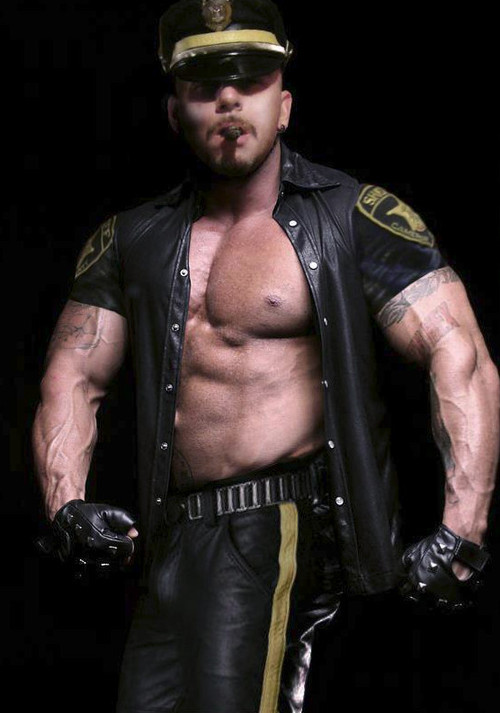
Now, this isn’t some romantic idealization of the Other as some exotic utopian fantasy (which is very much a thing, and has its own problems as an ideology), but one driven by fear. Machiavelli is credited with prioritizing fear over love as a method of governance, and while he is commonly interpreted to mean fear of the ruler, that fear can be directed outward to great political effect. If the populace is afraid, it is far more likely to accept authoritarian control. There’s no need to worry about the bogeyman, daddy’s got you. Just do as daddy says, and things will be okay.

cop

Whatever kind of Daddy you’re into

A big problem with identity politics, left and right, is that no group is homogeneous, and so categorizing any group will always be disingenuous. The problem with right-wing identity politics in particular is that the reality and statistics are often skewed because fear is the ultimate goal, and if reality doesn’t back up that someone who looks different is inherently a threat, by Jove we’ll make them a threat.

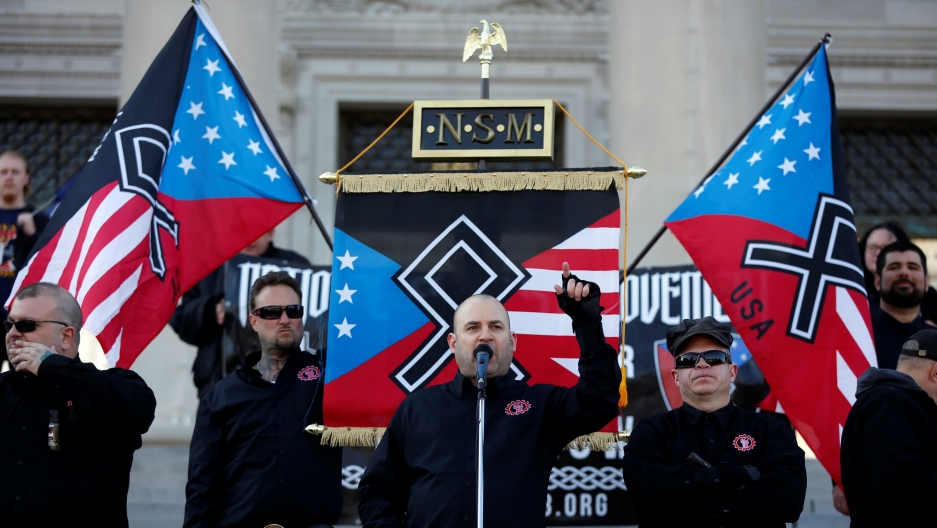
The politics of fear never lets up, which is why right-wing identity politics is so dangerous. Imagine if the white nationalists get their wish, and all the blacks, Jews, Muslims, Mexicans, gays, whatever, leave America. We’ll even say peacefully to avoid any overt Nazi parallels. Since the politics of fear was never based on reality in the first place, the underlying goal being emotional manipulation in order to maintain dominance, new out-groups would need to be created. All of a sudden people might start remembering that the Irish and Italians weren’t considered white, once upon a time, and then it’s time for them to go. And so on.

2019-03-20-rally

Do you really think ‘hate’ has a retirement plan?

Diversity is a thing forever now. The world is global. This is not something that can be undone. Sorry? But also, at the same time, I’m not sorry. What this means is that pluralism must be included as a given in any on-going political conversation. Fear of the Other reeks of obsolescence and hangs on only in the propaganda of despotism. There’s no such thing as the bogeyman. It’s time to grow up.

I’m not a huge fan of identity politics. My reasons are the common ones: they’re unnecessarily divisive, and they tend to ignore practicality. I’m not against the idea of identity politics; every identity has a right to celebrate themselves in an empowering fashion, but when that mental process is expanded to the grander scale of actual politics is when things fall apart. Luckily, I found a brilliant video that disagrees with me, and it puts forward the best case for identity politics I’ve ever seen:

Here’s a summary for those who opt out of watching this almost 12 minute video:

Identity politics is based on arbitrary distinctions between two groups, and those distinctions don’t necessarily even need to be defined all that well. Politics on the whole, as defined by Carl Schmitt, is the distribution of power along those hazy boundaries. Consider the One-Drop rule that governed the ‘blackness’ of individuals during the 20th century: insane nonsense, but still firmly embedded in the cultural psyche and accepted by the whole as a means of dividing power. To quote, “True political conflict isn’t about facts – it’s about the fight against other identities, however arbitrarily we might point them out.”

Politics therefore isn’t about policies, government programs, or their austere lack, but about “who is allowed to have power over themselves, and who is not.” The arguments over any other issue is what Olly, the presenter, calls, “management disagreements.” Those who focus on these management disagreements as the basis for their political identity are less zealous than those who adhere to Politics as defined by Schmitt. The zealotry behind a dogmatic identity can literally kill while milquetoast liberalism could never achieve such an extreme. Because of this, a government that runs on the ideologically weaker managerial proceduralism platform will be dangerously vulnerable against any group fueled by identity-based fanaticism that is big enough to threaten it. This means that anyone who doesn’t take into account power and identity when they are discussing politics will be doomed to lose every time.

Olly then goes on to say that when one considers the identity politics of the Left and compares it to those on the Right, there is a crucial distinction to make because they are not mirror images of one another. In this Us vs. Them mentality, the opposition to the Left is less rigid than the opposition to the Right. For example, when the Left defines itself as against the rich, a rich person could simply redistribute their wealth and they would be accepted by the Left, whereas gay people, transgendered people, Muslims, etc. who are the dichotomous Other to the Right, cannot change who they are because their identity is not a choice. He concludes by saying that the centrists who focus on liberal democracy and forget, or purposefully ignore, the role that power and identity inherently play within politics are essentially condoning the violence that those two factors play in every day lives.

Like I said: good stuff. I myself have written about the perilous implications of a possibly universal Us vs. Them mentality, and given that that would encompass politics as well, then Schmitt’s Identity Politics are truly the only type that need to be addressed. However, if that’s the case, then Olly’s argument fails on one critical point. Consider Vladimir Lenin. Or Mao Zedong. Or Pol Pot. These were identity politicians on the Left who engineered a violent, inflexible attack against their identity-based opposites: the bourgeoisie. There was no talk about allowing the rich into the loving warmth of their Leftist ideology. There were massacres. The same could be said for Malcolm X who did not want white people to end their racist ways, he simply wanted them gone in a black-people-only utopia. The Left can be just as ideologically vicious as the Right when they are inflamed by their identity-based righteousness. If politics is only Identity Politics, and both sides at their extremes work only to eliminate their opposites, then ultimately we’re just fucked.

In a glimmer of hope, let’s consider this excellent Al Jazeera article that has a similar theme to Olly’s lovely video. It mentions a similar distinction between the populism on the Right and the populism on the Left, but uses an example of Bernie Sanders demonstrating left-wing populism by wishing to break up the big banks as the contrast to the Right’s anti-pluralism. Olly hints at this as well when he says that the rich and powerful can give up their oppressive ways to become a friend of the Left. It is not the identity that is at issue in these examples, but the practices of those who possess that identity. In order for Schmitt’s Politics to have a happy ending, the Other needs the capacity to change.

It could be argued that this is simple: give up racism, or sexism, or homophobia, and people will be welcomed into that loving embrace of the Left I was fantasizing about earlier, but unfortunately this is too simplistic. Consider the arguments of Anne Bishop, who declares that everyone possessing oppressor traits (straight, white, male, able-bodied, etc.) will always be oppressors because regardless of their deeds, they will always benefit from the privileges that those identity markers bestow upon them. In addition, they will have grown up under conditions that reinforce their superiority, and undermining that conditioning is an infinite process that can never successfully be accomplished. Bishop claims that the person who believes that they have finally rid themselves of their oppressor qualities becomes more oppressive for holding these impossible beliefs. What Bishop is essentially saying is that the dichotomous Other of the Left cannot shed their incompatible identity any more than the Other of the Right. Are we just fucked then?

Since identity is inescapable from either side, then we must look elsewhere for solutions. The key lies in the example I used from the Al Jazeera article where Sanders wants to break up the big banks. Breaking up the big banks has absolutely nothing to do with identity. In fact, it is closer to what Olly might call a management proposal. This management proposal, however, is the mechanism for change that would allow the rich to absolve themselves of their oppressive identity to something more acceptable to the Left. Or consider the Black Lives Matter campaign demanding an end to the shooting of black men by police. This is Schmittian Politics because so long as police are trained to use deadly force, and crimes are still committed by black people, even if racism is taken out of the equation, this will always produce the use of deadly force against black people. It is an impossible demand for change. Further evidence is the call to defund the NYPD and expel the police department from Pride Parades; clear indications of inflexible dogmatism. This isn’t allowing capacity for change, it’s demanding the elimination of police from within the Leftist fold: an explicit Us vs. Them mentality. Instead of an overarching ban on police, or calls to defund and therefore ultimately abolish the institution of policing, why not look at mechanisms for change? In the UK (save Northern Ireland), cops do not carry firearms, and if this system were imported into the United States, it would certainly eliminate the police killings of black men. While I am by no means saying this is the panacea for the shootings of black men by police, and other, better solutions are certainly available, it is one example of a mechanism for change that does not call for vindictive polarization.

If we are to accept the implications of Schmittian Politics, then the passionate zeal that drives us must be directed against the management disagreements that Olly insists are not involved in that type of Politics at all. Creating a Them out of an identity marker, no matter which direction it is coming from, will only ever be destructive. My initial critique was right: we must avoid divisiveness and focus on practical, real-world solutions. Identity must be dismissed in favour of these mechanisms for change, as they are the only way to bridge the friend and enemy divide. I mean sure, maybe that is an impossible request, and we are hardwired to pursue an Other based on arbitrary identity markers. If that’s the case, then, as I’ve been saying, we’d just be fucked.