2023 is over, and while the final numbers are yet to be tallied, it’s generally expected to be another record-breaking year for drug overdose deaths. What surprises me the most about this is that Vancouver has had an injection of additional police, 100 of them in fact, and the abysmal numbers of equally promised mental health nurses certainly would be irrelevant. Drug deaths are the result of degenerates not having sufficient consequences for their actions, so surely there must be some kind of mistake. I can’t imagine that venerated and Oscar-snubbed documentary Vancouver Is Dying would mislead me in any way. Surely my fears should be allayed; my condemnation of drugs vindicated, and yet, the fear persists, and drugs keep killing.
I’m sure Aaron Gunn, the auteur of this masterpiece, would suggest that it’s all that darned harm reduction that’s keeping these deaths high. In fact he does. I’m doing a bit; perhaps you’ve forgotten since it’s been so long since my last blog on this, but I’m trying to provide an analysis of this… whatever Vancouver Is Dying is supposed to be. Harm reduction paradoxically perpetuates harm, as per Gunn. His masterclass in logic points to the fact that Insite, the supervised injection site, has been around since 2003, and yet drug deaths have soared since then. And it’s true! Drug deaths have soared. It’s a weird leap of logic though because Insite has reversed 11,856 overdoses since it started collecting data in 2004. So like… yes, deaths have gone up, but it’s pretty easy to argue that the number of overdose deaths would be even greater by 11,586 if Insite wasn’t around, right? Like that’s pretty simple and straightforward. Perhaps there are other things going on that contribute to growing drug addiction beyond the measures society has taken to make that problem safer for the people who are stuck with it.
Of course, harm reduction isn’t actually about making things safer. Gunn argues that this is a gaslighting technique used by progressives to hide the fact that harm reduction is about reducing stigma. Stigma is a good thing, actually, because it discourages people from smoking cigarettes or drinking and driving (two notably legal and heavily regulated substances, I might add). We should stigmatize drug users to achieve similar ends (I would love legal and heavily regulated, but I don’t think bullying is the way we’re going to get there, Gunn). Anyway, there is just so much stupidity to unpack in just this small little point then I’m going to take a quick break for a picture.

First, harm reduction and stigma reduction are separate things – both of them are good. Does giving out clean needles for free reduce more harm or stigma? Well, they do a really good job of reducing the risks of contracting bloodborne diseases like HIV and HEP C. Does Gunn not consider those harmful? Needle exchanges and similar programs do reduce stigma in the sense that they tacitly suggesting that people who use drugs don’t deserve to die needlessly, so maybe he’s right. But then he appears to be suggesting that people who use drugs deserve to die needlessly.
This brings us to stigma being good. What?! Education campaigns like those surrounding smoking and drunk driving do not increase stigma; they increase education. People weren’t collectively bullied into abandoning these pursuits – cigarettes became heavily regulated as people became more informed about their harms and demanded it, and when they were informed about the dangers of drunk driving, drug users made informed, rational decisions about being safe while using their drug of choice, i.e. they started using designated drivers and taxis because even though they enjoyed using drugs (alcohol), they didn’t want to die while doing it. Gunn gets really close to encroaching on these obvious parallels to harm reduction and safe supply that would suggest a more rational approach to drug policy, but then just skates by obliviously… or intentionally. I mean, he does suggest that there is no evidence for harm reduction strategies, so the odds are he’s just a moron. It’s not hard to find the citations I’m using here.
And these drug users don’t need an education campaign! They know, better than literally anyone else, the harms of drugs. It’s their friends, partners, and loved ones who are dying. It’s them playing Russian Roulette with their drug dealers. They’re the ones ending up in the hospital with cellulitis from an unsafe injection. They fucking know already. The unbelievable callousness of this infuriating garbage to presume that stigma gussied up as education is in any way necessary for people addicted to drugs, let alone something verging on a solution to their problems. The vilest of slurs would still be too high praise for these contemptible sociopaths.

Reducing stigma is about seeing people who use drugs as people. People aren’t a disease. People aren’t inherently a threat. People are worthy of love and kindness. If people who use drugs are people, Gunn is out of a thesis. His goal, remember, is to utilize violent consequences to enforce sobriety within a particular and nefarious demographic. He refers to the “imagined persecution” of drug users because if it was real, if they are people, he’s a fucking monster.
But Gunn loves junkies! He shows this by dismissing their views, demonizing their behaviour, calling them zombies, and convincing the rest of us that more of them need to die. Gunn loves junkies so much that he doesn’t want the government to give them drugs. We’re giving people drugs and then watching them overdose! How foolish of us! He literally suggests that the weight of the drug user vote is pushing governments to adopt safe supply policy – the excess funds of drug addicts are going toward lavish lobbying groups. It’s drug users and their allies with all the political clout these days! All the normies are cynically getting into the safe supply market and profiting off of it, just like Purdue Pharma making money off the deaths of OxyContin – no citations given. All these malicious actors and the naive babies that are drug users that he needs to protect are pushing the government to come together with those who are addicted to drugs like fentanyl, carfentanyl, benzodiazepine, diacetylmorphine (Ha! If only!), and give them… hydromorphone!!!

Gunn argues that safe supply perpetuates an illness (I’ve already addressed this last time by saying that drugs aren’t actually the problem of addiction, so I won’t repeat myself here). Safe supply is what is actually causing the crisis that was declared in 2016: a pilot program that started midway through 2021! You see, giving drug users a drug is suggesting they are past the point of saving (of note, being saved means never doing drugs again, not staying alive). Gunn wants to save junkies by putting them into privately-run treatment centres that certainly have no financial incentives in promoting abstinence-only policies!
So what does giving a tiny fraction of opiate users (around 5,000 people get prescribed safe supply out of an estimated 225,000 opiate users) a drug they never really wanted to take in the first place look like? Are they truly diverting and selling their drugs as much as Gunn suggests? In a miraculous first, Gunn is finally right about something!
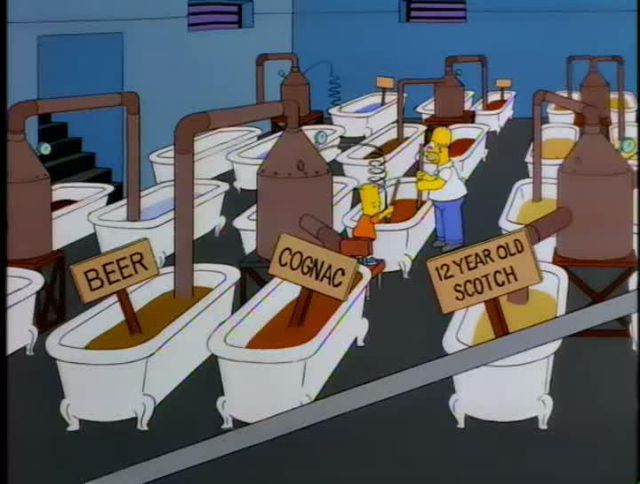
Getting prescribed hydromorphone when you are addicted to fentanyl is like being given a couple of Bud Lights a day when you’re normally downing an entire keg of blindness-grade moonshine. If you listen to drug users, or look at the research, the metaphor is backed up by a good amount of reality. Hydromorphone is weak-ass shit, and the comparison to Bud Light is apt. The only way Bud Light would be useful to a moonshine-oholic is if you stockpiled it for a rainy day, if you didn’t have any moonshine and were desperate for anything with alcohol in it, or if your loved one didn’t have any moonshine either, was dangerously hung over, and needed a bit of the hair of the dog to get going. Or you’d sell it because you’re addicted to fucking moonshine and don’t have any money. It’s literally the same with hydromorphone – click on a hyperlink for once in your lives and see.
So is hydromorphone contributing to the problem? Well certainly not the deaths, at least – they’re barely relevant on that end. Is it cheaper because it’s more abundant now than it used to be? Sure! Is that actually a problem? Well, given that it’s fentanyl that’s killing people, Economics 101 would tell us that a safer, cheaper alternative would dissuade people from going to fentanyl. So arguably, a street market flooded with hydromorphone is one for the ‘plus’ column.
Also, just quickly, Gunn suggests that doctors are prescribing safe supply to people with schizophrenia, and they are, obviously. Addiction is about alleviating suffering, schizophrenia causes a lot of suffering, so there is a disproportional amount of people with schizophrenia who medicate themselves with drugs. And like… there are problems with giving certain medications to people with schizophrenia – and those medications are for ADHD, and have nothing to do with safe supply. Gunn just wants to throw in one more scare tactic for people who don’t know any better to suggest that mental health (an already terrifying unknown!) is now becoming even more scary because of DRUGS! It’s a simple misleading claim, pulled out of his ass, mashing two ‘scary’ tropes together for the sake of weak propaganda. The use of fear to manipulate people toward a particular ideology is just so glaringly apparent that it physically hurts me.
Are there problems with safe supply? You bet! That hyperlink you clicked on earlier about the research into it suggests that people aren’t actually looking for hydromorphone because that’s not what they’re addicted to, and would be better served by something that actually touches their tolerance level. It’s also only being delivered to a small fraction of the people who need it, and that’s partly because doctors, the current gatekeepers to safe supply, are nervous about prescribing it. If things go wrong, it’s their licenses on the line. That’s why the research, as well as the Chief Coroner of BC, advocate away from a prescriber model. Read things! I strongly recommend it.

Anyway, Gunn is wrong about more than just the information he provides. He’s also wrong on more research that he never talks about! You’d think he would want to include all the evidence on safe supply in order to provide comprehensive reporting on it, right? The NAOMI and SALOME trials run out of Crosstown Clinic in Vancouver followed individuals who were provided with diacetylmorphine (that’s heroin if you didn’t look it up the last time I mentioned it) daily as a treatment for their opiate addiction. And wouldn’t ya know it, their lives improved! They were able to start working again, rekindle connections, and no longer needed to resort to crime! You know how Gunn acknowledges that drug users will do awful things like crime in order to get their drugs, but then is against safe supply for completely irrational reasons? Well, turns out proper safe supply gets rid of that crime part! Drug users would no longer be desperate, so they wouldn’t have to do desperate things! Why would you need to do a crime in order to get drugs if you’re already getting the drugs? That sounds like a harm is being reduced there – surely it must be a stigma thing.
The lives of the people who participated in these trials improved because they were able to get what they needed without issue, and then they could spend the rest of their time doing whatever. And turns out, that’s mostly healthy things anyone would do because, and I can’t stress this enough, people who use drugs are people. When the trial ended, the government shut down the heroin program because drugs are bad, and the participants banded together to sue the government to allow them to keep taking heroin and won. You know how if you are part of a cancer treatment trial, and the trial works so well that you’re able to live a functional life again, when the trial ends that the trial operators are legally required to continue giving you that successful treatment? Well they are, that’s why they won, and Crosstown still has the heroin program running – for about 140 people of the 225,000 mentioned earlier.

Looking at things like research and data, or even just listening to the drug users that he’s talking to, is beyond Gunn’s capacity as a documentarian. Perhaps his shoes are too tight. Gunn prefers simplistic solutions: drugs are bad, so don’t do drugs. Things are only seem complex because those smarmy leftists who love opiates made it that way! If you put our leaders in power, we’ll fix things by getting rid of those people and their confusing ideas! Drug policy shouldn’t be about creating a functional society, it should be about simple moral assertions about what is right and wrong. There is only one right way to live, and laws should be a reflection of that, and if reality doesn’t conform to that ‘right way of living,’ then we’ll play pretend no matter how many dead bodies stack up. Anyone talking about consequences is just trying to cause trouble. We can’t acknowledge any nuance about drugs or it will distract from the necessary truth that drugs are wholly evil because I can’t fathom a world outside of the black and white. Simplicity must prevail over any other factor. There is no limit to how simple a solution can be when it doesn’t have to conform to reality, and that is the kind of solution that Gunn is advocating for here. Drugs are bad, so don’t do drugs, mmkay?

Back in reality, harm reduction, safe supply, and reducing stigma have all been shown to improve the lives of drug users. The question that Gunn dances around but never asks is, what if we could reduce the harms of opiates to the point where the people who use them could be functional members of society, no more socially unstable than those who drink alcohol or smoke weed? It’s possible – we used to do it before it was criminalized for being associated with the Chinese! This is where the dancing comes in: Gunn cites “normalization” of drugs as a threat that society is facing. What if opiates were as normal as alcohol and weed? This terrifying outcome does not come with any evidence as to why it would be bad – the fears of increased crime and death would be negated by the reduction in those harms from the process of the aptly named ‘harm reduction.’ Gunn can’t imagine a society that does not fit into his moral framework. He’s fighting to obtain that fantasy.
The use of simplistic fears to generate simplistic political outcomes is ubiquitous. The ‘right’ way of doing things needing to be reflected in law expands well beyond drug use. These strategies to manipulate reality to suit a moral panic aren’t unique to Gunn and his absurdities. There are real world consequences to these kinds of delusions, and Gunn arguably made a significant difference with this shit. To find out why I’ve been wasting so much of my life on this gibberish, tune in one last time… whenever I get around to it. Hey, I have a job!



 Blog for Chumps