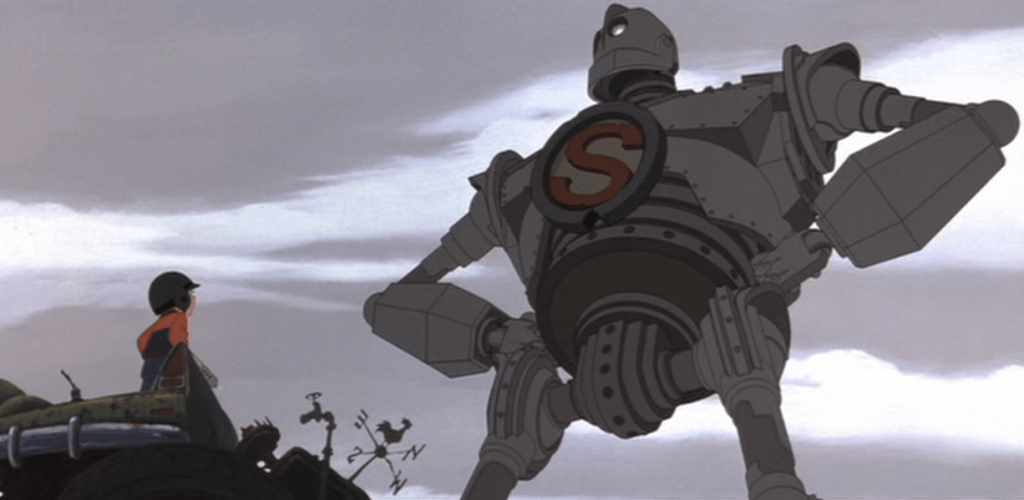
I’ve been watching the latest season of Daredevil: Born Again, and it’s forced me to contemplate the philosophy of superheroes once more. By dint of their title, superheroes are modern paragons of virtue. More than just heroes, these creatures of myth follow the long tradition of moral idols from Beowulf to Achilles to our boy Jesus Christ, guiding us using story toward redemption. Even the Iron Giant looked to Superman to determine what kind of robot he wanted to be.
Yet the moral standards that many (though not all) heroes represent are actually quite simplistic in their deontology: do not kill. However broken the system might be, it must be upheld and upheld in such a way that the villains live to antagonize another day. Batman has sacrificed every Aristotelian virtue in his crusade for justice, Batman routinely tortures people, but Batman will never kill. In further abandonment of the Greeks, the meaning of that justice is never questioned, particularly in the turnstile carceral system of Gotham City, but there is one moral rule that supersedes all others. The ends of justice would never justify the means of obtaining it if those means involve killing in any way. All other means are seemingly totally fine.
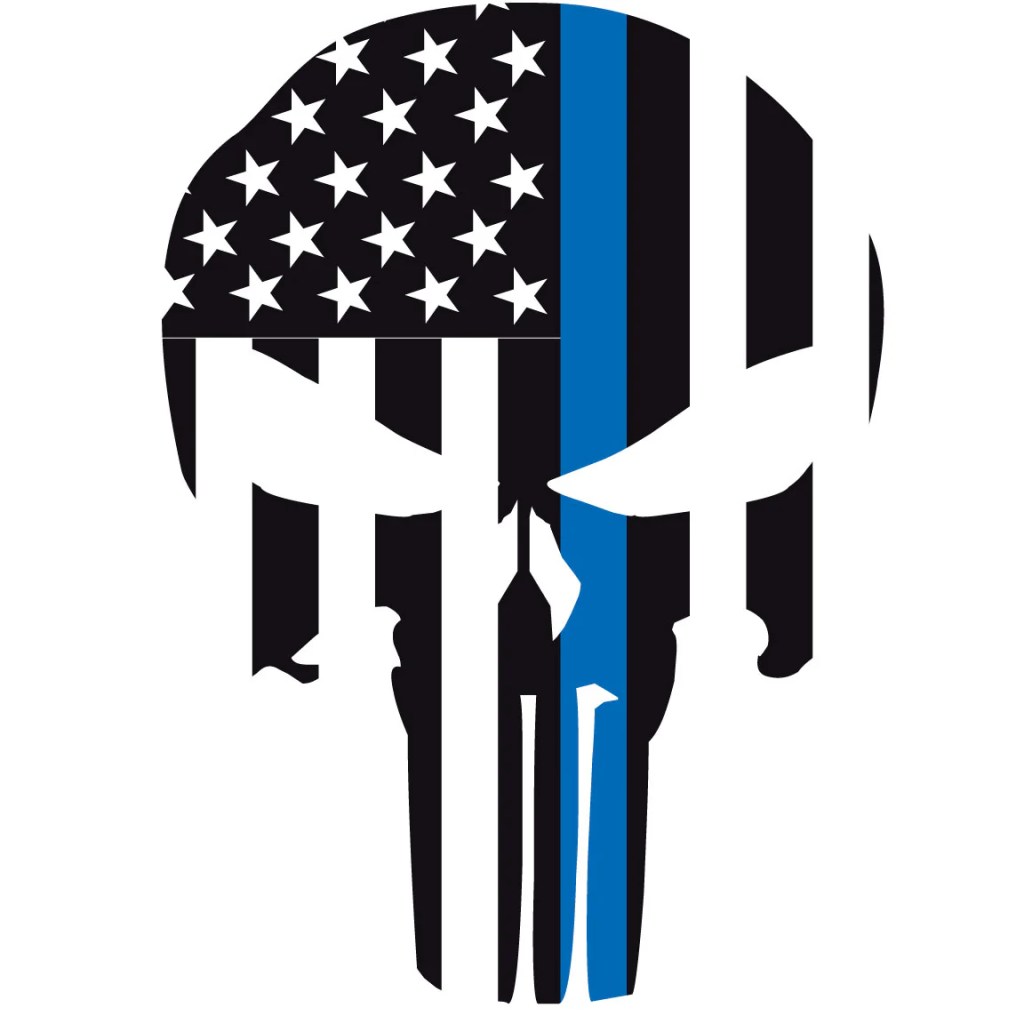
The problem with our cultural heroes throughout time is that their stories are understood to be aspirational. A Greek warrior will never be Achilles but can strive to his bravery. A Christian will always be a sinner but can do their best to live in grace. We can fight for justice, and if one or two people get killed, well, we’re no Batman. If our moral theory is at a baseline low bar, then us mere mortals are justified in not living up to that standard, and all of a sudden literally everything is on the table. Christ had so many rules that a good Christian is forgiven for fudging a few, but the superhero has only one. Characters like the Punisher are revered in vicious applications of the law because there is a perceived authenticity in his approach in comparison to the other heroes who constantly have to dwell and gnash their teeth on the singular moral rule they are obligated to follow.
Batman is frequently accused of being a murderer by allowing the Joker to live – as if it were up to him. The Joker is an irredeemable killing machine that will continue to produce murders until the off-switch is flicked. This is a canonical truism. This isn’t a reflection of reality; real-life monsters have more nuance than this one-dimensional murderous madness, but with the in-universe laws of human psychology, it is an undeniable fact. Superman kills Zod in the Zach Snyder movie because there is no other possible solution to the problem of a deranged Kryptonian. Theoretically, Zod could have been written to be convinced of the error of his ways and apologized to the people of Earth, spending the denouement of the film trying to redeem himself. Stories are malleable. But that is not the moral lessons superheroes teach – villains are a constant, and the philosophy of letting them live is allowed to be an actual debate. This blurring of the singular moral rule, even within the universes where it’s held to be paramount, pushes the boundary beyond any justifiable moral rationale into outright advocacy for murder. A real-life Punisher is a school shooter, killing perceived bad guys driven by a hazy sense of permanent justice.
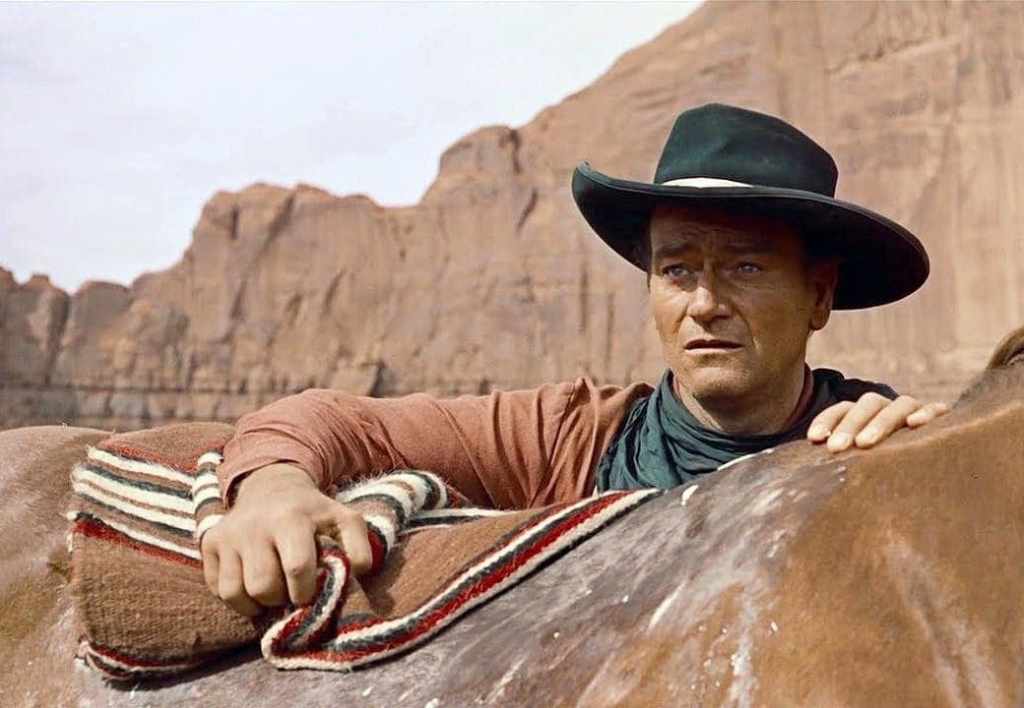
A little while ago, I watched the John Wayne film The Seachers. In the film, Indians (it feels inappropriate to use a politically correct term) murder a nice, white family and abduct their two young, white daughters. John Wayne must track down these Indians, but while searching, one of the daughters is killed (with more than that being implied), and the other “goes native” and John Wayne must now kill her himself for losing her whiteness – this is the literal plot of the film. In the end, John Wayne meets up with her, and in the moment of truth where the question of whether or not John Wayne will murder a young woman in cold blood for the sin of being accepted into an Indigenous band, John Wayne uses his stoic machismo to convert her back into a proper white woman. This film is considered a cinema classic, and reflecting on it, were the Indians to be replaced by vampires or aliens or some other such non-human group, it likely would have stood the test of time.
What does this say about our current fictional monsters who are morally irredeemable? Would Batman or Daredevil be considered incredibly progressive if their rogues gallery were replaced by black gangsters, and all the world demanded their deaths, but these heroes refused to succumb to the social pressures of meting out an extrajudicial death penalty to the Central Park Five? Critically, without providing justification that the Central Park Five should not have been framed this way in the first place? The grotesque moral framing of these stories is much more obvious when the cartoon villains are replaced by the very real human beings typically at the root of these kinds of life-and-death deliberations – and very much on the wrong side of that debate. Who is Zod if not the Supreme Leader of Iran, his death a necessity for the sake of the world? The official narrative tells us we had no other choice. Who are the Venezuelan fishermen if not replicants of the Joker, and all of us but men, resigned to the fallibility of having to dole out deaths that perhaps only a Bruce Wayne could have otherwise avoided?
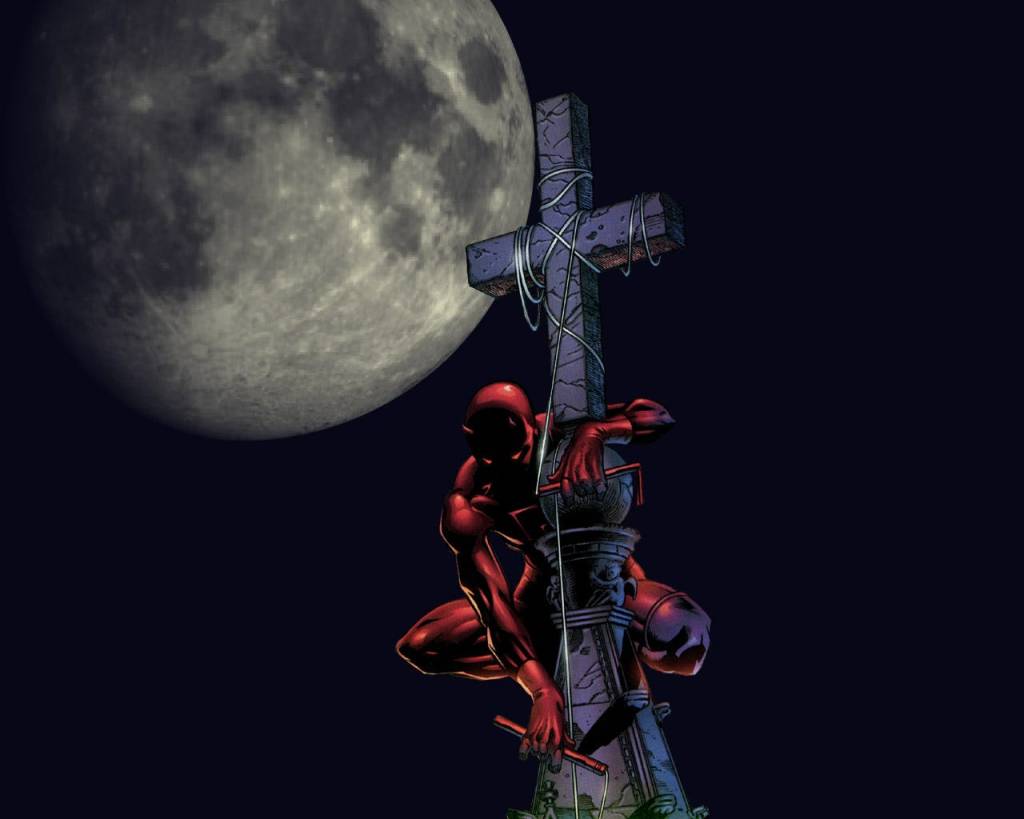
Returning to the Greeks, Socrates casts doubt on traditional understandings of justice, but through his trademark condescending dialogue, is able to narrow the definition to the foundational structure of how a society is organized. Justice is a Just world. In Daredevil: Born Again, there is an obvious condemnation of Trump-style politics with paper-thin parallels to ICE abductions and unrepentant criminals being elected into public office. Of note, the overt racism of real-life Trump politics does not carry over into the show because Disney is a massive corporation that sees no financial benefit in chasing that allegory. Daredevil: Born Again follows the well-trodden path of Democratic lawmakers where they will be highly critical of the most obvious flaws of Trumpism (of note, while still ignoring much of the racism underlying American politics that brought us all to this point), but refusing to point to an alternative society that would be better than the one much of the world sees both Trump and Fisk as the answer to. In a binary choice between no option and a bad option to an unjust society, it turns out many people will turn to the bad option. As much as the narrative tries to frame it this way, Daredevil does not offer hope to New York City, he offers only negation.
I’m not saying that superheroes need to add utilitarian calculus to their cinematic feats of bravery and prowess; that would be incredibly boring. However, to not offer a vision of the just society they’re fighting for is moral myopia. Every single instance of democracy in this world was born in slaughter. America had a war with the British. The British had a civil war. Germany and Japan lost a world war. The French killed literally everyone. I’m not saying that superheroes need to start killing folks (nor that utilitarianism is a viable ethical framework – it ain’t), but the singular focus on killing as the only moral rule worth elevating is harmful on so many levels.
I’ve seen around the internet a “joke” that says that the left’s vision of a utopia is a world where everyone has enough to live well and take care of themselves; the right’s utopia is a world where white people work 80 hours a week and everyone else is dead. This is perhaps reductive on both sides, but useful to ask where along this spectrum the “justice” that all these superheroes are fighting for sits. If our moral paragons had real ideals, not living up to their standard would be less important than believing in the world that we all should be fighting for.
 Blog for Chumps
Excellent commentary. You must be a university professor.
This is what happens when you read smart books and watch dumb TV. Thanks for reading!