“Not In My BackYard” is a sentiment among the middle class that refers to their liberal recognition that yeah, I guess we should probably do something for the poors, just so long as I never have to see them, interact with them, or have any cognition that they even exist. Poverty works best as an abstraction in the mind, a reminder of how blessed we are, rather than something concrete and immediate that maybe we ought to deal with. The homeless, to quote former British Finance Minister Sir George Young, are “the people you step over when you come out of the opera.” They shouldn’t be your neighbours because they don’t belong in your community. NIMBYism is the reactionary backlash when the middle class fantasy of pristine civilization is disrupted by evidence-based policy that says class integration promotes social mobility. It’s all well and good to have, say, detox facilities, but it is imperative that they are placed in the neighbourhood where drug dealers will be beckoning to their old clients through the windows. My sense of civilized entitlement demands it.
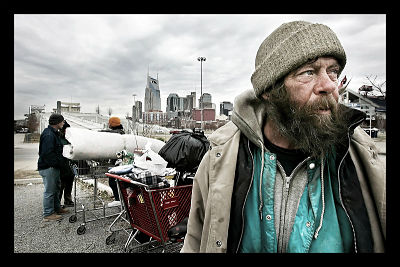
I will help you on the condition that you never leave the situation you find yourself in, AND I don’t have to see, hear, or smell you. Deal?
However, pristine middle class civilization is just a fantasy. To continue with our example, drug use is still prevalent in middle class neighbourhoods. In fact, because of the willful ignorance, the situation could even be considered worse. South Vancouver is a middle class neighbourhood that has 1 in 9 deaths due to drug overdose per 911 call. Compare this to the Downtown Eastside that has 1 overdose death in 29. There are certainly more deaths overall in the DTES, but when aid is required, that neighbourhood is flooded with resources and education that is forbidden in South Vancouver due to class anxiety and NIMBY hand-wringing. Pretending that substance abuse, domestic violence, child neglect, and all of the other problems that “Other People” have don’t exist in the bubble you’ve created for yourself is harmful to this “perfect” community because it prevents needed supports from being implemented that might help those who are already in your “backyard.” Never mind those who are seen to be invading it.

Nobody invited you, shadow people. Stop harshing my buzz!
Let’s assume for a moment that we’ve created a neighbourhood where no poor people could dare enter. A gated community that never has to worry about property devaluation due to social justice because no politician would ever slight this demographic: an upper class neighbourhood! We’ll also assume that they don’t want social resources in their neighbourhood for the same reason as the middle class; they don’t want to be conscious of class inequality. Except Sir George Young is upper class, and he still had to deal with the homeless because people generally don’t spend their entire lives in their backyard. Sometimes they go to the opera, and if you don’t want people stabbing you in the junk as you step over them, you probably want to make sure “those people” have the best resources available to prevent that junk-stabbing moment. As it turns out, integration does pretty well for that sort of thing. Like the detox housed right next to the drug dealers, those stuck in substandard social situations with all the compounding effects of crime, reduced access to health services, underfunded education, etc. will be worse off than if they were in a different environment with better social determinants. For like, really obvious reasons!
What might reduce this NIMBY attitude? Wolfenschiessen, a small town in Switzerland, was asked in 1993 if they would accept a nuclear waste repository in their town, and a slim majority of them said yes. Later, some economists surveyed the town again, asking if pecuniary compensation would sway them further still. This lead to the approval rating dropping from 51% to 25%. Even increasing the compensation did nothing to change their new NIMBY attitude. Being part of a community requires universal responsibility for that community. Accepting social burden requires a connection to that community, and a culture that commodifies everything, even civic responsibility, will be doomed to collapse into itself as more and more neighbourhoods embrace NIMBYism at the cost of the whole. What is required is a reduction in libertarian individualism, and an increase in communal relationships.

There! Much better. Hold up, there are still shadow people! God dammit!
We need to start seeing our neighbours as our neighbours. Just because someone doesn’t live next door doesn’t mean they do not belong. A community is necessarily inclusive of everyone within it. Let’s not abandon ourselves to segregated ghettos. At no point in history has that ever been a good idea.
Post-Script: It’s a good idea to mention NIMBY attitudes against real threats to the community, such as poisonous industry near water supplies or hell, even nuclear waste sites. The difference is everyone agrees that things like detox facilities and homeless shelters are a good idea; the argument goes against where to place them. Pollutants are being condemned specifically because they destroy their surrounding environment, but they destroy the world at large as well. A global NIMBY attitude, where we collectively agree that certain developments are unwelcome anywhere, is a different story.
Another Post-Script: Class antagonism toward the poor is often racially driven. My use of “segregated ghettos” was not a coincidence. A lot of NIMBY attitude comes from wishing to avoid race integration just as much as class. You can watch Show Me A Hero on HBO for an intelligent and compelling dramatization of a real-life class integration attempt in New York to see what I mean.


