In a shock to absolutely no one, condemning Nazis is super easy. Industrialized murder and racial supremacy aren’t really all that controversial. I mean, I know that’s not universal and there is a certain president that seems to excel at fucking up even the simplest of value-judgments, but when there was that anti-immigration rally in Vancouver, and an overwhelming number of people showed up to say that overt racism is wrong, was anybody really all that surprised? Cuz like, Nazis are bad. Punching Nazis isn’t controversial; we’ve made video games about exterminating them with a variety of creative weaponry far more grisly than a fist since video games first started being a thing. Same thing with violence against women. Even the Alt-Right propagandist Breitbart released some articles about the recent #MeToo campaign that conveyed sympathy toward the victims. Their goals are the same as any radical feminist: sympathy and justice for the victims, and retribution against the offender. No one in the world has more respect for women than Donald Trump, because disrespecting women is bad.

We know these things because they are obvious. Nazism today is repellent. Rape is horrific. Disrespecting women is barbaric. If there’s one thing that fascists and misogynists agree on, it’s that fascism and misogyny are bad. If everyone agrees on these things, then surely bigotry must be eradicated from society. All those SJWs can sleep easy, knowing that white supremacists no longer identify as racists.

I mean, even though hate crimes are on the rise, lynchings are way down. No one is burning crosses anymore. Where did all that racism go? Why do people keep talking about it when everyone agrees that it’s bad? Well, all the -isms have gotten more subtle. Now racism, sexism, and heterosexism are most prevalent in systemic structures.

I know what you’re thinking: ffuuuuuuuuucccckkk! Systemic? Structures? What is this postmodern cultural-Marxist jargon bullshit?! If the president doesn’t explicitly say that black people are inherently worthless due to the colour of their skin, then the “system” must be equal for everyone because there can be no possible form of racism other than direct violence.

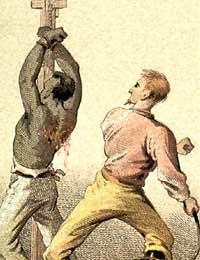
12Years_slavery

If this isn’t happening, it can’t be racist.

As it turns out, there can be. Hannah Arendt in her book Eichmann in Jerusalem: A Report on the Banality of Evil gives a pretty fair description of what systemic injustice looks like. A Jew who fled Nazi Germany, her critique of Adolf Eichmann during his post-WW2 trial mostly centres on him being the most boring, inoffensive dude in the world; the Ed Sheeran of the Nazi party. How could this oppressively bland human being be responsible for the expulsion and extermination of the Jews during the Holocaust?

Systemic injustice thrives on those who participate within an unjust society believing that they are not doing wrong. They are simply following the rules, and any kind of blame for the results of those rules is so diluted in bureaucracy that personal responsibility evaporates. Everyone is so distanced from direct action that they can confidently state, “Well, I never did ________!” Eichmann, and anyone who participates in these types of systems, is seen as normal to the point of being dull because normalcy itself is the monstrosity that is causing the atrocities.

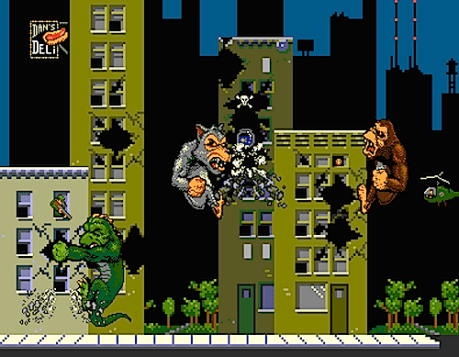
Monsters-Rampage

In this instance, George, Lizzie, and Ralph are metaphors for normalcy, and Dan’s Deli is the Holocaust. Or maybe it’s the Jews? I picked a bad metaphor here, I think.

The person has no specific value because their role in this system is interchangeable. There is no need to hate the Jews, and weeding out the sadists and psychopaths perpetuates the normalcy that is required for the system to function. Passionate people with convictions are also not particularly welcome, since convictions would negate the systemic process. Normal people are calm, educated, and endure uncomfortable realities because dirty jobs need to get done. Normalcy validates our deeds, allowing us to separate our identity from their intrinsic stigma, and quells any misgivings we might have about the way things are because the way things are is already established as “normal.” When everyone is guilty, nobody is.

To quote Arendt:

From the viewpoint of our legal institutions and of our moral standards of judgment, this normality was much more terrifying than all the atrocities put together, for it implied – as had been said at Nuremberg over and over again by the defendants and their counsels – that this new type of criminal . . . commits his crimes under circumstances that make it well-night impossible for him to know or to feel that he is doing wrong.

Creating an unjust normal does take some work. It usually finds its beginning in more overt and direct oppression, and then over time infuses itself into the institutions of society that become a part of the every day normal. To give an example, say I’ve shot you repeatedly, but all of a sudden I stop. Then I start saying something like, “hey now, the rules say no bleeding on the carpets! If I were to slice myself while cutting vegetables, I’d have to face the same consequences. Rules are rules!” Then you might say, “But you’re the one who shot me!” My reply of course would be to say, “That was in the past! You’ve got to own your own destiny now!” And then I’d throw you in prison or a concentration camp or something. The normal is the rule about blood on the carpets, equally held for everyone. What makes it unjust is how those very rules are framed to oppress the poor shot up jerk trying to hold his insides in.

Arendt quotes David Rousset, a concentration camp survivor:

They know that the system which succeeds in destroying its victim before he mounts the scaffold . . . is incomparably the best for keeping a whole people in slavery

In Canada, the most obvious example is that of our First Nations people. After the initial genocide and land theft died down, Canada abducted Aboriginal children and forced them into what are known as “Residential Schools” where they would be physically and sexually abused under the pretense of removing their indigenous culture and replacing it with white culture. When that started slowing down, Canadian social workers would go into Native communities, abduct children, and place them into white foster homes under the same basic pretense. This is what’s referred to as the 60s scoop. Today, First Nations children make up close to 50% of all children in care (foster care, group homes, etc.), despite only being 7% of the population. In Manitoba, they make up 88% of children in care. The rules today are that children are not allowed to be in homes where they may be abused or neglected, so they are removed. The reason that Native homes might produce that kind of environment is driven entirely by the history of abduction and abuse that they have suffered in the past. First Nations in Canada must somehow learn how to stop bleeding on the carpet, because our rules, the norms of society, will only continue to punish them for the gunshots they have endured for centuries.

In America, the glaring example is the war on drugs. Founded by Nixon literally as a reason to crack down on blacks and hippies, it continues to this day. Crack is criminalized to a greater extent than cocaine, despite the fact that the drug component of each is exactly the same, because crack is cheaper and thus more predominant in poorer, black communities. White people and black people do about the same amount of drugs, but black people are the ones getting arrested and doing jail time, due in part to the fact that more police patrol black neighbourhoods over white ones. The rules say that drugs are bad, so it doesn’t matter if those who are punished for them are predominantly from a certain group, because rules are neutral. Rules are normal. If they didn’t want to do the time, they shouldn’t have done the crime.

I mean, there are other rules that aren’t so explicitly stated as those written in the law. Regular social rules, like women are supposed to be caregivers, can create systemic opposition when women try to break free from that stereotype. It’s not sexist if it’s just acknowledging what’s “normal,” right? Gay men or those effeminate enough that the differences are negligible (outside of actual sexual preference, which is irrelevant) aren’t real men, so it’s normal to exclude them from homosocial environments. Trans women aren’t real women, and they have to abide by the same bathroom rules as everyone else. If an international corporation moves its manufacturing to a place where labour is cheap and regulations are zilch so they don’t have to pay to protect their poorly paid workers, and as a result I fall into poverty because my secure, good-paying union job has been compromised, that’s fine because companies are allowed to do that. Those are the rules. Doesn’t matter if international corporations are the ones writing them, rules are rules.

nafta-corportate-werewolf-2-e1505065922979

When rich people get richer, the GDP grows even if poor people get poorer! When the economy grows, it doesn’t matter *how* it grows! It’s a success when the numbers go up. Pay attention to that.

Systemic racism, systemic sexism, systemic injustice in general is what happens when normal people apply the way things are in broad strokes, not knowing that their very normalcy is the problem. How do you change that? Arendt resorts to biblical… I don’t want to say hyperbole because I’m not sure she intended it that way… but whatever. She refers to Sodom and Gommorah as societies where injustice had become so infused into their system that the only solution became complete destruction. It’s a bit dramatic, but as Michael Warner, author of The Trouble with Normal: Sex, Politics, and the Ethics of Queer Life, says,

When battles have no enemies . . . victories are rare.

There’s a reason that radical leftists call for revolution. If you see statistics that say a minority group is doing worse off than everyone else, but you can’t see anyone giving them ten lashes simply for their minority status, odds are it’s because the ways the rules are set up, these groups are being left behind. They’re being told that they should stop bleeding on the carpet before they’re allowed to fully participate. The problem is normal, and changing normal is a revolutionary process. Yes, there are still people handing out lashes, there are still people firing those gunshots, but seeing beyond these obvious examples requires reevaluating the rules. And it’s something we all have to do.

Let’s finish with some more Arendt to really drive us home:

Many Germans and many Nazis, probably an overwhelming majority of them, must have been tempted not to murder, not to rob, not  to let their neighbors go off to their doom (for that the Jews were transported to their doom they knew, of course, even though many of them may not have known the gruesome details), and not to becomes accomplices in all these crimes by benefiting from them. But, God knows, they had learned how to resist temptation.

You remember back in the day when white people were so upset that they couldn’t say the n-word, but black people could? Now they’ve grown up a little bit, I didn’t say matured, and decided that this is a free speech issue, and it is the single greatest threat to modern society. Everyone knows, or at least has the confidence of blind zealotry, that free speech is an unalterable human right. Human rights are funny things. They’re conceptual ideas that are basically made up, their only justification being that they sound nice, and then it’s claimed that everyone is entitled to them. Free speech can be a human right, sure, but so can healthcare. So can collective bargaining. If the entire basis of your demand for free speech rests on the fact that it’s a human right, wellllllll maybe look into the distinction between negative rights, positive rights, and collective rights, because odds are you’ll abandon the entire foundation of your argument, go back to saying the n-word, and just give up on trying to justify your racism. The tricky thing about human rights is that they are usually conceived in such a way as to benefit everyone, not just those with the loudest voices.

However, free speech is often seen as a human right even by those who roll their eyes at the Milo Yiannopoulos’ of the world, and so let’s look at free speech as a human right. If you’ve had access to literally any news source within the last few years, you’ll probably know that it is under attack… from the left wing of the political spectrum.

FINAL©.VIVA-CHE1968x8

I’m here for your speech to redistribute it so that everyone has an equal share.

Everyone knows how the right cracks down on free speech. They use violence to enforce their rigid ideology, cracking down on any dissent. This turns into censorship, and fascist propaganda is used to replace alternative perspectives. Today, the tables have turned, and now you can’t even say women are chromosomally inferior at computer programming without some SJW calling you sexist. Antifa beats up journalists! Both sides!

So what’s the difference between universities not allowing certain speakers from lecturing, or Twitter users dog-piling on someone for a bad joke, or protests popping up against companies that discriminate against gay people, and the government torturing and killing journalists and academics? According to some, nothing. They are exactly the same. The smug self-righteousness of “centrists” claims that the left and right, after a certain distance from the reasonable centre, become identically insane. They both want to crack down on our free speech!

Let me stop you before you start talking about Stalin and his purges and pogroms, because a university declining a platform to someone whose claims are as dubious as a Flat Earther is not anywhere near the same thing. That’s what is known as a false equivalency. Don’t do that.

false-equivalence-graphic

Stalin claimed to represent communism. Communism is on the left. Those who act on leftist principles must be harbouring Stalinist urges. See? Like that. It’s dumb.

Let’s look at an example of free speech. Imagine a company that has one black employee, and the rest are white. Within this company, there is a group that loudly makes racist jokes and comments. Whenever the black employee contributes at a meeting, this group laughs and derides whatever they contribute, regardless of its merit. The group can’t be silenced since any attempt would be censoring their free speech, nor can they be fired for the same reason. Reasonable discourse regarding the illegitimacy of racism goes nowhere because these people are buffoons. How long do you think before this black employee either stops contributing, or simply leaves the company? My guess is not that long. You can replace the black employee with female, homosexual, or whatever you like. When a majority group is allowed unregulated freedom to trammel the minority under foot, the minority will be silenced or excluded.

Free speech, as demanded by centrists and the right, is simply the demand to silence the speech of minorities by creating environments where they are not welcome. If a university allowed racist and sexist commentators, would ethnic minorities and women really be able to claim a place there? How safe would they be if those whose violence is only tempered by its social stigma are suddenly given legitimacy by reckless, but free, speech? When leftists claim that speech can be violent, they mean the violence of social exclusion, and actual, literal violence that is its logical consequence. Inciting a riot is an uncontroversial crime, as is uttering threats. When the violence is social, its causal network is more complex and the results are more ambiguous, but the link is there.

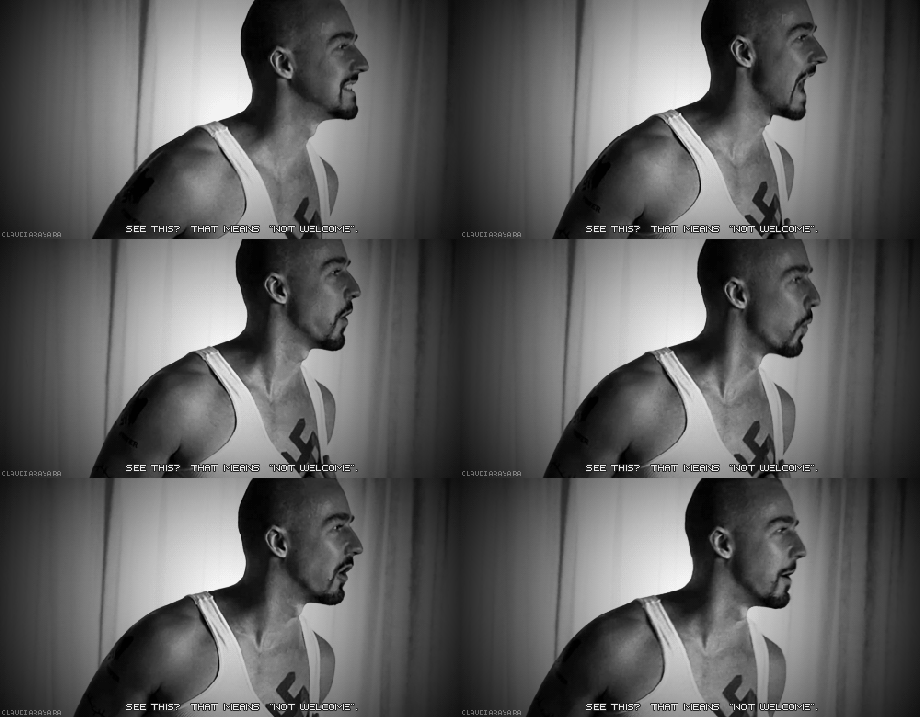
not welcome

A white supremacist who openly recognizes the link between speech and social consequences? Must be a utopia.

Free speech cannot be universal because unregulated free speech censors the speech of the less powerful, which means, ultimately, that it fails as a human right. You know how allowing the super rich to contribute as much money as they want to political parties essentially means that the average person’s voice no longer means anything in a democracy? That happened in the States, and the argument of “free speech” was the driving force behind it. This means that when the left challenges the “free speech” of racists and misogynists, they are not attacking a human right, or censoring a dissenting opinion, they are fighting for the voices that this “free speech” silences. They are promoting democracy, not defying it.

Is the solution to violently attack those who take advantage of their role as social censors under the irony of free speech? Is it morally permissible to punch Nazis, basically. Unfortunately, it’s a narrative that drives these attitudes, not facts and figures, which makes discourse a difficult endeavour. Disallowing that narrative to spread is one way to combat it, but it also needs to be replaced with a better one or it will lash out as it is backed into a corner.

Post-Script: Twitter is just fucking stupid at its foundations. It has real life consequences that are depressingly inane across the spectrum, and social media in general should be abolished. That’s my view of Twitter censorship.

A few years ago, I worked in a butcher shop. I learned the different cuts of meat, learned the value of a sharp knife, and ingested probably more than my fair share of raw meat juice by grabbing snacks after handling ground beef. Just a bit of extra iron; it’s fine. Anyway, while I was there, I accidentally stabbed myself in the face. I was tying up a roast, holding my knife point-up as I did so (don’t do this), and when the twine broke, my hand shot up, and the tip of the knife entered my forehead, just above my right eye. Another thing I learned at the butcher shop is that foreheads bleed quite profusely.

For a few weeks, I had a very noticeable red gash on my face, or alternatively, a conspicuous Band-Aid that didn’t quite give me the same tough-guy edge as Nelly’s. I spent these weeks contemplating what it would mean to have facial scarring.

Obviously it would not change anything about me. My personality had not been altered, my essential biology remained the same, even my apathy toward basic food safety when it comes to what I put in my mouth continued at its same charming rate. I had a scar, a mark on my skin. Nothing more.

the-elephant-man-still2-526x284

Elephant Man: A Social Construction

What I wondered about was how others might see me. If they were to stare, would they look away embarrassed if I caught them, or would they continue unashamed? Would they ask me how I got it, demanding I retell the same ridiculous story over and over, or would they uncomfortably skirt around it, pretending they don’t even notice? Would I be treated as an incompetent buffoon, someone worthy of pity and paternalistic “helping”? Laughed at?

How would I handle that? At what point would I start to question my self worth? How long would it take me to ignore the stares, absorbing them into my new normal, or would I always have to endure noticing them? Would I internalize their attitudes and begin to believe myself to be “scarred” rather than someone who just happens to have a scar? Would I act “scarred”? Would I start wearing hats and become less confident around women? Would I start associating any kind of rejection as an expansion of the way “unscarred” people would shun me?

5768145-finch1

How long of being treated like a monster before you become a monster?

I am fortunate enough that the scar is hardly visible now. Just another scratch on a Jackson Pollock of pockmarks covered by the unkempt scruff and bangs of someone who is too lazy to regularly shave or get a proper haircut. The stares are gone and nothing was internalized. However, the scar, pockmarks, and eternal five o’clock shadow all reside on the same surface: white skin.

If people had the potential to treat me very differently based on an etching on my skin, what about the skin itself? When people say that something like race is a social construction, they don’t mean that blackness and whiteness don’t exist. I have a scar. It’s definitely real, and that’s definitely how I got it. Social constructions are attitudes people adopt based on traditions and shared values toward things that don’t mean anything in and of themselves. Something as superficial as a scar, for instance. They are “constructed” because they are built by social perception.

Does a bombardment of beauty standards define how people might look at a scarred face? How about movies where darker foes are vanquished by whiter heroes? Or a Eurocentric history that teaches a dichotomy between white civilization and coloured savages? What about timid news stories about violence committed by those with white skin compared to the more harrowing tales of violence committed by those with darker skin? Every act of racism perpetuates attitudes which further shapes the construction. By the virtue of something as arbitrary as my skin, I am automatically treated differently by society based on how it constructs the image of “whiteness”. How much of that have I internalized? How often do I act “white”? What parts of “whiteness” have been absorbed into my normal?

collar11

At least I don’t give a shit about Pumpkin Spice.

Not everything that is a social construction is as controversial as race and gender (or beauty standards, for all my facially-scarred homies). Money is a social construction, for instance, as is the authority of a uniform. It is not necessarily a pejorative, but an appropriate description of how society functions. When the construction becomes particularly harmful is when we have to take a step back, collectively, and reexamine what is real, and what has value in and of itself.