Archives for category: Fun

John Stuart Mill once told us that it is better to be Socrates dissatisfied than a fool satisfied. There is a merit to misery that is simply unavailable to genuinely happy people, and what comes with it is usually a more fulfilling, well-rounded life. Much greatness has come from anguish and despair, and we never would have experienced the brilliance of Ernest Hemingway or Vincent Van Gogh if they weren’t a couple of Gloomy Guses. Here are five habits of miserable people that will help you share the successful lifestyle of a pathetic wretch:

1. Outward Reflection: If one were to examine the world, one would find it heavily flawed. They say that ignorance is bliss, and quite frankly it is. If you want to enjoy a nice bout of depression, pick an issue, any issue. Wonder about the environment? Read up on it. See what the people who study it have to say about it, and then see what the people in power are doing about it. The more you learn and study the world, the more your crippling cynicism will develop, ruining any potential good mood you might ever possess again!

They're called "Little People!"

They’re called “Little People” and they shouldn’t be tossed!


2. Inward Reflection: If we turn our mind inwards, we can potentially find another well of sadness to dip our beaks into. They say that the instant you start to wonder about whether or not you’re happy, you can no longer be happy. Self-reflection is antithetical to happiness because happiness exists outside of thought in a shallow but euphoric high. If one critically examines their life, they will inevitably find flaws and regrets to dampen their mood, but in doing so will also create a deeper understanding of their Self and identity that they would otherwise never find.

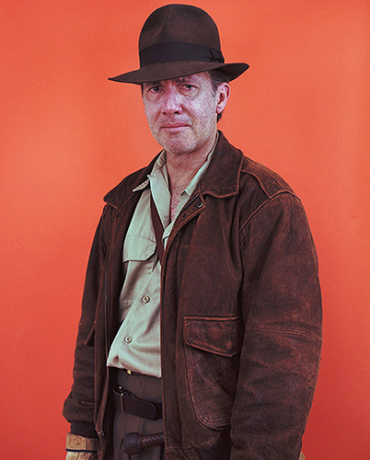
Back there I could fly a gunship, I could drive a tank, I was in charge of million dollar equipment, back here I can't even hold a job *parking cars*!

Back there I could fly a gunship, I could drive a tank, I was in charge of million dollar equipment, back here I can’t even hold a job *parking cars*!


3. Attachment: It’s better to have loved and lost than never to have loved at all. This is actually a terrible thing to say to someone in the throes of heartbreak, and they would be quite justified in punching you in the face if you do. However, the amount of despair that accompanies a breakup is reflective of that person’s capacity to love. If one felt nothing, then this indicates an utter lack of human connection. The crushing loss or disappointment that inescapably goes hand in hand with attaching your heart to someone or something displays the full extent of that person’s ability to love.

I can't believe he invaded her "Bay of Pigs"... if you catch my meaning

I can’t believe he invaded her “Bay of Pigs”… if you catch my meaning


4. Striving: If someone never expected anything of themselves, and drifted listlessly through life without any direction or ambition, then they would likely be quite content. It is those who try, and then quite likely fail, who suffer despondently. Was it your aspiration to be a big movie star? Unfortunately, after all those acting classes and unpaid internships at a movie studio you’re still serving coffee to aggravating, entitled assholes. Those who dream, those who fight, those who try, they are the ones who push us forward, and they are the ones who get the headache for it.

God damn it, Lex. Every. Fucking. Time.

God damn it, Lex. Every. Fucking. Time.


5. Anguish: Fear is different from anguish because fear is related to something that can be physically or psychologically dealt with. Anguish exists as a contemplation of possibilities. When we wonder, “What am I going to do?” we recognize our freedom to choose, and all the responsibility that comes along with it. When we acknowledge the infinite number of choices we have, and how even one will eliminate all others, we are gripped with dread.  Our ability to choose precludes happiness. If we have the choice between A and B, and can switch back and forth at a whim, we will never be as happy with whatever we end up with than if we were simply stuck with A from the get-go.

How will I ever save my franchise? More aliens? Less aliens? AUGH!

How will I ever save my franchise? More aliens? Less aliens? AUGH!


So let’s hear it for the learned, self-aware, free and loving dreamers, because with their torment they will always lead superior lives than those who content themselves with mere happiness.

No two superheros are more iconic than Batman and Superman. If you’re a Marvel fan, I’m here to tell you you’re wrong. Go home. Though both are similarly dedicated to the pursuit of justice and both similarly possess righteous infallibility, the ways they approach their superhero-ing business are quite opposite. Superman is good-natured and morally upstanding: the boy scout. Batman is broody and outside the law: the dark knight.

Now, as much fun as I would have talking about Batman for an entire blog with a few snippets about Superman here and there, I’m going to link the celebrity of each of these Superheros to the cultural state of mind of their respective eras. Though both originated in the late 1930s, the popularity of Superman was at its height probably from the 1940s until the 1970s, whereas Batman didn’t really come into his own until the late 80s/early 90s. You could argue that the Adam West Batman gained some popularity for the character, but I’m talking about when Batman really developed his own pathos. Adam West was an interchangeable guy in tights who solved mysteries akin to those solved by Scooby Doo and the gang. More camp than character. Batman is grim, spawned in heartbreak and isolation, and he is just as deranged as the villains he faces off against, with the only difference between them being Batman’s rigid and absolutist moral code.

Superman, on the other hand, landed just outside of Smallville: an idyllic, rural countryside where he was lovingly raised by two wonderful parents, Ma and Pa Kent. There are those who claim that Superman is exceptional because the Kryptonian, Kal-El, is the real persona of Superman, and it is Clark Kent that is the mask. This is contrary to all the other superheros out there, but I would disagree. Superman is Clark Kent, not the other way around. The boy raised in Smallville, who loves and intermingles with the populace, dedicating his life to humanity, is who Superman is. That’s what he fights for: humanity. Lex Luthor, as any good antagonist will be, represents the direct counterpart to his hero. Just as Superman represents the best aspects of humanity, truth and justice (and shut up, work with me here), Lex Luthor represents the worst, greed, power-mongering, and cruelty. They are two sides of the same coin, fighting for the perpetuation of their own version of human nature.

That’s why the symbol on Superman’s chest represents hope. Superman is the hope that humanity can overcome its dark side. That we can recognize the value of compassion, truth, and humility: the attributes of Clark Kent, and that they can survive the dark times we live in and be reborn anew when the time comes. This is why Superman was popular during the conflict years of World War 2 and Vietnam. We wanted to believe we could be better, and Superman was a symbol of that longing.

Then, in 1992, Superman died. As explained in the video in the hyperlink, DC was trying to make Superman relevant again. For some reason, the ideals of Superman had lost their allure. Cue the world’s greatest detective.

Batman is dark. Like, seriously dark. The Killing Joke in 1988 is a perfect example of that. Batman doesn’t fight for the happy return of ideals once lost because Batman’s past is filled with just as much suffering and strife as his present. Batman fights to keep his head above the water. There is an apathy, an unfeelingness, to his brand of justice as he resorts to scare tactics and bullying to dole it out. There is no hope in Batman, just the certainty that criminals are a superstitious cowardly lot, and that we are in an unending war against them.

Society today is deeply cynical. Possibly more cynical than we’ve ever been before. We suffer a deluge of horrors every day in the form of our news media coverage, and this oversaturation of atrocities has dulled our reaction to it. We are desensitized and demoralized. As much as we might think that we are more compassionate, our apathy and laziness reduces any idealism into a status update or a meme. We still recognize that the world is a terrible place, but there is no hope anymore. No wishful thinking of better days to come, just a melancholic acceptance of the state of the world. We idealize Batman because he maintains his Sisyphean battle against the ills of the world, but we embrace his mythology because of its recognition of the ultimate invariability of it.

Today, Batman is successful because he is as brutal and miserable as the world believes itself to be. We also haven’t had a good Superman movie since Christopher Reeve because now we’re trying to turn the boy scout into the dark knight, which is like trying to fit a square peg into a bat-shaped hole. So now we must ask ourselves, will a renascent Superman rekindle humanity’s hope for the future, or must we wait for a cultural revolution before we get a good Superman movie again?
Existence before Essence: When we create our online dating profile, it is a blank slate. Its existence precedes its essence, and its essence will be whatever we choose to fill it with. We create our own selves in the form of our self-summary and interests. If our online dating profile were completed before their formulation, if their essence preceded their existence, we would be stuck with whatever character traits were assigned to us. However, because we begin as a tabula rasa, we are free to choose which HBO series defines our personality.

Bad Faith: To exist in bad faith is to deny the true nature of our freedom. If I say that I am ‘easy-going’, ‘fun’, and ‘outdoorsy’, I am objectifying my being by limiting myself to only being ‘easy-going’, ‘fun’, and ‘outdoorsy’. If I were to truly be ‘easy-going’, I could never be anything other than ‘easy-going’. I may have been ‘fun’ in the past, as my past is set in stone, and therefore can be defined objectively, but to claim presently to be ‘fun’ is to deny my possibility of being anything else. I am not ‘outdoorsy’ in the way an inkwell is an inkwell. I am not what I am, and I am what I am not; that is to say, I am my possibilities, not my facticity.  These claims to be something limit my freedom by implying that I cannot be anything.

The flip side of bad faith is to attempt to live strictly within freedom, to avoid choice. However, to not choose is to choose not to choose. When we flake out on a potential partner because we believe that the next possibility could be The One, focusing on trivial imperfections to justify the inability to commit, it is because of the realization that to make a choice is to nihilate all other choices. Online dating condemns us to freedom by bombarding us with an infinity of choices, and choose we must.

The Other: We know of the existence of the Other and eliminate solipsism by recognizing that when someone visits our profile, we experience their Look by seeing the pop-up indicating that they have viewed our page. However, this Look turns us into an object. We become our self-summary when viewed by the Other, and this is how they will perceive us. They cannot know me the way that I know myself; they can only know me through my list of favourite musicians, and so to them I am someone who likes Pink Floyd. I become the Pink-Floyd-fan object. My freedom is thus eliminated, and the only way to combat this encroachment is to attempt to objectify them in turn by visiting their page and reducing their freedom to an object who likes some indie hipster band.

Negation: When we go out on a first date with CuteKittenz88 and see that she is larger than her pictures imply, we do not experience fat-CuteKittenz88, we experience not-fit-CuteKittenz88. The expectations that we possessed are negated by our first date impressions, and it is the experience of this negation that shows the implicit non-being in everyday human life.

Nausea: The contingency of online dating, the accidental nature of any romantic encounter or lack thereof, truly shows the meaninglessness of existence.