A few years ago, I worked in a butcher shop. I learned the different cuts of meat, learned the value of a sharp knife, and ingested probably more than my fair share of raw meat juice by grabbing snacks after handling ground beef. Just a bit of extra iron; it’s fine. Anyway, while I was there, I accidentally stabbed myself in the face. I was tying up a roast, holding my knife point-up as I did so (don’t do this), and when the twine broke, my hand shot up, and the tip of the knife entered my forehead, just above my right eye. Another thing I learned at the butcher shop is that foreheads bleed quite profusely.

For a few weeks, I had a very noticeable red gash on my face, or alternatively, a conspicuous Band-Aid that didn’t quite give me the same tough-guy edge as Nelly’s. I spent these weeks contemplating what it would mean to have facial scarring.

Obviously it would not change anything about me. My personality had not been altered, my essential biology remained the same, even my apathy toward basic food safety when it comes to what I put in my mouth continued at its same charming rate. I had a scar, a mark on my skin. Nothing more.

the-elephant-man-still2-526x284

Elephant Man: A Social Construction

What I wondered about was how others might see me. If they were to stare, would they look away embarrassed if I caught them, or would they continue unashamed? Would they ask me how I got it, demanding I retell the same ridiculous story over and over, or would they uncomfortably skirt around it, pretending they don’t even notice? Would I be treated as an incompetent buffoon, someone worthy of pity and paternalistic “helping”? Laughed at?

How would I handle that? At what point would I start to question my self worth? How long would it take me to ignore the stares, absorbing them into my new normal, or would I always have to endure noticing them? Would I internalize their attitudes and begin to believe myself to be “scarred” rather than someone who just happens to have a scar? Would I act “scarred”? Would I start wearing hats and become less confident around women? Would I start associating any kind of rejection as an expansion of the way “unscarred” people would shun me?

5768145-finch1

How long of being treated like a monster before you become a monster?

I am fortunate enough that the scar is hardly visible now. Just another scratch on a Jackson Pollock of pockmarks covered by the unkempt scruff and bangs of someone who is too lazy to regularly shave or get a proper haircut. The stares are gone and nothing was internalized. However, the scar, pockmarks, and eternal five o’clock shadow all reside on the same surface: white skin.

If people had the potential to treat me very differently based on an etching on my skin, what about the skin itself? When people say that something like race is a social construction, they don’t mean that blackness and whiteness don’t exist. I have a scar. It’s definitely real, and that’s definitely how I got it. Social constructions are attitudes people adopt based on traditions and shared values toward things that don’t mean anything in and of themselves. Something as superficial as a scar, for instance. They are “constructed” because they are built by social perception.

Does a bombardment of beauty standards define how people might look at a scarred face? How about movies where darker foes are vanquished by whiter heroes? Or a Eurocentric history that teaches a dichotomy between white civilization and coloured savages? What about timid news stories about violence committed by those with white skin compared to the more harrowing tales of violence committed by those with darker skin? Every act of racism perpetuates attitudes which further shapes the construction. By the virtue of something as arbitrary as my skin, I am automatically treated differently by society based on how it constructs the image of “whiteness”. How much of that have I internalized? How often do I act “white”? What parts of “whiteness” have been absorbed into my normal?

collar11

At least I don’t give a shit about Pumpkin Spice.

Not everything that is a social construction is as controversial as race and gender (or beauty standards, for all my facially-scarred homies). Money is a social construction, for instance, as is the authority of a uniform. It is not necessarily a pejorative, but an appropriate description of how society functions. When the construction becomes particularly harmful is when we have to take a step back, collectively, and reexamine what is real, and what has value in and of itself.

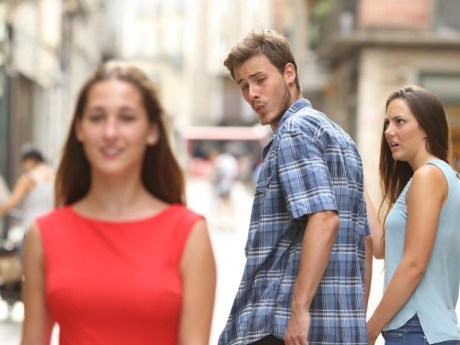
Meat Loaf is known for three things: being the sole visible casualty of anarcho-conformism in Fight Club, singing songs about doing anything for love except for one thing, and going great with ketchup. The philosophy of Fight Club is soul-crushingly tedious, sugary tomato paste isn’t particularly scintillating either, but I am dead set on writing a blog about Meat Loaf, so I guess we’re stuck with that one song of his that everyone thinks is about anal.

anal

But I won’t do that!

Meat Loaf is pretty clear about all the things he would do for love.  He would run right into a metaphysical plane of existence, for instance, and then come back. In addition, he would never lie to the person he loves, and that’s a fact. When pressed about his commitment to doing anything for love, Meat Loaf agrees to all sorts of conditions: coordinating his lover up or down according to which direction is most suited for the occasion, helping her move, and adjusting the thermostat.

What’s less clear is what he wouldn’t do. Near the end of the song, Lorraine Crosby accuses Meat Loaf of eventually cheating on her, just like every other man. Meat Loaf says that he won’t do that. This makes the song somewhat confusing since saying that you’ll do anything for love except screw around on your partner isn’t the most conventional vow.

adultery

“If you *REALLY* loved me, you’d have sex with that woman!” “Nah babe, I would do anything for love, but I won’t do that!”

I mean, unless there’s a silent third party in the song that Meat Loaf is in love with, but he won’t have sex with this third party while he’s still in a relationship with Lorraine? Let’s just assume for the sake of this blog that Meat Loaf and Lorraine Crosby have a weird swingers thing going on. In any case, Meat Loaf has made a vow, and regardless of how far his relationship goes, he will not give up this one part of his autonomy.

Let’s get real for a moment here. To give you all a tantalizing glimpse into my own love life, I once had an argument with a past girlfriend where she was upset because I had asked her to pay for bowling after I had paid for supper. It was her belief that as the man, I should pay for the dates to their completion, and in return, she, as the woman, would prepare home cooked meals for me. I’m not the biggest fan of gender roles, personally, so we got into a bit of a tiff. The relevance here is that she exclaimed, “I would do anything for you!” and my reply was that this clearly was not the case, as she wouldn’t pay for bowling.

People make this claim all the time, despite the fact that most people have limits, be it screwing around, paying for two rounds of bowling, or having anal sex. Even the most devoted person probably wouldn’t kill their parents for love. “But Lorraine Crosby would never ask me to do such a thing!” Meat Loaf might exclaim, “She’s not that kind of person!” Who decides what kind of person Lorraine Crosby is? I’ll give you a hint: it’s not Meat Loaf. My ex-girlfriend believed me to be a man’s man, which I am definitely not, so she would do anything for me only insofar as I adhered to that mold. We make this claim of eternal devotion if, and only if, we have confined our partner into a box that we define.

The importance of this analysis is obvious when we look at cases of desperation. If a man will only treat his partner well if she acts in such a way that conforms to his idea of what a lady should be, for instance. Or the unrequited stalker who would do anything for his obsession except leave her alone. I would do anything for love, but I won’t allow self-determination or independence.

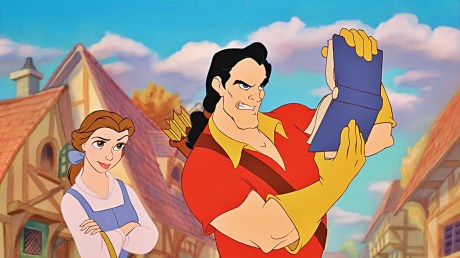
gaston

I would sing for her, kill Beasts for her, but only so long as she doesn’t read books! She might start getting ideas, thinking…

Jean-Paul Sartre posited that any relationship is about transforming your partner into an object, or becoming the object they wish you to be. The person who would truly do anything for love, including killing their parents, has abandoned themselves completely and exists only as their partner’s whim. On the flip side, we are fully prepared to give the entirety of our autonomy only after we’ve convinced ourselves of our partner’s objectification.

Jean-Paul Sartre is a miserable sod, so let’s ignore him. Let’s focus on Meat Loaf. Meat Loaf is clear in his boundaries. There is no way he is going to screw around, no matter how much her love might depend on it. Meat Loaf is also great at communication: the entire song is a dialogue between two partners hashing out their expectations for the relationship. Both are allowed their autonomy, but this hinges on fundamental respect and a commitment to overcoming ambiguity with dialogue. Meat Loaf would not, in fact, do anything for love, and it is only for this reason that those two love birds might have a shot after all.

In a field one summer’s day a Grasshopper was hopping about, chirping and singing. An Ant passed by, bearing along with great toil an ear of corn he was taking to the nest. “Why not come and chat with me,” said the Grasshopper, “instead of toiling in that way?”“I am helping to lay up food for the winter,” said the Ant, “and recommend you to do the same.”I am a grasshopper! I sing, I fiddle, I find value in music!” replied the Grasshopper. But the Ant went on its way and continued its toil.

When the winter came the Grasshopper had no food and found itself dying of hunger, while it saw the ants distributing every day corn and grain from the stores they had collected in the summer.

Then the Grasshopper knew: a society that overemphasizes the STEM fields will always undervalue the arts, killing off those who produce beauty and culture.